
Blast | September 11, 2025
“Once I Lived at the Y” by Maureen Aitken
BLAST, TMR’s online-only prose anthology, features prose too vibrant to be confined between the covers of a print journal.
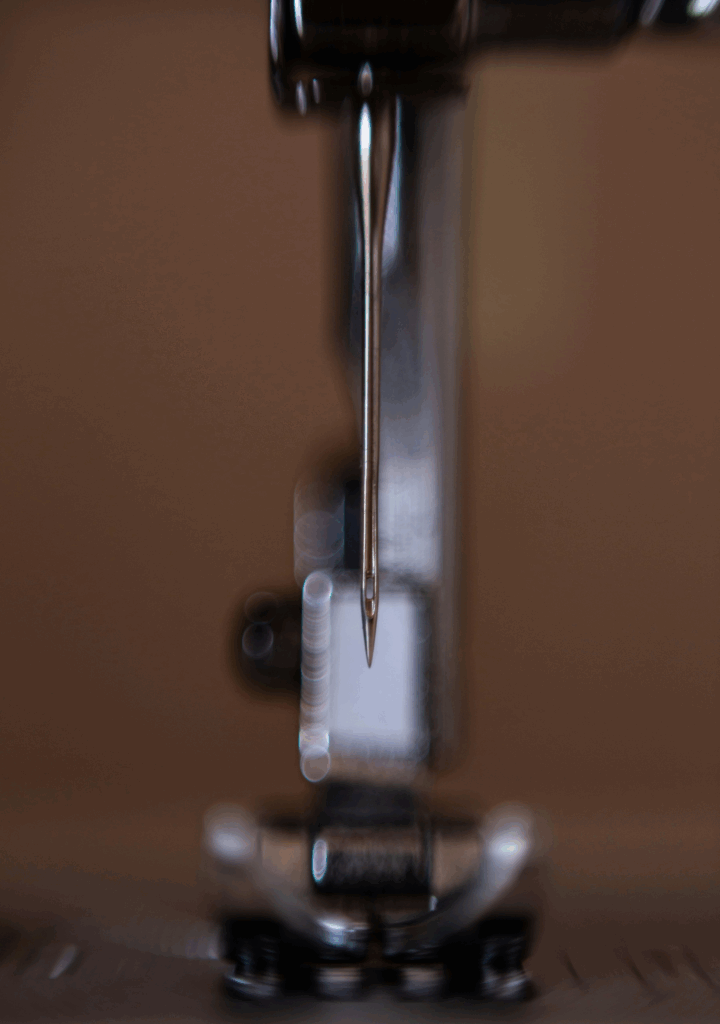
A 2025 Perkoff Prize finalist, “Once I Lived at the Y” follows a woman who, in the process of dying, reflects on her life’s relationships and choices—and on the cruel choices made for her by her parents. Aitken’s story, like the sewing machine it conjures, pierces deeply while stitching neatly.
***
ONCE I LIVED AT THE Y
The part of Emma that isn’t dying walks downstairs toward a warm September night. Upstairs, her husband hunches over her fading body. “Come on, Emma. Live.” Still, she walks past the porch and out to the dock to reclaim the nightly ritual of thanking God for her life. She sits on a lawn chair and says thank you for the cottage, and the dock, her husband and the boat, her life and her health and her friends. Her remaining siblings can go to hell. The lake water under the dock is calm now, barely lapping against the shore. Emma tilts her head and takes in this sweet air under a sky of stars.
Upstairs, the part of Emma that is dying is receiving CPR from her husband. The 911 dispatcher has given him instructions. “Help has just turned onto your street,” the dispatcher says. Emma’s husband continues to plead, yelling for her to breathe. “Don’t you leave me.”
***
Minutes ago, she pressed her bony, small foot against the stool and began hoisting herself up into the bed when a pain plunged like a burning sword through her chest. It pierced her heart. She clutched her chest and fell backward. Her left side hit the carpeted floor. The impact shuddered through her bones. She had to find her breath before screaming for help. Her husband ran up the stairs. He shouted, “Emma, what’s wrong?” The quicker he came toward her, the more muffled his voice became. When he knelt down beside her, Emma wanted to put her hand on his leg, console him, but she could not. He called 911. “They’re on their way,” he said. He pressed his crossed palms over Emma’s chest and started pumping and continues to do so now.
The pumping irritated her. Emma felt the moment, saw the ceiling, as her husband said, “Don’t go,” but she wanted some space and air. She wanted a place to collect her thoughts, to see the night.
Now, outside, she continues to thank everything in her life, except for this damn broken ankle that won’t heal. She wishes it were fixed. The ankle is her fault, she thinks, then shakes her head: No, no, I am grateful for my health and for healing. She is grateful for the new flowers, which smell so faint now, in the evening. She is even grateful for the new bed, with the stool set by her side because she is short, and the bed is tall.
***
The sirens blare as she gazes west and whispers, “Glorious.” The stars dot the dark sky. She knows the previous fall, eighteen months ago, was the beginning of the end. That was her mistake. She’d broken a promise to her neighbor Mira to never go up on a ladder without Mira standing beside her, holding the ladder still and coaching her steps.
But that one twig sticking out of the tree was so horribly annoying. Emma broke that promise, pulled the stepladder from the shed, opened it next to the tree, grabbed the sheers, and walked up four steps before feeling a tilt of the ladder as one of its feet leaned into a dip in the ground. Emma lost her balance, fell on her ankle, and heard the snap of her breaking bone.
It didn’t heal well. She was sluggish, watched a lot of television, and kept her foot up. After six months of sitting around, she started light gardening again. She promised to use a chair when weeding. Soon she was mowing the lawn. As months passed, Emma wondered if her return to gardening has reinjured her ankle.
***
Now, in the night, as the police arrive and the EMS bubble lights ricochet through the sky, she feels so light, as if she has secret powers to reclaim the story. In her mind, she does this differently. This time she calls her neighbor Mira, just as she had promised. Emma tells Mira, “See that branch on the top of that tree? It’s flipping me off. I water the thing, and it gives me the finger.”
Mira laughs. “Not at you. At the world.”
This time, Mira holds the ladder and watches as Emma walks up the metal steps, and Mira says, in her thick Croatian accent, “It’s too shaky. Come down. Come down now.” Mira is all fists and fire, so Emma steps down.
“All right, My-ra.”
“Good, Emm-eee.”
This time, Emma moves the ladder and puts one foot on the step to test the balance.
“Good, OK,” Mira says. Emma walks up and clips the one twig that has been driving her nuts.
Once down on the lawn, Mira and Emma step back and look at the young tree, now a perfect ball of leaves.
“You have a problem,” Mira says.
“Not anymore,” Emma replies.
“You could have broken your arm for a twig.”
“You’re here. It all worked out. It always works out.”
***
But that isn’t what happened, or what is now happening. The part of Emma that isn’t dying now sits down on her lakeside porch and hears the men holler at her dying body upstairs. I am going. These are my last seconds, Emma thinks. Emma is not sad. She thinks of the lawn, the lake waters rippling, the neighbor staining his deck. She came from poverty, from abuse, from anger. She thinks of her mother, who said, when she was a girl, “You will be nothing.”
If all of her had lived, Emma would flirt with the EMS technicians. On the way to the hospital she would say, “If you see the Y in Windsor, my room was just above the door.” Homeless at fifteen. She would say this all her life: “Once I lived at the Y.”
Emma would tell them she still sees the moment as if it’s happening. She looks out the window as her mother leaves her father, drives away in their Chevy sedan, so it’s just Emma and her father in the apartment. Her mother calls from a nearby shop and tells Emma, “I forgot my sewing machine. Would you bring it out for me? I’ll drive by the front.”
“Sure,” Emma tells her. Emma grabs the heavy machine, has to set it down to open the door, then pick it up again and boot the door back with her butt. Too late. She holds the machine in the elevator and carries it all the way outside, into the bright sunny day. She walks to the road and stands on the lawn just before the curb. She thinks she might drop the sewing machine. Her arms hurt from its weight. Her mother will be mad if she sets the machine down on the lawn, where dirt and ants will lodge into the footings and slits. Emma keeps holding the machine. If she is good, perhaps her mother will ask Emma to get in the car. Maybe the machine was a ruse all along. Maybe her mother wanted Emma to come with her. Maybe this request got Emma safely out of the house, away from her father, who would turn his anger toward her, one who also planned to flee.
Emma holds on until her fingers go white and her elbows throb. Finally, she sees her mother’s gray sedan, recognizes the frame of her short hair. Emma smiles.
Her mother pulls up. The windows are open.
Emma does not see urgency in her mother’s face. She does not see a plea to get in. Emma tries to encourage the moment.
“Mom, are you okay? Here’s your machine.”
“Set it there,” her mother says, pointing to the floor in front of the passenger’s seat.
Emma shifts the machine on her hip, braces it with her left hand, opens the passenger door with her right, and sets the machine down on the floor. She is halfway in the car. She longs for a sign from her mother. When no sign comes, Emma sets one knee down on the seat to keep her mother from leaving and test her chance. “Mommy, are you okay?”
“Thank you. I hope that bastard rots in hell. Tell him I’m never coming back.”
Her words are like firm hands, pushing Emma back. Once she is out of the car, her mother leans over and pulls the door shut. Emma squats down and says, “I love you, Mommy.” But her mother has already pulled away. Emma never gets to say, “Please let me come. Please don’t leave me.”
Her mother is in the right lane now, driving away. Emma stands on the street waiting, hoping her mother turns around, or brakes and calls Emma over and says, “Get in.” When Emma’s mother turns right, Emma is still waiting. Emma doesn’t move. She can’t miss this moment. If she does, her chance will be gone forever. She waits for minutes, then what feels like an hour. Then Emma doesn’t know what she’s waiting for—a person, a hope, a prayer, a miracle, a meal. Other cars come and go. Once she is upstairs, her father says, “Where were you?”
“I went to give Mommy her sewing machine.”
“You talked to your mother, and she had a request, and you did it.”
“Yes, Daddy, I was just trying to help.”
“Get out,” he says. “Now.”
He means it.
Emma walks out of the house with nothing but her little purse. There is nowhere to go. She walks three miles to the Y. She moves swiftly to the front desk, as if her chances of being put up were dwindling by the seconds. “I was just kicked out of my house,” Emma says to the receptionist. The woman grabs her hand and squeezes it. “I’m so sorry.” Emma answers questions. She is fifteen. Neither parent wants her. No, there is no family who will take her in. Yes, she can work. She wants to work. Yes, she can start looking tomorrow. Yes, she loves this room. Yes, she will take it. Emma tells the woman “thank you” over and over again until the phrase doesn’t mean thank you anymore. It means They’re crushing me, and How can anyone do this to a family member, and I did nothing wrong, and I loved them—Why can’t they love me? What is so wrong about me?
The woman holds Emma as she cries. “I’m sorry, honey. It’s not your fault. And if it’s any consolation, it happens more than you think.”
In her room, Emma is not consoled. Emma cannot be another one in the revolving door of people crushed by this. Emma is something. She cannot be the unloved. Emma is someone. She will show them. She will show them all.
***
Her first job is at a beauty salon, washing hair. The women think she is adorable. While washing away the residual dye, Emma smiles. They ask her questions about her family and boys. She does not want their pity. She wants their love. So Emma lies a little. Yes, I have a good family who loves me. I like to work. Yes, we are celebrating Christmas together. Thirty people. Can you believe it?
When a woman says, “You remind me of my daughter,” Emma hears the warm, loving tones in the woman’s voice, the smile of pride and love. She’s seen this look before from a distance, a mother to a child, a grandparent to a grandchild. When this look of love shines on Emma, it sends a shock through her heart. She fights back tears.
***
Time melds together. They aren’t reviving her. Her husband is weeping. Her mind is racing. I am someone. My middle finger is like that twig on the tree. One day, I will show you all. She is fifteen and seventy-three, and she is dying. And she is still alive.
She never returns to the curb to wait for her mother. She will never wait for anything again. As she walks from the salon to the Y, she sees the cars passing and does not look for her mother. Emma searches for the finest car, and for the woman inside it, the woman she will be, with a heart full of fire, with twenty-two thousand sunsets to go, with all her dreams realized, with a pressing knowing that, because she is successful, because she did show them, because she deserves appreciation, her siblings huddle together and hate her. Of course they do. When Emma tells her younger friend the entire story, her friend says, “They’re jealous, and because they are jealous, you win.”
“That’s right,” Emma says.
“You are a great woman,” Emma’s friend Janeen says. Emma tells Janeen she is like the daughter she never had. Emma’s heart is full of love.
She reminds herself every night of this. Emma’s friend, her neighbors, all of them love her. And why not? She mows their lawns, watches their houses, calls, and laughs. Everywhere she offers small gestures to see their smiles, to hear their kind words.
“You are a wonderful person,” her neighbor says.
“You are amazing,” says another neighbor.
A few years ago, Emma saw trouble coming for her friend Janeen, whose sister was dying. There was no will. At work, Emma saw what happened to families without wills, how probate intervened, dragged on for years, and how families devolved, fighting over the last dollars.
At first, Emma approached with caution. “You could hire a lawyer on her behalf, get her on the phone, and she could say what she wanted.”
Months passed, and one day Emma yelled, “For the love of God, ask about the will!”
Sure, it was tough love. But the world was tough. Janeen asked and the will was drawn up and signed. When Janeen’s sister passed and the real fighting started, her friend said, “You saved my freaking life.”
The Emma that does not die moves to the side of the cottage. She watches. They are transferring Emma’s body onto a stretcher. Her body, her head, are covered by a sheet. Emma thinks, I am so little, like a girl. She sees this now. She sees her husband.
Earlier today, Emma told Janeen, “If I die tomorrow, I’m happy.” When she thinks of the fall from the stool, she understands something. Once, Emma and her husband gutted the entire house, knocked down a wall, helped the floor guy install wood. Since the doctor told her to stay off the ankle, it’s been watching television and boredom. Maybe the decision to climb that ladder was a sign of a deeper problem. Maybe her mind was going. She’s certainly slowed down. She remembers the old stories with her mother, but the new ones are hard to remember, vague, popping into her brain like toast springing from the toaster. If she must leave, at least she goes with her brain intact, love in her heart, and a view of the water. Emma dies in her own home. How few people can say that.
Onward is no worry for her. Her being is already moving forward, departing this place. There is one image that remains thick in her, like rawhide. It is of her mother driving away, never looking back at Emma, who stands and sees the curb, no brake lights, no pause, just one easy turn right and gone forever. She knows then the grip of the thing releasing, the pain of the past that has, up until this moment, felt so heavy, up until this second, has never let her go.
***
 Maureen Aitken’s short-story collection, The Patron Saint of Lost Girls, received a Kirkus star, the Nilsen Prize, and the Foreword Review INDIE Gold Prize for General Fiction. Order the reissued edition (release date September 16, 2025) from Wayne State University Press. Her stories have earned a Minnesota State Arts Board’s Artist Initiative Grant, a Loft Mentor Award, an award from Ireland’s Fish Short Story Prize, and two Pushcart Prize nominations. Her stories have been published widely in journals such as Prairie Schooner and New Letters. Her story “The Witches of Detroit” appeared in the Missouri Review’s BLAST section in 2022.
SEE THE ISSUE
SUGGESTED CONTENT
Blast
Nov 05 2026
“Talking with My Mother at Midlife” by Andrew Cohen
A meditation on the crossroad that occurs at the cusp of middle and old age, “Talking with My Mother at Midlife” by Andrew Cohen approaches the grounding effect familial love… read more

Blast
Oct 22 2026
“Buckle Up” by Tyler Ayres
“Buckle Up,” is a story about two relationships of well-intentioned dysfunction and how they compare in a spontaneous moment. TMR’s online-only biweekly series, BLAST features prose too vibrant to be… read more
Blast
Oct 08 2026
“Starting Over” by Joseph Hamaker
In Joseph Hamaker’s short story, set in the busy years after World War II, the young son of a father who can do anything witnesses sudden devastation. Something can be… read more