
Blast | October 09, 2025
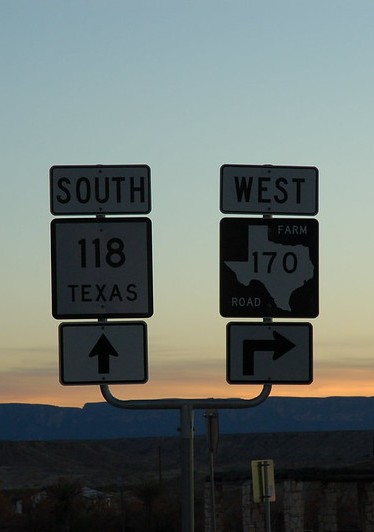
“This Might Be It” by Michael Hicks
BLAST, TMR’s online-only prose anthology, features prose too vibrant to be confined between the covers of a print journal.
Glinting with desert dust, “This Might Be It” is Michael Hicks’s story of a young man whose life is thrown onto the road when he jumps into a relationship with an adventurous woman.
***
THIS MIGHT BE IT
We’d met in defensive driving class and got in it quick, using the ten minute breaks to fool around in her sedan. She’d failed to yield. I’d been caught doing forty in a school zone. Her fingernails were long and fuchsia. After our last session she invited me to Rudy’s Tavern, bet me ten dollars on a game of eight ball, and from there we sort of gave ourselves over to it, cutting work early to meet at her favorite taverns, rolling around in bed, saying this was unlike anything we’d ever lived. And maybe it was. She said she was used to guys who all wore the same pair of tattered jeans, coke-snorters who misquoted the Bible, old at twenty with dip-stained teeth. Like my pals throwing chain in the Permian. They could buy fifty thousand dollar rigs at age nineteen and for some reason I’d done community college and hung around Midland and now was twenty-three. I’d grab for anything new like a child going after a toy. Five days with Mary just fell away. A week. With Mary, I felt like I could breathe the desert air more deeply, see past the scarred dirt yards and flatness toward some kind of distance that used to howl and gape. The air grew warmer. Spring was coming. Who the fuck knows how these things begin?
We applied to rent a one bedroom. A squat brick cube in a row of a dozen others just like it. The roof was only somewhat wavy. “This could work,” I said.
“Sure, it might do,” Mary said. We drove past the postage stamp yards and lifted trucks, bare hedges and broad cement driveways. There wasn’t much else to see.
After a minute she said, “No. No, I can’t swallow no yearlong commitment. I thought I could cause it was what we were supposed to do, but goddamnit, this feels wrong. My guts ache and all the blood seems to have left my hands. Feel them. Feel how cold. I want adventure, Sam. Not East Midland. I want an adventure with you.”
So there it was: application withdrawn, rented rooms vacated, all our stuff crammed in the back of her sedan. I sold my two door beater for eight hundred so we could make it last. Set out a box of junk marked FREE. There wasn’t much else to abandon. I’d been driving a forklift at a recycling center and Mary had worked the register at some health store. Neither of us had trouble quitting. Our roommates weren’t really our friends.
We left Midland with wildflowers in bloom, and they were still in bloom as we drove south: vermillion across miles of pasture, blues that bordered the highway, tiny yellows that blossomed within an inch of the ground. You could see the wind travel through an acre of them like a gently breaking wave. We didn’t stop until we were in Big Bend, camping near the river, living off jerky and Mexican beer, existing plain and simple according to our needs. Every day we’d hike switchbacks to the top of a canyon, swim in the river, leave the main paths to fool around behind giant boulders or great stands of cane and flowering retama trees. We kept our site clean. Brushed our teeth leaning over the river. At night we made small fires and watched the cinders travel up toward stars.
Just when Midland began to feel like a distant memory, a beige family van pulled up one morning and some harried spouse in a visor leaned out and pointed. “You’re in our spot and we’ve reserved it online and you need to move now, so please hurry now, please.”
We fled the park and didn’t stop until we hit a town called Price, where Mary spotted a trio unloading instruments from a cheap looking van. It had once been white, was rust splotched now, dented rear and front. They’d parked haphazardly in the dirt parking lot fronting a little shack of a tavern called the Yard, and that was enough to draw us into a dim room where a guy from Nome, Alaska, who went by Ike was sort of running the joint. We drank with him and chatted. I’d never met anyone less in a hurry to do anything. Other patrons leaned on the bar holding empty bottles while Ike told us about gillnetting sockeye in Bristol Bay. He let us camp in the dirt lot out back for a twenty, and half an hour later we’d set up our life there, such as it was. Night came. The band started up. We two-stepped and drank with the locals, traded chili recipes and outright lies. It was after three o’clock when the music ended. My ears were ringing. Mary and I spread out a blanket beside our tent and got naked. Something brief and lurid flashed across the sky.
“This might be it,” Mary said. “I thought we’d go to, like, California next, but I don’t know, this might be it.”
So we decided to stay. There were these cheap stone huts available that mercury miners used to sleep in. Ike said to talk to his friend Denis Marshall and by the end of the day we had us a place, month to month, with no AC and a knobby, creaking bed. I started driving for a river outfitter, hauling around canoes and lifejackets and out of town paddlers. Two weeks passed. Spring ended and the wildflowers withered. Who the fuck knows how these things end?
***
You can’t hide your heartache easy in a town like Price, and right after Mary ditched I worried I’d be branded as some castaway twerp. Every night after Mary left I thought of her in ways that never used to cross my mind, carrying my thoughts as if they existed outside my head. She was the social engine of our unit, see, but I kept up the routes we wandered, drank with the usual crowds, and through politeness and self satire, became cozy with a few good souls. At La Kiva, they called me Sam. At the Starlight, they called me Sammy Boy. At the Yard, they called me Samdy because of my hair, which was sandy-colored, and my name. Jennifer Newcomb called me Sandy for a while, then Denis Marshall combined it with Sam. It seemed to make the regulars happy when they said it. Samdy.
This one night I sort of got into it with Denis Marshall. We were sitting up by the Starlight, looking out across the miles of desert land. Every goddamned evening, that was what we did. The land went immense from up there, with many rises and falls reaching out toward the faint outline of the Santa Elenas, like you were staring at the ragged joint where two worlds end. Denis started telling me about how much he and everyone else liked Mary. “That woman was special,” he said. “She could have been a real asset to this town. People like her don’t come around more than twice in a lifetime. What’d you do to make her jet, Samdy?”
“Didn’t do anything, Denis,” I said.
“Bullshit,” he said. “What do you guys think?”
Sitting next to him were Tatum Hobbes and Grayson Lowe. They sort of raised their shoulders.
“Don’t pull them into it,” I said. “Old man.”
“Easy,” Tatum said.
Denis said, “You best watch that mouth, kid.”
“Yeah?” I said. “Or what do you idlers plan to do?”
Denis exchanged a look with the other two. Tatum shook his head. Grayson spat out in the direction of the Santa Elenas, then faced me. His eyes both saw me and didn’t.
The next morning, I drove tourists and boats from town to the river and back. The following morning, I drove tourists and boats from town to the river and back. At the end of the week I found a note posted on the Tom’s Outdoor Adventures office door: Sam: Put van key in mail slot. Will be in touch. The door was locked, the interior dark. I deposited the key and walked up the hill to the Starlight porch, where the usuals drank and stared. No one said a word to me. I wondered how much longer I could make it here, then I bought a beer at the outdoor bar and sat among tourists on the patio, everyone snapping weak photos, blabbing about desert this and desert that. The view was about the same as on the porch: Mexico, vast folds of desert beige, ochre, rusty maroon. Even on clear evenings the distant Santa Elena mountains were hazed with a million years of dust. But it was just a view. You couldn’t exactly hold it in your hands.
“This place is magical.”
Sitting beside me was a woman. She wore dusty hiking pants, dusty sandals. Her toenails were short and turquoise. I watched her sip a frozen margarita and lick a few salt grains from the rim. Her elbows went up on the long narrow table we shared, and I kept watching as she rested her chin on her palms, as if content to just be there, staring. There beside me in the desert was this entire life. “I was in the park all day and I can’t wait to go back for more,” she said. “This place is magical.” Her car key sat nearby, next to a bejeweled cell phone and a nice fat wallet. A thousand ideas swarmed with a potency I believed I might grasp.
I said, “It sure is.”
***
 Michael Hicks was a Truman Capote Fellow at the University of Montana. His work appears or is forthcoming in Virginia Quarterly Review, BULL, and Feign. He lives in Missoula.
SEE THE ISSUE
SUGGESTED CONTENT
Blast
Nov 05 2026
“Talking with My Mother at Midlife” by Andrew Cohen
A meditation on the crossroad that occurs at the cusp of middle and old age, “Talking with My Mother at Midlife” by Andrew Cohen approaches the grounding effect familial love… read more
Blast
Oct 22 2026
“Buckle Up” by Tyler Ayres
“Buckle Up,” is a story about two relationships of well-intentioned dysfunction and how they compare in a spontaneous moment. TMR’s online-only biweekly series, BLAST features prose too vibrant to be… read more
Blast
Oct 08 2026
“Starting Over” by Joseph Hamaker
In Joseph Hamaker’s short story, set in the busy years after World War II, the young son of a father who can do anything witnesses sudden devastation. Something can be… read more