
Blast | July 02, 2026
“This Other World” by Laton Carter
In Laton Carter’s short story “This Other World,” life is awkward and physically messy in contrast to ideals.
TMR’s online-only prose anthology, BLAST features prose too vibrant to be confined between the covers of a print journal.
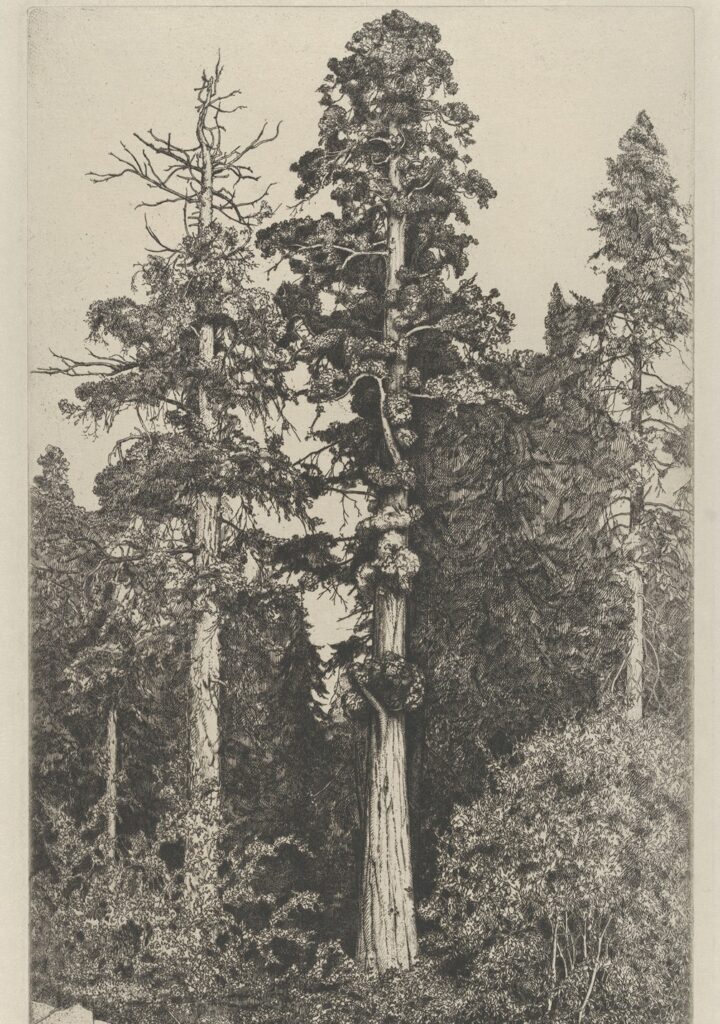
Artwork: Baby Sequoia (1915), Ernest Haskell (American, 1876-1925), Artvee
* * *
This Other World
The book ended up being mostly about sex. Not all of its chapters; it wasn’t smut for fun, but almost. I was nearly done with its three hundred pages, and the main character—a woman, a woman who I could find almost nothing in common with—was still at it. Such horniness made me insecure. Should I be like her, reveling in the possibilities of my own body? Or should I be like the author, also a woman, who apparently knew far more about sex and joy and physical self-knowledge than I ever could? If sex was a radiant pool, this author was confidently at its pure blue bottom, not drowning or struggling, but calmly surveying the order of things from deep below, grinning and glowing and orgasming and seeming to say, Ladies, this can be all yours too.
I hadn’t known what the book was about before purchasing it. No friend had exclaimed, You need to read it now! Nor had I stumbled upon any review online. I’d simply picked it up at the local bookstore I went to when I had to kill time waiting for my daughter’s violin lesson to end. The cover was of a giant tree. Sequoia? Phallus? I didn’t know.
I had the door to my room closed because Claire was practicing, which meant she was going to have a meltdown. We were both on our periods, and I knew better than to get in the way of a fifteen-year-old. Of course I’d had countless more periods than her, but I could still conjure the uterus-scraping, anus-throbbing, bladed-weapon pain she was pushing through. Add violin to that—drilling the second movement of Dvořák’s concerto—and you had a recipe for seething oblivion. I’d once tried to praise her with two Midols and the compliment You are one strong trooper. She returned my ill-formed recognition with an unblinking glare and low growl—I am NOT a trooper. She was right. The comfort of a mother could sound stupid.
I was stationed in my reading chair, a mug of lukewarm tea on the armrest. I would hide and read until the instrument was returned to its case and an atmosphere of calm reemerged. My nose started to bleed. What the—I felt a warmth pooling in my left nostril. Instinctively I tilted my head back, and just as I was bringing my fingers up to stanch the flow, my head abruptly jerked down. I let go a violent sneeze, blood spraying from my face, speckling the open pages of my book into a miniature murder scene. All I could do was nothing, just stare. Menstruation, bloody nose, now this ambush. There couldn’t be anything else. I studied the garnet droplets scattered over the lines of print. A small stream of blood I could feel but not see was traveling from my nostril down to the border of my mouth. I licked it away. Metal and shock. I shifted in my chair and felt a small gush into my pad. The two victim pages of my book were now permanently marked in some unintelligible hematic code. Seconds ago, they’d been virgin wood pulp. My brain misread the situation—fury!—then shifted to the appropriate conclusion: comic ridiculousness. I started to laugh but ended up choking on the blood that had decided to travel down my throat rather than spring from my nose.
“What’s so funny?” came Claire’s voice. How had she heard my choked laugh over her strings? She’d stopped playing and was waiting for a response.
“Nothing,” I burped through the closed door of my room. I wiped my nose with the back of my hand. Now my hand was bloody.
“It’s not nothing,” Claire retorted. She was practically yelling. “You laughed. At something. That’s not nothing.”
“You’re right.” I was already in de-escalation mode. But I was practically yelling too. “It was just something in my book. But really nothing.” To this, silence. Claire had no response. Her violin started up again.
There was blood in my pad, blood in my nose, blood down my face, on the pages of my book, on my hand, and none of it was stopping. I was the absolute opposite of the woman in the book. She was draped on a bed somewhere, entwined with her lover in Egyptian cotton sheets, awaiting her next little death, while I was—in this case literally—leaking little deaths, a crazed fairy godmother in a dollhouse killing spree. I needed tissue.
“Mom!” Claire was yell-talking again. “For dinner, let’s do tacos.”
I stood up and felt dizzy, then cold. Jesus. My murdered book was in my left hand while my right was clamped down on my nose. I had no third hand to open the door. A wave of nausea swept over me, and for a moment I thought I might add another fluid to my book’s pages.
“Mom?”
I was in no place to talk. Crouching down, my head tipped back to prevent further leakage, I laid the book, still open, on the floor, involuntarily peeing a little as I squatted. I could feel the adrenaline taking hold in my nervous system. I was under siege. In just under a minute, I’d somehow gone from the world of sex to the world of . . . I didn’t know what to call this other world.
“Mom!”
“Give me a minute. My nose is bleeding.” I was yell-talking just like Claire, except my voice had that pinched-nose sound.
No response.
My whole focus was the doorknob. The order of things would fall into place after that. Hallway to the bathroom. Light switch. Tissue. The toilet. Maybe a shower. Dvořák was starting and stopping, hiccupping phrases in small seizures. I was the trooper, stumbling to the sanctuary of the smallest room in the house. Claire was giving me my space.
My face in the mirror was unusually pale. A smear of blood stretched from the place just under my nose to my cheek. I looked like Sissy Spacek in Carrie, minus the bucket of red liquid poured over her head. If I could’ve moved things with my mind like Carrie, I would’ve moved all the damn blood to a halt.
“Mom? Are you okay?” Time stopped. Through some mystical wizardry, Antonin Dvořák had produced empathy—in my offspring. Claire was thinking about another person.
“I’ll be alright.” I still had the pinched-nose voice, but I was no longer yell-talking.
“We should do tacos, Mom.” There it was again. She’d said we. The expensive violin lessons were paying off.
I sat down on the toilet, unclamped my nose, and exhaled, my gaze still pointed upward. Socks. Of course. I carefully looked down and scanned my Goodnight Moon socks—Claire and I had matching pairs—and they had blood on them. I’d killed the moon. Jesus Carole King Christ. The vertical crease in my brow where I needed Botox was aching. Aspirin. But I needed more than aspirin.
I peed, changed my pad, washed my hands, and washed the blood off my face. Claire was on her phone now. I knew because of the strange silence. Phones put your brain on hold and your voice on mute. We’d been half yelling at each other through a door, and now this. I was standing like people do when they’re supposed to move on to the next step but don’t want to. I could open the door or look in the mirror again. I chose the mirror. Some color had come back to my face, mostly in blotches. I thought about smiling but decided against it.
Not whiskey, not weed, not a jubilant orgasm. My forehead pressed against the bathroom door, my will buffering. I needed something less tangible. More powerful, while also subtle. A voice, a comforting voice-from-above—not a bearded bald man in a white toga sitting on a cloud, but something better, something updated and cosmically relevant—issuing words that would reconstruct this stupid moment and tell a different story, one I could believe, even see myself in.
* * *
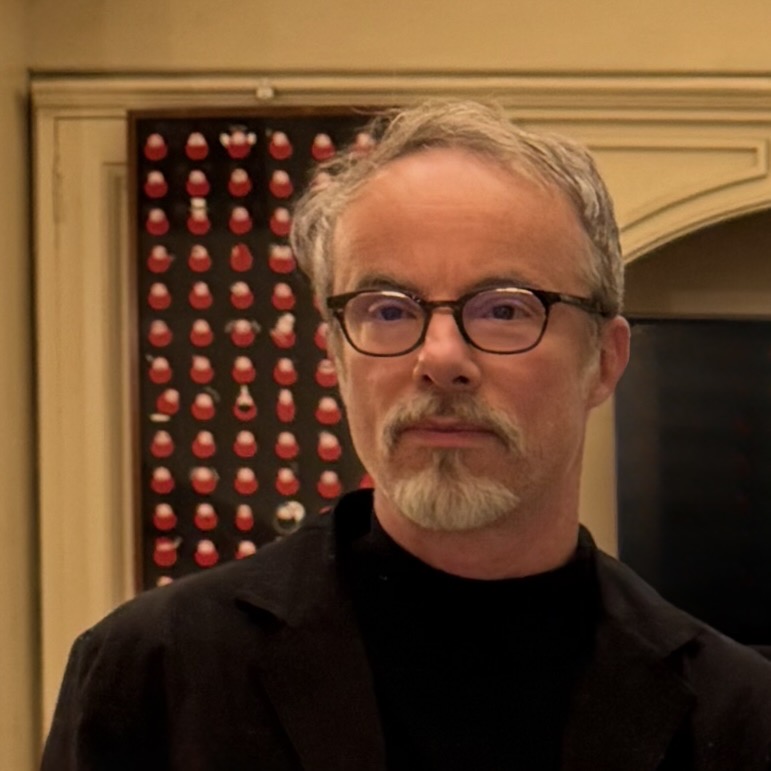
Photograph © Charly Brown
Laton Carter is the author of Leaving (University of Chicago Press), which received the Oregon Book Award. Recent writing appears in Best Microfiction, Interim, and Susurrus; work is forthcoming from Galileo Press and June Road Press.
SEE THE ISSUE
SUGGESTED CONTENT
Blast
Nov 05 2026
“Talking with My Mother at Midlife” by Andrew Cohen
A meditation on the crossroad that occurs at the cusp of middle and old age, “Talking with My Mother at Midlife” by Andrew Cohen approaches the grounding effect familial love… read more
Blast
Oct 22 2026
“Buckle Up” by Tyler Ayres
“Buckle Up,” is a story about two relationships of well-intentioned dysfunction and how they compare in a spontaneous moment. TMR’s online-only biweekly series, BLAST features prose too vibrant to be… read more

Blast
Oct 08 2026
“Starting Over” by Joseph Hamaker
In Joseph Hamaker’s short story, set in the busy years after World War II, the young son of a father who can do anything witnesses sudden devastation. Something can be… read more