
Featured Prose | August 27, 2026
“Snow Angels” by Mitch Wieland
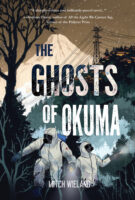
“Snow Angels” by Mitch Wieland first appeared in TMR 38.2 and later in the TMR anthology Hello, I Love You: Stories of Romance. Wieland turned the story into a novel, The Ghosts of Okuma, which will be published on November 3, 2026, by Regal House Publishing.
***
Snow Angels
At Inokashira Park, the black trunks of the cherry trees rose from the pristine snow. Not California, Wyatt West thought, and waited for the familiar pangs to subside. A galaxy of snowflakes tumbled and twirled around his head. When the homesickness had run its course, he walked into the park, watching his boots mark the smooth surface. And there, like a construct of his dreams, was Yoshimi Watanabe. His next-door neighbor stood in an open expanse of white, facing Wyatt but not seeing him, her arms extended to the sides. She wore the ivory button-down and short plaid skirt of her high school uniform. Red high-top basketball sneakers adorned her feet. Her navy peacoat and leather book bag had been stashed under the shelter of a distant pine.
As he watched, Yoshimi closed her eyes and dropped backward, both arms still raised, her spine ramrod straight. She landed with a thud in the deep snow, then windmilled her arms and legs, jumping-jack style. Her laughter rang across the empty park. Wyatt remembered learning to make snow angels when he was five or six, his mother laughing at his own laughter. Emboldened by the memory, he walked right up to this peculiar girl, stopping inches beyond her thrashing legs. Each time her feet swung outward, scarlet underwear flashed against the snow. Wyatt closed his eyes, wavering above his neighbor as if he might fall.
“Are you looking up my skirt?”
Wyatt opened his eyes to find the girl staring at him, head raised, snow clinging to the raven darkness of her hair. Her bare legs were blushed from the cold.
“Not intentionally. I mean, I wasn’t trying to look.”
“Why not?”
“What?”
“Why weren’t you trying to see my mysteries?”
Wyatt felt his throat tighten on cue. While it had never been easy talking with girls in the good old U. S. of A., it was almost impossible in this frantic foreign city. “You speak English very well,” he said.
“You are equally gifted with the language.” Yoshimi sat up and rose to her feet, careful not to spoil the perfect snow angel she’d made. “So did you see my underwear or not?”
“They’re bright red.”
“Like the rising sun. I’m being patriotic today: my scarlet round rump on a field of pure white, like our glorious national flag.”
“Are you headed to school?”
“Are you kidding? The day’s too fantastic for those dreary ideas. I’m skipping.”
“Me too,” Wyatt said, a partial truth. In the mornings, he was supposed to be studying online with a virtual high school in Los Angeles but hadn’t logged on since moving to Japan three weeks ago. With his exhausted father teaching conversation skills to Sony executives morning, noon and night, Wyatt was pretty much on his own.
“What do you think of my tenshi?” Yoshimi pointed at the winged shape in the snow.
“We call that a snow angel,” he said.
“Yes, my angel in the snow.” Yoshimi took a big step sideways. “Well, as the old song says, ‘One is the loneliest number.’” She flung her arms outward and dropped. Wyatt winced as she plopped onto her back. Like a wound-up toy, Yoshimi started churning her arms and legs.
“Don’t look at my Japanese flag,” she shouted. “Mind your p’s and q’s.” Wyatt studied a row of pine trees dividing the park, their branches heavy with snow. In the dark pond opposite the pines, a flotilla of dazzling white swans cruised toward the distant shore. He didn’t know what to do or say next. Yoshimi was unlike anyone he’d ever met.
“There,” she said, standing beside him once again. “They are now an angel couple. Angel lovers, sleeping in the snow.” Yoshimi grabbed his hand, her fingers shockingly cold, and pulled him one pace to the right until they were clear of the pair of imprints. “Come on,” she said. “Let’s create a family. Let’s give them children to watch over. Here, stand beside me and raise your wings.”
Wyatt stretched his arms to the sides, fingertips touching Yoshimi’s. She gazed at him and smiled. Her eyeteeth were slightly crooked, something he hadn’t noticed before. It made her prettier somehow. “Now we fall together, ne? Ready? Ichi, ni, san.”
Wyatt allowed himself to drop straight back, landing beside Yoshimi in the yielding snow. Out of the pale sky, a million flakes plummeted toward him, plastering his face, stinging his eyes. Wyatt spread his arms and legs as far as he could and brought them back together, then swung them out once more, the action resurrecting memories too numerous to name. It seemed only months ago that he’d played in the snow with his mother, though over a decade had passed. It was almost half a year since that unspeakable day.
“Come on, slowpokey!”
When he looked over, Yoshimi was already carving another angel. Wyatt hurried to keep up, standing and moving to a new spot. Yoshimi laughed again, her slender limbs swishing in the snow. At last she scrambled to her feet. Wyatt did the same. They stood looking down at the dozen or so angels in the snow, breathing hard from their exertions. It was the most fun he’d had in months.
“That’s what they needed,” Yoshimi said, trembling beside him. “A big happy family to keep them company.” She looked him in the eye. “Is your family happy?”
“My mother’s dead.” Wyatt clamped his mouth shut, surprised to have blurted out such a weird proclamation.
“My father is equally dead,” Yoshimi said without missing a beat. “I am stuck with my fucking sister. My mom sent us to Tokyo for school. That is why I make happy families in the snow.” Her lips looked blue in the diffused light. Snow clung to her skirt and blouse.
“You’re going to catch cold,” he said.
Yoshimi turned her back to him. “Can you get the snow off me?”
Wyatt felt his heart pick up speed.
“Hurry,” she said, shaking even more. “I’m freezing.”
Wyatt brushed snow from her hair. He wiped off her shoulders, swept his hand across her upper back. He felt Yoshimi tense. She reached out and stayed his hand.
“Wait,” Yoshimi said, peering through the falling snow. “We have company.”
Along the northern border of Inokashira Park, cruising down the plowed street on pink bicycles, was a pack of teenage girls. The riders wore frilly pink dresses with matching pink shoes and kneesocks. Pink streamers flapped from the handlebars and pedals of the bikes. They rode in formation like a motorcycle gang. The lead girl had streaks of neon pink in her hair.
“Who are they?” he asked.
“My enemies from school. They are at the top of the food chain. I am on the bottom.”
Wyatt watched the girls glide along the park. Despite the snowstorm, none of them wore coats, their flamboyant dresses like flowers blooming in a black-and-white world. “They’re bullies?”
“They call themselves the Pink Flamingos. That is why I changed my name to Yoshimi. It is from the Flaming Lips CD entitled Yoshimi Battles the Pink Robots. I have my own robots to conquer.”
“You fight them?”
“I will one day soon. I am the superhero of my own life, and those skanks are my archvillains. They harass me every day and call me names. They trip me in the halls and push me down stairs. They threaten to shave the hair from my head. I hate them with all my being. I will defeat the Pink Flamingos and celebrate my victory.”
“There’s eight of them.”
“Yes, and that is why I must escape before they spot me. I am not ready to vanquish them yet. I must train more extensively.”
Across the snowy park, the Pink Flamingos coasted past Wyatt and Yoshimi as if on patrol. The leader pointed straight at them, her mouth a sudden dark oval. She thrust her fist into the air and held it aloft, a signal of some sort.
“I’ve been discovered,” Yoshimi shouted. “I must flee.” She lowered her head and bolted toward the pines.
The bikes swung around with a single mind, changing direction like a flock of birds. The girls dismounted where the pavement ended and ran hard across the deep snow, knees pumping high beneath the delicate filigree of their skirts. They fanned out across the park like wolves on the hunt, surrounding their quarry, closing in. The leader reached Yoshimi and shoved her down. Wyatt sprinted to the rescue across the uneven drifts but found himself behind a barricade of pink lace. He could not believe what was happening.
“Today is my destiny, Wyatt-san,” Yoshimi shouted to him. “Today I battle these harlots of the underworld.”
Over the heads of the Flamingos, Wyatt watched the leader shake her fist in Yoshimi’s face. The rest of the gang inched closer to their prey. This would not be a fair fight. Wyatt shouldered his way through the girls and spun to face them, blocking their advance. They appeared incredulous at this unexpected development: a scruffy, shaggy-haired gaijin separating them from their supreme leader. To the Pink Flamingos, it must not seem possible that a complete stranger would interfere with their well-choreographed schoolgirl thuggery.
Behind him Yoshimi screeched like a banshee; then came the sickening thunk of flesh on flesh. Someone rolled against the back of his legs, almost taking him down. He craned his neck to find the leader crumpled in the snow, holding her nose, brilliant red blood trickling onto the stark white. Wyatt held out his arms, preventing the others from rushing Yoshimi. When he looked back, the leader was rising to her feet on shaky legs. Her dress was torn at the shoulder, a pink bra strap showing.
“Even your underwear is pink?” Yoshimi asked.
“Kuso,” the leader said, spitting out the word. She seemed at a loss for what to do next, torn and battered as she was, bejeweled with clumps of snow. When the girl stumbled back toward the pink cluster of bicycles, her friends followed like defeated rebel soldiers. Yoshimi stood and watched them go.
“We are superheroes,” she yelled. “We have defeated the forces of evil.”
“Well, you did at least.”
“You were my sidekick. My companion and fearless protector.”
Without warning, Yoshimi Watanabe leaped right into his arms. Wyatt braced his legs to keep the two of them upright. She gripped him, her heart hammering against his chest, until the breath fled his lungs, then leaned back and grinned. She gave him an exaggerated wink, pressed her lips against his mouth and kissed him as if the world were about to end.
When Yoshimi knocked on his door the next afternoon, a pair of crimson balloons hovering above her head, Wyatt was caught off guard. He had thought of his neighbor incessantly in the hours since their parting, and like magic she stood before him again.
“What’s all this?” he asked, waving at the balloons.
“These represent our two hearts, floating carefree above the sullied world.”
“Sullied?”
“I’ve been studying my English textbook. I wish us to communicate on the highest of levels.”
Yoshimi handed him the strings to the balloons. “I went to the park this morning. Our family is gone. It is only grass and mud today. Everyone has melted down.”
They rode the limited express to Shinjuku, nestled together on the bench seat. Yoshimi slipped her fingers through his and pulled his hand into her lap. She wriggled close against him, head on his shoulder. Wyatt felt self-conscious at the public display of affection.
“Our first adventure is officially under way,” she said.
The express train reached peak speed; densely packed neighborhoods slid past the windows. A fiery sun blazed above the gleaming tile roofs. Across the aisle, a man in a rumpled suit could not stop staring.
“So what do you think of my country of origin?” Yoshimi asked. “I bet it’s different than you thought.”
“Actually, my mother taught me a lot about Japan.”
“Your mom?”
“My mother was born at Misawa Air Force Base. Her dad was a pilot. She lived in northern Honshu until she was three, then her family moved back to California.”
“Did she ever make it over here again?”
“Her dad skipped out soon after they got home. Growing up, Mom always wanted to return to what she called the ‘land of her birth,’ but there wasn’t any money. In college she got pregnant with me, and that put the skids on everything. To compensate, she raised me in a house that was all things Japan.” Wyatt watched the rumpled man watch them. “She bought my first Astro Boy video when I was five. For years, I thought I was Astro Boy himself.”
“I think you are Astro Boy still,” Yoshimi said, kissing his cheek. The rumpled man across the aisle openly scowled.
“That dude looks like he hates me.” Wyatt tried to free his hand from Yoshimi’s grasp, but she held him fast, trapping his palm against her skirt.
“Oh, I’m sure he does. You are sullying one of his Japanese flowers.” She glanced at Wyatt. “I must use the word in three sentences today.”
“He’s creeping me out.”
“He just wishes you were him. He dreams nightly of schoolgirls in white socks and plaid.” Yoshimi positioned her other hand in front of her face. She made a fist, then put her thumb in her mouth and started puffing, acting as if she were inflating a balloon. With each puff, her middle finger slowly raised. Folding thumb into fist, she rotated her palm inward, that lone finger proudly at full mast. The man jumped to his feet and hurried down the rocking car, where he huddled at the closed double doors.
“I learned that from the Pink Flamingos,” Yoshimi said. “Fuck you is their central message to the world.”
The teenagers changed trains in the bustle of Shinjuku Station, boarding the Yamanote line on its loop around the city. In Shibuya, Yoshimi guided him with ease toward one of the many exits. The throng of passengers pouring from the station congregated at the curb. To Wyatt, it was as if the LA Coliseum had just let out. There had to be thousands waiting for the crosswalk green.
“Is something special going on?”
“This is a favorite shopping spot for the misguided young. It’s like this all the time.”
“We’re here to shop?”
“Shopping is not why we are here.”
When the lights changed, the horde flooded the intersection from every direction, crisscrossing in front of each other. Wyatt hesitated, but Yoshimi tugged him off the curb.
“Oh, the humanity,” she shouted over her shoulder.
At the opposite curb, Yoshimi about-faced and let the crowd flow around her. “I love to watch the multitudes,” she said. “Seeing all these people makes me feel special. It is something my dad used to tell me. When we were in the midst of the largest crowd, he would always say, ‘Look, Mariko. Look at how special you are. No one here is like you.’”
“My dad doesn’t ever say much, especially since Mom died.”
“All fathers live trapped inside their own dimension. They can see and hear the outside world but are unable to fully interact with wives or children, or even most common household pets. My father loved me, but he could not ever leave his own dimension to spend time in mine. He was always looking at me through the transparent membrane of his world.”
“How long has he been gone?”
“Five eternal years. He is buried up north, near our hometown of Okuma. I have not visited his grave for fourteen months. I do not know if the tsunami washed over his cherished stone marker. It is my strongest need. I want to see his name again with my own eyes.”
“Why don’t you go?”
“Our hometown was evacuated after Fukushima Daiichi. Everyone had to leave within hours of the government’s directive. We are not allowed to return.”
The light changed and traffic clogged the street. “Where is your mother buried?” Yoshimi asked.
“We had her cremated.”
“We also burn our dead, but we bury them as well. The dead need a place to rest.”
“They put her ashes inside an urn.”
“And where is this urn?”
Wyatt watched another crowd gathering at the corner. “In my suitcase,” he said. “I’m supposed to find a place to spread her ashes.”
“And you will.” Yoshimi looped a willowy arm around his waist. “Let us discuss the dearly departed at a future date. For the present, we must focus on the living,” she said. “Our journey is not complete.”
“Where are we going?”
“That is still a secret.”
Yoshimi led him through a maze of bustling streets. Above their heads, neon blazed like a carnival was under way. They started up a gentle slope in the early dusk, patches of sky smoldering between the buildings. Yoshimi abruptly turned down a tranquil side street. “We have arrived,” she said, pointing straight ahead. At the end of the block rose a nondescript stucco building, trimmed in garish neon. There wasn’t a sign visible anywhere.
“What is this place?” he asked.
“You’ll see.”
Yoshimi approached an illuminated screen displaying photographs of a dozen rooms, each with a different outlandish decor. She studied the choices as if she were at the drive-through at McDonald’s. “We have Persian harem, Hugh Hefner suite, medieval castle chamber, French brothel—the list goes on.” Yoshimi ran her finger down the rows of glowing photos. “Don’t look,” she said. “I am making my selection.”
The hallways were quiet and dark. Yoshimi checked the room numbers and halted in front of a door like all the others. When she swiped her card through the reader, a green light flashed, and Yoshimi swung open the door.
“Close your blue peepers,” she said. “I will direct you.”
Wyatt shut his eyes tight. Yoshimi guided him into the room; then he heard the door latch shut.
“Keep those eyes closed.” She released her grip on his arm. “You cannot see me yet.”
Waiting alone where Yoshimi had left him, Wyatt felt something between fear and expectation. He wondered how she knew of such a bizarre place. From somewhere in the room came the warning chimes of a train about to leave the station, followed by the pneumatic hiss of doors sliding closed, then the sound of steel wheels clacking rhythmically on tracks, gaining speed.
“It’s okay now,” Yoshimi shouted. “You can look.”
He opened his eyes to find that the room was an exact replica of a commuter train interior: maroon bench seats running down either side, chrome luggage racks overhead, white plastic hand straps hanging down. Darkness loomed beyond the windows, as if the train were hurtling through a subway tunnel. At the far end of the car, Yoshimi stood facing the windows, one hand gripping an overhead strap. She had assumed the posture of a passenger on a real train, swaying slightly as if they were in motion, staring at her smart phone.
“Pretend you don’t know who I am,” she said, not looking his way. “Come stand next to me.”
Wyatt took his place beside her. He reached up and grabbed one of the hand straps. From speakers overhead, a recording told them to kindly refrain from talking on their mobile phones, to leave the reserved seats for the elderly, the handicapped and the pregnant. Passengers were to take special care to not forget their valuable items.
“This is freaky,” Wyatt said.
“That’s the point,” Yoshimi said out the side of her mouth. She continued to stare straight ahead. “Now, move closer to me and pinch my bottom. Pretend you are the worst sukebei. You can fulfill your fantasies. You can imagine you are touching a stranger without permission.”
“That’s not really my fantasy.”
“Touching a stranger is everyone’s desire.”
“I don’t want to touch a stranger,” Wyatt said, confused. “I want to touch you.”
Yoshimi spun around, her skirt flaring outward, and dropped onto the seat. She covered her face with both hands. Her weeping was barely audible above the hypnotic clomp-clomp of the wheels. Wyatt eased down beside her, unsure what to do.
“You are ashamed of me.”
“I’m not,” Wyatt said. “I’m glad we’re alone.”
Yoshimi lifted her head, facing the other row of seats. Wyatt realized they’d resumed their places from the train ride an hour ago.
“I came here once before,” Yoshimi said, gazing out the opposite window.
Wyatt’s breath caught in his throat. He did not want to hear about past boyfriends.
“He was forty-seven years old. He said he had two daughters my age.” Yoshimi snuck a quick peek at him. “I answered one of those flyers for escort services you see everywhere. It was right after I moved to Tokyo. I wanted money to run away. I wanted to forget who I was.”
“You don’t have to tell me.”
“He took me to a fancy French restaurant. It was like eating dinner with my dad. He brought me to this very room. He had me change into my junior high uniform. He told me to sit right here and wait, then he plunked down beside me like we had never met. After the conductor’s announcement, he snuck his hand onto my knee.”
“I don’t want to hear the rest.”
“I screamed when he touched me. I screamed and screamed and could not stop. He looked as if he was about to faint. He opened his wallet and threw all his money at me, then dashed from the room.”
“I’m glad you screamed.”
“Me too.” Yoshimi combed her fingers through his unruly hair. “You will be my first, ne? You will be the one to sully me.” Yoshimi smiled. “I have successfully used it three times in a sentence.”
Beneath a cobalt sky, Wyatt climbed onto a paddleboat in the shape of a white swan. The park attendant, a jovial man with a round, tight belly, helped Yoshimi step aboard as if she were royalty. Once seated beside him, she adjusted her ever-present skirt. The attendant winked at Wyatt on the sly. With his black rubber boot, the man shoved the boat from the dock and gave two thumbs-up in final farewell. The enormous swan drifted backward and spun in a lazy quarter turn.
Yoshimi gripped the steering wheel. “I am the courageous but foolhardy captain,” she said, positioning her red sneakers on the pedals. “You are my obedient first mate who worries constantly about my judgment.” She started pedaling with remarkable gusto, her knees rising and falling like pistons, and steered them toward the open waters of Inokashira Pond, the fiberglass neck and head of the swan leading the way. Wyatt started his own energetic pedaling, as happy as he could remember being since his mother’s death. Though it was the first warm day of spring, he and Yoshimi were the only people on the water. Behind them, a fleet of chained rental boats bobbed against the dock, a few, like their own, resembling large waterfowl—swans, geese, ducks—but most fitted with sleek upper shells of solid colors: yellow, blue, green, pink.
Yoshimi shouted with glee beside him. She pulled her skirt up extra high, her bare thighs flexing as she cranked the pedals. They sailed like mad down the middle of the wide pond, water churning behind them, frothy spray on their backs.
“Last summer I did this all the time. I would imagine I was part of the swan herself. I pictured myself as her beating heart.”
At the far end of the pond, Yoshimi swung the boat in a gradual arc. Wyatt’s thighs were already burning, but Yoshimi continued to pump her legs like a human dynamo. When they reached the center of the pond again, she finally quit pedaling. She twisted in the seat, her long hair whipping in the breeze, and regarded him without speaking. Her expression had abruptly turned serious.
“Will you take a trip with me?” she asked.
“A trip?”
“To my father’s grave.”
“Isn’t it dangerous there? You know, radioactive fallout in the streets.”
“Any great act requires courage and sacrifice. It is how we prove ourselves to the gods. We must act bravely against tremendous adversity.”
“I thought your town was in the exclusion zone. How would we get past the blockades?
“It will not be hard. I know the area better than inept government officials.” Yoshimi smiled, her crooked eyeteeth showing. “My house has sat empty since the reactors blew. We can sleep in my room. I will show you my childhood things.”
“But won’t we get sick?”
“That is for Buddha to decide. I believe my father’s spirit will protect us.”
“I don’t think we should risk it.”
“Taking risks is all we have left.” Yoshimi leaned close, her eyes sparkling. “You can take your mother with us. You can put her ashes on my father’s grave. The cemetery is quite close to where she was born. She can truly return to the place of her birth.”
Wyatt thought about the urn in his suitcase, cradled among his socks and T-shirts. “Then I’ll go,” he said. “Your father has been alone too long.”
Yoshimi jumped into his lap, and the boat rocked precariously. She threw her arms around Wyatt’s neck, pulling his mouth to hers. Her tongue fluttered over his teeth. Somewhere in his brain he registered the sound of roiling water. Their boat wobbled as small waves hit the hull. He realized they were not alone: one of the sleek paddleboats, its cabin Day-Glo pink, was barreling straight toward them. Two Flamingos were at the helm, legs spinning beneath the pink lace of their dresses. Yoshimi sprang from his lap, landing effortlessly in her seat, both feet on the pedals.
“We will outrun the bitches,” she yelled.
From either side, two more pink boats were closing in. Wyatt saw another approaching from behind. The girls must have rented all the pink paddleboats at the dock. It was the typical Flamingo strategy: surround their victim and attack.
“Why won’t they give up?”
“I was once a Pink Flamingo,” she said. “I was ordered to throw a classmate down the stairs at our school, but I refused. They have hounded me ever since my acute betrayal. They will never give up.”
“Can’t the school stop them?”
“Adults can stop nothing. They are worse than these costumed tramps.” Yoshimi nodded toward their assailants. “Ramming speed,” she yelled.
Wyatt pedaled with all the strength his tired legs could muster. Yoshimi aimed straight for the boat in front of them, knuckles white on the steering wheel, strong thighs flashing in the sun. They were on a definite collision course. As Yoshimi’s intent became clear, the girls in her crosshairs quit pedaling, doubt clouding their pretty faces.
“Prepare for impact,” Yoshimi shouted.
The pair of Flamingos bounded from their seats, tumbling into the pond. The boats collided with a wallop that echoed across the park. Dazed and sputtering, the girls treaded water, their dresses billowing as if large jellyfish were attacking from below.
“Keep pedaling,” Yoshimi said, yanking the wheel hard to the right. The giant head of the swan wheeled around to face the remaining boats. Yoshimi steamed directly toward the weakened armada. She singled out a boat piloted by the notorious gang leader. The boats quickly closed the distance, chugging for another head-on collision. “Banzai,” Yoshimi shouted.
As the boats were about to crash, the leader veered to the left. Too late, Wyatt saw that she brandished a futuristic paintball gun. Before he could yell a warning, the girl leaned out from her cabin, unleashing a blast of pink onto the side of Yoshimi’s head. A sharp pain struck Wyatt’s forehead, and his eyes instantly burned.
“Let’s get out of here,” Yoshimi said, her feet working the pedals. “We must save ourselves.”
The other boats approached from either side, blocking their retreat. Beyond the head and curved neck of the swan, the leader of the Pink Flamingos stood on her bobbing deck, legs splayed apart, eyes narrowed. She calmly raised her weapon.
“Your move, Skank Queen,” Yoshimi said.
The leader let loose a barrage of Japanese. Yoshimi’s face turned pale. “This morning,” she said to Wyatt, “they delivered certain photographs to my sister. They show us leaving the love hotel together. We are doomed.”
With dramatic flair, Yoshimi rose slowly to her feet. She spread both arms to the side and closed her eyes. “You have won, Yuko Shimada,” she shouted. “Let your cowardly retribution begin.”
The leader took careful aim, pulled the trigger, and a splotch of paint appeared over Yoshimi’s heart.
They rode a tour bus like those found in major cities on the island, except this city was gone, washed out to sea, nothing but wasteland left behind. When they reached the first signs of the destruction, the stocky driver clamped a microphone headset onto his bullet-shaped head, through which he recited nonstop facts and figures in a bored monotone. For all Wyatt knew, the man could have been delivering spring-training stats to a busload of loyal baseball fans. They were on some kind of low-budget sightseeing excursion out of Saitama, onlookers to the breathtaking extremes of devastation. Yoshimi had booked the tour from her phone, a chartered bus ride that promised The Ultimate in Tsunami Catastrophe! At times the highway cut between mounds of bulldozed debris higher than the bus roof. Across the barren land, the occasional shell of a building stood like a monument to the dead. He could not imagine the sadness and loss that had been visited upon this place.
In the window seat beside Wyatt, Yoshimi stared out the tinted glass. be your heart’s fashion constable was stenciled across her chest. The constellation of yellow bruises on her face reminded him of diminutive suns. The pink paint stuck in her pitch-black hair resembled clumps of bubblegum.
“It’s all gone,” she said. “I have visited this place many times in my youth. There is nothing that remains.”
Wyatt recalled the footage that had looped continuously on cable news: whole houses floating down the streets, cars tumbling like toys, everything bobbing out to sea. It had made his mother cry for weeks. Now the land looked as if it had been scoured clean.
“It’s different in person,” Wyatt said. “It’s beyond belief.”
After the attack on the pond, Yoshimi had not returned home. She bathed at a public sento near Kichijoji Station, scrubbing the paint from her skin, and changed into new clothes from the local Seibu. She purchased a backpack with the Superman logo embossed on the outer flap and filled it with supplies. When his father left to teach his night class, Wyatt had slipped the funeral urn into his own backpack, written a note saying he was hitching to the beaches in the south, and left the apartment. He met Yoshimi at the entrance to Tokyo Station.
“Are you ready?” she’d asked.
Wyatt could only nod, a strange and secret thrill tingling his toes.
The tour bus passed a ravaged five-story building, whole sections of the lower floors without walls, the metal girders and beams exposed like bones. On the roof of the structure, a massive fishing trawler was resting on its keel, the broad deck tilted toward the road.
“Nineteen thousand dead within an hour,” Yoshimi said. “Parents and schoolchildren, grandmothers and babies, young couples passionately in love—all gone by suppertime.” She placed her palm flat on the bus window, fingers spread out. “This life, Wyatt-kun, is nothing but a whirlpool of death and despair.”
When the bus neared the government checkpoint on the outskirts of Okuma, it pulled into a rutted dirt parking lot. A prefab building of corrugated metal had been set up as a makeshift convenience store. The driver announced a brief rest stop before the bus would return to Saitama. Wyatt watched the man slouch to the store, his shaved head glistening in the low sun. While the driver was inside with the other passengers, Wyatt and Yoshimi circled casually behind the metal building and slipped like stealthy ninja into a stand of dead trees. After fifteen minutes, they heard the driver call everyone back onto the bus. The vehicle roared to life, then lumbered down the road, spewing black exhaust.
“He didn’t count heads?” Wyatt asked.
“Who in their right mind would want to stay here?”
Yoshimi led him through the withered trees. Above them, bare branches clawed the orange sky. They tracked beside the road until they were out of sight of the checkpoint; then Yoshimi nimbly climbed the embankment and stood on the pavement. “It is three kilometers to Okuma. We will be at my house by dark.”
“It’s as easy as that?”
Yoshimi shrugged. “In a dutiful country, disobedience is often utterly unexpected.”
They reached the edge of town with the sun below the rooftops. Before them stretched a forsaken street of abandoned shops and businesses, weeds tufting the sidewalk. At a major intersection up ahead, a lone traffic light flashed its useless warning.
“It’s like a zombie flick,” Wyatt said.
“Except we are the zombies and the humans are gone.”
Yoshimi crossed to a 7-Eleven and peered through the grimy window. “It looks like the day I left. Everything is still on the shelves. We could live here for months.”
Yoshimi pointed them left at the light, and they marched down the faded yellow centerline of the street. Beside him, Yoshimi froze mid-stride. A herd of black cattle waited at the next intersection, watching their approach. A hump-shouldered bull snorted once, and the herd drifted nonchalantly from sight.
“It’s as if we are the last people on earth,” Yoshimi said. “Lone survivors of some frightful apocalypse.”
“We could very well be.”
They turned down a narrow side street, and Yoshimi made a couple more lefts and rights through the deserted neighborhood. Now and then, a scrawny cat slinked into the shadows. Yoshimi stopped in front of a drab two-story house.
“This is it,” she said, shaking her head. “It hasn’t changed much.”
From the bushes, a trio of white Chihuahuas burst past them, their kangaroo ears pinned back, glittery collars sparkling on their necks. The dogs raced down the street at full throttle. “You don’t see that every day,” Wyatt said.
“Come on, the lock on my window is perpetually broken.”
They entered through the back of the house. Her bedroom was eerie in the failing light. “Tadaima,” Yoshimi called out and touched his shoulder. “That means I’m home.”
On her wall hung posters of Gundam Wing and other anime heroes. “Look,” she said, gesturing at a poster of Astro Boy. “I have been waiting for you all my life.”
Yoshimi pulled a flashlight from her Superman backpack. She led him through the shadowy house, shining the beam into various rooms. “This was Maki’s,” she said. “My mother slept across the hall.” Yoshimi ended up in the kitchen. “I was right here when the quake shook the house. As usual, I was playing hooky.”
“What did you do?”
“There was nothing I could do. I thought the planet was finished at last. I crouched down and waited to perish. The quaking lasted five whole minutes.”
“And the tsunami?”
“The town was spared, but that does not matter when three nuclear reactors melt down.”
Yoshimi wiped a patina of dust from the dinner table. She lit a candle, dripped hot wax onto the wood, and stuck the base to the table. They opened bento boxes purchased on the train. Wyatt popped cans of beer they’d bought from a vending machine at the bus station.
“We ate our family meals here,” Yoshimi said. “My father would sit where you are sitting now.”
Wyatt sipped his warm beer. “How did he die?”
“His heart stopped one night during the evening news. They call it karoshi, or death from overwork. He expired in that chair over there. It was his favorite place to be. That night is like a bad dream I never wake up from.”
Wyatt considered the recliner in the flickering light. His own nightmare was seared into his head: a furious 911 call, that odd pair of fat and skinny paramedics, the forgotten turkey smoking in the oven. His stunned father, crouched in the back of the spotless white ambulance. He viewed these memories as a squadron of ferocious attack fighters—shields raised, weapons locked and loaded—poised to fire on a single command. He fought every day to hold the bastards at bay.
“And your mother?” Yoshimi said softly.
“She overdosed on a major national holiday,” Wyatt said.
“She took too much medicine?”
“Last Thanksgiving, she swallowed twenty-one Xanax and lay down for a nap before the big feast.”
“Why did she do that?”
“That question will never be answered.” Wyatt pushed his box lunch to the side. “I’ve always worried she won’t find rest in the afterworld. That she is condemned somehow, caught between the living and the dead.”
“Tomorrow we will find her a place to sleep.” Yoshimi leaned forward and blew out the candle flame. “We will find her everlasting peace.”
She took his hand in the dark.
In the first light of dawn, they reached a road choked with the remnants of people’s lives. The bulldozers and graders had not reached this far; everything was exactly where it had remained when the waters receded. “The cemetery’s at the end of this road. It should not take us long.”
A chorus of cicadas keened from the trees above them. “They sound like lost souls,” Wyatt said.
“Far too many souls roam this place.”
With the sun stealing into the sky, they picked their way through this strange assortment of personal belongings. They skirted a leather couch with a tricycle poised on the rotting cushions, a gas stove sitting upright in the road. On the ground lay dozens of strewn books, their pages fluttering in the breeze like dying birds. It was a hodgepodge of everything imaginable: one lone hiking boot, warped photographs fading to white, cooking pots full of rain. Atop a bloated futon, an orange life vest hugged an ebony bowling ball.
“It is everything people wanted,” Yoshimi said, “all mixed together.”
“It’s like none of it ever mattered.”
Yoshimi pointed to a shattered china cupboard lodged against a sign-post. “It didn’t.”
The cicadas grew louder as the couple neared the hillside. The sun glared down from the cloudless sky. Up ahead, in the center of the road, sat an overturned Toyota, shrouded in a fishing net. Yoshimi veered onto a path that cut through the trees. Above their heads, an electric guitar dangled by its strings from a bare branch. They came upon the first headstones of the graves, each rectangular marker lying on its side. Yoshimi drew in a sharp breath.
“It does not look good. I fear my father’s grave has not survived.”
“Where is he buried?”
“Higher up this incline. There is still a glimmer of hope.”
They climbed steadily, stepping over the scattered lengths of carved stone. Everywhere Wyatt looked the grave markers were toppled. It seemed impossible that the water had flooded this far inland. Crows called to each other from the trees, announcing their arrival.
“Yokatta,” Yoshimi shouted.
She rushed toward the woods at the top of the hill, zigzagging around the fallen headstones. He hurried to keep up, sweat in his eyes. Yoshimi stopped short of the tree line and bowed her head. When he reached her, Wyatt saw a lone marker standing perfectly upright. The base of the grave consisted of square cuts of stone. A narrow column rose three feet from the bottom like a small tower.
“It is a miracle,” Yoshimi said. “My father survived the terrible waves. It is too good to be true.”
“His grave is the only one still intact.”
“My father’s spirit must be very strong. He would not allow the waves to disturb his resting place.”
“What was his first name?” Wyatt said, tracing the kanji etched into the stone.
“Hiroyuki,” Yoshimi said and frowned. “I just realized I do not know your mother’s given name.”
“It was Zoe.”
Yoshimi clapped her hands three times. She pressed her palms together in prayer and dipped her head, fingertips touching her chin. She kept her eyes tightly closed. From the branches above their heads, crows bickered back and forth. Wyatt waited quietly at her side. A grave, he thought, is the same anywhere. He glanced around, surprised at how high they’d climbed. Below them the land stretched all the way to the beach. The calm flat of the sea sparkled in the distance.
“My father spent his whole life along this coast,” Yoshimi said. “Now the dust of his bones is all that remains, and most everything else is gone. It is a perplexing world indeed.”
Wyatt unzipped his backpack. He eased both hands inside and carefully withdrew the metal urn. In the luminous silver finish, his face was full of wonder. Yoshimi watched him intently.
“Ohayō, Zoe-sama,” she said. “Hajimemashite.”
Wyatt knelt and set his mother’s urn beside the stone marker. He contemplated the gleaming surface of the metal, burnished in the spotlight of the sun, and picked up the urn again. Before he could falter, he removed the circular lid and emptied his mother’s ashes onto the grave. What poured forth was not ashes at all, but the finest pale powder that floated up around him. He stood back and bowed deeply, his eyes aching.
“My dad wanted her final resting place to be special,” Wyatt said. “He’ll be happy with what we’ve done.”
“Your mother is home now,” Yoshimi said. “She has returned to the land from whence she came. She is among those who will care for her.” Yoshimi stared intensely into the sky, astonishment spreading across her face. “Our parents have already found each other in the alternate realm. They have met in the spirit world through us, their living children. The purity of our love has brought them together. They approve of us.”
Wyatt squeezed his eyes shut. He imagined the darkness that had encased his heart growing brighter in degrees. He felt released from something, as if he’d grown weightless, without substance or heft. He wondered how he would stay tethered to the ground. He opened his eyes to find Yoshimi gone. She called to him from somewhere beyond the crest of the hill.
When he entered the edge of the woods, a thatchwork of branches blocked the sun. Wyatt breathed the clean scent of pine into his chest. Beneath his feet, the spongy needles had become so thick that nothing grew between the trunks. An obnoxious clamoring erupted overhead, another crow berating this further intrusion into their private refuge. To his surprise, he found Yoshimi sitting on the ground in front of him. Wyatt crouched down beside her.
“I came here daily after my dad died. I always felt closer to him during my visits. I would sit at his grave and talk for hours. Afterward, I would climb to this spot. I could feel the spirits around me in the darkness of the pines. It made me feel special to witness these goings-on.”
Yoshimi lay on her back in the bed of needles. She opened her arms to him. “Come to me,” she said.
Wyatt moved gently on top of her, their bodies sliding together like puzzle pieces.
“Soon, across Okuma,” Yoshimi whispered, “the cherry blossoms will bloom for no one but us. Our time together will be like those blossoms, Wyatt-kun. Tragic and brief, but incredibly beautiful.”
When their lips touched, Wyatt felt dizzy, as if his mind were racing away, leaving only desire behind. He sensed a presence and raised his head. At the base of the trees, the trunks pooled into shadows black as water. He pictured a crowd of ghosts wandering through the trees, his own mother among them, her face aglow with unexpected happiness. Yoshimi held on to him with all her strength, anchoring him down. It seemed the darkness of the trees had passed through their skins, that they had become part of the shadows themselves.
***
About the Author
Mitch Wieland is the founding editor of the award-winning Idaho Review—publishing writers such as Joyce Carol Oates, T.C. Boyle, and Joy Williams—and cofounder and longtime director of the MFA Program in Creative Writing at Boise State. Now in his thirtieth year at the university, he teaches fiction writing, narrative structure, and publishing classes in the MFA and BFA/BA programs in creative writing.
Wieland’s first novel, Willy Slater’s Lane, was awarded starred reviews in Publisher’s Weekly and Booklist and received high praise from The New York Times and Kirkus Reviews. The book was later optioned for a film. His second novel, God’s Dogs, was a top finalist for the John Gardner Fiction Book Award and became Idaho Book of the Year. His short stories have appeared in The Missouri Review, The Southern Review, The Best of the West, The Kenyon Review, The Yale Review, and The Sewanee Review, among numerous other journals. He’s been awarded grants from the National Endowment for the Arts, the Christopher Isherwood Foundation, the Idaho Commission on the Arts, The Cabin, and the Alexa Rose Foundation. He is the current Idaho Writer in Residence for the state of Idaho.
SEE THE ISSUE
SUGGESTED CONTENT

Featured Prose
Oct 15 2026
A Conversation with Mitch Wieland
Mitch Wieland’s short story “Snow Angels” debuted in the summer 2015 edition of The Missouri Review. In the years since, Wieland adapted the story into his forthcoming novel, The Ghosts… read more
Featured Prose
Aug 27 2026
“Snow Angels” by Mitch Wieland
“Snow Angels” by Mitch Wieland first appeared in TMR 38.2 and later in the TMR anthology Hello, I Love You: Stories of Romance. Wieland turned the story into a novel, The… read more

Featured Prose
Jul 09 2026
A Conversation With Rufi Thorpe
Rufi Thorpe is the author of the Clark Fiction Prize-winning novel Margo’s Got Money Troubles, as well as The Girls from Corona Del Mar, Dear Fang, With Love and The Knockout Queen, which was a… read more