
Features | July 17, 2024
Foreword: In the Altogether
Speer Morgan
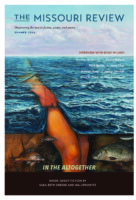
In the Altogether
The history of nudity in art and literature shows a far wider variety of purposes than merely the erotic. “In the altogether,” one of the genteel phrases first used to describe nude models around art studios in the 1890s, unintentionally suggests that range of meanings. The Venus figurines of the Upper Paleolithic Period—given their wide hips and exaggerated breasts and abdomens—were probably encouragements to fertility and abundance. Nudity in Greek, Roman, and Renaissance art was impelled by fascination with human power or preeminence. Michaelangelo’s seventeen-foot-tall statue of a nude David, with only his tree stump and sling casually held over his left shoulder, was meant to show the surprising strength and courage of Florence, a relatively small city-state surrounded by larger ones.
In both the Old and New Testaments of the Bible, nakedness either had to do with poverty, generosity, or the assumption of roles. In one of the two versions of the creation myth in Genesis, Adam and Eve only grow self-conscious and ashamed of their bodies when they disobey God, are banished from the Garden of Eden, and assume the roles of mortality and sin. Saul was commanded by God to preach naked for three years in Egypt to show the Egyptians that they would lose everything. When clothing was shared or given in the New Testament, it was to offer kindness and welcoming. Organized Judaism and early and Medieval Christianity condemned nudity as much because of the connection of nakedness to paganism and pagan idols as any issue of sexiness or sinful eroticism. In early Greek literature, specifically the Iliad, being stripped naked on the battlefield inevitably represented defeat, shame, and death. Western literature has gone through phases of suppression regarding the nude human body—for example, during the highly regulated period of British Elizabethan drama, when women weren’t allowed on stage, or the period before and after 1900. But as is the case with all forms of human suppression of the “altogether” of human life, it has a way of finding its way back into the story. Kate Chopin’s The Awakening describes the protagonist Edna Pontellier, who loves someone other than her husband, and who yearns for independence and sexual freedom. Her eventual suicide by walking naked into the ocean testifies to that yearning for control over her own body.
The nakedness in the stories in this issue is elemental—an essential condition of all bodies, including their vulnerability to change and decay.
If you are a student, faculty member, or staff member at an institution whose library subscribes to Project Muse, you can read this piece and the full archives of the Missouri Review for free. Check this list to see if your library is a Project Muse subscriber.
Want to read more?
Subscribe TodaySEE THE ISSUE
SUGGESTED CONTENT
Foreword
Oct 07 2026
Searching for Life
Searching for Life The writers in this issues find authenticity in ways that remind me of Stoic or existential thought. They speak of acting on one’s own, finding meaning… read more
Interviews
Oct 07 2026
A Conversation with Sigrid Nunez
Sigrid Nunez has published nine novels, including A Feather on the Breath of God, The Friend, What Are You Going Through, and, most recently, The Vulnerables. Her first collection of… read more
Reviews
Oct 07 2026
The Human Future: From Symbiosis to Transcendence
The Human Future: From Symbiosis to Transcendence Bacteria to AI by N. Katherine Hayles. University of Chicago Press, 2025, 304 pp., $27.50 (paperback). Alien Earths by Lisa Kaltenegger.… read more