
Poem of the Week | April 13, 2026
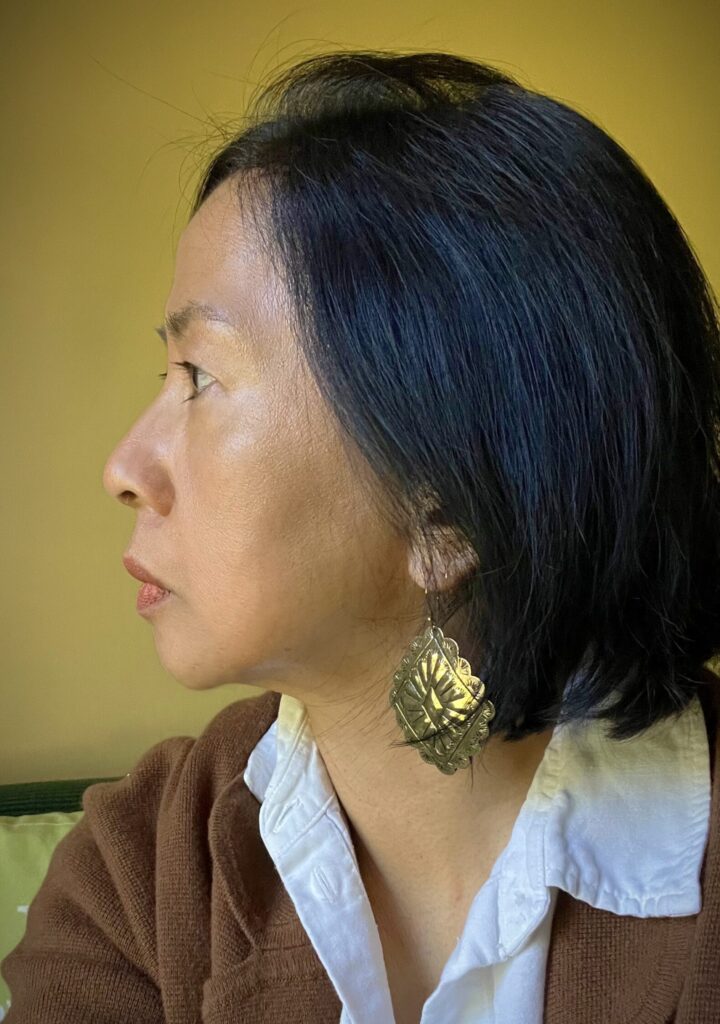
“Short History of Medicine, with Whale Hotel” by Luisa A. Igloria
Luisa A. Igloria was a 2025 poetry finalist for The Missouri Review’s Editors’ Prize Contest. She is the author of Caulbearer (Immigrant Writing Series Prize, Black Lawrence Press, 2024), Maps for Migrants and Ghosts (co-winner, 2019 Crab Orchard Open Poetry Prize), The Buddha Wonders if She is Having a Mid-Life Crisis (2018), twelve other books, and four chapbooks. She is lead editor of The Nature of Our Times: Poems on America’s Lands, Waters, Wildlife, and Other Natural Wonders (Paloma Press, 2025), along with coeditors Aileen Cassinetto and David Hassler; and lead editor of Dear Human at the Edge of Time: Poems on Climate Change in the U.S. (Paloma Press, 2023) along with coeditors Aileen Cassinetto and Jeremy S. Hoffman. Originally from Baguio City, she makes her home in Norfolk, Virginia, where she is the Louis I. Jaffe and University Professor of English and Creative Writing at Old Dominion University’s MFA Creative Writing Program. She also leads workshops for and is a member of the board of The Muse Writers Center in Norfolk. Luisa is the twentieth poet laureate of the Commonwealth of Virginia (2020–2022). During her term, the Academy of American Poets awarded her a 2021 Poet Laureate Fellowship.
“Short History of Medicine, with Whale Hotel” by Luisa A. Igloria is our Poem of the Week.
***
Short History of Medicine, with Whale Hotel
Even the bodies of gods needed
tending—their wounds after lightning
strikes or war, their cursed organs
shredded night after night then made
whole in the morning. But they had some
unfair advantages. Blood from the right
side of a Gorgon to bring back the dead.
Ichor in their veins, nectar and bread
of ambrosia served up by doves whenever
they sat to eat. We, on the other hand,
must submit to the eternal probing
of healers just as mortal and flawed
as we are. They cupped our blood
with leeches then with lancets, numbed
our flesh before any opening could become
a window into the interior. How much more
do they know about the mysteries of blood,
marrow, bone? We have gleaming hospitals,
antihistamines, radiation and ion beam
therapies; vaccines for measles and flu
but not yet the common cold. Not so long
ago, in 1896, rheumatism sufferers
were rowed out to wherever a whale
had died. Whalers cut out narrow
plots in the carcass and patients lay
for two hours in a bath of exposed
blubber. It was believed this moist
poultice enveloping the entire body
would pull out all its inflammations.
***
Author’s Note
As a child I was sickly. I was asthmatic, had food allergies to chicken and eggs, tomatoes and shellfish, had nosebleeds practically every day at school until third grade. Thankfully I outgrew these conditions when I hit my teens. With illnesses in the family, this past year I’ve felt again a sharp sense of what it means to live in a body, to be fragile and vulnerable. At the height of the COVID-19 pandemic, we compared what we were going through to other episodes of widespread contagion in history like the bubonic plague or the Spanish flu. For all the many advances in our science, our knowledge is still vastly inadequate—which in part is the subject of this poem. I remembered some of the home remedies my mothers resorted to when I was sick in childhood. To diagnose the cause, they tossed a few rice grains into a bowl of water. If the water turned cloudy, the condition was caused by some unhappy ancestor spirit or someone wishing me harm. If it was clear, it was a garden variety kind of ailment that would respond to a pharmacy prescription. But for good measure, they’d pound cloves of garlic and smear the paste in the hollows of my elbows and the backs of my knees, then wrap me tightly in blankets. When my fever broke, they bathed me in water infused with fragrant eucalyptus leaves and cinnamon bark. Writing my poem, I was curious to find more information on such cures and stumbled on a March 1896 article originally published in the Australian Pall Mall Gazette on “whale cures” involving rheumatism sufferers sitting in the decomposing blubber of a dead whale. Patients waiting for their turn would stay at “whale hotels.”
SEE THE ISSUE
SUGGESTED CONTENT

Poem of the Week
Jun 22 2026
“Schadenfreude” by Dion O’Reilly
Dion O’Reilly’s books include Limerence, finalist for The Floating Bridge John Pierce Competition for Washington State Poets; Sadness of the Apex Predator (Cornerstone Press 2024), and Ghost Dogs (Terrapin 2020). Her work appears in Rattle, New Ohio… read more

Poem of the Week
Jun 15 2026
“Exodus” by Ryan Caidic
Ryan Caidic is a Filipino poet and advertising creative. Born and raised in the Philippines, he later moved to Germany and now lives in Denmark. His poetry has appeared in… read more

Poem of the Week
Jun 08 2026
“Pretty” by Donald Platt
Donald Platt’s ninth book of poetry, Tender Voyeur, was published by Grid Books in 2025. His eighth book, Swansdown, won the 2022 Off the Grid Poetry Prize. He is a… read more