
Blast | December 18, 2025
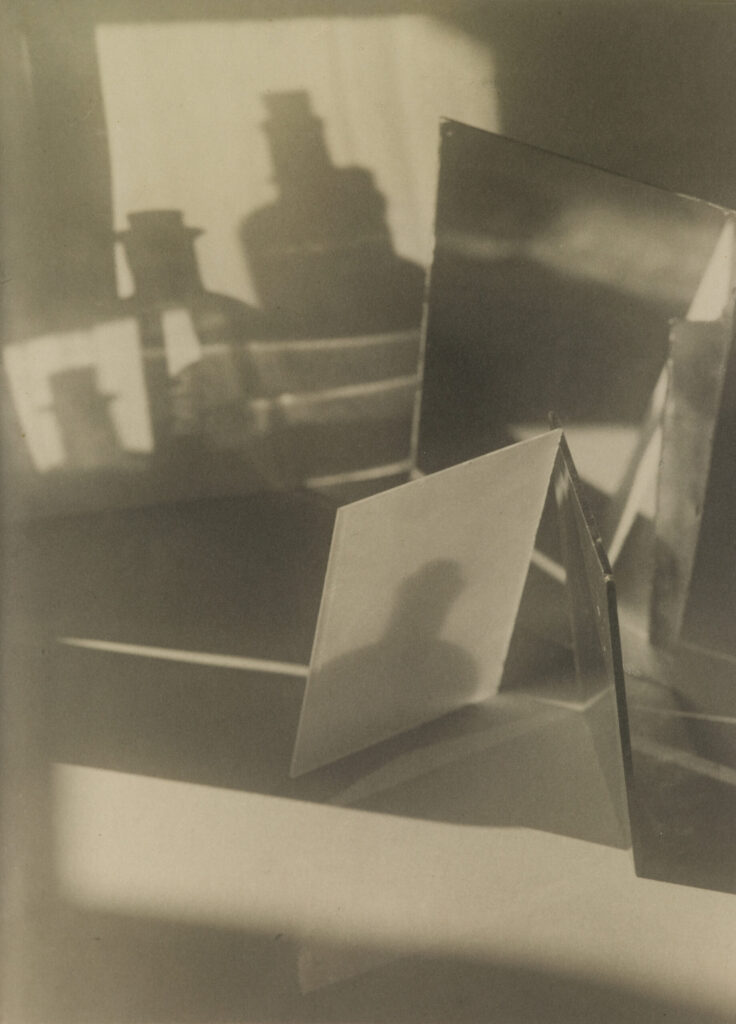
“Once Is Never” by Michael Pikna
In Michael Pikna’s story “Once Is Never,” an elderly Czech couple looks back on their lives, remembering both joys and unspeakable suffering. As Marek and Tereza move toward the next realm, each with their separate wishes, they ponder questions of finality, meaning, and eternal return.
BLAST, TMR’s online-only prose anthology, features prose too vibrant to be confined between the covers of a print journal.
***
Once Is Never
He has taken to narrating his life in moments that seem to require it. Sometimes under his breath and other times loudly enough for someone to hear. Call them abstracts, excerpts, ruminations. Epitaphs?—possibly. He tries not to do this in the company of others, but he has been letting his guard down more and more, especially when he is tired, and he is always tired now. His oldest son calls them CliffsNotes on his life. It drives Tereza crazy, seeing him move his lips when he thinks he’s by himself. Marek, what are you doing? she will say. You look like a crazy person. He can’t say he disagrees. And to prove her point now, although she is in the house and cannot hear him, he says, Here I am, a one-eyed Czech expatriate in his eighty-ninth year, sitting out back under a red oak on a nice spring afternoon, sipping Hammerhead and reading a Czech novel. As the words leave his lips, he is lighter, as if the facts they contain, as true as they may be, are simply ballast.
But the novel, beginning as it does with a deliberation on the concept of eternal return, weighs him down again with the agitation it provokes. The idea that after we die, we live our lives over again, exactly as they occurred. An endless loop. What a horrible notion, one that not even the fine single malt whiskey can offset. Yes, there were some golden moments in his life, mostly having to do with Tereza and their sons. Blessings, to be sure. But then there is the war to consider, the bloodshed in Banská Bystrica, his capture and confinement in Mauthausen, the torture. Wounds that bled backward and forward in time, tainting everything in his life that was and would be. His great-grandson, only five and as vigilant and skittish as a shell-shocked soldier—how could he not have passed on to him something of that ugliness?
No, once is more than enough, thank you very much. Even if he never again sees Tereza in the Royal Court Tavern in Hořice all those years ago, she an underage barmaid and he a seventeen-year-old self-proclaimed partisan fighter, as yet unbloodied, spoiling for war and a beer. The feeling in his chest as she smiled at him when he walked in, as if she had already met him and was pleased with the recurrence. Even if he never gets to hold his newborn sons in his arms again, hear another symphony, read another masterpiece, sip another single malt. Even so, let once be the last time, for God’s sake. Hasn’t he returned to Mauthausen many times already, if only in his mind? Each time he looks in the mirror and sees his glass eye, its lid drooped with weariness, he is reminded of it. He never wanted the blasted thing; it was more for Tereza and his sons. An eyepatch, although just as capable of transporting him back there, would at least be more honest. The glass eye says, He’s fixed now, all better. But he will never be fixed, a fact of considerable weight.
Leave it to the hubris of philosophizing writers to spoil a perfectly good afternoon. He takes a consoling sip of whiskey, then removes his lying eye and exiles it to the small cocktail table next to him, covering it with the book for good measure (let the pretend eye read that nonsense). Around him, the garden and the flowers and the trees are flourishing while he is diminishing rapidly, a fact more burdensome than he previously allowed. Over the past few weeks, he attributed the heaviness instead to the by-products of a life lived, the accretion of debt and responsibility, of choices made, indignities suffered. It bothered him so much, he reacted like a snowbound man in a hypothermic crisis, casting off everything that had kept him warm and alive. He boxed up most of his books and had them delivered to the local library. He felt lighter, so he kept at it. He threw his Czechoslovak war-cross medal—the smallest object but heavy with irony—in the trash when Tereza wasn’t looking. He bubble-wrapped a stack of his albums—Dvořák, Janáček, Smetana—and mailed them to his second cousin in Colorado. Most of his clothes he gave to Goodwill.
The uncluttered space loosened the band around his chest, let him breathe easier. When Tereza caught him only days ago trying to shred their marriage certificate, she put her foot down. No, she said, plucking it from his hand, enough. He looked up at her and saw the burden his life had imposed on her, saw in her eyes his heaviness bearing her down. He could shred everything in the house and it would not change a thing. Still, he persisted. Sweetheart, we’re married now for more than half a century. A lifetime. We don’t need a piece of paper to tell us that. All the proof we need lives right here, don’t you think? He placed a knobby hand over his heart. She narrowed her eyes at him. I think, she said, holding the marriage certificate close, that you are full of shit, old man. She walked away with it, no doubt wondering where she could hide it.
He takes another sip of his whiskey, laughs at his foolishness, and shivers in spite of the warmth of the afternoon. I’m an old man, he says. And no matter how far I have come, that awful place is looking to finish the job it started. How long do I have to live to say I survived it? As he looks around, the light is sepia-toned, and everything he sees exists in the two dimensions his one good eye allows. He is nothing more than an old photograph to be hung on the wall, an artifact.
He looks up into the canopy of branches and says, I lived while men around me, better men than me, died, and this fact, the heaviest of all, is liberated. He is buoyant, insubstantial; as if a weighted blanket, like the one used to calm his great-grandson, has been thrown off. He closes his sighted eye, the one that has seen enough, the light candles to a warm orange, and he takes his last breath, gathering the fragment of life that is left, bringing it forward to a threshold. As Marek crosses it, his very last thought is this: I have been here before.
***
Tereza does not mean to intrude on Marek, but she is worried about him. When she steps through the French doors leading into the back, she wants to show him how well she is walking without the cane her sons have recently badgered her into using and to wheedle him in for dinner (he hasn’t been eating much lately), but when she comes close and sees his head slumped forward . . . Oh Marek. Today is the day? She checks for a pulse, but he is gone. She knew it was coming and thought she was prepared. How stupid of me. The tumbler in his left hand still contains a finger of whiskey—not even death could make him spill it. She sets the tumbler next to his book on the folding cocktail table, then kisses the top of his still warm bald head. Without thinking about it, she sits in the grass, more of a barely controlled fall on her backside; she will not be able to get up again without help from Denise, who is not scheduled to come again until morning. She will likely be dead by then. The thought calms her. The pain in her knees keeps her company while she weeps quietly.
The old tree tries to soothe her with the shade it throws. The air smells like lilac; no seepage from the septic tank today, thank goodness. Aside from the occasional scolding of blue jays and the whine of insects, it is quiet. The kind of quiet she enjoys when there is family around, someone to lean into and remark: Isn’t it nice out here in the country? You can hear yourself think. But she is not sure she wants to be alone with her thoughts. The breeze toying with strands of hair that escaped her chignon feels improper somehow, so she lets her hair down. Marek always liked her hair, did not mind the bottled color. Her sister, whose arthritis inflamed more than her joints, said she was foolish for dyeing her hair at her age.
It is not a bad place to die. Beautiful, if a little wild, the blackberry and gooseberry bushes running riot, the apple trees in need of a trim, the grass long enough to wave in the breeze. If only she and Marek could be left to the anarchy of nature, in time they would be shrouded in green burial garments and folded gently into the ground. She will sit here and wait for her life to wind down and stop, as it must, while the pain in her hips and back sing a dirge. Marek would do the same for her.
She finds that time passes with cruel indifference, whether one is waiting to die or not. In this way, the afternoon lapses into twilight, with bats in tortuous pursuit of mosquitos, fireflies winking, crickets fiddling for a mate. Eventually the air cools, and stars dangle from the lowest branches. To pass the time, she talks to Marek in Czech. The words sound almost foreign to her. She has been in America for so long that at some point, she can’t remember when, she started thinking and dreaming in English, a language she considered mastered when she could make the th sound and her boys couldn’t mock her anymore for her pronunciation of words like refrigerator and aluminum. It was not so easy for Marek, who held on to his accent like a souvenir.
You were insufferable when I met you, she tells him now. That night at the tavern in Hořice, thinking I would spend the night with you because you were going to war and might die. And yet I did, didn’t I? Her laugh is a croaking sound that startles the concert of crickets into a brief caesura. She slides a cigarette out of a crinkled pack and lights it. I know you don’t like me smoking, but you had your whiskey, so please don’t begrudge me a last cigarette. She is considerate, blowing the smoke away from him. Do you remember, dear? I was smoking when you found me after the war, working the streets in Wenceslas Square. You never judged me for how I survived, not a word, but oh the looks you gave me after that whenever you caught me smoking. She shakes her head. You were so thin when I saw you walking toward me, I didn’t recognize you. Your clothes had no shape, more a walking clothes hanger than a man. I never told you, but you frightened me. I could almost see through you. And that eye patch, my God.
She picks up the novel, one that she read years ago, and underneath it she finds his glass eye. Sometimes he removed it when he was reading, telling her it would keep a lookout while he was otherwise occupied. Remember, sweetheart, when our sons were little and they asked how you lost your eye? You told them wild stories, each one more ridiculous than the next. You sneezed too hard and it popped out. One eye couldn’t see eye to eye with the other one, and it left in a huff. You opened one eye during the closing prayer in church, and God snatched it from your head. To me, you would say only that you made an unwise remark to an unscrupulous man in an unimaginable place. I’d like to tell you that I wish you had told me more, but I’m glad you didn’t. I wanted to forget as much as you did. Thank you for that.
She fans the pages of the novel, remembering that she shares a name with one of the characters and that the narrator speaks of eternal return, a concept she found weak-willed in its refusal to accept that life ends. But now the thought of their lives ending forever strikes her as absurd. Her life and Marek’s—over, as if they never occurred. The immensity of what they experienced and felt, ground down into nothingness by the weight and relentlessness of time.
Once is never was the phrase the narrator used.
To quell the thought, she drinks what is left of the whiskey. Despite the sleek notes of citrus and red currants, it goes down like shards of glass, and she wishes she had tossed it on the ground in front of her as a christening of their next journey. One that requires her death, yet her body thinks it knows better. Since the war, it has done what it wanted, as if she had not been living in it.
She lies on her side, hoping the chill will seep into her bones and stop her heart, but instead she falls asleep, and when she wakes, she is wet with dew, shivering, and in so much pain that she can barely move. To make matters worse, she has to pee. She will be damned if she is going to let someone find her in her own mess, so she rolls onto her stomach, the way Denise taught her, then walks her elbows back a few inches at a time until she can sit. From there she grabs Marek’s knees to steady herself and, after a few tries, pulls herself up. She stands behind him, blinking away cobwebs, her hands on his shoulders. You will have to start without me, sweetheart. Marek’s book lies on the cocktail table, his glass eye a placeholder. The thought occurs to her that, no matter how many times he lives his life, he will never finish that book.
Around her, the birds are working themselves up about the light haloing the horizon, as if it is the first dawn they ever witnessed. She touches Marek’s cold cheek, then turns and walks back to the house, her steps slow and painstaking.
There are phone calls to make, coffee for Denise, who likes it strong and sweet. But for now, sitting quietly in her kitchen, there is the irreconcilable current of life, her old heart punting along with it. There are her hands on the table, veined and dappled, the simple gold wedding band adrift between swollen knuckles, its circularity a comfort: sometime soon—she is not sure how eternal timekeeping works—Marek will walk into the Royal Court Tavern, the same princely smile on his peasant face, and start it all again.
***
 Michael Pikna lives in Colorado with his wife and an unruly schnauzer. His stories have appeared in Water~Stone Review, Still Point Arts Quarterly, Hobart, The Briar Cliff Review, and others.
SEE THE ISSUE
SUGGESTED CONTENT
Blast
Nov 05 2026
“Talking with My Mother at Midlife” by Andrew Cohen
A meditation on the crossroad that occurs at the cusp of middle and old age, “Talking with My Mother at Midlife” by Andrew Cohen approaches the grounding effect familial love… read more
Blast
Oct 22 2026
“Buckle Up” by Tyler Ayres
“Buckle Up,” is a story about two relationships of well-intentioned dysfunction and how they compare in a spontaneous moment. TMR’s online-only biweekly series, BLAST features prose too vibrant to be… read more
Blast
Oct 08 2026
“Starting Over” by Joseph Hamaker
In Joseph Hamaker’s short story, set in the busy years after World War II, the young son of a father who can do anything witnesses sudden devastation. Something can be… read more