
“Yeki Bood Yeki Nabood” by Jaz Sufi
Jaz Sufi (she/hers) is a queer Iranian American poet and arts educator. Her work has been published or is upcoming in Best New Poets, Best of the Net, AGNI, Black Warrior Review, Muzzle, and elsewhere. Her debut chapbook, Catalog of Shadows, is forthcoming with Game Over Books. She is a National Poetry Slam finalist and has received fellowships from Kundiman, the Watering Hole, and New York University, where she received her MFA. She is the current poet laureate of San Ramon on occupied Ohlone land, where she lives with her dog, Apollo.
“Yeki Bood Yeki Nabood” by Jaz Sufi is our Poem of the Week.
***
Yeki Bood Yeki Nabood
In my youth, I lodged complaints
with the wrong authorities.
When my classmates chased me
with sticks held high as God,
I spoke with the sticks instead,
sure they would see my side
and turn against the hands
that held them. True, they flew
like the branches had burst
into birds, but the bruises
they left took the shape
of bruises I’d borne before.
Some from other boys; some
from myself, my own biggest bully.
This was back when my brain
had first started its buzzing,
honey to be fracked from its folds
and my small body a swarm.
I knew something was wrong,
and so, it seemed,
did everyone else. Cruelty was simply
the universe revising me into my place.
By the time I got to love, I was
a slammed door with a broken lock,
hanging open on my hinges
for anyone to enter. And then . . .
***
Author’s Note
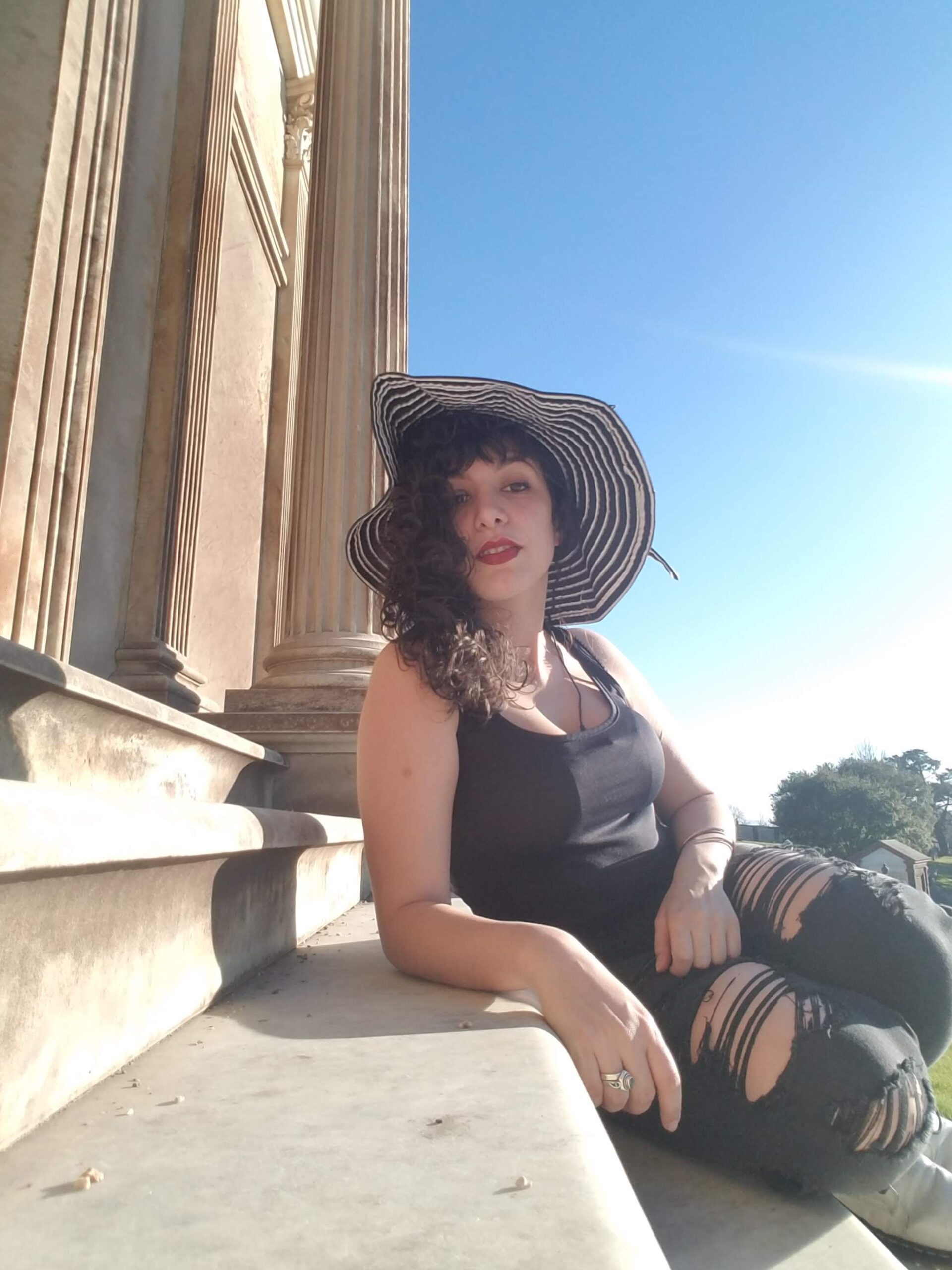
I wrote this poem as part of a greater project, a chapbook titled Catalog of Shadows, focused on intimate partner violence and codependence. Considering the emotional logic and chronology of the chapbook led me to consider the emotional logic and chronology of my relationship with abuse. As an adult, I don’t think often about having been bullied throughout my childhood, and so it was a surprise to realize that my abuse later in life was not, in fact, a surprise, that it echoed dynamics I had encountered before.
“Mystery Hill” by Sonya Schneider
Sonya Schneider’s poems can be found or are forthcoming in American Poetry Journal, Chicago Quarterly Review, The Penn Review, Potomac Review, Raleigh Review, Rattle, Salamander, Tar River Poetry, and elsewhere. Her work has been nominated for a Pushcart Prize, and she’s been a finalist for the Laux & Millar Poetry Prize and twice for the Patricia Cleary Miller Award for Poetry. A graduate of Stanford University and Pacific University’s MFA in poetry, she lives with her husband and daughters in Seattle, Washington.
“Mystery Hill” by Sonya Schneider is our Poem of the Week.
***
Mystery Hill
Are we going uphill or downhill? Mom asks.
Rooster Rock towers to our right, all jagged-toothed
basalt, hairy with pines. To our left, the Columbia River
portends her Gorge. We’re going downhill, I answer.
It seems obvious enough, though she’s clearly
up to something. My uncle, her younger brother,
opens the door to his apartment,
his corkscrew curls, now completely grey,
are weighed down with shower water.
The look in his eyes is one-third love,
two-thirds confusion. He asks, Have you been here before?
Below, on the river, colorful kiteboards whip
in the wind. Three times before, Mom answers.
We eat chicken sandwiches under a portico
wound by wisteria, flowers long spent,
dark green pods rocking gently above.
This is a good sandwich! he says,
then, What is it? as if he hasn’t heard
the answer before. He remembers his three wives,
scuba diving in the Red Sea, the waiter,
Edsel Fong, whom he befriended at Sam Wo’s,
but he can’t remember what sandwich he’s eating.
Later, in the small hospital room, a kind,
long-fingered doctor explains the diagnosis
is dementia, Alzheimer’s. My uncle hugs
his arms and asks about ways he might improve.
He holds his hand like an airplane taking off
to show the rise he means, but the doctor
slopes her hand like a plane aiming
for a crash landing, calls it a progressive disease.
Progression seems a funny way of putting it,
he laughs, though his eyes shine with tears.
We help him write reminders on butcher paper:
renew car registration, check credit cards
for hardship programs, buy napkins.
When he waves goodbye, he shouts,
Look at those beautiful clouds!
As we pass Rooster Rock on our left,
Mom asks, So, are we going uphill or downhill?
I should say uphill—abiding by the law of physics—
but my sense of gravity has upended. When I shrug,
she smiles. Good, I want you to be as perplexed as I am.
***
Author’s Note
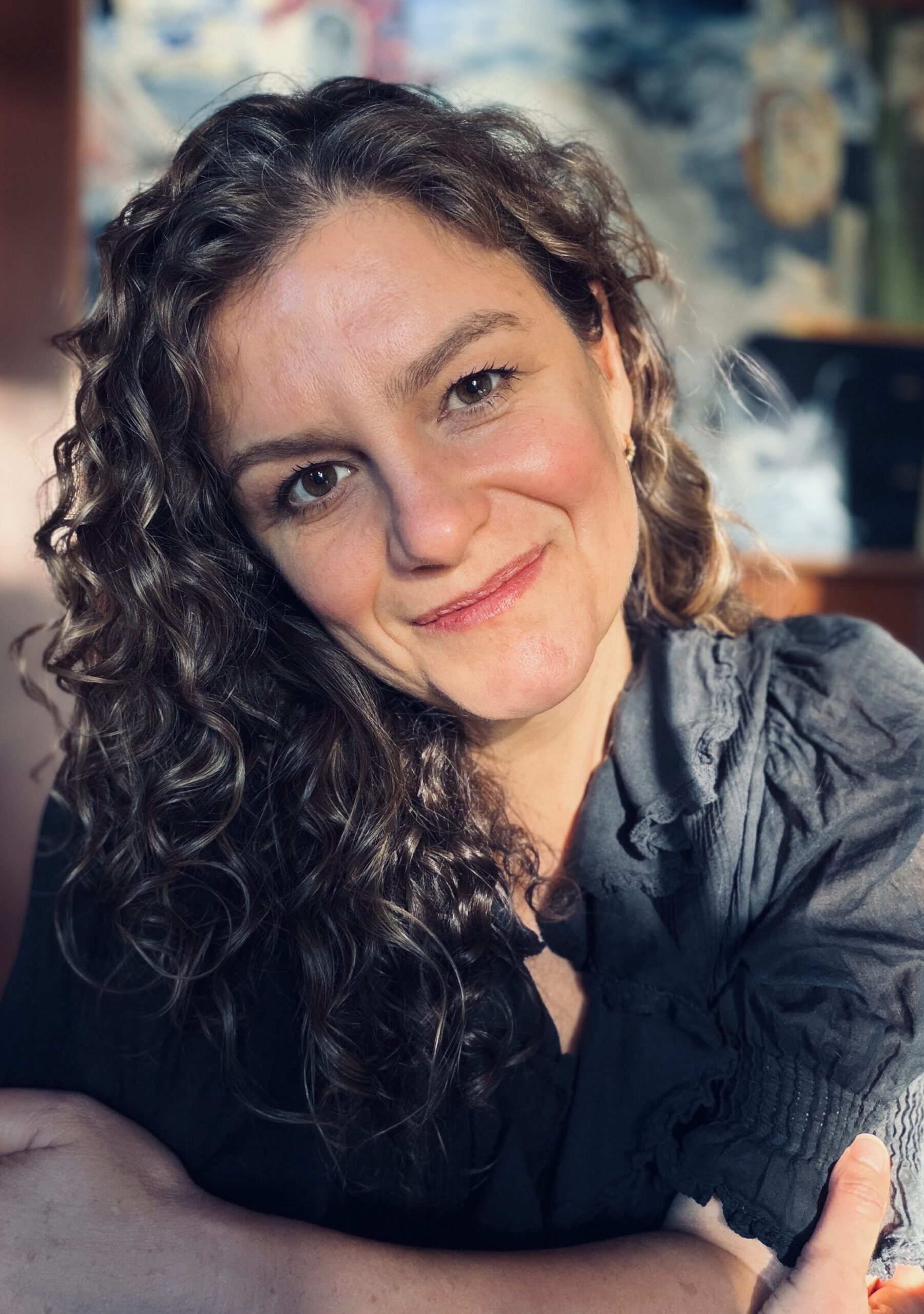 A mystery hill, also known as a gravity hill, is an optical illusion where a slight downhill slope appears to be an uphill incline. I didn’t know these existed until a recent trip my mother and I took to visit my uncle in Hood River, Oregon. She’d driven this road with my father before, and they’d argued over which direction they’d been going. On our drive—which was scenically stunning—Mom kept asking me, “Up or down?” At first, I felt certain of my answer, but the farther we traveled, the more uncertain I became. Not until I got home and began writing this poem did I realize the parallels of this phenomenon with dementia, and with existence itself.
I’ve always been close to my uncle. He’s led a fascinating life, including running a nonprofit for peace in the Middle East and writing and starring in a one-man show about Abraham Lincoln. Twenty-two years ago, he officiated my wedding (he had my husband and me laughing and crying under the chuppah). Learning about his Alzheimer’s diagnosis and seeing its effects firsthand have been heartbreaking. But there is also so much of him that remains—his brilliant humor, curiosity, and love of nature. I think of the mystery of it every day.
“The Kidnapped Child” by Nicholas Samaras
“The Kidnapped Child” by Nicholas Samaras is our Poem of the Week.
***
The Kidnapped Child
What do you really want to know?
I came from a dark place called
before-memory-begins.
No one ever called me by my real name.
I never answered to the name they called me.
The only recourse was to walk on the rules:
you don’t ever talk about the torture.
There will always be worse torture—
a distant hole where the heart goes,
to which no calling sound reaches down—
not this knowledge,
not any beforelife.
What do you want to know?
What good will it do?
The first thing you learn
is that nobody believes you.
***
 Nicholas Samaras is from Patmos, Greece (the “Island of the Apocalypse”), and at the time of the Greek Junta military dictatorship (“Coup of the Generals”) was brought in exile to be raised further in America. He’s lived in Greece, England, Wales, Belgium, Switzerland, Italy, Austria, Germany, Yugoslavia, Jerusalem, thirteen states in America, and he writes from a place of permanent exile. His first book, Hands of the Saddlemaker, won the Yale Series of Younger Poets Award. His current book is American Psalm, World Psalm (Ashland Poetry Press, 2014). He is completing a new manuscript of poetry and a memoir of his childhood years lived underground.
“Blue Mouths: An Ending” by Leila Farjami
Leila Farjami was a 2025 poetry finalist for The Missouri Review Editors’ Prize. She is an Iranian American poet and psychotherapist. Her debut poetry collection, Daughter of Salt, an Editor’s Selection at Trio House Press, is forthcoming in July 2026. She has received The Iowa Review Award in Poetry, The Cincinnati Review’s Schiff Award, and a PEN America Emerging Voices Fellowship, and was runner-up for the Auburn Witness Poetry Prize. She has been a finalist for prizes from The Missouri Review, Noemi Press, Perugia Press, and Southern Indiana Review. Her poems appear or are forthcoming in Ploughshares, The Iowa Review, Pleiades, Copper Nickel, AGNI, and Southeast Review, among many others. She lives in Los Angeles.
“Blue Mouths: An Ending” by Leila Farjami is our Poem of the Week.
***
Blue Mouths: An Ending
An old photo
of my mother—
holding an apple
and a knife.
A sixty-two-year-old
object: Iran-made
steel blade,
walnut hilt.
Apples always
find her hands.
Some picked
half-bitten,
before I knew
what half-bitten meant—
curves long gone,
still breathing.
She peels and slices
without end.
Each bite becomes
my body:
my heart, my spine.
Water divides
in our bellies: flesh
of nebula and salt.
Tomorrow, she dies
in the next room—
a drunken ghost
wanders her mouth,
head propped,
back powdered for sores.
Look—the moon
flashes before it falls.
The sea drinks us
in a single gulp.
***
Author’s Note
Expecting the imminent loss of my mother, I wrote this poem as the final piece in a series titled “Blue Mouths.” It is both homage and requiem for a woman who gave birth to me not once but twice. An accidentally discovered photograph in a forgotten stack of old images returned me to her youth in 1950s Iran, an era that she and many others remembered as a moment of promise toward modernization and establishment of women’s rights, before the 1979 revolution extinguished those hopes under an anti-democratic, deeply misogynistic regime. Now, as we prepare for end-of-life measures, this poem is a daughter’s meditation on the moment where birth and death are equal, mirrored thresholds in the same cycle, holding grief and celebration at once.
“Live Fast Die Young Bad Girls Do It Well” by Kirun Kapur
Kirun Kapur was a 2025 finalist for The Missouri Review’s Editors’ Prize in poetry. She grew up in Hawaii and now lives along the banks of the Merrimack River. She is the author of three books of poetry: Women in the Waiting Room (Black Lawrence Press, 2020), a finalist for the National Poetry Series; Visiting Indira Gandhi’s Palmist (Elixir Press, 2015), which won the Arts & Letters Rumi Prize and the Antivenom Poetry Award; and the chapbook All the Rivers in Paradise (UChicago Arts, 2022). She serves as editor at the Beloit Poetry Journal and teaches at Amherst College, where she directs the creative writing program.
“Live Fast Die Young Bad Girls Do It Well” by Kirun Kapur is our Poem of the Week.
Live Fast Die Young Bad Girls Do It Well
When the last days come, may I be driving
too fast down the Pali Highway, swimming the bay
in the dark, laughing and swallowing water.
May my wet hair fly out from the back of a motorcycle—
no need now for a helmet. May I wind my way up Tantalus
to shout curses and blessings over the city
where I was young and happy, young and harmed.
Now, I’m armed with stars miles above.
May I lie in a bed of uncapped pens, books
with wrecked spines, my tea-stained drafts—
all lost in the sheets when friends climb in beside me
to read. In my last days, I want to take off my shoes
in the middle of dancing, carry armfuls of peonies
in from the garden, walk the neighborhood
after a dinner, admiring the rectangles
of lit up lives. In my last days, I want to remember
how almost everything was better in the dark
and at higher speeds, how I never regretted
doing anything naked, flashing my middle finger,
taking long unnecessary trips in cars, wrapping
my arms around complete strangers, going
up to the edge, then one step too far.
***
Author’s Note
This is a poem about the wildness, joy, and pleasure that is sometimes unleashed in the wake of great fear or sorrow. When you know—really know in your bones—that your time is short, that you don’t have any more days to waste, what should you do? You might give the world the bird. You might dance in random places. Or lie in bed with books and beloveds. Or speed bareheaded through the night. If you could choose, what would you do with your last glorious bursts of strength and energy? It’s also just a poem inspired by a song.
“Color Theory” by Jarrett Moseley
Jarrett Moseley was a finalist for poetry in The Missouri Review’s 2025 Editors’ Prize. He is a bisexual poet living in Miami and the author of the chapbook Gratitude List (Bull City Press, 2024). His manuscript, Rehumanization Litany, was chosen by Major Jackson as an honorable mention for the Vanderbilt University Literary Prize and earned an honorable mention for the Miami Book Fair Emerging Writer fellowship. His poems have won awards from the Baltimore Review and the Academy of American Poets and have been longlisted for the National Poetry Competition. Individual poems have been published in Ploughshares, AGNI, and elsewhere.
“Color Theory” by Jarrett Moseley is our Poem of the Week.
Color Theory
All the mangos
are dying on the branch.
Hannah calls
too late to say
she met a horticulturist
who had a fix.
The green fruit rots.
Your face was fading
from my memory
until I saw you again
last week.
Graveyard opened
to the returning Florida heat.
A bookstore burning
orange in the spring afternoon
light.
All year I think about color
as a choice the mind makes
to make sense of absence.
Like the bright red blood
I lose
on the sidewalk
when attacked by a dog
a week after we part.
I practice loss.
I read a book that begins
all the images will fade
and become afraid
of walking beneath palm trees.
You do not call
and offer me a brand-new calendar
to tack up on my wall.
On the document
I send to a friend
every comment I leave
autocorrects to
I resolve to love you
like collecting . . .
and I have no idea why
or how to erase it.
Did you hold me
even after you couldn’t anymore?
Even after you knew
you couldn’t anymore?
I collect colors
in your absence:
blue of the Miami sky
green of dogshit
red-brown of dying
blossoms
on the mango tree.
Over the phone,
my mother:
you knew it would hurt.
What’s hurt?
The beautiful olive door
downstreet painted
a piss-bright baby blue?
The humidity gathering
like desire
to chip away
at the new paint?
I don’t want to make you
my enemy
just to stop wanting
to make you my enemy.
And when I see you
you tell me
you were bit by a dog too
and the same breed
and the same week
and I love you.
We have lost blood
without calling.
All the colors will fade.
Turn off the sun.
I find myself
speaking to no one, writing
a letter to no one.
And the mangos
are not dying
because the mangos
never grew.
And Hannah says
cut away the branches
cut away the leaves
cut away anything
that looks dead.
I have no argument
but to write
the returning heat
and read it as
the returning heart
and lie down on the grass.
And lie down on the grass.
And speak to you
through a purple afternoon.
Purple from everything
all at once
holding its breath.
Author’s Note
When you experience a great loss, everything becomes imbued with its color. You try to ground yourself in the physical world only to find that the physical world has become charged with metaphor. The mango tree that won’t blossom is as personal as a dog attack. A repainted door takes on the same significance as advice from your mother. Everything points, somehow, back to that greater loss. The same way that “color” is actually just the light an object reflects—in other words, the light it cannot hold—the whole world becomes a mirror reflecting back to you what you no longer have.
“On Paradox” by Mallory Rodenberg
Mallory Rodenberg’s poems have recently appeared in Shō Poetry Journal and The Swannanoa Review. She was the 2025 artist-in-residence for the Robert Lee Blaffer Foundation and the recipient of the 2023 Levis Prize from Friends of Writers. A graduate of the MFA Program for Writers at Warren Wilson College, she lives in Southern Indiana.
“On Paradox” by Mallory Rodenberg is our Poem of the Week.
***
On Paradox
A beast is anything without a choice.
A heart is a beast within the body.
When I was a child and trying to imagine God,
I’d picture Unsolved Mysteries host Robert Stack
stepping out of the shadows in his trench coat to insist,
“Perhaps you can help solve this mystery.”
I decided to stop believing in God the summer I started to drink.
This was the summer I worked at the airport,
making the planes stop, their noses to mine,
by forming an X above my head with reflective wands.
At the time I thought this evidence of personally ordained power,
but really it was just minimum wage.
Just. An adjective that can validate or belittle its noun.
Here is a joke I thought up in a fit of sobriety:
God is not the glove, but the glove box
in which I used to shove
all the things that might get me arrested.
Here is a joke I realized years after it happened:
the night I found my brother dead from a gunshot wound,
I’d been in a musical called And the Winner Is . . .
I played a 1960s beauty queen from outer space.
This means the most devastating thing to ever happen to me
happened to me in blue eye shadow and my hair in a beehive.
It was the first time in my life I thought I could really use a drink.
In the parking lot after a meeting,
Randy says he can see the wind pushing through me
because I have not yet made a fortress of my soul.
I believe him, if only for the VFW hat that says
he has seen some shit which is incomparable to the shit I’ve seen.
I want to say something back, to explain how hard it is
to think any of this is a blessing.
My long-ago acceptance of a for-nothingness,
trading in hope for the promise of whether you like it or not.
No just death, just . . . anyway. Maybe it’s time
to think again of the mystery solving I once believed
God offered me. Maybe not solving but embodying.
Maybe not embodying but laughing.
Laughing at the mystery.
The stupid beast pounding its wants against my chest.
Once, to make sense of things, I tried to read Simone Weil.
I didn’t understand any of it.
Only the part about misers.
How it’s not the misers but the saints
with a void where a heart might be.
***
Author’s Note
Like a lot of poets, and a lot of people who find themselves in need of recovery, I’ve spent my life struggling with the why of the world. No matter how much I read or how much I experience, revelation has always felt just beyond my grasp. The mystery of it seems to be as impenetrable as death, and still, I can’t stop seeking answers. In 2024, I took a poetry workshop with Ben Fama and Chariot Wish. We read Simone Weil’s Gravity and Grace and wrote poems in response. There was so much of Weil I didn’t understand, but her lifelong struggle to articulate the why of things—that, I understood. This poem came to me during that time.
“The dream says I am here to tell you” by Zoë Ryder White
Zoë Ryder White’s first full-length collection, The Visible Field, was published by River River Books in February 2026. A chapbook, Via Post, was a finalist for Tupelo Press’s Snowbound Chapbook Prize and won the Sixth Finch chapbook contest in 2022. HYPERSPACE was the editors’ choice for the Verse Tomaž Šalamun Prize in 2020 and is available from Factory Hollow Press. She coauthored A Study in Spring (Rabbit Catastrophe Press, 2015) and Elsewhere (Sixth Finch Press, 2020) with Nicole Callihan. Her poems have appeared in Tupelo Quarterly, Iterant, Plume, and Threepenny Review, among others. A former elementary school teacher, she edits books for educators about the craft of teaching. She lives in New York’s Hudson Valley with her family.
“The dream says I am here to tell you” by Zoë Ryder White is our Poem of the Week.
The dream says I am here to tell you
The dream says I am here to tell you that bodies
are not what you think. Swelled and ebbed nodes
pocketed in your armpits, palmed at the groin:
lymph is nothing to be ashamed of, the dream says.
Tells how you bled so late you wondered if you were real,
how you weren’t real, and you were, and you aren’t
and you are, how anything that makes you
gasp like that is good for you, how the scars collect,
how you’ll flash them to your friends as their scars
collect, how every call feels free now
so you can go ahead and talk all night.
The dream says the bunions are okay, just accept them.
It doesn’t know why you want to press yourself
into thickets of brambles all the time
but it supports this behavior—mutters something about
becoming one with, something about privacy.
The dream says to buckle up because what’s coming
is going to hurt. It calls you sugar
and ruffles your hair, lays a thumb across your nipple.
The dream has no body, suggests you use
your own thumb. The dream is all body,
keeps you company when you can’t sleep.
Alongside the dream you affix a flower name
to each letter of the alphabet. Why not the body
of an aster, a bluebonnet, a coneflower. A coneflower
suits you fine, with its bold and upright center.
You like to tell the blood technician how good they are
at finding the vein. One quick pinch and you’re
both in the river; you’re swimming.
Author’s Note
This poem is the first in an evolving series of “dream says” poems I started when I was in the midst of some mysterious health issues. The foggy brain that was part of that time made everything feel a little tilted, a little dreamy. I also wasn’t—am not, for now—able to run, an activity that generally makes me feel put together, settles the anxious mind. Somehow having the self jostled off-kilter in these ways, slightly unhoused, invited a different perspective. I like the idea of the dream bossing the body around—there’s something comforting in the dream knowing what the conscious mind can’t articulate, or doesn’t want to know. The dream accepting all of it: panic about aging, shifting mobility and relationship with the body, inevitable loss. The tenderness of truth-telling. I didn’t expect to keep writing these poems after this first one, but I kept wanting to hear what the dream would say, so I’ve continued on.
“Dear Polly,” by Stephanie Choi
Stephanie Choi’s poems appear in Beloit Poetry Journal, Blackbird, Copper Nickel, Electric Literature, New Ohio Review, and elsewhere. Her debut collection, The Lengest Neoi, was selected by Brenda Shaughnessy for the 2023 Iowa Poetry Prize and published in 2024. She is an assistant professor of creative writing at Oklahoma State University.
“Dear Polly,” by Stephanie Choi is our Poem of the Week.
Dear Polly,
A corporation owns your home now. You’d laugh if you knew how much I paid for a seat on the jet boat upriver to your 27 acres. You’d demand the profits you deserve. Without descendants you gave your property to loyal neighbors, and they too without any offspring left this land to be sold. We dock on the white sand beach next to kayaks, rafts, taking a rest. Groups of people recreate where you once grew rhubarb, corn, potato; pass frisbees where you once picked berries. Under your catalpa our river guide repeats the lore of your life as fact. In China she was born Lalu Nathoy, her family sold her for seed during a famine. But you never spoke that name to anyone. You drowned your real name in the Pacific before ever reaching American shores. The nine other white tour participants nod while my cheeks flush apple red, catching their curious glances at me. I am the only Asian woman in this group. I do not correct him. This narrative that grips onto what sounds authentic rather than what is. Just terrible, how could you sell your own daughter, one woman says. In the cabin your worn belongings: coffee grinder and gun, wash pan and pots, eyeglasses and embroidery relics. On display too: a bronze replica of your shoes, which amuse some other visitors whose gleeful chuckle at your tiny feet adds to my discomfort. You planted your grave in your apple orchard. I bow three times with pressed palms. The guide informs me that scientists have identified these still fruiting trees as a lost variety,
a rare breed with no
genetic matches found on
record I take one
Author’s Note
This poem is part of a series of poems I’ve been working on that speak to and through Polly Bemis, a Chinese woman who was trafficked into the United States in 1872 and sold to a Chinese business owner in Warren, Idaho. She eventually earned her freedom and married Charlie Bemis in 1894. They moved to a mining claim on the Salmon River and homesteaded there for the rest of their lives. Polly is well-known throughout Idaho, though there are still myths and lore used to tell her story. Priscilla Wegars’ book Polly Bemis: The Life and Times of a Chinese American Pioneer dispels many of the myths around Polly’s life and gives a comprehensive and incredibly researched account of what we can and can’t know about Polly’s life. In these poems, I hope to navigate the connection I feel to Polly as a Chinese American woman writing in the twenty-first century and expand the dexterity of my own poetic voice.
“Summer Sadness” by Alison Pelegrin
Alison Pelegrin is the recipient of fellowships and grants from the National Endowment for the Arts, the Louisiana Board of Regents, the Foundation for Louisiana, and the Academy of American Poets. Alison’s two most recent poetry collections are Our Lady of Bewilderment (2022) and Waterlines (2016), both with LSU Press. Her work has appeared in The Southern Review, The Missouri Review, and The Best American Poetry 2025. While serving as Louisiana Poet Laureate from 2023 to 2025, she founded the Lifelines Poetry Project, and her poetry outreach in prisons continues to this day. She is the writer-in-residence at Southeastern Louisiana University.
“Summer Sadness” by Alison Pelegrin is our Poem of the Week.
Summer Sadness
No one knows why slugs drown themselves
in beer, but I could make an educated guess.
With small talent it’s hard to perform
great services—Po Chu-I wrote that,
and I can relate. Kids gone, house a mess,
and all my poems are the same—
blah blah minnows in the ditch,
beneath the next blood moon I’ll be older.
At this stage I expected to be stirred up,
on some mission or other. It shames me
to admit that I love hurricanes. No one
comes calling and I can shelter in place
with bottles of wine, my only friends,
and the hummingbird which peekaboos
and maintains possession of lantana gone wild—
a total show-off—about the size and finish
of my uncle’s gold nugget pinkie ring.
An important, toupeed man of the realm
of Gretna he was—name in the papers,
always at some banquet or other,
lost to sadness after a slow demise,
with the white noise of LSU baseball all around.
He’s filed away with my father, who went quick,
in a no-frills mausoleum near which
the ugliest trees of the Westbank keep watch.
Nothing’s the same. My eyes water and I never visit.
Author’s Note
When I lived in Arkansas, I had a traumatic slug experience. Under cover of darkness, these things emerged from nowhere and devoured my double begonias. I knew how to kill them, but because I didn’t have it in me to set out a saucer of beer instead of flowers, all I had on the porch that summer were pots of dirt. By the next year I was back home in Louisiana, where I am continually pestered by cockroaches and mosquitoes, but never slugs. Still, summer uproots sadness in me. I remember Arkansas, or my boys when they were little, fishing in ditches, or my uncle or my dad, and how somber the day turned when we opened the aboveground tomb to make room.