
“Ronin” by Gary Enns
BLAST, TMR’s online-only prose anthology, features prose too vibrant to be confined between the covers of a print journal. In Gary Enns’s story “Ronin,” a divorced bike mechanic and his single neighbor face off over the fate of a stray cat, until one of them makes a surprising move toward reconciliation.
Ronin
Gary Enns
I’ve got this cat, a big orange warrior. Just appeared one night, you know how cats do. Your life can be in ruins, the bike shop you built with your bare hands crashes, your wife cheats on you with your business partner, and they both leave you high and dry. You try to put it all back together, but you can’t. No sense trying to pin an avalanche back up onto a mountain.
But then this cat appears out of the mist in the backyard. Not like a refugee, nothing pitiful, no begging, and it’s not cute at all; it’s dirty and rough looking with droopy, wide-open golden eyes that don’t seem to move. He sits there on the mound of my back yard like a displaced warrior that walked into a new country.
You won’t hear me complaining. I’ve got a job in the bike shop down the road. It’s not my place, but I’m doing what I love. At least I’m not in the oil fields greasing pumpjacks. I’ve got wide windows that let the light in, I build bikes for people, help people fix their flats, get them moving. And I don’t have to worry about all the capital, about the taxes, broken windows, back-stabbing partners. I help people every day, I get paid a check at the end of the month, and I make my mortgage payment.
About the cat: my neighbors hate him. Maybe they’ve got good reason, I’ll admit. Ronin is feral, wild. Never neutered, never will be. He slips like a knife through the darkness, without boundaries. He eats the neighbors’ pet food like it’s tribute. In the witching hour, you can hear him humming away, facing down lesser beasts.
But none of that is my fault. I didn’t seek him out. A few months back, there he was, this big gargoyle of a cat watching me from the shadows.
For weeks we’d just gaze into each other’s eyes, him on the grass mound of my backyard, and me sitting in my chair behind the glass of my sliding door. Around eleven at night, he’d be there, and I’d sit with him, letting him get to know me. Then I started putting out a half can of tuna midway up the mound before he’d arrive. Day after day I put it out, and he’d come and recline there and not budge. He’d be looking at me and then calmly turn his head to his surroundings. He’d never even glance at that tuna, like he was making a clear point of it not being any big thing at all.
And then one day, the wall came down. He sat there on his mound as usual with that can between us, just ignoring it. About ten minutes in, he got up calmly, glided over all nonchalantly, and cleaned out the can.
The threshold had been crossed. Nothing incremental, nothing by degree. It was an all-or-nothing deal for him. After that, I could put that can on the back step, sit right there next to it, and he’d stroll on up. I could reach out and smooth his damp coat, even touch his head at the back of the ears. I’d earned my way in.
***
The neighbors post a nasty online thread, thinking I’m a Luddite and won’t see it. It’s Peggy, my back neighbor, who starts it—she and her adult son, Kevin. She’s sixty-something, always at home puttering about. He’s about thirty-five going on forty, a big guy with a developing middle tire and thinning hair. He pressure-washes people’s cars and driveways for a living. You see him rolling around Bakersfield, pulling a washer trailer behind a clean, copper-colored Chevy with tires shining from Armor All. In the thread, they’re going on and on about this terrible alley cat’s transgressions—their growing dog food bill, the cat spray on the doggy door, her little Yorkie’s scratched retina. Other neighbors are chiming in, saying someone should call animal services. They don’t surprise me. Kick some spurge seeds around, and you’ll get weeds. It’s Peggy and Kevin I hold accountable for starting all this.
I let the conversation roll for a good long time, until finally Peggy mentions that she’s bought a trap. I jump in. Just one sentence: Now I know who to hold responsible when my cat disappears.
After that, crickets—the end of conversation. The next morning, the thread has been taken down.
I trust them as far as a baby can ride a bike.
***
The next day I put up a tiny camera, nestled into the ivy leaves on my back fence and pointed into Peggy’s back yard. You might call this an invasion of privacy, but I call it protecting my rights.
I connect my phone at work and glance at it every so often while assembling a bike. I’m building a carbon-frame Émonda for a rich dude, Dura-Ace components, the best of everything—a ten thousand dollar ride he’ll putter around on down Alfred Harrell Highway with the local amateurs.
I’m watching off and on, and finally Peggy comes out, hobbling with this shiny wire cat trap, the kind with the spring-loaded door and the little trigger step that slams it shut. She sets it down by the garage and puts her Pierre’s food bowl in there on the trigger, that little dog nosing all around it, a white bandage covering one eye. She picks the dog up, and they head inside.
Sure enough, Ronin steps into the frame. I watch as he goes up to the trap and looks inside, calm as usual. Then he walks away, around the side of the house. That cat’s smarter than Peggy and Kevin combined.
Peggy comes out not a moment later, like she’s watched the whole thing from her window, and the little dog runs out right between her legs and into that trap, swear to God. I watch her for ten minutes trying to figure out how to open it up, and I’m dying. Soon Kevin shows up in what looks like an old high school hoodie too small for him and figures it out for her. Then he just stands there like a big kid, shoulders tight, like the kind of person who never returns a hug.
I finish up the Émonda and call the guy to let him know it’s ready for pickup the next day, then I close up shop and ride home. I walk right through the back gate, up their drive and to their back door. I peek through the side window and see the inside all lit up and warm, Kevin at the table, sitting there for dinner. I have to admit, it looks nice. Little Pierre is in his little bed. The trap is resting there beside the couch.
I knock three times. Peggy opens the door. Her eyes are anxious.
“I want you to know,” I say, “that I know what you’re up to, and if anything happens to that cat, I’ll be at your door again, and you and I”—and I’m looking over Peggy’s shoulder at her son,—“you and I are gonna work it all out.”
He stands up then, pushes his chair with the back of his legs, throws those tight shoulders back as best he can. “Are you threatening me?” he says. He actually looks like maybe he has some kind of backbone.
“I’m not threatening anybody. I’m just making a promise. Now if something happens to my cat, it would be a shame if something happened to this little guy,” and I glance over at the dog.
“I hear you, all right,” Kevin says in a low tone, clenching his teeth.
And that’s that. I clarify my position on the matter.
Ronin is smart, but dumb people still find ways to punch, so I get a collar and cut a tag for him at the pet store. It’s got his name on it and my address and phone number, and on the back an etching of crossbones. I put it on him that night on the back step.
Then I keep watching.
***
Nothing happens for a few weeks. I’m fixing some homeless guy’s flat tires, pro bono, when Danika, my ex, calls the shop phone out of the blue to chat, to see how I’m doing. I’m thinking, How the hell are YOU doing, shacked up on Murder Mountain, raking in a load of cash with the guy who owes me twenty-five thousand dollars?
“Just peachy, Danika. Everything great with you? Enjoying your gardening up there in misty Humboldt?”
“Don’t be like that,” she says, and I’m off to a terrible day with a smelly homeless guy crowding my personal space and Danika on her high horse, telling me about how she cares for me, how I need to love myself, make space inside myself, be more accepting. I feel like yanking the phone out of the wall. Then I glance at my screen on the counter, and there’s Kevin on the back step, making some kind of steamy slush in a bowl, Peggy standing there directing him. Probably some slurry of valerian root and sardines all cooked up and smelly. Online cat haters post all kinds of twisted recipes for other degenerates to follow. No way he’ll go for this trick, I think.
“Talk to you later,” I say to Danika and hang up. Peggy and Kevin get the trap all set up again and head inside. I get back to finishing the guy’s tires to move him out the door, but I’m still watching.
And then there he is, Ronin sitting in the corner of the frame. He moves a little closer, lifting his nose up and down like cats do when they smell something irresistible. He circles all the way around the trap.
“Don’t you do it,” I say out loud. But whatever that concoction is must be too much to resist. He steps in. All the way. A moment later, SLAM!
I pump up the guy’s tires real quick and get him and his bike out the door, lock the place down, and ride home in a heartbeat. On my way out back, I grab a baseball bat from my garage. I head through the gate, down the driveway, and into their yard.
They’re both standing there around Ronin, that little Pierre sniffing about the cage.
“You couldn’t stop yourselves, could you?” I say. “You just had to push it to the next level.”
They’re nearly falling back like they hadn’t expected this. “I told you I’d be back.”
Kevin takes a step forward like he’s thinking he’s going to make a move, but I’ve got the bat, so he stops. I get to the cage, and that little punk dog takes off through its doggy door like a Piccolo Pete.
Ronin is crouched and humming real low like he’s about to kill someone. I lift the door on its spring, and a moment later he’s shooting through the yard and around the corner.
“Maybe you didn’t see the collar around his neck,” I say. “That cat belongs to me!” Then I go to town on that trap. I hammer away and hammer and hammer until it’s nothing but a mess of mangled wires. I’m in my rhythm with that bat, and when I’m done, I turn to them. Peggy is there on the steps, dialing on her cordless. Kevin is standing next to her, eyes fixed on me. Some guys, you know they’re trying their best to contain themselves, to push down their inner beast. Whatever karma they’re carrying around from their past, they know taking on more is just going to run them to ruin, so they rein it in. That’s what he looks like to me, like a guy trying hold himself back. Come on, blow up! Let me see it. But he’s not coming near me at all, just stands there next to his mom.
“I see you dialing that phone,” I say. “Go ahead and make the call, let’s get law enforcement involved here, and we can talk all about your little illegal pet-trapping operation, your disregard for other people’s property, and about whatever else Kevin’s got going on. I’m sure there’s lots to talk about with the police.”
Kevin reaches over and takes the phone out of her hands, presses the button. Seems like he’s got his own reasons for flying under the radar.
“Well, now you know I’m a man of my word,” I say.
And then I’m out, down the drive and back through my gate.
I wonder if Ronin will ever come back, but that cat’s got adamantine nerves. There he is, the very same night, sitting on a chair in my backyard, surveying the darkness.
I fix him up a dinner and watch him eat, his tag clinking against the metal bowl.
***
I figure I’ve heard the last of them for a while. What else is there to say or do after a neighbor takes a baseball bat and goes berserk in your back yard and you decide not to do anything about it?
Truthfully, maybe I feel a little bad. Who knows what kind of mess is running through their lives? I used to hear a little kid’s laughter back there about once a week, and when I’d ride by to the Smart & Final, I’d see the boy playing in the driveway, rumbling around on a plastic Big Wheel while Kevin and Peggy sat on the porch, watching him. But a few months ago, all that stopped. When you think about the possibilities, there doesn’t seem to be any best-case scenario.
But what can I do? I don’t put on an act for anyone. With me, you see one side or you see the other, depending on whether you stay on your plate or step onto mine. Maybe some people can paint the walls gray, but I’ll show you straightaway who I am. I’ll be honest with you. You know who I am.
***
My days are looking up. I killed it with the rich guy’s Émonda, and he’s become my biggest cheerleader, gave me a two-hundred-dollar tip, a fifty-dollar coffee card for the Filling Station, and a call to the shop owner about what a master craftsman I am. It’s not my shop, but I’ll work for bonuses and keep the folks coming back for more.
Then one evening there’s a knock on my door. I push back the curtain, and there’s Kevin, standing two steps off my porch. I open up.
“Peggy wants you over for Chinese food,” he says without smiling. “She’s buying.”
I wonder if this is some kind of setup, and I must have a suspicious look on my face.
“She doesn’t want us all to be on bad terms,” he says.
I understand that. It can suck your energy to be living with an enemy at your back, and if the enemy isn’t going away, the only option other than war is to make amends somehow.
“What do you think about it?” I ask.
“Whatever,” he says. He doesn’t look happy, just resigned, but I say, “Sure, let’s do it.”
This is how the world works. Your neighbors hate you, and then they ask you to dinner. You’re married, got a business, and suddenly the market slams you to the pavement and your wife tells you she’s banging your business partner. I had a buddy move to Manhattan to live out his dream as a bike messenger. He’s hustling down Lexington and gets mowed down by a New York City bus driver who forgets to check his side mirror. Alive one minute, dead the next. The only constant in this world is change.
***
I kick the local scooter kids out of the shop at a quarter to five, bolt the scissor gates, and ride home. I wash up, head over, and knock three times. Pierre starts yipping, and then Kevin comes to the door. Peggy is in the kitchen, looking busy.
“I called the order in fifteen minutes ago,” she says. “It’s paid for and bagged up. Can you two go get it? Maybe you can talk.”
“Sure,” I say and look at Kevin. “I can hike you on my bike, or we can take your truck.”
He hasn’t fully accepted Peggy’s plan to befriend me. Why would he? Maybe it’s me bringing him down, or maybe I’m simply the final straw, but those shoulders say, I’m living with Mom. They say, I pressure-wash rich people’s driveways. They say, What the hell, where’s my pot of gold?
We get into his truck and pull away, the pressure washer trailing behind us.
“Look,” I say, “we got off on the wrong foot, but there’s no reason we can’t be neighbors.” He just keeps looking straight ahead, keeps his eye on the road, lips tight.
We pull up in back of Bamboo Chopsticks downtown and park where there’s room for the rig. Some of the Chinese cooks are crouching back there outside the kitchen door, smoking and looking around. There’s this ganky-looking homeless dude, young, in a green jacket and ripped jeans, heading toward us.
“Look at this guy,” I say.
“I’m hungry,” he says to us, “Got any money?” Just like that. No pride. I’ve got empathy for the homeless. I’ll help a guy fix a tire or put a new link in a chain, but I’ll never send a guy like this off with money in his pocket because I know exactly what he’ll do with it; I can see it in his eyes. His is a hunger for something, all right, but it’s not food. He’ll never play it straight, though, because if he does, no one will give him a dime.
Kevin looks like he’s going to say something, but then we walk on in.
The bag is ready and stapled, but Kevin puts in an extra order of broccoli beef with rice and gravy. I figure he’s hungry. We wait for a bit,; then the little girl at the counter bags up the order, and we head back out.
Before we reach the truck, Kevin stops and puts the bags down on the waist-high wall, busts the staple from the order, and takes the extra food over to the guy, who’s now sitting on the ground. Kevin’s got everything the dude needs: the chopsticks in their paper sheath over the top, packets of soy sauce, a to-go cup of red pepper flakes.
“I got you this,” Kevin says to the guy, and wonder of wonders, guess what that guy does? “I don’t want that,” he says, “I want money.” He swats the food away, and it all falls from Kevin’s hands to the ground, a big sloppy mess of gravy and broccoli, a total waste.
“No, no, no,” I say under my breath. I don’t say anything more than that. I’m ready just to leave. Lesson learned. Give the guy some choice words and walk away the wiser. But Kevin, I see all that tension in his shoulders release. He’s suddenly animated, possessed, the pink neon of the back alley glinting in his eyes.
“Aaaaaaaaaaargh!” he yells like a Viking, like a big juggernaut rushing at that skinny guy. He pushes the dude against the back wall of the restaurant, and the cooks are on their feet, shouting in Mandarin. One runs in and comes back out with a butcher knife in one hand and a phone in the other. Kevin pulls the guy by his coat to the dumpster and slams him against the edge so he’s doubled over with his feet off the ground. Then he grabs the dude’s legs and flings him over like a rag doll, right in with the old chow mein and moldy cardboard.
The guy pops up in a moment like a prairie dog, fear in his eyes. Kevin pulls the lid over him, and the guy pops back down quick, before it smacks his head.
“Better stay in there, kid,” I say. “You pulled your act with the wrong person tonight.”
I hear the guy inside, rustling around, and then he gets quiet. Kevin is just standing there like he’s released some great ball of energy and he’s now spent.
I wish for his sake we’d headed out a few moments earlier, but now the cooks are yelling and pointing at Kevin as the squad cars roll into the alley. The guy in the bin is deathly quiet.
Kevin says nothing, just reaches into his pocket and hands me the keys to his truck. “If they take me in, can you drive it home? The wheel clamp is in the back box.”
The cops talk to the cooks; then they cuff Kevin, sit him on a parking block, and open up the dumpster. The guy peeks out over the edge and says something to them about it not being his fault. The cops pull out their blue rubber gloves because they can see what they’re in for. They let him crawl out on his own steam, cuff him up, and sit him down two parking blocks away from Kevin. The radios on their shoulders are squawking.
“Are you taking him in?” I ask one of them and point to Kevin.
“We just ran his ID. What do you think?”
I make eye contact with Kevin, and he nods, so I grab the food off the wall, hop in the truck, and head back to Peggy’s.
I pull the rig up to the curb in front of their duplex. I unlock the box, take the yellow boot lock out, and boot up a trailer wheel nice and tight so no one gets any bright ideas.
I grab the food, head up to the front door, and knock. Peggy opens the door. She looks over my shoulder, surprised at first, and then invites me into that warm house.
I tell Peggy what happened. After a moment, she closes her eyes like it’s exasperating but not surprising. She’s standing there in the living room with her eyes closed, taking deep breaths.
“OK,” she says, finally. “Bring that food over and come have a seat. I’m hungry.”
She sits me down at the table, all laid out with blue placemats and cloth napkins. She takes the food over to the bar and opens up all the containers in a row. She gets down some wide bowls from the cupboard and starts serving with big spoons, mounds of pan-fried noodles and broccoli beef and sweet-and-sour pork and potstickers. The smell fills the room. She puts a spring roll into each bowl, jutting it out like a garnish; she throws the cheap chopsticks away and brings out some nice bamboo ones and places the bowls on the mats with their chopsticks resting across the rims.
“We’ve got lots of food,” she says. “And I almost forgot, we’ve got beer in the fridge. It’s Kevin’s. You want one?”
She opens two and brings them over.
And then we eat. We eat and eat. We take our time, savoring each flavor.
“Have more,” she says, and I do.
I ask about the little boy, and she tells me about the mother, Char, about how she brings him over only when she wants more money than the child support she’s getting from Kevin, about how CPS hasn’t taken an interest in her yet but that they wouldn’t give Kevin custody if they did. Char took the boy with her when they split, said Kevin wasn’t a fit caregiver, even threw mud at Peggy for an old relationship she’d had with a guy who turned out to have domestic abuse charges against him from ten years prior.
Char is no better, was on drugs along with Kevin, probably still is. Kevin has told Peggy how when he met Char, she was hanging out with a very bad crowd, gutter punk types, the kind who party in garages, and he’s seen her mixed up with them again. But until something bad happens to the child, the judge doesn’t seem to care about Kevin’s side of things. As the mother, Char has the power, and no past convictions, and she’s logged two calls to the police for domestic disturbance involving Kevin, plus she had a video of him yelling at her and shattering a wall mirror with his fist. All of this, and the judge grants her custody.
“If I were her,” Peggy says, “I’d probably do the same, but I’m on this side of things.”
She opens two more beers for us. We sit in silence for a bit, just sipping the beers.
“Kevin has always had anger problems,” she says, “ever since he was a boy. You blame yourself when you’re the parent. Lately it seems he’s been better at keeping a lid on it. I thought maybe with you and the cat and everything, maybe he was going to lose it again, but you were a good challenge for him. A big challenge, but a good one. He just lost his cool on something else. And someone so random, too.”
Maybe not random, I think. Maybe he saw something of himself in the eyes of that guy in the alley, or some frightening vision of his son in a not-too-distant future. Maybe that’s why he reached out to him and why he flipped. I think this, but I can’t say it to Peggy.
“I’m sorry for trapping your cat,” she says. I’m half expecting a follow-up, like “but it was terrorizing my dog,” but there isn’t one; it’s just one big gracious sorry laid down there for me.
As she is telling me everything, I study her face, her loose jowls and crepey skin, her crooked front teeth, the cloudy eyes, and I catch a glimpse of the little girl she used to be. You know how that happens sometimes. I see her young hazel eyes and strawberry blond hair, I imagine her on an old playground in the dust, standing there among the swings, and I hope kids were kind to her. How could she ever imagine, back then, her life as it is now? If she could see her future self, fifty-five or so years later, living with no one but a toy dog and her adult son in a not-so-nice back unit of a duplex in downtown Bakersfield, could she even comprehend that the woman was her? And if she could, would she then second-guess every decision she was going to make from that point on?
I feel sad for her, but Peggy isn’t crying. Her back is straight, and she isn’t losing her breath or looking around the way people who can’t see their way through the mess of their lives do. I guess she’s spent all of that pointless effort already. She’s not pitiful, and my sadness feels unfairly placed. She doesn’t need pity; she just needs me to listen.
I take another sip of beer. Peggy does, too.
“I don’t know why that cat means so much to me,” I say. That’s the truth. I don’t. And then I’m thinking of Kevin’s child out there somewhere, living with a mess of a mom, of that young guy in the dumpster—someone’s son, scared, cold, thrown out with the night’s uneaten dinners. I think of Danika up north, my beautiful wife, what we used to have, what I might be like as a dad if we’d ever had a child, and I can’t hardly imagine it.
“I’ll pay for your cat trap,” I say.
She smiles at that, starts to laugh. She’s laughing so hard, tears come to her eyes. “Oh,” she manages to say, “I needed this,” and I start to laugh, too.
We talk and talk. Finally, we look at the clock, and it’s eleven. She hasn’t heard from Kevin yet, so she says she’s going to call, and it feels like time to give her that space.
She boxes up all the leftovers and insists that I take them for lunch the next day.
At the door, she reaches out and stops me. She puts her arms around me, like a mother, as far as they’ll go, and I lift mine and hug her back, the bag hanging from my hand. “You take care of yourself,” she says against my shoulder, and I feel her warmth.
The house is dark when I get home. I put the food in the fridge.
I head back out to the fence, to the spot behind my garage. Though it’s dark, it’s easy to reach over the ivy and unclip the camera. I put it in a junk drawer in the garage.
That night I’m in and out of sleep until two AM. I get up, get a drink of water, and for some reason go to the back of the house, to the glass of my sliding door. I sit down. Light is flooding through the window from the nearly full moon rising up over the rooftops. There, on his mound in the back yard, is that big orange beast, just lying there facing me with his paws straight out in front of him like a sphynx, eyes glistening in the moonlight. He has the collar on, but he isn’t mine. He’s far from that. What does it mean to be mine, anyway? And my heart aches. It aches for more—a lot more than what I have, a lot more that seems like it should have come to me already, but I don’t know what any of it is, out there beyond the moonlight, and I gaze out, into those eyes and beyond, mourning the loss of something big that was never really mine to begin with.
***
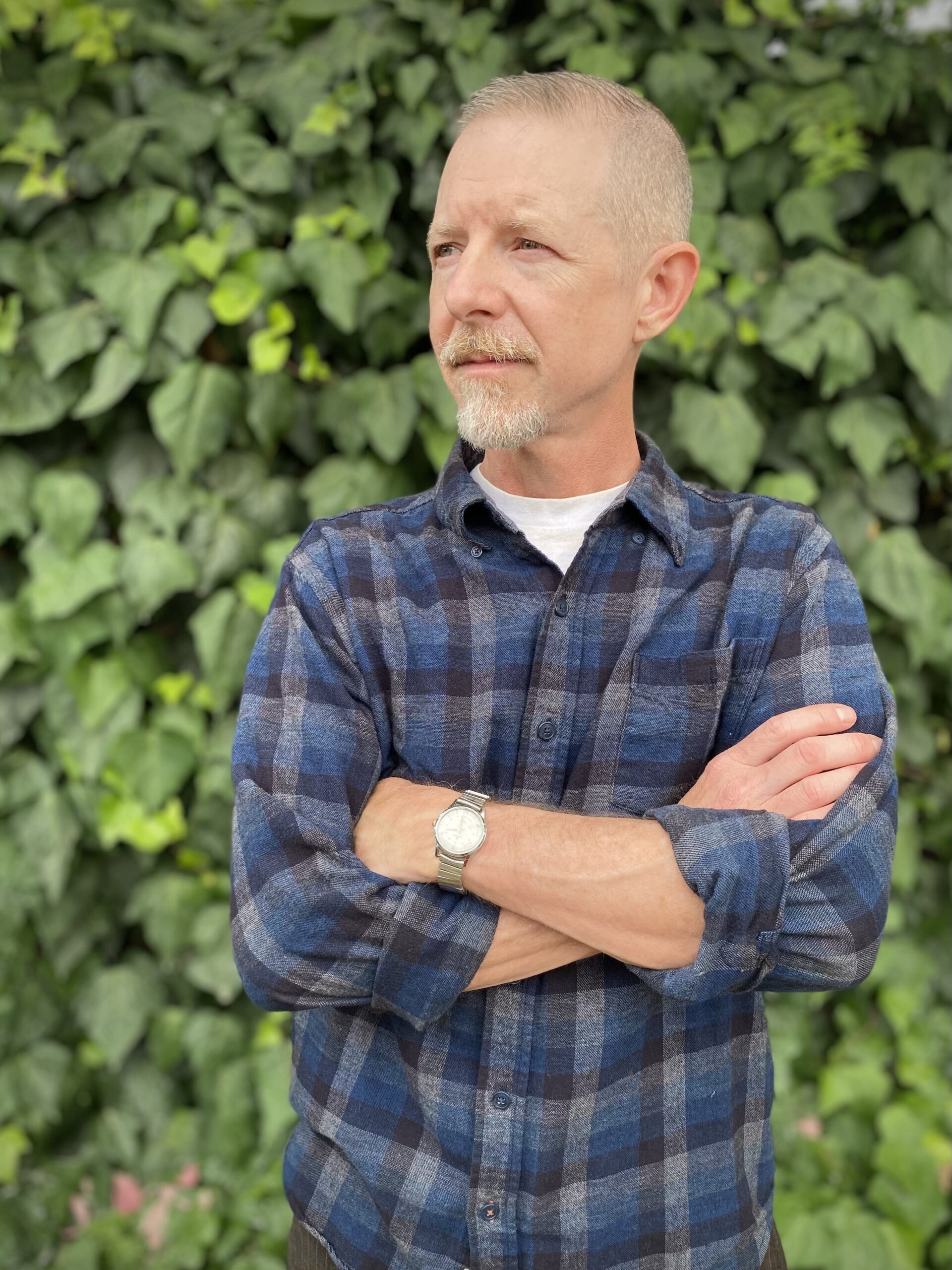 Gary Enns writes about bike mechanics, Zen-practicing Mennonites, farmhands, punks, fairground carnies, and push truck drivers in the rural California towns of the Central San Joaquin Valley. He resides in Bakersfield with his family, within walking distance of Buck Owens’ famous Crystal Palace. He has published stories and poems in Granta, Crazyhorse, Southern Humanities Review, the Wayfarer, and many other literary journals. This is his first story in the Missouri Review. Find him online at garyenns.com and on Instagram @gary.s.enns. [hyperlink https://www.instagram.com/gary.s.enns/ ]
“One Hundred Days” by Andrea Eberly
BLAST, TMR’s online-only prose anthology, features fiction and nonfiction too lively to be confined between the covers of a print journal. In her 2021 Perkoff Prize finalist story “One Hundred Days,” Andrea Eberly gives us an oncologist and new mother whose past rock-star crush comes crashing into her present professional life in the form of a dying patient.
One Hundred Days
Andrea Eberly
Earlier in my career as an assistant professor of medicine, I would lose myself in charting, reading, writing. I’d imagined myself all mind, just a big brain hitching a ride in a body-machine that I kept running with protein bars, premade cafeteria sandwiches, cup noodles, all washed down with cup after cup of coffee. Now my mammal-body called me back every few hours as my breasts filled with milk, two biological hourglasses that got flipped over after twenty minutes of pumping.
Wichita wichita. The breast pump’s cicada-like chorus filled the clinic’s break room. Today was Thursday, my clinic day. Since I was working as the attending physician at the hospital this month, I spent the rest of the week I was at my research lab. I willed my oxytocin-fogged head to be up to the task of skimming over two years’ worth of chart notes during a single pumping session. I stuffed salmon salad into my mouth while flipping through the electronic chart on my laptop, reviewing chemo regimens, cell counts, CT-scan images. A couple of quinoa kernels fell onto the keyboard, and I brushed them off. I was now responsible for nourishing two bodies, so I’d given up the cup noodles. This next case was new to me; he was coming in for a pretransplant workup.
Wichita wichita wichita. Drip, drip, drip.
When the medical assistant walked in to tell me the patient had arrived, I turned around to his voice. He backed out of the room, hands held up in a Hey, don’t shoot sort of gesture. Strangely bodiless, my swollen nipples pulsed with the suction of the machine, sticking out from the cone-shaped flanges strapped onto me with an elasticized corset. Larry was filling in for Sonya. Sonya was used to the pumping.
I unscrewed the bottles and pulled off the bra, losing a few drops of milk on my pants, and wrapped up the gear before chucking it all into the fridge. I rinsed out my mouth with tap water to conceal stank coffee breath before walking into the exam room. I rubbed some alcohol gel onto my hands.
A man sat on the edge of the paper-covered exam table. Slim dark jeans and a nubby sweater covered a slim body. He appeared closer to my age than his calendar age of fifty-one. But that’s how it is with cancer—the puffiness from IV fluids and steroids can make you look unnaturally young, or the disease can eat away at you and turn you old overnight.
I introduced myself, Dr. Sydney Weaver, and he reached out to shake my hand. A tattoo covered his wrist and half the back of his hand. I’d seen the image before. A blue serpent circled his wrist, scaly body looping on itself with the head eating its own tail. I recognized the ouroboros from the album art of The Invisible City. The poster was still up at my parents’ house, in my old bedroom.
Cool tattoo, I thought, very cool. I was about to say so, when I really looked at the prednisone-puffed face and the postchemo hair fuzz. The cleft in his chin cinched it.
It was him. Mr. Polo.
***
One night in eleventh grade, my friends and I had gone cruising. It was the late ’80s, Phoenix. Tan desert dotted with stuccoed tract houses and green lawns. All the roads at right angles to each other.
Beth, Angela, and I piled into my Ford Escort—stick shift, plastic dash cracked from endless sun, fabric-wrapped visor disintegrating into a swirl of fine powder. We’d just taken the practice SAT and were giddy with having made the first concrete move toward getting into college, which was to say, getting the hell out of Phoenix. I pushed a Mr. Polo tape into the deck, twisted the volume nob, and felt the bass shake the air, even as the warping speakers were all rattle and static. We stopped at Denny’s and ate cheese fries and drank bottomless cherry cokes. Angela smoked some cigarettes she’d stolen from her mother. Menthols. After driving past Jim Delver’s place and launching a couple of eggs at his window, we drove over to the elementary school with the big speed bumps out front. The city had painted HUMP to warn drivers to slow down. We chalked in the word KIDS underneath. After midnight, we stationed the car in the parking lot of the Ross Dress for Less where Beth worked. It was next to the Taco Bell with the late-night drive thru. We stuffed ourselves with fifty-nine-cent tacos, witnessed petty drug deals, and ripped jokes about the creepy guy in fifth period who was always drawing pictures of wolves in trench coats. Beth and I bet on which one of us he’d ask out first. Definitely Angela. We laughed our throats raw, and then we laughed more. All the while, Mr. Polo blasted from the cassette deck and we swore to each other that even when we went to college, we’d never lose touch and would be friends forever.
Back then, I just thought Mr. Polo’s music was the best thing I’d ever heard. If anyone had asked me why I loved it, I would’ve said it was because of the way he wove together the beats and sounds, how he pushed and pulled the tempos. What a dumb and technical answer, but I cared a lot about sounding smart back then. Really, I just I loved how it made me feel, how he made me feel, like he had crawled into my skull and made sense of everything. I could listen and think, Yeah, it’s just like that. Just like that.
***
Not long after Marco’s first appointment, I dug around in some old boxes and found my Mr. Polo CDs. I hadn’t listened to his stuff in years. With my windows down, the volume up, and my baby Maddie in the back seat, I drove around. Maddie goo goo gah gah’d and bounced her feet to the electronic drums, the synthesizer click, and Mr. Polo’s machine-gun lyrics. The baby seemed to like Mr. Polo’s middle work best, before he returned to real drums and guitar shreds. In the delicious anticipation of the next beat, the next musical structure, feelings poured through me that were both familiar and strange.
Of course, in medical school I’d learned about dopamine and the pleasure and reward centers in the brain, so I figured music was like drugs, food, and sex—big fat dopamine hits in the deepest parts of the brain. I once shared this theory with Ben, my best buddy from med school, when we were studying neurotransmission, and he joked that I had a pretty mechanical view of the best parts of being alive.
Ben and I had ended up living together in San Francisco for our internal medicine residencies. We shared a one-bedroom—I paid more rent to get the bedroom and Ben slept on the couch-bed. We often went to the laundromat together, the nicer one a little farther away called the Lost Sock. When we washed clothes, Ben always came up one sock short. He had an old shoe box filled with the singletons taking up valuable real estate on our bookshelf at the apartment. I guess he was an optimist, believing that someday all the socks would be reunited. Me, I used to put all my socks in a mesh bag, so it was impossible to lose one. I believed in planning, not luck.
We’d watch our clothes spin around in the dryer while dreaming out loud about the next stages of our careers. Classic overachievers, both of us planned on doing fellowships following residency. I told Ben I wanted to go into hematology/oncology. Ben said he couldn’t understand why anyone would want to go into oncology, because so many of those patients were not fixable. That was the appeal of infectious disease, he said. Match the drug to the bug and cure the patient.
I told him that I didn’t want to stop just at regular oncology. I would push further. Hematopoietic stem-cell transplantation. Every patient on a research protocol as investigators trialed new combinations of medications, new methods of harvesting cells. The fucking Wild West of medicine. In transplant, the goal wasn’t just a feeble extension of life. It was cure.
I wanted to be a goddam cowboy.
***
On the days Mr. Polo, whose given name was Marco Schellenbach, was on my schedule, a fluttery feeling filled my chest. I wore mascara and was careful not to leave the house with a white blob of dried spit-up on my blouse, even as I was less careful about fastening up all that blouse’s buttons. My husband would sometimes even tell me I looked nice as I dashed out of the house.
On one of those days, as I waited for Marco to arrive for his appointment, I massaged the kinks out of a grant application that was due the following day. My grad student, technician, and two postdocs didn’t deserve to end up unemployed because I couldn’t get my act together and secure funding. I yawned. My kid’s first teeth were coming in, so I was getting little to no sleep, even by new parent standards. The only thing that kept Maddie from screaming was constant attachment to my breast. All. Night. Long.
Marco came in and sat down in a chair—not the exam bench—next to the office computer and stared at his hands. I started with the results of his last bone marrow biopsy.
“Your leukemia is no longer detectable.”
“So that means I can get the transplant?”
I nodded.
His lips pulled into a smile that gripped my heart as we hashed out some of the other details—which conditioning regimen he’d get, the brother who was a match, the sister who could come out from Waco to shepherd him through recovery.
“Do you have any more questions?”
Marco picked up one of the two photos on my desk. Since I shared the exam room, I always had to remember to take my photos home at the end of the day.
“Your baby is cute. How old is she?”
“That’s Maddie. She’s six months old.”
“Who’s the guy in the other photo? Your brother?”
He was asking about the one with the blonde in a tux standing next to the redheaded bride. A lot of patients send their doctors cards with family photos, and we put them up in our offices. I knew it blurred the lines of patient confidentiality, but I couldn’t help myself and answered Marco’s question knowing the hope that the photo could inspire.
One of my first patients.
“Did he live?”
“Yeah.”
My fellowship had just started when Jason, the guy in the photo, was diagnosed with acute myelogenous leukemia—same diagnosis as Marco. I remember the spring in my step in those days; I’d been driven by my belief that the initial induction and consolidation treatments would work, and even if they didn’t, there was always another step, another treatment, so many different chemotherapy cocktails. I’d prescribed the clotrimazole troches for his thrush during salvage treatment. I’d optimized his antirejection meds. He survived, grew back his hair, got married, and sent me that wedding announcement—the photo on my desk. He’d been the first patient I ushered through the whole process. The first patient I cured.
Marco nodded and pursed his lips as he looked at the photo. His brow twitched. I wondered if he was imagining himself in a similar photo, hair grown back, muscles rounded out. A future without cancer. A posttreatment world.
What was I thinking, leaving the neck of my blouse undone?
***
During our appointments, I kept thinking that Marco would eventually mention music, like Hey, last weekend I was messing around on my Roland 808 drum machine . . .
But he never did. It became a bit like when you’ve been talking to someone at a party all night long and realize you don’t know their name. You can’t ask anymore. In this case, I wanted to tell Marco that I loved his work, but it seemed deceptive to not have said anything for so long. Maybe he valued what he’d believed was a certain anonymity in our interactions. I mean, I’d now seen him naked under a backless hospital gown, taken blood, knew his whole medical history. So intimate, and yet.
It became a secret I watered like a houseplant. But not any houseplant. Maybe an orchid, where the pleasure was married to the toil of keeping it alive.
***
While I waited for Marco to arrive—that patient before him had canceled—I caught up on emails. My grad student almost had enough data to write a paper, but her figures were awful, and I didn’t have the time to really get into it, so I closed the email and opened up Amazon to buy some new clothes for my daughter. No one told me it would be so sad to retire Maddie’s six-month footed pajamas, the ones with the hedgehogs.
Earlier that week, I’d replaced Maddie’s photo with a new one. My husband was holding her, and you could just see his hands. Maddie had two tiny bottom teeth. Marco noticed the new photo immediately when he sat down. He said she looked like me. That was when I asked him about his daughter and immediately felt my face grow three sizes too big, hot and red.
My leukemia patient had never told me about his daughter.
In high school and college, I’d read every article about Mr. Polo in Spin or Rolling Stone or whatever other music rag. My high school binder was covered in a collage of magazine cutouts, and the one taking up the most space was a black-and-white photo of Mr. Polo in sunglasses screaming into a mic. I still had a pair of the same aviators.
“I’m actually a huge fan,” I mumbled and swallowed and drummed my fingers against my leg, and the air in the room was jelly. What would he say?
“My daughter just finished art school,” he said. “Hard to believe she was ever that little.” He motioned toward the photo of Maddie.
“Yeah. It goes by fast,” I said. After a moment, I got my nerve up to meet his eye and asked, “What kind of art does she do?”
“She wants to open a tattoo shop.”
He paused and took a deep breath, almost like he was tired from the talking. He lifted his arm, the one with the ouroboros, and said, “She always liked my tattoos. She likes the idea of living art.”
We went over his lab results before he got onto the exam table. I placed my stethoscope over the jaguar tattoo on his back, and the tip of my finger brushed his ink. My heart skipped into my throat as I listened to his breaths go in and out.
***
Right after graduating college, my roommates and I took a road trip to a big open-air concert near Jackson Hole. Mr. Polo was the headliner. On the stage, Mr. Polo unbuttoned his starched white shirt. Under the stage lights, his muscles rippled, creating the illusion that the stylized jaguar tattooed on his back was alive.
Masses of sweaty bodies, moving to the beat. The violence, the raw physicality of the crowd, edged on sexy. With disassociation from caring and really letting loose, I was for the tiniest moment living life without my mind—I was just a body swimming in thereness, if there even is such a word—synched up with Mr. Polo and his music.
After the concert, we camped for a few nights off a dirt road that lay in the border region between Yellowstone and Grand Teton Park. One night in the tent, my roommate dug out a piece of paper from her bag and wrote the letters MASH on top. It had been ages since any of us had played that schoolgirl game. Mansion, Apartment, Shack, House. A game to predict our futures. The game foretold that I would end up in an apartment with five kids, working as a movie star and married to Dr. Richards, our lech biochemistry professor, whom we always saw working out at the campus gym in such short shorts I swear you could see his nut sack. My roommate got a mansion and was married to Mr. Polo. Lucky her.
Our campsite was near a stream. From our tent we heard something splashing in the water, and then it would stop before starting up again. Was it bison charging through the water? A massive grizzly bear catching fish? We’d been hitting the hash pipe, and paranoia tickled the napes of our necks. That fall I would be heading off to medical school—my roommate, too. My other roommate had been accepted to a PhD program in chemical engineering. We snort-laughed as we imagined the headline. “Young talent cut short. Eaten by bears.”
I unzipped the tent, and my bare feet felt as though they were floating over the chalky dirt as I padded toward the stream. I parted the willow branches like a curtain just in time to see a cloud of white pelicans landing in an explosion of water. They floated with the current of the creek a stretch before flying upstream to land and float downstream again. Paranoia melted into awe as I stumbled back to the tent.
Safely zipped inside the tent, we listened to the sounds of pelicans taking off and landing in splashes of creek water, and we fell asleep to the rhythm of living things.
***
As usual after working at the lab, I had to get Maddie from day care. The day care teacher told me Maddie had started to point.
Earlier that day I’d reviewed Marco’s chart to see how he was doing. He was two weeks out from his transplant and still admitted to the hospital. His liver enzymes were through the roof, and he was suffering watery diarrhea—graft versus host disease or maybe side effects from the conditioning regimen. We’d know more when the pathology report came back.
My stomach filled with ash.
I strapped Maddie into her car seat. Mostly I was ignoring the stream of garbling sounds emerging from her mouth, when I jammed my finger into one of the buckles. The fingernail of my left middle finger bent back, and pain seared through my hand. It was all I could do to not yell “Fuck!” to not plow my fist into my thigh. I sucked on the finger to dull the ache and inhaled a couple of times. Maddie’s long toes wriggled, taunting me. Goddammit, her sock was off again. What was it with children’s feet and socks? I leaned over, the waistband of my jeans cutting into my belly fat, and picked up the pink-and-white knit thing. Maddie stuck her thumb in her mouth and gave me the stink eye as I pulled the sock over her foot for the eight hundredth time before cinching the straps of her car seat.
***
One Thursday in clinic, after Marco had been discharged from the hospital, he talked to me about his garden.
“Sydney, what is your favorite apple?”
“I’ve never thought about it.”
“Well, a few years back I planted a Gravenstein tree. This year it has two apples, so next year it should really start producing. Maybe enough for a pie. Gravensteins make the best pies. My grandma had a big tree in her yard, and she baked with nothing else.”
During another visit he told me about a novel he was trying to complete. He said this in between body-wracking coughs that he tried to cover with trembling hands.
“I’m about halfway through revising it.”
“I didn’t know you wrote.”
“My head is filled with all these people—my characters. It will be weird to say goodbye when I’m done with the book.”
I kept hoping he’d talk to me about the music, especially now that he knew I was a fan. I wanted to learn about his process for writing songs, choosing samples, what it was like to stand on the stage above a sea of dancing bodies.
Somewhere inside these conversations lurked his real question: Will I get be able to get my book done?
No, deeper.
Am I going to die?
No, deeper still.
When will I die?
***
One hundred days after I had birthed my daughter, my mom watched her while Craig and I went to a café for a glass of wine to celebrate having kept our baby alive for this milestone. As we walked home, the clouds cracked open with a fountain of rain. We ran the last blocks back to the house, and something warm happened between my legs. I knew what it was, but still hoped I was wrong.
My body had fallen apart to bring new life into the world.
I wanted control of my bladder back.
I’ve always wanted control.
***
On day eighty-seven posttransplant, it was confirmed that Marco’s leukemia was back. He didn’t get to one hundred days.
***
Marco paced in the office. Not the violent lunging steps of a healthy man, not the vigorous movements of that man I’d seen so many years before at that festival in Wyoming, but the nervous shuffle of a sick man. A scared man. I explained that the prognosis for people whose leukemias relapsed within one hundred days of transplant was grim.
“What does that mean, Doctor?”
He usually called me Sydney.
I met his question with silence, and that was when he started to cry.
***
The lights in our living room were on a timer. They clicked off at ten thirty. So did the heat. I had already put Maddie to bed. and Craig was upstairs playing on his computer. The baby cried, and I didn’t think it could be that she was hungry; she had just eaten. I hollered at Craig to go in and get her back down.
Ghost-like light from my laptop filled the room as I flipped through the PubMed database, sifting the medical literature for any option that could go after Marco’s leukemia. There had to be something there if you looked hard enough.
My breasts filled with milk.
I saved links, skimmed abstracts, printed a couple of articles, made notes. Normally I would have fed Maddie around midnight, but I kept working until the sky lightened and birds chirped outside the window. My breasts felt like they had become bags filled with stones. Finally, Craig came downstairs and asked why I hadn’t ever come to bed. I couldn’t say much more than that I was trying to help a patient. I couldn’t tell Craig I was treating Mr. Polo. You know, HIPAA and all that.
Craig went back upstairs and returned a few minutes later with the baby.
“Syd, Maddie’s hungry.”
He said it like “hawngree.” It was our joke.
I held Maddie to my breast. The flood of milk made her cough, and pain shot through me as she clamped down on my nipple.
Goddamit, Baby.
She now had four teeth. Two top and two bottom.
Maddie’s swallows made little “kah” sounds. A recent paper outlined how something called a FLT-3 inhibitor could attack the leukemia cells, but the drug was still in clinical trials. Could I procure it for Marco? Sometimes drug companies let you use experimental therapies for what they called “compassionate use.” I had to try. I’d contact the medical science liaison at Novo Nordisk. They’d give me the drug. They had to.
The baby dozed off at my breast. A flutter of guilt rushed through me for ignoring her. I remembered the advice my mother had given me—sleep when the baby sleeps. Don’t fight nature. So I picked up her sleep-limp body and carried her into bed with me. I held her to my chest and breathed in the scent of her hair. My own restlessness seemed so abrupt and harsh next to her sleeping form. Her eyelashes were so long. I had no idea that a baby could have such long eyelashes. Underneath the paper-thin lids, her eyes twitched. What was she dreaming about? What would her dreams be? My body was tired, but my mind resisted sleep, and my thoughts wove in and out and kept coming back to the same place. Physicians were just body mechanics. Why could some bodies be fixed, while others failed? What if I couldn’t patch it up and get it back on the road? A package of bones and tissues and vessels and blood—was that all we were?
***
How many hours did I spend on the phone or drafting emails to the drug company? But inside Marco, his cancer had a schedule of its own.
There hadn’t been time to work through the regulatory hurdle for the experimental drug, so he’d elected to try another transplant. I told him it was a long shot, that it was off protocol and that there was no way his insurance would cover it. Marco didn’t care that his insurance wouldn’t pay. After all, he’d quipped, what else was a gold album for? I tried to be clear and upfront about the risks, about how we were going into unknown territory, that his body hadn’t recovered from the first transplant. But the truth was I never suggested he shouldn’t do it. Not really.
I wasn’t attending the month he got the second transplant, so it wasn’t as a physician that I visited Marco at the hospital. He had a scarf wrapped around his head. He’d been in the room long enough that his family had decorated. A huge line drawing of Marco holding a toddler girl—I had to assume his daughter—was taped to the bathroom door. I had to blink for a moment to control myself. The image so keenly evoked how it felt to hold your child. Marco said his daughter had drawn it and was planning to have it tattooed on her calf.
“Are you able to eat?” I asked.
“Yeah, when I don’t feel too sick.”
“I brought you some pie. The farmer’s market didn’t have Gravensteins, so I got some other kind the guy recommended.” I pulled a Pyrex out of my bag and put a small piece of pie on a paper plate I’d nabbed from the unit’s nourishment room.
“And don’t worry, Marco, it meets criteria for neutropenic precautions.”
Marco smiled and took a small bite.
“I didn’t expect you’d be so good at baking.”
I wasn’t his doctor today. I also wasn’t his friend; that would be presumptuous. There was some sort of blurry relationship between us. I finally asked if we could talk about the music.
***
Marco had been in the hospital for over a month when it was once again my month to attend on the inpatient unit. His head glistened, totally bald from the treatment. Yellow complexion and sunken eyes, knobby hands, jutting collarbones. His skin like a loose suit over his frame. Diarrhea came next, neutropenic fever, a rectal tube, blood-pressure support. He was altered and could no longer hold a conversation. And then came the breathing tube.
His body was still there, however tenuously, but where had he gone?
Marco’s daughter came every day to visit and sometimes asked questions during rounds. Sometimes they weren’t really questions.
“Is he going to wake up?”
“Why aren’t the treatments working?”
“Isn’t there anything you can do?”
***
I was home in bed with my baby and my husband the night Marco coded. I found out the next day that the team had worked on him for over an hour, getting his pulse back a couple times before they called it. I was glad I wasn’t there. I didn’t want my last memory of him to be of his body getting smashed by chest compressions while blood frothed around the breathing tube and his eyes became fixed and dilated. The eyes of the dead aren’t like in the movies. They don’t stay closed when you brush your hands over them. The lids spring back open.
***
That last conversation, the one we had over pie, I’d literally taken notes as Marco talked about his influences. And it wasn’t just other music, but visual artists and novels too. I did mean to look it all up. But as I sat in my office and held the wrinkled piece of notebook paper trying to figure out why I’d scrawled the half sentence, most people like rubbers, I realized I was already remembering it wrong. The notes were meaningless. Sure, I had asked him some questions, but mostly I’d just gushed about how much his music meant to me and how much fun it had been to dance at his shows. Suddenly, a thousand questions leaped into my brain, things I hadn’t asked him. Would never be able to ask him.
Had it been about me all along?
***
Marco had been gone for two weeks when I received a letter in my office mailbox. It was from Marco’s daughter. I held the small blue card for several minutes before I had the courage to open it.
Thanks for taking such good care of my father. He said you were a fan, and I know that shouldn’t make a difference, but it did.
***
Later that week, on a sunny Saturday morning, I decided to take Maddie to the park. I buckled my seatbelt, turned the ignition, and stuck in a Mr. Polo CD. Maddie yelled, and I craned around. Her staccato laugh filled the car, and she wiggled her legs and feet. One of her socks hung from her toes.
At the next red light, I turned back to Maddie. Her foot was now bare. I didn’t pick up the sock. Instead, I pulled off the other one and released her beautiful baby foot. She kicked and giggled as I tickled her feet. I was laughing so hard that I didn’t notice the light had turned green until the car behind me laid on its horn.
I was laughing so hard, I peed.
And now? When I listen to Mr. Polo, it is like drinking a memory, taking a hit of the way it felt to be seventeen, parked outside of Ross and laughing with my best friends, how it felt to lie in a tent listening to pelicans splash, how it felt to sit in the car tickling the feet of my beautiful daughter, always on the jagged edge of the rest of my life.
***
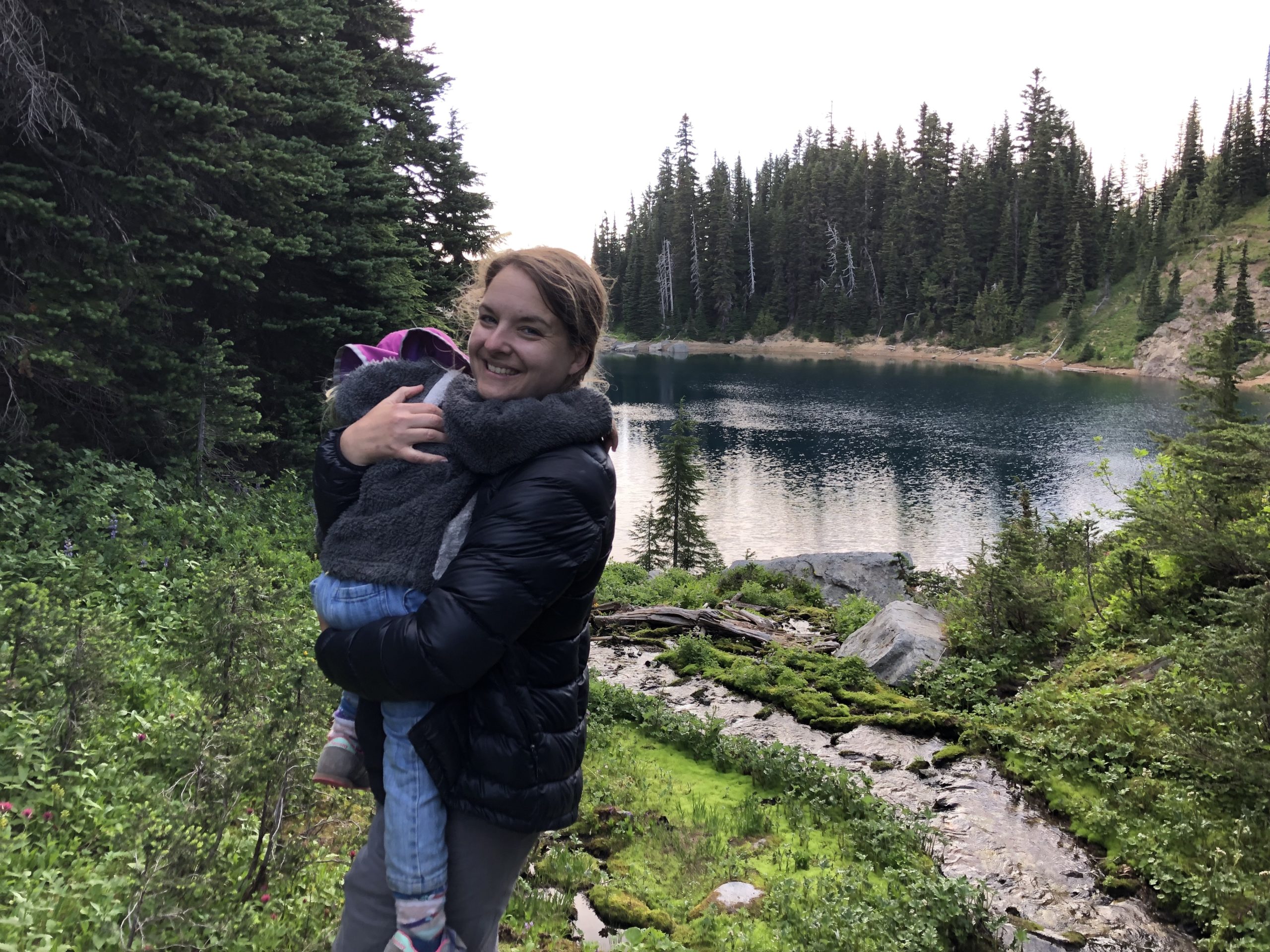 Andrea Eberly works as a clinical pharmacist in emergency medicine. Her stories have appeared in Witness, Southwest Review, Carve, Bellevue Literary Review and elsewhere. She is currently working on a novel-length work.
__
__
“Heart-Scalded” by Daphne Kalotay
Daphne Kalotay’s sensitive depiction of a terminally ill woman bravely attending a party where she knows she’ll run into her ex is not your usual Halloween-party story, but within this narrative of emotional pain and acceptance, we find intimations of magic–and mortality. “Heart-Scalded” first appeared in our summer 2021 issue (44:2). You can read our interview with Daphne here.
Heart-Scalded
by Daphne Kalotay
Twilight’s hazy glow, the world covered in gray lint. Viv hailed a ride and set out toward the crumbling edge of town. Though it was nearly November, leaves still clung to branches, some in the blazing colors of life, most a parched brown. Odd how warm it is, her driver said, as they rose over the bridge that just months ago she would have crossed on her bike. A cluster of figures slipped toward them along the walkway, dressed strangely, like characters in a play. She turned to look, but they were already past.
Fun plans for the evening? her driver asked. The streetlamps weren’t yet lit, and the fading sky looked thick enough to touch.
I’m going to a pig roast.
Parties at Len’s always began early and went into the wee hours. Viv told herself she was just stopping by, didn’t have to stay long, though she had taken time on her makeup—smoky eyeliner and a thin, feathery pencil for her brows. She had even considered false lashes, since they seemed to be in fashion even for women in their thirties like her. Slid silver hoops through her earlobes, draped her favorite twisty cotton scarf around her neck, found her silver cuff bracelet and pushed it up to her biceps like a sort of amulet.
It’s here on the right, she said. A house like a wilting wedding cake where Len rented rooms to a few former grad school friends who, like him, had yet to convert to more standard arrangements. She thanked her driver and stepped out into the gloaming.
Voices wafted from the backyard, where winking orange bulbs dipped along the fence and the pig smoldered in its box. The company called it a Chinese box, Len had told her, while Viv had held back any commentary on corporate opportunism or Len’s naïveté, tried not to be so Viv; no one liked being forced to see the truth. A dozen or so thirty-somethings looked vaguely her way. There was something odd about them, or maybe it was just her nerves.
Hey, stranger! Len came to envelop her in one of his hugs. He was wearing a chain-mail getup, like a knight in armor. His embrace was awkward.
Viv didn’t find it odd that he was wearing chain mail; he ordered the new limited-edition Lego set each year and still liked to play dress-up. The orange bulbs reflected in the lenses of his glasses. On-off, on-off. He said, I love your look. You’ve got the heroin chic thing down.
She laughed, though she’d used bronzer and lip tint, had even purchased a sparkly body cream. Probably she should pull her sweatshirt on. She was wearing loose crepe pants, because they were the baggiest she had, and a silvery T-shirt, and black canvas sneakers with the anklet she still wore, even though it was from Aziz and she had rid herself of most things he had given her. The anklet had a small silver starfish that had once seemed to her to be good luck. These past two years had not caused her to remove it.
Around her, the air was sticky, smoky. She said, How long until you think it’s ready?
Should be done about now. Can I get you a drink?
I’ll get it, she said, already searching warily, though Aziz often arrived later to these things. A head taller than most, he was usually easy to spot. She wondered if he would look the same or if, like Len, he would have gone thicker in the face.
At a table crowded with bottles and stacked plastic cups and a bowl of melting ice cubes, she poured herself a lukewarm soda water, squeezed a tight wedge of lime. Up close she saw that the fence was covered in a thin fuzz of the vivid green mold-like moss that had overtaken everything after the summer of too much rain. Despite its dire warning, a stunning color. Even in the dusk, it glowed, bright with rejuvenation. A few times, she had tried mixing her paints to match it but always ended up with neon yellow.
Hullo, said a frowning man plucking a can of beer from the plastic cooler. Cyrus, he said. I work with Len.
Their parent corporation had been caught falsifying data concerning waste disposal at their factories, Viv knew from texting with Len the other night. Len said he just had to pay off his student loans and then could look for a new job.
I’m Viv. The bubbles in her glass sped upward, exploding at the surface.
Cyrus moved to take a sip of beer but had to pull down a long white beard strapped to his chin. Viv realized he was in costume, too—some sort of wizard. She said, Is this a costume party?
He laughed. A Halloween party!
But—Halloween isn’t until—
Wednesday!
Oh! She had lost track of time. Except for her friend Laurel, who worked in New York but still hadn’t fully moved there, she had mainly spent these past months alone in her apartment, painting watercolors when she wasn’t woozy or watching movies sideways on the sofa. The institute where she wrote educational pamphlets and other communications had hired a freelancer to cover the hours she missed.
Not big on Halloween, eh? Do you know anyone here?
She nodded. She used to come here all the time when she and Aziz were together. I actually met you before, she said. I came with Len to a Christmas party a couple of years ago, up in Prudential Center.
He looked at her more closely. Ah, right, you’re the artist. You’ve cut your hair.
She said, I remember you telling me how your wife used to be a competitive ice-skater.
The man shook his head mournfully, his artificial beard swaying from his neck. He said, Viv, I have the worst marriage in Massachusetts.
He had an explanation for what had gone wrong, something to do with his wife being a descendant of Mayflower pilgrims. Viv glanced up when she could, to see if Aziz had arrived.
She had been warned that the fiancée would be with him. Though Viv had known about her for a year already, it mattered to have to see her for the first time. Just as it had mattered when, after Len broke the news, he had added, perhaps thinking it would make her feel better, She’s not as pretty as you. That was when Viv’s heart had shredded to bits because it meant the fiancée was real. That even if Viv could have her old prettiness back, it wouldn’t matter, because Aziz loved someone else now.
They had taken the pig from the Chinese box and laid it out on the picnic table. A few vegetarians acted briefly repulsed.
Will you look at that, the man with the worst marriage in Massachusetts said. A mosquito. In October. He flicked it from the back of his hand.
Perhaps sensing she was toxic, the insect avoided her. The man said, The apocalypse really is coming if mosquitos are out this late.
But she could tell from the way he said it that he didn’t believe it.
Viv! It was Joe and Jerry, Aziz and Len’s soccer friends. They were at least a decade older but never missed Len’s parties. She wasn’t sure if they were in costume or not. Joe liked to cross-dress and tonight wore a slender black dress awink with sequins, while Jerry wore a dark suit over a white shirt. Viv began to make introductions, but everyone had already met.
Viv, Joe said, I was just saying to Jerry the other day—I swear—I wondered whatever happened with that garden plot you’d been on the waitlist for forever—
I got it.
She got it! What are you growing? You always had such a green thumb with Aziz’s poor dejected plants.
It was true she had resuscitated the houseplants Aziz’s mother had bought to brighten the affectless bachelor pad, with Viv feeding and pruning them until some even needed to be repotted. After Viv moved in, an entire wall of the apartment became jungle-like, plants practically climbing out of their pots, the air in the apartment fresh, moist.
Well, she said, this wasn’t the best growing season, actually, with so much rain.
Of course, of course. God, I mean, look at this thing. Joe gestured toward the cement planter beside him, which held the stubby remains of a bare, clearly dead plant. Or maybe he meant the cement tub itself. It was covered in a light fuzz of that alarmingly bright green moss that seemed to be growing on so much else, giving an eerie glow to the decorative pattern embossed on the planter: a circle of figures dancing. Perhaps because the original cement mold was cheap, the figures’ faces were blank. The thing somehow struck Viv as sinister.
Exactly, she said, rather than add that there had been stretches where she could not make it to her plot at all. She saw the way everyone was looking at her, realizing. As if to compensate, Jerry said, Your hair looks fantastic!
Viv wanted to hide, wished she hadn’t left her sweatshirt on the folding chair by the picnic table. People were tearing into the pig now, stripping off the meat and piling it onto big oval platters. Yearning to hide, Viv lowered her gaze. There was the cement planter, the neon fuzz. It really was eerie, the way the faceless dancers glowed beneath those spores or lichen or whatever that green fuzz was, while inside the planter lay nothing but the finality of death. Desperate, trying to think of some diversion, she said, Are you in costume?
We’re that Bryan Ferry video, the one with the models! At Viv’s reaction, Jerry turned to Joe. I told you they’re too young to know it.
She saw them then. Aziz and the fiancée. They must have just arrived, because Aziz was carrying a six-pack of the hard cider he liked. He and the fiancée were dressed as Daddy Warbucks and Little Orphan Annie. Even as a joke, it still seemed to Viv repulsive; everyone knew Aziz had sold out to Len’s corporation and now had a corner office in Kendall Square. Len said it was one of those new constructions, sky high, with lunch ordered in daily, delivered by unseen couriers at a back entryway.
Just seeing them made her feel briefly dizzy. She had to remove her scarf. Jerry said, Come on, let’s eat!
Along with the oval platters of meat, there were broad aluminum trays of sticky yellow cornbread, of dusty buttermilk biscuits, vats of barbecue sauce and gravy, coleslaw, and gooey baked beans. Viv scooped clumps of the food onto a paper plate. It was tricky because she was trying to keep her arms folded to hide the bruises where the nurse struggled to insert the tube into her veins. For a long time now the nurses, beleaguered, had been urging her to get a port.
Well, look who’s here. A warm hand touched her arm.
Oh—hi, Aziz. She let herself be kissed on the cheek, Aziz bending down to her. His lips were warm.
Cute haircut! Annoyingly handsome in his crisp black suit and bow tie, Aziz did not look very disturbed to see her transformed. Len had probably told him what to expect. Hey, meet Stacy.
So good to meet you, Viv, I’ve heard so much about you! She seemed genuinely pleased. As much as Viv wanted to appear composed, she had to set her plate down. The fiancée shook her hand, her palm, like Aziz’s, much warmer than Viv’s. And Viv felt herself smiling, heard herself speaking, thought, I am chatting with Aziz’s fiancée and, later on, when the air had cooled and she had found her sweatshirt, as they sat in chairs around the woodstove on the patio and ate from the paper plates on their laps, I like Aziz’s fiancée; she’s pleasant.
The drugs made the food taste strange. The compostable utensils seemed to be decomposing in her hands. She wondered if it was the toxins, glanced around her to see if others were having trouble. Len was at least right that the fiancée wasn’t as pretty as Viv. Well, how could she be in an orange Orphan Annie wig?
Aziz told Viv she looked fetching with her eyes all circled in black like a raccoon.
That wasn’t the look I was going for, Slim, but thanks. The humidity must have smudged her makeup. She used her paper napkin to dab the skin below her eyes, secretly grateful for Aziz’s teasing, as if nothing had changed.
You called him Slim, Stacy said.
Oh—I call him that sometimes.
It gave Viv a small pleasure to know this was something Aziz hadn’t shared, that he also would have kept to himself his pet name for Viv. Sometimes she ached to hear him call her Beep again.
Hmm, now I’ve smeared it. I’ll be back. Viv stood to make her way to the bathroom, passing a woman dressed in scrubs, with gloves, protective goggles, and elastic booties, like a nurse in a toxic emergency. Or maybe that really was her job, and she had simply worn her work clothes as her costume.
There was a line for the restroom. Viv leaned against the wall, unzipped her sweatshirt. She had avoided these gatherings for a long time, but Len must have known that telling her the fiancée would be here would dare her to come. And, he had added, I miss you.
He was the only one among them to whom she still spoke. Gave updates. But she knew he told the others. There were emails from a mutual acquaintance who practiced acupuncture, enclosing a diet she suggested Viv follow, along with a mantra: You can choose bliss! Though Viv never responded, the messages continued to arrive in her inbox.
She listened to the conversation ahead of her, whispers about Len’s corporation and its ties to one of the candidates in next year’s election.
Elections don’t matter—
What do you mean, don’t you vote?
No, I don’t vote! The voice sounded offended. But the bathroom door had opened, and the speaker disappeared inside. The interlocutor turned in bafflement to Viv. Can you believe it?
It was one of Len’s renters, or former renters. Viv tried to recall her name. She was dressed, it seemed, as a sexy witch, an excuse, Viv supposed, to wear—along with the pointy black hat and green face paint— fishnet stockings, thigh-high boots, and nothing across her midriff, which (this Viv did remember) she had always spent a lot of time on at Pilates classes. She said, Viv, wow, hi! I love your hair!
It wasn’t her hair, but it was true it looked better than her real hair ever had. Same bronze color, but short and flirty, with a little curl at the ends. The witch said, It looks French.
Her face paint was not the usual witch green, more like the color of the worrisome mold outside. Viv asked if she still lived in the house.
I moved to Atlanta for work, can you believe it? I’m just here for the weekend, I have to go to a memorial service tomorrow. She shrugged. I still have that drawing you did of the blue jay. I love it.
Viv said, I like the color of your face paint.
Thanks—it was actually a darker green, but I use this serum and it made it turn this color. Oh, my turn. The bathroom was free again.
Viv waited, voices reverberating off the walls.
. . . teaches this like adult ed class it’s called Time for Terrariums and like people actually take it.
We made a pact; next year we’ll go to the DR if this year he comes with me to Iceland.
Len said she has some rare kind of cancer, there’s no real treatment, they just try whatever until it stops working, then try something else.
Viv tried not to listen. Tried not to think of Stacy in her red dress with the white collar. The costume said it all, Viv supposed. Deep down Aziz must have longed for someone like that, who could be ironic and fully participate in the rituals of the masses. Unlike Viv, who on the night they met had bonded with him over having grown up in the suburbs without any sense of fitting in. As much as Aziz said he liked that Viv looked at the world askance, clearly what he had needed was a Stacy.
Stacy wouldn’t chide him for taking start-up money from a developer who opposed the bill to stop illegal fishing off the Cape. Wouldn’t dare ask if smart technology was always necessarily smart (knowing full well his company was based on the premise). Wouldn’t have set off their worst fight by calling his approach to business remorseless.
How you holding up? It was a mutual friend of Viv and Aziz, dressed as Mary Poppins. For a moment it seemed she knew how hard it had been for Viv to come here tonight, to see Stacy in the flesh, and to be seen herself, looking like this.
The truth was, in order to come here, Viv had actually allowed herself to think of the party as somehow perversely restorative: a trial-by-fire cure. Because if she could live through this—seeing Aziz and his fiancée together, and all the while being witnessed, by everyone else, seeing them—then surely she could survive anything.
I’m fine, how about you? She said it by rote.
Mary Poppins said, I didn’t realize Stacy was pregnant. I’m always the last to hear these things. Still, I imagine it kind of sucks.
The floor dropped from under Viv’s feet. Viv looked for the bathroom door to open, managed to stammer something. Oh, yeah, well. She thought of the gentle confidence she had noted in Stacy, reassessing it as a pleased smugness.
Thank god, here was the witch. Viv escaped into the bathroom, leaned against the sink. In the mirror, her face shocked her. She didn’t look ugly. But with the dark eyeliner and circles of fatigue below, she looked skinny and strung out.
Stupid, stupid.
There was a phrase Laurel had taught her, back when Viv and Aziz first split up and Viv, alone in the attic studio she had found, felt a despair she hadn’t known possible. When each night her thoughts followed the same looping circle—that as much as Aziz had loved her, she had not been what he thought he wanted, that she should never have expressed those thoughts that had hurt him. When her mother, trying to be helpful, said, It’s not the end of the world.
You’re heart-scalded, Laurel had explained. A term from the British side of her family. An anguished, active grief. Viv’s dictionary said it meant tormented by bitter disappointment, sorrow, or remorse.
Not just grief at the loss, but the ongoing torment of her regret. The sense that if she could have been different, could have tamped down her horror at human obduracy, Aziz would have loved her as she had loved him: wholly, unstintingly, enough to have endured.
She went to use the toilet, trying to tell herself not to dwell on what she had just heard. What did it matter? She would be gone, she already knew quite well, before any baby arrived.
Someone knocked on the bathroom door.
Be right out! Viv flushed her toxic pee into the sewers. Washed her hands. Did not look in the mirror. Time to leave. There was nothing left for her here.
***
She was still making her way through the narrow, echoing hallway when someone stopped her. Like Viv, he did not appear to be in costume, just dark jeans, black T-shirt, and sneakers. And while he seemed to know Viv, she could not quite remember him. How are you feeling? he asked, and the pity in his voice made her want to slug him.
He swallowed his swig of beer, not waiting for a response, said, Seeing her with him must be hard. Aziz doesn’t deserve her or you. That guy just gets things handed to him.
It wasn’t true. Aziz had worked until late every night to get his company going. Plus lunches and dinners with investors who made him feel that all he did was beg, a nonstop cycle of schmoozing. He’d even confessed to Viv that he couldn’t stand a good half of those guys, whom he suspected wouldn’t deign to speak to him if they didn’t think he was worth something to them. And now that he’d partnered with Len’s corporation, he was basically trapped.
Anyway, I put a spell on him for you.
Viv would have raised her eyebrows if she had any. What’s that supposed to mean?
A curse. On Aziz.
Um, that was actually unnecessary. I don’t harbor any ill will toward Aziz. In fact—
Sure you don’t. He gave a closemouthed smile, his eyes becoming narrower.
No, really—but the guy tilted his head and said, Be honest with yourself, Viv. It’s okay to want it.
But she didn’t want it. At least, she didn’t think so. Whenever she glimpsed the starfish anklet around her bony ankle, she still thought of how Aziz had noticed her admiring it in the shop at Wellfleet and gone back for it while she was napping on the beach. He called her Beep from early in their relationship, when he came out dancing with her, which he had pretended to enjoy, but Viv could tell he didn’t like bumping up against other sweaty bodies. She kept trying to carve out a space for just the two of them, to discreetly elbow away all the others. Beep beep! he had said when he noticed what she was doing, to which she had countered, Mister open-source communal tech guy needs his personal patch of dance floor! And he had danced with her until late, because he saw she was happy.
God, I was awful, she thought now. Shaking her head, she asked this guy who so clearly envied Aziz, What do you know about spells?
I took a class! Looking insulted, he added, I’ve been practicing.
In that case, how about a cure, huh? Instead of a curse?
An interesting premise, he said. If you had a choice of being cured but no longer having Aziz in your life, versus no cure but getting Aziz back, which would you choose?
Well that’s a ridiculous question. Obviously—
Is it really?
She nearly added that it was obnoxious, too. Instead, she just said, Look, I don’t need your help.
But he just winked and said, It’s already taken care of.
Viv did not thank him. I’ve got to go now, actually. She looked around the room as if someone were waiting to escort her out. There was the You can choose bliss woman, in some sort of superhero attire. Viv quickly turned toward the kitchen to make a beeline out the back door.
***
Outside, the woodstove spat sparks at the circle of guests in chairs, still digging into their soggy plates of food. On the ground around them were half-empty bottles of alcohol. The pig carcass lay on the picnic table. Viv meant to slip away—she would text Len tomorrow to thank him—but someone tapped her arm.
Have you seen Aziz?
It was Stacy. She had removed the orange wig, exposing a short hairdo not unlike Viv’s: pixie bangs and little commas in front of her ears. She said, I can’t find him anywhere.
Hi, no, I haven’t seen him. He must have gone to use one of the upstairs bathrooms.
I already asked. Frustration showed on her face, and she did not bother to continue but went to ask someone else. Viv heard Len’s voice sifting through an upstairs window, Aziz, hey, you up here?
She was glad people were huddled around the woodstove, that they wouldn’t see her slinking away and not helping to look for Aziz. Starting down the slate path, she reached up to loop her scarf.
It took a moment to remember where she had discarded it. Back at the table where the drinks had been, there were now just empty bottles and used plastic cups. Ah, there was the scarf, under the winking orange lights. She snatched it up, relieved to have remembered.
A sound startled her. She felt herself tense; she knew there were rats around. There it was again. A kitten? Not quite a squeak, not quite a mew. A small, weak sound.
She moved nearer to the winking lights and heard it again, the muffled sound of some tiny being. Less a cry than a hum. The sound seemed to be coming from within the cheap cement planter.
She bent to examine it—difficult with just the light from the porch. But she must have frightened the tiny creature. There was only silence. The porchlight illuminated the side of the planter, so that even in the dark, Viv noticed something in the raised pattern. One dancer whose shape did not match the others.
Taller and thinner. The pattern of the cement mold must have gotten cut off halfway. Viv took out her phone to turn on the flashlight, shone it on the pattern. Unlike the other dancers, covered in mossy green, this figure had a face.
A nose protruded from the cement, creases where the corners of lips met. And the edge of an eye. Viv touched the lips—quickly drew back her hand. The lips were warm.
She hurried away, out to the street. Did not linger to hire a car. She had stayed too late; her scalp prickled hot with sweat. Removing the wig, she decided to walk the three blocks to the bus stop. She would call a car there, or just take the bus.
With each footfall on the cracked pavement, the thought became clearer. That sound she had heard. It had sounded an awful lot like a beep.
Just one more hypersensitivity. A side effect, like the thrush and the fevers and nausea—some hearing mirage, with warping of vision. He was on her mind, after all. That must be why she had heard it.
Felt that heat burn her fingertips.
But such things simply weren’t possible.
She thought of Aziz’s choices. Caught in his own devil’s bargain each day, simply by going to work. The perpetual dance he had willingly entered into. Wasn’t any so-called curse one he had brought on himself? Well, who hadn’t, really, so many daily pacts and just this once-s. Little excuses on the collective march toward the end of the world—even if no one ever seemed to realize it.
The other week she had heard a conversation not meant for her. As she sat in the chair with the tube in her arm, behind the curtain that separated her from the man who had come to take his seat in the next bay, an oncologist, with the aid of a social worker, told the man that his time on earth had come to an end—the treatment was no longer working, there were no more remedies, it was time to go home and plan for the “next step.” Something about the doctor’s voice made it absolutely clear that she had never paused to contemplate her own mortality. And though Viv knew from other overheard conversations over the weeks that the man had been sick for years, it was evident even through the curtain that only in that moment did he understand that all this was to end. His voice shook awfully when he asked the social worker how best to break the news to his children.
At the bus stop, under the streetlamp, Viv took a seat on the bench to wait. She wondered if Stacy had found Aziz yet. A few meters away, two punk-looking kids, or maybe addicts, skinny in their worn-out hoodies, turned to observe her. They seemed about to approach her, maybe thinking her one of them: a lanky teen with her head shaved and needle marks in her arm. But after a moment they seemed to see more clearly and turned away.
***
 Daphne Kalotay’s books include the award-winning Sight Reading and Russian Winter, the fiction collection Calamity and Other Stories — shortlisted for the Story Prize — and the new novel Blue Hours, a 2020 Massachusetts Book Awards “Must Read.” Published in 20+ languages, her work has received fellowships from the Christopher Isherwood Foundation, MacDowell, Yaddo, and Bogliasco, among others, and her story “Relativity” was the 2017 One City One Story Boston pick. She teaches for Princeton University’s Program in Creative Writing but makes her home in Somerville, Massachusetts.
When Should You Know How to Write a Short Story?
 One of my friends recently graduated from college and, as a person serious about writing fiction, she began researching MFA programs in creative writing. Along with deciding what she wanted from a graduate writing program, she interviewed several people who have completed MFA programs, from the recently graduated to those who finished graduate school years ago. She wondered: what do I know, what do I know I don’t know, what do I not know I don’t know, and so forth. Most of the advice has been good if relatively straightforward—don’t go straight from undergraduate, get full funding, etc. But one particular bit of advice she received was quite different. She was told that she should go to a MFA program already knowing how to write a short story.
I’ve been thinking about this quite a bit: should a writer enter a MFA program already knowing how to write a short story?
Here is the usual “Should I get an MFA or not?” pattern. An emerging writer (note: I’ll go with “emerging” rather than young because not all writers planning to enter a MFA program are 22 years old) likes to write and thinks, maybe I’m good at this. Or, more forcefully, I want to do this for a living. Basic program criteria are fired through: low-res or residential, two or three years, teaching or not. The faculty is examined, the recent graduates’ publications, maybe the literary journal that comes from the program.
Here is the usual “How do I get in?” pattern. The emerging writer fires up the best story (or stories) one can. A personal statement agonizing over why this matters, at all, is written. Old professors are chased down and politely/desperately asked for letters of recommendation. A decision, usually driven entirely by financials (damn you, application fees!), is made about how many programs to apply to, and then application packets are mailed off. March becomes a month of nail-biting anxiety, wondering, “Did I get in?”
I hadn’t really considered what an emerging writer should already know before entering a program. The previous two paragraphs really focused on the process, but didn’t focus much on the individual. Loosely, the insidious “they” tell an emerging writer to submit only his/her best work to enter a writing program. Most of the publicly available advice doesn’t really ask, directly or indirectly, what a potential MFA candidate should already be able to do with the pen and the paper (Or, keyboard and screen. But, whatever, stay with me …). It’s about “feeling ready” or something sentimental about where you are emotionally as an artist, but rarely asks the emerging writer for a self-assessment. What can you actually do?
 Time and experience are the two things often stressed before going to a graduate program. After an entire life spent in school, does a twenty two year old have anything to actually say, to actually write about, in a meaningful way? While I’m inclined to lean on William Maxwell, who believed you had the full spectrum of life experiences before you were five years old, practically, I’ve rarely seen a writer succeed without being out of school for a few years and living a bit.
The undergraduate creative writing experience probably does not prepare a student for a MFA program. In my Intro to Writing Fiction class, I never mention publication; I tell my students on the first day that my goal is simply to get them to continue writing fiction after my class is over. The University of Missouri also offers undergraduates Intermediate and Advanced classes in writing fiction. Students can take up to five creative writing classes, which is, I imagine, standard or close to standard at other universities. Does that seem like enough to know how to write a short story?
Almost certainly not. Reading widely and writing endlessly, are almost impossible to achieve in college (unless the student is on a six year plan and/or is a phenomenally mediocre student who blows off all other coursework. This is not inconceivable). Further, an adult who discovers writing as a calling is probably limited to online classes or community workshops where the seriousness of the other writers is questionable and, maybe much more importantly, the demands of Life are constant and neverending. This type of emerging writer is probably thirsting for a community of like-minded folks who want to be fully immersed in a writing life. Both categories of emerging writers feel the MFA program will fill in the gaps that, thus far, they have not been able to fill on their own.
Analogy: What should a college basketball recruit be able to do? While it would be nice if the youngster had a killer jump shot, sick handle, and could rebound like Charles Barkley, many highly touted college recruits know very little about the game. They usually know how to score and are phenomenal athletes. There is the old saying, you can’t coach height. But they aren’t expected to be, and in fact rarely are, finished products. There is so much for them to still learn about the game on a fairly rudimentary level.
Any experienced writer will tell you there is no such things as “mastering” the short story. You might know how to write a story, but each story presents a unique set of challenges. For each new story that makes you feel like Chekhov, the next story will humble you. How can you be prepared, really, ever, to survive such a roller-coaster with no breaks? Analogy #2: Imagine building a house. You need certain things — a roof, walls, plumbing, electricity — but each house you build is different. Every house you might build has a new set of demands, aesthetics, quirks, many of which you might have no control over (location, location, location!). All you know is how to be prepared for the challenge of each house, and the person(s) paying you to build the house.
This means having a lot of tools and knowledge at your disposal, and being flexible to the outside demands over which you have no control. Tools and knowledge: how to create narrative tension in a space (or a twenty page story), how to embed a home with character (“character”: a double entendre!), what things can be left out (you don’t need that extra half-bath; or, how I learned to cut the extraneous story thread and love my short story), an aesthetic style to the language that is appropriate to the story (you like sunken living rooms? all right, then …), and a wide-range of additional—and perhaps endless—tortured metaphors comparing your writing tools to building a house.
And if “being flexible to outside demands” sounds strange, ask any writer about the paradoxical frustration of being the sole creator of a story while simultaneously trying to understand its characters or “figure out the story.”
Can this be learned before graduate school? I don’t see why not. If one read “Everything Rises Must Converge” and read that story over and over again—I mean, really read it—and then retyped it, and thought about the choices in every paragraph, in every sentence, taking notes on what O’Connor did with each line … if you really did this, and not with just this story, but with the other greats, would, then, perhaps, you have a fuller grasp of the short story?
So, yes: maybe you should be able to write a short story before you go to a MFA program.
Like a true basketball player, a gym rat, the writer who “knows how to write a short story” doesn’t assume to have all the answers. This weekend, I watched a YouTube clip of Hakeem Olajuwon teaching Carmelo Anthony various spin moves. It doesn’t matter if we’re talking basketball, homebuilding, or writing. For the best, the learning never stops. The emerging writer truly ready for the leap to a graduate program, a story can be read, written, and discussed the story with a greater level of nuance and complexity than the average emerging writer. The emerging writer can always write a competent short story … and can also recognize that it is a story that is merely competent, not great, not yet, but believes, perhaps stubbornly, that the story (and consequently its author) can get there.
Follow Michael on Twitter: @mpnye
TMR writer in Best American 2008
We’re thrilled to announce that Katie Chase’s short story, “Man and Wife,” has been selected by guest editor Salman Rushdie for inclusion in Best American Short Stories 2008! “Man and Wife” — Katie’s first publication! — appeared in our Summer 2007 issue and has quickly become a staff favorite. In fact, we gave it to our internship class this semester as an example of “what we’re looking for” in fiction: a bold theme, details that are at once surprising and convincing, and a strong ending. Best American 2008 will be published this fall, but until then, you can read “Man and Wife” in TMR 30:2. Congratulations, Katie!