
Blast | April 09, 2026
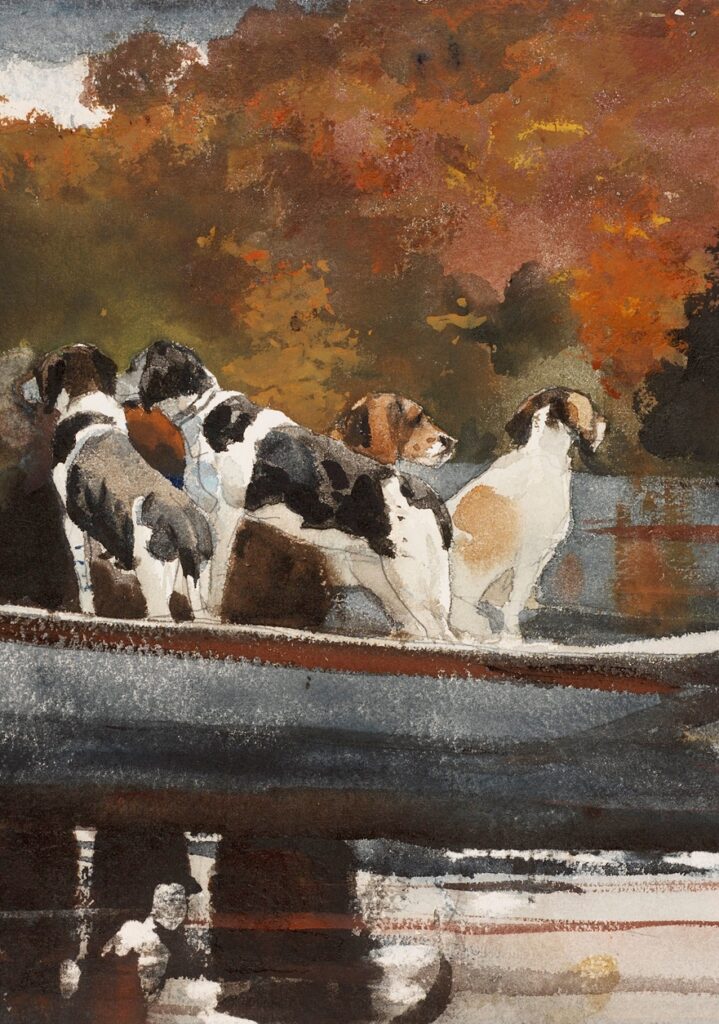
“The Dogs” by Zoe Ballering
In this sparkling, spare sci-fi by Zoe Ballering, the descendants of Earth’s elite trawl space for “the barest hint of life,” aching for what, and who, they left behind. Most of all, it’s the “unbridgeable chasm of difference” that they crave.
TMR’s online-only prose anthology, BLAST features prose too vibrant to be confined between the covers of a print journal.
***
The Dogs
In the beginning, everything died.
Songbirds, those perfect pockets of merry life, and parrots that spoke to us with our own voices; brawny, wise-eyed rhinos and gray whales with their bellies full of plastic bags. Seahorses dancing with their mates and the long-lashed camels that our ancestors once entered into beauty contests, and the squirrels on the branches sprinting and freezing and sprinting and freezing again. Our stories tell us that squirrels were nothing special, but we still miss them. Sometimes, as our children zoom around our tiny quarters, we scold them with the tenderest of words: “Settle down, little squirrels, settle down.”
It feels cliché even to recite the reasons why—these litanies we know so well. Microplastics, warming oceans, crazy weather. Forever chemicals slopped across our fields. All the calves came stillborn that year, the first year of the New Plague. It was like the biblical stories, but sadder and longer, for there was no Promised Land, there was only our planet, which was dying.
That which had integrity grew thin. Eggshells, spiderwebs, chitin, bone.
And the rivers ran red with toxic algae.
And the trees released their leaves in a great denuding.
And during all that time, cancer bloomed within us, so that we—the avatars of uncontrolled growth—were defeated by the principle that had enabled our dominion.
Furiously, we worked to save ourselves. We fled the cities, then the Earth. Only the best among us survived, or the richest. Sheikhs and oncologists. Playboys and botanists. Oligarchs and engineers. We come from a collection of kings and scientists and now we travel the universe searching for the barest hint of life.
Every so often, one of us passes through the solar system and reports back to the rest of the fleet. New Venus is what we call our planet, a name we use to distinguish between the world of our stories and the hot beige ball it has become.
“There is still nothing here,” say those distant, tinny voices. “We are alone—there is only ourselves and the dogs.”
***
In the beginning, we saved them.
Perhaps it was some lithium magnate who loved his Afghan hound more than he loved his girlfriend, or some hermit chemist who brought his mutt because he had no family. In the rush to leave, our record-keeping suffered. But however it happened, a single canine set off a chain of similar requests, and our fleet set out with 9,978 humans and a complement of dogs.
At first, we had no intention of leaving the solar system or even of leaving New Venus. We only wanted a clean, quiet place to fix ourselves. And we watched, despairing, as the network of lights, like a great beaded blanket draped across the land, went dark in ragged patches. Perhaps we would have stayed and devoted ourselves to bringing back life, but then the New Venutians tried to knock us from the sky. We had taken most of the useful space tech, but they still found a way to make their shoddy, deadly missiles. When our first ship fell, we understood their message: “If we have to die, why should you get to live?”
We wanted to call down and defend ourselves. We wanted to say that the answer was contained within the question. Die, live, life, life. We left to save ourselves, yes—we were frightened, unyielding, entitled—but we also left to save the evidence of life.
After that, we drifted through the solar system, though we gave New Venus a wide berth. Our scientists worked diligently in their labs, finding ways to arrest the spread of cancer and rinse the forever chemicals from our bodies and the bodies of our dogs. We perfected our skills as a spacefaring people: we improved our air recyclers and mined asteroids and tweaked our plants to make them hardier in space.
It was the dukes and the moguls and the socialites who were charged with managing our vessels, usually with a specialist or two to oversee their work. It was they who ran the galleys and purged the air recyclers and walked in space, encased in stiff white suits. At first they were resentful and inept, but over hundreds of years they became their own expert caste. Those hierarchies died out long ago—we no longer distinguish between scientists with their abstruse knowledge and aristocrats with their useful skills—but language remains. Still, when we taste something we do not like, we spit it out and say, “Who made this, the Queen of Spain?”
***
In the beginning, we stayed close.
When we finally returned to New Venus, we found a planet that was fully dead. New Venus, like Old Venus, was covered in a scrim of sulfur clouds. Even the amoebas had been burned away. Then we understood that there was nothing left to hold us to the solar system.
We drifted farther out. We still visited planets to collect the materials we needed, but mostly we adapted to space. We built vast and extravagant space stations and improved our ships. And the dogs walked beside us, always.
Our dogs are supermutts—an admixture of all the dogs from that first generation—but the hounds are the breed we have cultivated most. In space we have no rats to kill, nothing to herd, nothing to fetch. It is dogs’ noses that we need. They have grown longer and leaner, with deer-like legs and that exquisite S-shaped curve that greyhounds had. Our dogs are a rich golden brown we still call honey, and they have velvet ears that drag across the floor when they are following a scent.
Mostly we keep them because they please us. But they still work. They sniff out low blood sugar and the first signs of cancer. They identify bacteria in the air vents and fungus in the hydroponics bay, and when the nutrients in the soil aren’t exactly right for growing plants, they return to the red mat rather than the green one. It is the dogs that know, with utter certainty, when it is time to change the air recyclers. Our tech can do the same, but the dogs are faster and more accurate and we love how they sit and thump their tails when we tell them they’ve done a good job.
We are the eyes and they are the noses of the universe. But we miss the other creatures. Our stories tell us about bats that could hear the shape of the world and catfish whose bodies were covered in tastebuds and the star-nosed mole with a nose five times more sensitive than a human hand. And we miss the senses beyond our simple five—like the sea turtles that used the Earth’s magnetic field to navigate the oceans and the pit vipers that perceived the body heat of their prey.
If we didn’t have the photos and the samples and the proof from the scientists on Earth, our stories would seem like fables. Space, after all, is mostly space. It was an Earthman named johnmilton who named it so, so very long ago. Even then, trapped on that lush and living world, he understood that our universe was mostly made of emptiness.
How vast it is out here. How narrow it seems, now that we and the dogs are the only creatures able to perceive it.
***
In the beginning, we had company.
Lice, pinworms, bedbugs, fleas—all those passengers that rode upon our bodies. But they were unraveling too. Their egg sacs deflated; their damaged DNA unzipped itself. And those that survived—the superlice, the mutant fleas—could still not survive our attention.
Once we had stabilized ourselves, we exterminated them. It is a great regret among our people. But how do you explain to a scion or a surgeon or an astrophysicist, still in the early days of exploration, that their ancestors will miss the pests and parasites—fleas coursing across dog flesh and the brown speckle of bedbugs and the aphids and spider mites and fungus gnats that terrorized our crops.
We shouldn’t have killed the parasites, no. And pondering that error, we find others. Sometimes, when we think about the first generation that set out from New Venus, we wonder if we were wrong to bring the dogs. We could have brought more humans in their stead, but does it really matter? If twelve billion humans had to die, is sixty extra humans any sadder?
We wish we’d had more time to prepare. We wish we’d answered the New Venutians before we left that squandered world. We wish we’d assembled a menagerie, a Zooship full of life, a Noah’s Ark. And we the arks, when we noticed our affliction, purged ourselves. We wish we hadn’t done that. We wish we could go back. We wish we could go forward and find the evidence of life.
But the dogs, oh, the dogs! We can’t regret bringing them, not really. We love our children too, but each day they grow more legible to us, more human. Dogs never do. We’ve grown to understand them very well, and yet a gap remains—that unbridgeable chasm of difference that we crave.
We love to watch them scratch at the thin carpet in our quarters and turn in circles before they settle down to sleep. We love how delicately they smell our breath, their yips and bugles of affection, how they course across the cargo bay during Canine Hours with the pure joy of moving. We love how they fetch a ball with greater fervor than we devote to anything. We love their pink bubblegum tongues lolling from their mouths and how at any moment they might drop to the floor and assiduously lick their own crotches. We love how they cock their heads in confusion. Sometimes, when faced with a cosmic phenomenon that we don’t understand, we replicate their actions, standing on the bridge with cocked heads and questioning eyes, as if to say, “What newness is this, in this universe we thought we knew?”
***
In the beginning, we despaired.
We drifted even farther. We made our star maps. We sent back our reports.
We still perform our routine bioscans, which, after all these years, have come to seem like rituals. We still laugh and flirt and doodle and inspect our faces in the mirror. We still name our dogs after animals: Bear and Moose and Bee and Finch and Ferret and Lapwing and Lizard and Snail and Swan. If we close our eyes during Canine Hours and listen to the owners calling to their dogs, it really does sound like we built the ark we wanted.
We have wandered for ten thousand years. But what are years, even, when we have no Earth? “No life detected,” say the ritual bioscans. If we wait long enough, perhaps life will invent itself again. We are a melancholy people, it is true. But when we are playing tug-of-war with our dogs, when they dangle from our hands by a braid of rope, their eyes locked on ours with absolute devotion and resolve—well—then it is hard to be too sad. It is dogs that let us love this black expanse, this endless space.
But there is one more thing.
Sometimes, we wake to hear our dogs scratching at the door. Then we roll from our beds and take them out. Usually, our dogs are so obedient. They heel, they wait, they sit, they do not bark. But sometimes, very late at night, they disobey. They lope ahead of us as we chase them through the labyrinth of the corridors. They pass the dog-waste area and they keep running. It feels like a dream to follow them through that invented night. The lights are dim. The walls are gray. The air smells stale and familiar.
Each time, they lead us to the stardeck. They sit at its center. We stand at the edge where we belong. Then they lift their muzzles to the hard white stars and howl in overlapping spikes of harmony, deep and piteous and long. Our necks prickle at the first notes. So wild they sound, and so bewildered, crying their question to the void: “Where are the others? Where are the others in the universe?”
***
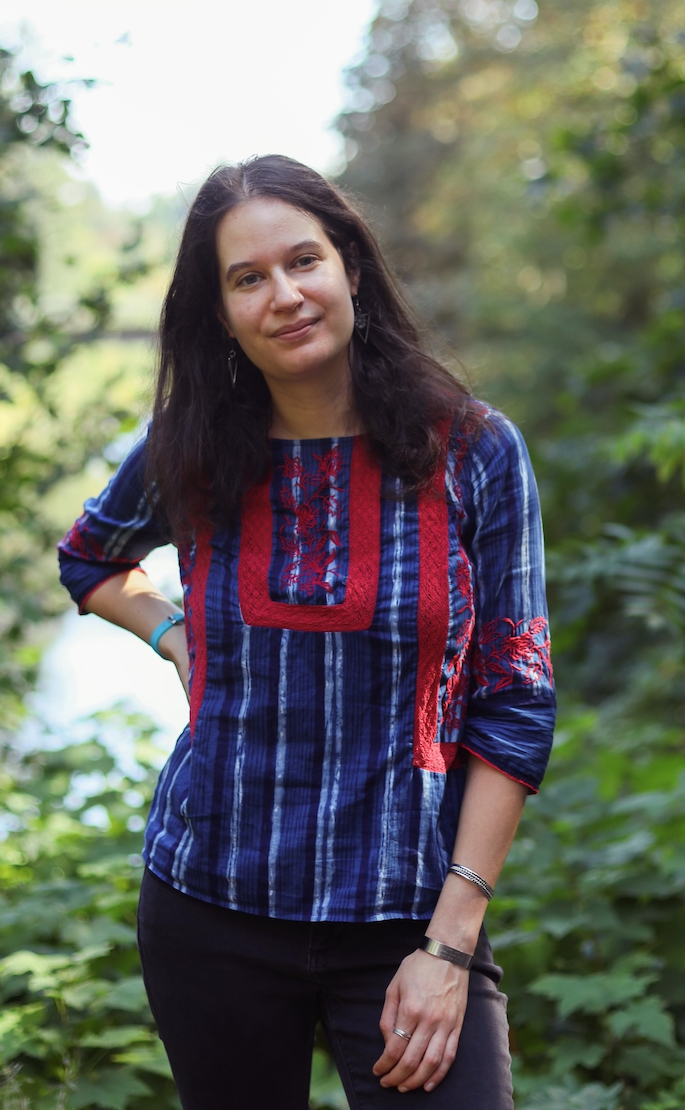
Photo by Michelle O’Shea
Zoe Ballering is the author of the story collection There Is Only Us (University of North Texas Press), which won the 2022 Katherine Anne Porter Prize in Short Fiction. Her stories have appeared in The Cincinnati Review, Electric Literature’s Recommended Reading, Hobart, and Story Magazine. Zoe is a 2025 Oregon Literary Fellow. She lives in Portland, Oregon.
SEE THE ISSUE
SUGGESTED CONTENT
Blast
Nov 05 2026
“Talking with My Mother at Midlife” by Andrew Cohen
A meditation on the crossroad that occurs at the cusp of middle and old age, “Talking with My Mother at Midlife” by Andrew Cohen approaches the grounding effect familial love… read more
Blast
Oct 22 2026
“Buckle Up” by Tyler Ayres
“Buckle Up,” is a story about two relationships of well-intentioned dysfunction and how they compare in a spontaneous moment. TMR’s online-only biweekly series, BLAST features prose too vibrant to be… read more
Blast
Oct 08 2026
“Starting Over” by Joseph Hamaker
In Joseph Hamaker’s short story, set in the busy years after World War II, the young son of a father who can do anything witnesses sudden devastation. Something can be… read more