
Poem of the Week | October 12, 2026
“Diorama 1871 (while a pie burns, the schoolteacher’s wife keeps going)” by Catie Rosemurgy
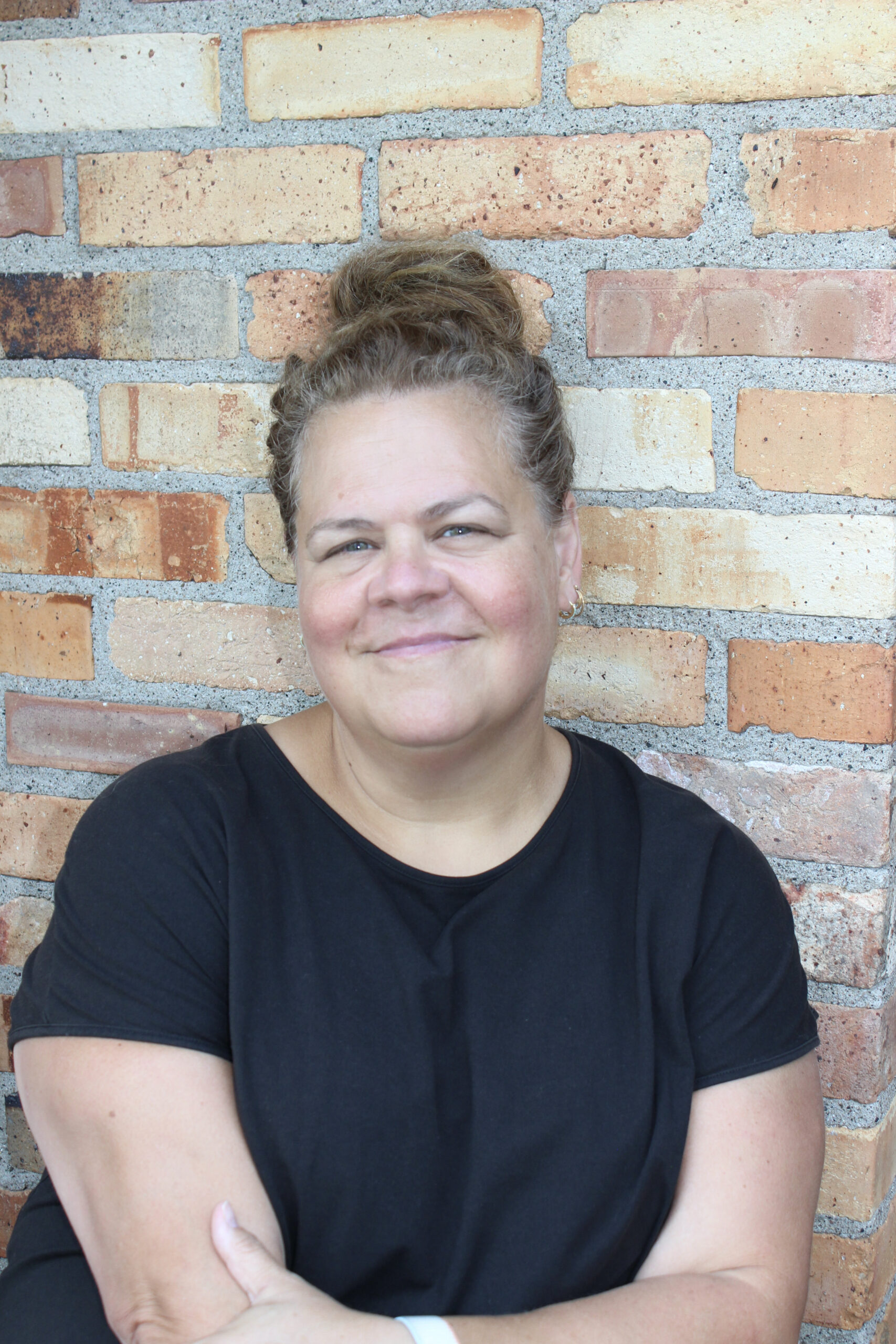
Catie Rosemurgy is the author of two books of poems, My Favorite Apocalypse and The Stranger Manual, both from Graywolf Press. She is the recipient of fellowships from the Pew Foundation, the National Endowment for the Arts, and the Rona Jaffe Foundation. She lives in Philadelphia and teaches at the College of New Jersey.
“Diorama 1871 (while a pie burns, the schoolteacher’s wife keeps going)” by Catie Rosemurgy is our Poem of the Week.
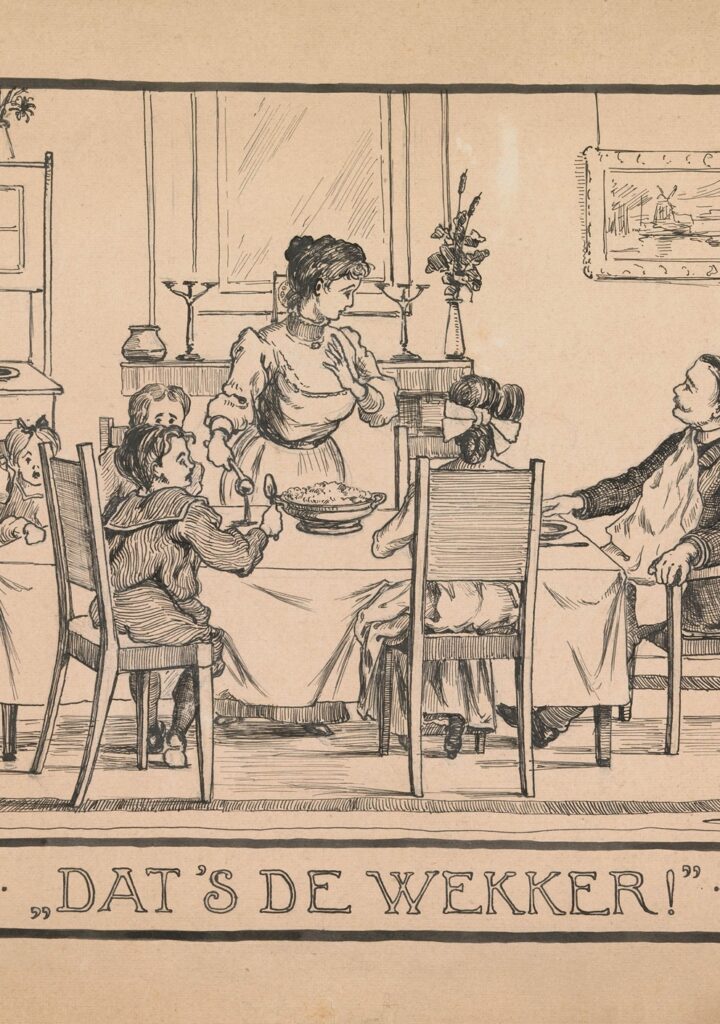
Title image: Gezin kijkt verschrikt op van het diner. Dat’s de wekker! (1930) by T.A.J. Vermeulen (Dutch, 20th Century)
***
Diorama 1871 (while a pie burns, the schoolteacher’s wife keeps going)
The newcomers arrived in Gold River in such large numbers. So much sudden. So many
stools, bunks, bowls, shovels, nails, cleavers, ladders
chutes, pipes, levers, cinches, planks, bolts, shears
stakes, plots, parcels, holdings, claims, allotments
freighters, schooners, barges, barks, steamers
disputes, interests, debts, ledgers, accounts
names, births, graves, clans, vows, curses, oaths
pins, hats, curls, cuffs, feathers, buttons, tokens,
elbows, tongues, femurs, arteries, knuckles, spines,
carvings, whittlings, peelings, dusts, shavings, fumes
spills, falls, pops, knocks, gouges, guttings
nicks, cuts, bruises, rots, punctures, sprains
fractures, limps, twists, tears, pulls, knots
pithings, pokings, severings, suturings, swellings
infections, fevers, fugues, visions, airs, aches
contusions, blisters, ruptures, drainings
abrasions, breakings, brandings, bulgings
boils, plaques, rashes, pimples, pustules
scrapes, bumps, gashes, stings, dislocations
oozings, numbness, faintings, blindings, chokings
Accurate records could not be maintained. They lost track of what hurt and how much and who felt it.
***
 Author’s Note:
This poem is from a book I began writing after visiting two local history museums in the upper Midwest near where I grew up. Both museums largely ignore the role of colonial settlement in their curation, and that silence felt hauntingly malignant to me in the days after my visit. One of the museums features a diorama of the once-thriving, now-deserted town in which the museum is located. As a way of exploring the fatal mixture of inability and unwillingness that prevents us from developing a shared, public narrative of our history, I began to write poems that imagine the tiny, white figures in the diorama beginning to speak.
SEE THE ISSUE
SUGGESTED CONTENT

Poem of the Week
Nov 02 2026
“Dreams of Birth” by Kathryn Kimball
Kathryn Kimball grew up in Montgomery, Alabama, has an MFA and a PhD, and taught writing and nineteenth-century British and American literature. Her translations and poems have appeared in various… read more
Poem of the Week
Oct 26 2026
“Observations meant to enlighten can also obscure” by Bob Hicok
“Observations meant to enlighten can also obscure” by Bob Hicok is our Poem of the Week. Title image: A Distant View of the Hudson River in the Fall (1873) by Jasper… read more
Poem of the Week
Oct 19 2026
“I Was Braver Than I Thought” by W. M. Lobko
W. M. Lobko’s poetry, interviews, and reviews have been published in journals such as Iowa Review, Kenyon Review, Washington Square, Boston Review, and Guernica. He has been nominated for a Pushcart Prize… read more