
Poem of the Week | November 02, 2026
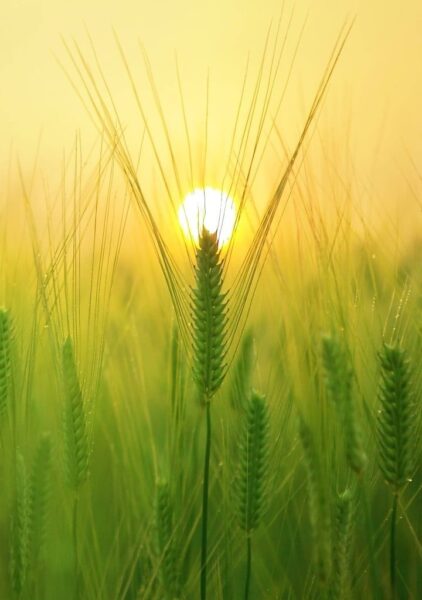
“Dreams of Birth” by Kathryn Kimball
Kathryn Kimball grew up in Montgomery, Alabama, has an MFA and a PhD, and taught writing and nineteenth-century British and American literature. Her translations and poems have appeared in various journals. She published a chapbook in 2021 and a volume of poetry in 2025 and won the Columbia Journal 2023 translation prize. She lives in New York City.
“Dreams of Birth” by Kathryn Kimball is our Poem of the Week.
***
Dreams of Birth
We’ve all had them—
dreams in which we fly
or die
or meet those long buried.
I was kissed on the neck
by a friend long dead.
I asked what dying was like.
“Benedetto,” he said.
I’m mostly me in dreams
but was once a bear,
and on one strange night
a seed.
In the spindly unfolding
of my green heart
I felt desire.
Up, up, up,
pushing through the dirt and dark
of birth, sex, death
and desire for new birth.
Benedetto.
***

Author’s Note:
This poem is true, at least the part about the dreams I’ve had. Of course, a poet has license to lie, a questionable business for some, like Plato, who proposed exiling poets from the ideal city because they imitate imitations and pretend to know more than they do. I don’t know what death is or what comes after.
Yet poets tap into something real when writing or dreaming, however flawed and full of holes the transference of feeling to materiality may be. We are woefully conditioned receivers. We may believe or not believe in life after death, but still we must record our yeas and our nays as we have experienced them.
So, yes, I did dream, once, that I was a bear. I did dream that my long–dead agnostic friend, a proficient speaker of Greek, English, French, and Italian, said the passage into death was benedetto (a word that I had to look up when I woke). And strangest of all, I dreamed I was a seed, a seed with the desire to push into the green world of experience, as hard and as fraught as it is.
Surely, the truism of the departed being always part of you is true. Yet more and more, I see the futility of attaching to the personal self, protecting the personal self, arguing for the primacy of the personal self. So much energy is expended clinging to what is transient, when being simply aware of what endures can be counted as joy.
My friend did not want to die. I spent two quiet days with him at the end. His last hours were spent in my arms, his head resting on the gray cashmere sweater I was wearing. I felt again the pain of his diagnosis and long struggle. He lay in my arms a very long time, his head cradled there. He didn’t move. The sweater was very soft—I think he found it comforting. We all have to die. How shocking and incomprehensible that phrase is. Benedetto.
SEE THE ISSUE
SUGGESTED CONTENT
Poem of the Week
Nov 02 2026
“Dreams of Birth” by Kathryn Kimball
Kathryn Kimball grew up in Montgomery, Alabama, has an MFA and a PhD, and taught writing and nineteenth-century British and American literature. Her translations and poems have appeared in various… read more

Poem of the Week
Oct 26 2026
“Observations meant to enlighten can also obscure” by Bob Hicok
“Observations meant to enlighten can also obscure” by Bob Hicok is our Poem of the Week. Title image: A Distant View of the Hudson River in the Fall (1873) by Jasper… read more
Poem of the Week
Oct 19 2026
“I Was Braver Than I Thought” by W. M. Lobko
W. M. Lobko’s poetry, interviews, and reviews have been published in journals such as Iowa Review, Kenyon Review, Washington Square, Boston Review, and Guernica. He has been nominated for a Pushcart Prize… read more