
Featured Prose | November 12, 2026

A Conversation With Matthew Salesses
Matthew Salesses is the author of several books, including the national bestseller Craft in the Real World: Rethinking Fiction Writing and Workshopping (Catapult, 2021) and the PEN/Faulkner-shortlisted novel Disappear Doppelgänger Disappear (Little A, 2020). His forthcoming memoir, To Grieve Is to Carry Another Time (Little, Brown and Company, December 1, 2026), follows the death of his wife, Cathreen, from stage-four stomach cancer, and moves through questions of adoption, racial melancholy, and what it means to keep loving someone after they’re gone. Salesses was adopted from Korea as a toddler and teaches creative writing at Virginia Tech. Cherry Lou Sy spoke with him about grief, doubling, the ethics of writing about real people, and what it means to be known.
* * *
CHERRY LOU SY: Before we get into the philosophical terrain of the book, I have to say—the passages on Cathreen’s death are devastating, in the best sense. It felt almost like witnessing an intimate process of grieving in real time. Your book moves through a lot of philosophical and ontological questions about being, so I wanted to start there: can you talk about your relationship to melancholy, and specifically to racial melancholy?
MATTHEW SALESSES: When Cathreen died, there was a lot of pressure to move on as soon as possible. As more people were saying, you need to move on, it’s been however many months or weeks, I felt like—one, I don’t think I can do that, and two, I don’t know that I want to do that. I wanted to hold onto my love for her.
With racial melancholy, which is an extension of the Freudian idea of melancholy as continuing to desire the lost object, rather than desiring something else, there is the idea that, if we can’t get rid of our desire for belonging to a society that systematically excludes us, we can at least be in community with other people like us. Just being in community, as an Asian American, has really been the way I’ve been able to live with racism in a way that doesn’t feel debilitating. After Cathreen died, I thought there was a lesson there about continuing to want something impossible to have.
CS: You’ve mentioned in your writing that Cathreen also made you Korean Korean—that phrase has stayed with me since I first read it. There’s something in it about diaspora, about doubling, about only understanding an identity once you’re standing outside of it. Can you talk about the origin of that phrase, for you?
MS: That’s a good question. I wonder when I first came across that phrase—maybe when I was in Korea, having to explain what I was, and some way of distinguishing between being Korean American and Korean Korean. But it’s also a phrase I’ve heard used by other adoptees.
I bet almost anybody in the diaspora feels some kind of way about their experience versus the experience they might have had if immigration hadn’t been part of it. I remember going to the Asian American Students Association the first few weeks I was at university, thinking I’d finally have some community. But I felt so different from them—the experiences that other Korean Americans had, growing up in families with Korean parents, were so far from my experience, or my lack of experience, with anything Korean. It didn’t even feel like I was in the diaspora. It felt like I was just something else completely.
CS: There’s also this idea of doubling and doppelgängers that you’ve returned to across your other work—and it comes up again here, with the version of you in the memoir. There’s something particular about someone who’s felt identity loss from very early on conceiving of a double: a version of Matthew out there who looks like you but is more you. Can you talk about your relationship to that idea?
MS: I was just reading The Life You Want, by Adam Phillips, and in the prologue, he says that parenting is basically rewarding children for being what the parents want them to be and punishing them for being what the parents don’t want them to be. Once you grow up and leave home, you end up seeking out people who either reinforce that idea of who you should be, or people who contest it. He says we’re haunted by the ghosts of who we were unable to be.
I felt like that as a kid, and I still do now—whether it was the life I thought I would have had if I hadn’t been adopted, or the life other people saw when they looked at me, or thought I should have. It always felt like the life I was in was, in some ways, the least correct life—and that there were maybe other possible correct lives, but none of them were the one I had.
Maybe because I was adopted, because I had spent time in the life I was born into and then was thrust into another, I felt like the ghosts of my other lives were very nearby. Sometimes as a kid, if I was home alone, I’d feel like—if I could just step through the wall, I could be in that other life. After Cathreen died, I felt a very similar feeling, like time was that wall and the life I wanted was so close—especially right after she died—physically close, like if I could just figure out how to move the right way, I could be with her again.
CS: That’s such a profound way to think about it—the wall, and how close it felt right after she died. It makes me think about your birth parents, who you don’t know. If they were to pass, do you think you’d feel it? Would that double of you, somewhere, feel it?
MS: I have read that, when babies are born vaginally, there’s an exchange of genes that happens—a horizontal genetic transfer between the baby and the mother—so that if the mother has other children, afterward, those babies get a horizontal transfer of genes too, meaning if you’re a younger sibling, you have genes from your older sibling.
For adoptees, when people find their birth families, they often end up finding siblings—a lot of adoptees don’t think about siblings until they’re suddenly there—and if your birth parents die, that could mean there is a part of you there with your birth parents when they pass, that even if it’s not a doppelgänger, or some other version of you, that feels it, it might be your siblings, who carry some of your genes.
CS: Because you write so intimately, I feel like I know you—even though I don’t, not really. It made me think about what it means to know a person at all, especially since none of us always has full access to ourselves. Have you thought about this—about people feeling they know you through the book, versus how you, or the people around you, might know yourselves?
MS: It’s comforting, in a way, to think that you’ll be known—maybe that’s all writers are trying to do, is be known by people. But then there’s this thing my sister says all the time, a lot of people say it: “You know me, I’m like blah blah blah.” Every time she says it, I think, no, I don’t know. We don’t even know ourselves.
I don’t think it would even be good for us to know ourselves fully—I think we’d be so simple. It’s like fixing yourself in time. What would be the point of living on, if you knew everything about yourself, or thought you did? It makes me uncomfortable when somebody presents themselves as if they know everything about who they are. But maybe that’s projecting—because I feel like I don’t know myself, and I want to believe that’s a good thing, because it means I can change.
I grew up really Catholic—my parents still are, they go to church all the time, my dad was a deacon when I was growing up, and at some point was going to become a priest or a monk before he married my mom. But going to church all the time, I think the thing that made me not want to go was this feeling that something supposed to be so all-encompassing could be something people claim to know so fully. As I’ve gotten older, I think if there’s some kind of beauty in religion, it’s the mystery of it. The mystics appeal to me a lot more now—the mystery of it all is so much more interesting than feeling like you know God and are known.
Do people feel like they know me? I don’t think you can know somebody from a book, but it is comforting to think. I’m not including everything, though—just the things I thought were relevant to grief. So people are getting a version of me that’s grieving all the time, which I am, but there’s other things happening too. Even the grief I’m doing—I don’t feel like I understand it that much more than I did before I started writing. It still feels so mysterious. You’re sitting around one day, watching a show, and suddenly you’re crying. That’s still happening to me, eight years out. I can’t imagine it won’t be happening twenty-eight years out.
CS: There’s that phrase—”it felt like it was just yesterday.” We hear that all the time, and I think there’s real truth to it: the feelings can rise up so strongly that it feels recent, even though, as you said, it’s been eight years. It’s almost like you’ve projected a double of yourself into the book—Matthew is still evolving, right?
MS: Yeah, absolutely—I think that’s right. Isn’t that every book? It’s a double.
CS: I want to shift to your pedagogy. Craft in the Real World changed how a lot of people think about the workshop model. How has working on that book, alongside your grief and your thinking about melancholy, changed how you teach now?
MS: Almost all of my tenure-track career has been after Cathreen’s death—I got my first tenure-track job in 2017, and she died in 2018. When I came back that semester, the grief was so present that I couldn’t help but teach it. I was teaching a course on desire, and I was telling my students about how I was grieving, because it was inseparable from what we were talking about in class—but also inseparable from how I was teaching them, or from what I could teach them.
Whatever I’m teaching ends up working its way into what I’m writing, and what I’m writing works its way into what I’m teaching—it’s hard for me to separate them. But I also think, for me, teaching—I have to be able to do it from a sense of self that’s still learning who I am. I think if I lost that, I wouldn’t be able to teach at all. So I have to go into class with a kind of mindset that I’m in the process of learning who I am in life, in order to feel like I can be part of a process of teaching that isn’t just the old top-down model. But it’s hard—I think it gets harder every year.
CS: What feels harder—the teaching itself?
MS: Maybe not the teaching exactly, but the emotional energy of teaching in a way that leaves the self vulnerable and open to the way students think or want to think they know you. I did a panel at AWP a couple of years ago, and someone in the audience asked something like—I’m listening to all of their concerns and fears and worries, we’re all being very vulnerable and open, but then they walk out of the room, and I’m just stuck there; how do I get out of the room? It becomes harder and harder for me, every year, to get out of the room.
CS: Would you like to get out of the room?
MS: I don’t know—that’s a good question, it’s just hard. I don’t know if I’d want to get out of it, but it is hard.
CS: It’s hard—and I ask that because I feel like whatever that room is, it’s become part of a person’s identity. But this idea of leaving that behind, of shedding that identity—that can be scary, because it’s what you’ve perceived to be safe, even if it’s stifling. So—what’s your thought on that, especially because your identity as a person, as a writer, as an academic, is tied to melancholy, to grief? Could you be someone else, outside of that?
MS: Maybe I could be somebody else, but I wouldn’t be myself. I’ve had this difficulty with the memoir that I didn’t have with fiction, or even with the craft book. With other books, I felt like I was able to get out of the room once it was a book—I spent all the time in the room, tried to put everything I could into it, but then I was able to get out. But maybe because this is a memoir, I can’t—
CS: There are no boundaries, right?
MS: There are no boundaries. It makes it difficult even to talk about the memoir, because it feels like my life is the memoir.
CS: Your life is the subject?
MS: Yes—I’m not able to get out of the room with the memoir. It’s a weird experience.
CS: That makes me think about what it means to interview someone who’s written this openly about themselves—how do you ask questions without feeling like you’re intruding on someone who’s still actively grieving?
MS: I am kind of trying to prepare myself. People ask invasive questions all the time, even with a novel—I still get asked those questions. But now, my life is in this book.
CS: And then real people.
MS: Yeah—it’s easier when you feel like you’ve done so much work to understand a character, and you understand them as best you can, and you’re not going to understand them any better as life goes on, because their life isn’t going on. But I don’t understand myself in a way that isn’t going to keep evolving—it has evolved, in a way. I could write this memoir again every year, and it’d be different.
CS: I was curious about how the memoir was constructed—I know parts of it are from previous essays you’d written. How was the process of revisiting those pieces, collating them, and then writing new material to construct the memoir?
MS: I took all the essays I had and went through them trying to find any pieces that were still interesting to me, that would work in the context of this book. I cut those pieces out—I was using Scrivener—so I had hundreds of these little pieces, and I printed them all out and put them in columns, according to subject matter, time in my life. Then I tried to turn them into a book, but it didn’t go well, to be honest—I had trouble figuring out a way for the story to feel like it had a time of its own.
And then—I went to the psych ward, and while I was there I was taking notes, in a little notebook, on the things I was observing. When I got out, I realized very quickly that that was a part of the book—probably the beginning of the book. And once I understood where, in time, the book was anchored, I was able to put the pieces together much more easily. So that’s kind of how it played out.
CS: I haven’t even asked about the time in the psych ward—that was such an eye-opening passage. It felt like you were falling apart as she was falling apart physically—because, at least to me, it read like your Korean-ness, or your perceived Korean-ness, had become tied to Cathreen, and as she was falling apart, that sense of security you felt with her started to fall apart too. It was so tragic and traumatic—I was reading it as someone in the Asian diaspora, too, so I could understand that. It almost felt like watching someone and being unable to help them. And from Cathreen’s side, at least from how you relayed the story, she could see it too, but there was nothing she could do—she could only will herself and her health so far, but the inevitable was there. That was moving to witness through the text, knowing your entire identity was hinged on the very existence of this woman living.
And what did it mean, for her and for you, when she was no more? What does “no more” even mean? It made me think—by writing about her, her memory is kept alive. There’s that Jewish phrase people say when someone passes: “May their memory be a blessing.” And I was reflecting on how, when people pass, there’s usually a rose-tinted view of who they were. You didn’t do that—but did you have impulses to write something closer to hagiography, where she did no wrong, where she was perfect?
MS: Right after she died, I did think of her that way. It strikes me as similar to when you first fall in love with somebody—they become this kind of ideal version, and the danger is forgetting that they’re a real person, with their own Otherness. After she died, it was the same thing—she became this kind of ideal again, and there wasn’t anyone there to counter that ideal anyway. I think the brain finds the ideal comfortable—there’s probably some protective measure to that—but that’s not a real person. It’s like keeping your love of somebody trapped, like Snow White inside some glass case, unable to be a living, full person.
Part of grieving, for me—thinking of things that weren’t just ideal about her—was helpful, not just for grieving, but for loving. Maybe it’s easier to “move on” if you keep somebody in that ideal state. But trying to live with the melancholy, I think for me, was also trying to live in the kind of love I had for her before she died—a love where I tried to see her fully, and not as a construction of my own love for her.
CS: I thought you did such a beautiful job of not writing a hagiography—you leave in enough small, complicating details that we see cracks in the mirror, that Cathreen wasn’t a perfect person. There’s a moment, for instance, around an argument, where you’d said something like “I’ll just finish this argument—just slap me right now,” and Janine, your second wife, later pointed out that it was “abuse.” Was including details like that a deliberate choice, or did an editor push you toward it?
MS: No, I did it intentionally. I was thinking about the way all these things compounded for me—adoption, Cathreen dying, racism growing up, but also my dad hitting me. I wanted to think honestly about—I think this is in the book—while Cathreen was alive, I didn’t want to think too hard about what symbolic weight she was holding for me. But when she died, or at least when I was writing the book, I felt like I had to look. I had to think about what it meant that I had married someone Korean Korean, and I had to think about the violence.
I still don’t exactly know what it means to grow up being hit, and then to marry somebody who would hit you sometimes, and to want that as a way to end an argument faster. It just wouldn’t be honest to write about our life together without those things.
CS: Do the people in your life know they might end up being written about, simply because they’re close to a writer?
MS: My partner’s a poet, so I’m hoping she understands that these things happen when you’re around a writer. But I couldn’t have written any of this about Cathreen while Cathreen was alive—though I also wouldn’t have had to, because it was really her death that was the reason for writing it.
I also thought I wouldn’t write a memoir while my parents were still alive, because of everything I’d have to reveal. To understand how grief affected me, you have to know certain things about my childhood. But I went up for tenure, so I had to finish the book as part of that. My parents still haven’t read it—I don’t want them to, because I know they’ll be upset. But could I have written a book that would even be helpful to somebody grieving, without being honest?
CS: What’s next for you, in terms of other projects?
MS: I’m working on a novel about an Asian American revenge cult. It’s climate fiction—it bothers me the way we buy this narrative that we’re individually to blame, that the action we take is recycling or going vegetarian—those things are fine and good, but they don’t actually make any kind of statistically significant difference. It’s just a way for companies to escape their own responsibility and put it on us. I’ve been thinking about what kind of action we might take if we tried to do something that wasn’t about our feelings about climate change and was instead about holding those responsible responsible.
Also, I thought it’d be fun to write a revenge story—I like revenge K-dramas a lot.
CS: Which one’s your favorite, revenge-wise?
MS: Itaewon Class is pretty good. But there are so many—there’s something very satisfying about them. I started to think there must be a place for revenge—maybe even a rehabilitative or reparative quality to it. Revenge is our oldest system of justice, and yes, it often goes wrong, but what if the first Koreans who came to America also started a revenge cult, in very Korean fashion?
* * *
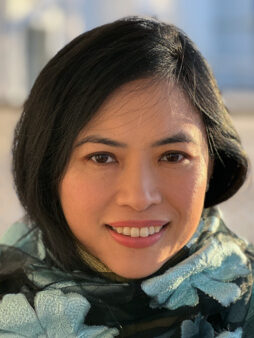 Cherry Lou Sy is a writer & playwright. Her debut novel, Love Can’t Feed You (Dutton, 2024) received a starred review in Publisher’s Weekly, is an Amazon Editor’s Pick, and was featured in People magazine, Vogue, Harper’s Bazaar, and Real Simple. Selected work is published or forthcoming in Shenandoah Lit, Massachusetts Review, Electric Lit, and The Rumpus. She received magna cum laude honors at NYU’s Gallatin School with a BA in Cultural Theory. She is a graduate of Brooklyn College’s MFA Playwriting program as a Kimberley Phillips-Boehm Scholar. Her work has been a finalist for the Public Theater’s EWG, and the Bay Area Playwrights Fest; she was a 2026 Fresh Ground Pepper PlayGround Playgroup Fellow. She currently serves as the senior prose editor at The Adroit Journal and is a frequent interview contributor to Electric Lit. For more info: chapter1.media
SEE THE ISSUE
SUGGESTED CONTENT

Featured Prose
Nov 12 2026
A Conversation With Matthew Salesses
Matthew Salesses is the author of several books, including the national bestseller Craft in the Real World: Rethinking Fiction Writing and Workshopping (Catapult, 2021) and the PEN/Faulkner-shortlisted novel Disappear Doppelgänger… read more
Featured Prose
Oct 15 2026
A Conversation with Mitch Wieland
Mitch Wieland’s short story “Snow Angels” debuted in the summer 2015 edition of The Missouri Review. In the years since, Wieland adapted the story into his forthcoming novel, The Ghosts… read more
Featured Prose
Aug 27 2026
“Snow Angels” by Mitch Wieland
“Snow Angels” by Mitch Wieland first appeared in TMR 38.2 and later in the TMR anthology Hello, I Love You: Stories of Romance. Wieland turned the story into a novel, The… read more