
Foreword | July 10, 2026
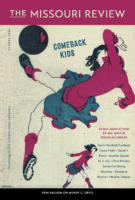
Comeback Kids
Speer Morgan
Comeback Kids
It takes a long time to become young.
–Picasso
The history of literature is replete with comeback books—masterpieces that came out late in their authors’ careers and were initially overlooked. Often, the books were just a little too realistic about life’s problems and our own unpredictability in weathering them. Take Moby-Dick, which ends with only Ishmael to tell the tale. After Melville’s lighthearted, best-selling South Seas adventures, this epic of fanatical human destructiveness was considered hyperbolic and sprawling (which it is, among other things). It remained obscure for seventy years, only to be rediscovered during the 1919 centenary of Melville’s birth. The Great Gatsby, a fierce autopsy of the American Dream, was a midcareer failure for Fitzgerald. It took a posthumous Armed Services Edition to rescue it from the bargain bin and establish its status as a classic.
Stories of social defiance by women—especially ones that were too gritty or real for their time—usually faced uphill battles. Kate Chopin’s The Awakening and Zora Neale Hurston’s Their Eyes Were Watching God both featured women resisting a stifling patriarchy. Published late in their authors’ careers, both books were initially dismissed by readers, who were unready for their honesty.
In postmodern American fiction, war and the ingenious destructiveness of humankind were primary subjects. Joseph Heller’s Catch-22, set in World War II, was published in 1961 when Heller was thirty-eight years old. It was poorly received and not widely recognized until American involvement in the Vietnam War. With a dark comic tone, the novel portrays antihero Yossarian, a bombardier who keeps being assigned more missions over Italy. He tries to get out of them every way he can, including by acting childishly insane, pulling pranks, or refusing to wear his clothes. Yossarian discovers the paradox of war: the military rulebook states that one must be considered sane if he doesn’t want to fly and risk death; therefore he can’t be excused from flying. “Catch-22” became a neologism of postmodern life and literature, with chaos and black comedy as signatures of the era. Gone was the formalist effort to dress up the world with literary elegance.
Kurt Vonnegut used a method of slapstick in which the darkest subject, such as the 1945 bombing of Dresden, became a casual science-fiction-like portrait of the indifference of humankind to slaughter. The same goes for Thomas Pynchon’s WWII novel, Gravity’s Rainbow, with its postmodern buffoonery and paranoia, including a frighteningly logical depiction of the construction of the totemic destroyer of the century: the supersonic German V-2 rocket.
Toni Morrison was an editor who didn’t put out her own first novel until she was forty. Beloved, her fifth novel, describes a mother who is tormented in later life by the choice to murder her infant daughter rather than allow her to live in bondage. The ghost of her beloved becomes more real than a living person. In this and other works, Morrison uses fragmented timelines, with past melting into present, metafiction that combines history, speculative fiction, and magical realism.
If you are a student, faculty member, or staff member at an institution whose library subscribes to Project Muse, you can read this piece and the full archives of the Missouri Review for free. Check this list to see if your library is a Project Muse subscriber.
Want to read more?
Subscribe TodaySEE THE ISSUE
SUGGESTED CONTENT
Foreword
Oct 07 2026
Searching for Life
Searching for Life The writers in this issues find authenticity in ways that remind me of Stoic or existential thought. They speak of acting on one’s own, finding meaning… read more
Foreword
Jul 10 2026
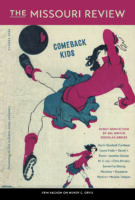
Comeback Kids
Comeback Kids It takes a long time to become young. –Picasso The history of literature is replete with comeback books—masterpieces that came out late in their authors’ careers and were… read more
Foreword
Apr 23 2026
The Cost of Living
The Cost of Living The rise in cost of living throughout much of the world is a current concern for good reasons, though the value of money in the United… read more