
Blast | February 06, 2023

“Banned” by Laura Venita Green
BLAST, TMR’s online-only prose anthology, features prose too vibrant to be confined between the covers of a print journal. In “Banned,” Laura Venita Green gives us two long-estranged sisters, separated by mental illness and the pain of rejection, who are reconciled in an unlikely place. “Banned” was a finalist in our 2022 Editors’ Prize contest.
Banned
Laura Venita Green
Lainey’s weekend bag sat by the garage door, and a pot of coffee was nearly finished brewing when a text came through from her sister: DON’T!!! She’d been ready to say goodbye to her husband, Kevin, and her stepdaughter, Mena, and to start the five-hour drive from Austin to west Louisiana for her dad’s seventy-fifth birthday. She hadn’t been back home since she’d left for a job more than two decades ago. When she left, her little sister had banned her from returning to their home. Over the years, she’d extended that ban to include their town, their parish, the entire state.
Guess you told Amelia, she texted to her dad’s phone, and the dot-dot-dot danced around for a minute until Couldn’t risk her having an episode when you drove up unannounced. Don’t try to get out of coming! popped up.
She turned off her ringer and put her phone screen down on the kitchen counter, and then she poured herself a cup of coffee. Spilled drops hissed on the burner. Through the window above the sink, she watched the sun rise over Lake Austin. Leading up to the trip, she’d had a ton of nightmares, picked fights with Kevin, overlooked work meetings that she’d requested and marked on her calendar. She took a swig of coffee and gagged a little when she swallowed; she’d forgotten to add milk.
Mena, who hadn’t yet gone to bed, entered the kitchen and hung back in the doorway. Three weeks ago, she’d dropped out of her second year of law school and had come to stay with them for an unspecified period of time, quickly adopting a nocturnal life. She held Lainey’s miniature schnauzer in the crook of her arm.
“Pepper says auf Wiedersehen,” Mena said, moving the little dog’s paw up and down in a gentle wave. The other dog, a mastiff mix, lumbered in at the sound of her voice. “Shadow just says auf, auf.”
Lainey tried to smile. She bent over and leaned her forehead on the countertop.
After a moment she felt Shadow nudge her hip with his nose and heard Mena say, “You’re really disappointed in me, aren’t you?”
Lainey turned her head and squinted across the room at her stepdaughter, experiencing the sort of disconnect that she sometimes felt as a stepmom. Disappointed? Mena was a twenty-eight-year-old grown woman. She’d already been fifteen when Lainey had started dating her dad, eighteen when they’d married. She’d gone away to college, graduated with a studio arts degree, and moved to Brooklyn, lived with a bunch of roommates, paid her rent bartending, and created incredibly intricate large-scale textile art mostly from found objects. A few years ago, several Brooklyn-based artists had broken into the padlocked old Domino Sugar Refinery in Williamsburg for an unsanctioned art exhibition. Lainey and Kevin had ducked under a fence and climbed through a broken window to attend. One of Mena’s tapestries, a night sky packed full of lace stars, covered an entire two-story brick wall of the refinery. She’d spent eighteen months working on it, and it was by far the most dazzling piece in the show. At the end of the night, she had set it on fire. The entire room watched it blaze, and Lainey had stood clutching tightly to Kevin’s hand, silently crying in the dark room. The last time she had felt that moved by art had been listening to her sister play the piano when they were girls. Such a long time ago. All this to say that no, Lainey wasn’t disappointed. Maybe a little judgey, because it was obvious to anyone that Mena should have never gone to law school—she was an artist—but judgey was different than disappointed. Lainey loved Mena very much, but from a polite distance because they were only thirteen years apart in age, and Mena already had a perfectly functioning mother.
“I think what’s happening is that I’m having my first real nervous breakdown.”
Mena put the little dog on the countertop, and its nails clicked as it scampered over to Lainey. “Oh. You want to tell me about it?”
Lainey stood and picked up Pepper, putting a hand on Shadow’s neck so he didn’t feel left out. “It’s just my dysfunctional family. My dad wants me to visit for his birthday, but my sister’s mentally ill”—Lainey almost never said that aloud, but it was the unavoidable truth—“and she really doesn’t want me to come. I don’t know. I feel like I have to go, but maybe not.”
“Well,” Mena said, “I don’t have a heck of a lot going on right now, if you think having company would help.”
It wasn’t that Mena was stuck up or that Lainey was embarrassed by her family. It was just that Mena had grown up with professional parents in a world of education and culture and vacations, and Lainey could picture her forced neutral expression when they drove together onto the dirt road and past the trailer park to get to the house where Lainey grew up. Lainey imagined Amelia peering at them, paranoid, from behind a curtain while they parked, and then hiding away for the whole visit. Lainey stopped herself from saying “Don’t worry about it” and instead said, “Yeah, I’d love company.” She saw a light enter Mena’s eyes that had been missing lately.
***
While Mena went to pack a bag, Lainey crawled into bed with Kevin. He wound his body, warm from sleep, around her, and immediately she relaxed in his arms.
He slid his hand down her inner thigh and kissed her neck. “Why don’t you just Bartleby this trip and stay in bed with me?” he whispered in her ear.
She laughed, and he squeezed her tighter.
“Oh, god, I want to. But I promised my dad and . . . Mena’s coming with me now.”
At that, Kevin sat up and Lainey rolled onto her back.
“Really?” he said. “How did that happen?”
“Well, she’s been up all night, and I asked her to come. I think she could stand to get out of the house, don’t you?”
Kevin got up and grabbed his robe from a hook just inside the bathroom door. “Hell, yes, I do,” he said. “This is excellent. Try to find out what’s going on with her, okay? But no pressure. You know what? Never mind. Just have a great time.”
He opened the bedroom door to both dogs, waiting on the other side. He gave them each a vigorous pet and then motioned for Lainey to come on, come on.
Mena sat in the chair by the garage door, ready to go. She wore a strappy summer dress that showed off all the tattoos one of her old Brooklyn roommates had given her. She tensed up a little when Kevin came in grinning, overenthusiastic, holding the dogs back that were already vying to get in on the car ride. She endured a quick hug. Poor guy. His level of parental worry whenever his daughter went through a rough patch was something Lainey understood but could never match in feeling. It was obvious to Lainey that Mena would stop being so standoffish if he could just be cool. But Kevin had never been good at hiding his true feelings, one of the many things that Lainey loved about him.
He waved goodbye while Lainey backed out of the driveway. Mena reclined the passenger seat and fell asleep before they were even out of the neighborhood.
They got onto Highway 71 and had about eighty miles before they hit I-10 in Columbus, which would take them almost the rest of the way. Lainey drove it in silence, both hands on the steering wheel, breathing in through her nose, out through her mouth. She couldn’t shake the feeling that something terrible would happen if she visited home, a feeling that had stopped her from going all the other times she’d tried over the years. Her sister’s bans were powerful—Amelia hadn’t been able to function without them while they were growing up, so the family had always treated them as reality. But this time her dad had insisted—so unlike him—said he had some news he’d only share in person. Which of course made her think he was dying, and then what would happen to her sister?
Her vision narrowed to a tunnel. She picked out a station wagon driving just under the speed limit and followed it closely all the way to Columbus, where she stopped at a gas station before they got on the interstate. She woke Mena up to use the restroom. As she filled up the gas tank, she looked at all the texts that had come through from her sister—Don’t come, don’t even try it. Don’t. Don’t. DON’T!—and decided that this trip was a no-go; she’d just have to call her dad and tell him it was impossible.
But when Mena came out of the convenience store, she was loaded up with supplies—Snickers, Doritos, Nerds, two Smartwaters, Ziploc bags, a pad of paper, and a pen—and had the giddy manner of a little girl who was getting away with something. She put the waters in their cup holders, threw the junk food in the back seat, and put the Ziplocs, pen, and paper in her lap. She pulled something from the pocket of her dress.
“Look at this,” she said. She uncrumpled a piece of cloth and smoothed it out on the dashboard. It was a patch, ragged and dingy gray, with “Gigi” stitched in red. “I saw this hanging off the cashier’s shirt. By one single thread. I hadn’t even thought about starting another project, but I haven’t done any work in forever and I think it’s killing me. So I just asked her, can I have that? She looked at me like I was insane, but then she snapped it off and handed it over, just like that.”
Mena flipped open the cover on her pad of paper and wrote: 8:43 a.m., April 17, Star Stop 71 gas station,
“What city are we in?”
“Columbus.”
Columbus, Tx. With Lainey on road trip to La. Saw this hanging off cashier’s shirt by one single thread. She handed it over on request without speaking.
Mena held the Gigi patch to a tattoo-less spot on her upper arm. “Might be good enough to make the collection,” she said, then zipped the nametag and the paper into the baggie and beamed up at Lainey. “All good?”
Lainey showed Mena some teeth, the best she could do.
Mena reclined again and shut her eyes. Lainey pulled away from the gas station, feeling nauseous, feeling like she could barely manage a breath, her head hurting so badly she had to squint to get on the interstate. But once she pulled onto the entrance ramp and got moving on I-10, the strangest thing happened—her body relaxed, her senses sharpened, she felt great. Night and day. Maybe it was Mena’s enthusiasm, this rare gift of one-on-one bonding, or the idea of seeing her family again after so many years or even believing once and for all that her sister banning her from visiting home wasn’t some unbreakable spell. It wasn’t real!
She put on some music and settled in for the long ride ahead.
***
Two and a half hours further down I-10, Lainey found a local NPR station that was re-airing a segment with Yusuf Islam, the artist formerly known as Cat Stevens. They were interviewing him and playing some of the music from his new album.
Mena stirred beside her and sat up, brushing her hair back out of her face. “I need to pee again soon.”
Lainey turned the volume down a little bit. “I’ll look for the next exit. We could get an early lunch, too, before we cross into Louisiana. This is Cat Stevens. Do you know his stuff?”
Mena didn’t answer. She was staring out her window and then turned around in her seat to peer out the back.
“‘Peace Train?’ ‘Moonshadow?’ Literally anything on the Harold and Maude soundtrack?”
“Lainey?”
Something in Mena’s voice made Lainey’s heart pound. She tried to ignore it. “My sister used to sing Cat Stevens all the time,” she said. “Our mom was such a megafan. Our whole family loved him.”
“Lainey? That sign just said Kerrville. Did you not notice that we’re in the hill country? That the sun’s at our back? That we’re going the wrong way down I-10?”
Lainey’s fingers began to tingle. She leaned forward in her seat and turned the volume up to maximum, and Mena covered her ears and the interviewer said, “Do you think you may have benefitted by taking a few years off from the industry?” and Cat Stevens answered, “Absolutely, I don’t drink, I don’t”—and Mena switched off the radio and Lainey took the exit and pulled to the shoulder of the access road and put the car in park.
***
Midafternoon, they pulled back into their neighborhood in Austin. They had driven a four-hundred-mile triangle. Lainey knew Kevin was working from home, since he had the house to himself, and walking in there right now and trying to explain herself was too much. She really didn’t know what to say.
She paused a couple houses before theirs. She and Mena had both been quiet on the drive back, even when they’d stopped for lunch, but now she said, “You know I love your dad very much, right?”
Mena turned to look at her. “You don’t want to go home right now, do you?”
Lainey shook her head.
“I get it. My dad’s the type of person who has never turned the wrong way on the highway.”
No, Lainey wanted to say. No, that’s not the reason. But it was close enough to the reason, and she didn’t have the energy to lie about it.
They checked into a place on Lake Austin, just a few miles from their house, some rental cabins owned by Mena’s high school friend, Sam. The day had turned hot, and Lainey was out on their screened-in porch with the door open so she could feel the breeze from the river.
Earlier, on the walk from reception to their cabin, Lainey had seen a few miniature horses grazing around the property. Now one of them clomped its hooves up the two wooden steps to her porch. As if it were right at home, it hopped up onto the deep porch swing, not seeming to mind that it rocked wildly, and curled into Lainey’s side, bumping her with its head until she stroked its mane. It had some caked-on dirt in its fur and smelled of hay and manure, but Lainey didn’t mind. Because of her sister’s aversion to animals, she hadn’t been able to have pets while they were growing up, but Lainey loved them. Careful not to break contact with the horse for too long, she texted Kevin a double pink heart emoji to his Don’t forget to have fun! Then she texted her dad to say that she wouldn’t be there today after all. Right away, he called, but she declined it, so he texted back, Don’t let Amelia get to you. I need you to come and you know I don’t ask a lot.
Mena and Sam came in with a bunch of shopping bags. Lainey had met Sam once or twice before, years ago, when he and Mena had acted together in their high school plays, when he’d been an awkward bucktoothed teenager. Now he was a surprisingly tall bucktoothed man.
He saw the miniature horse. “Connie, you know better than that.”
Connie kicked her legs out, neighed, and burrowed her head in Lainey’s armpit. The swing jerked beneath them.
“No. Connie! No,” Sam said.
Lainey hugged her entire body around the horse and then pressed her softly away. “You’d better listen, Connie. I’ll see you later, girl. Don’t worry.”
The horse huffed out a breath, and a shower of snot sprayed Lainey’s chest and chin. Departing, she snapped her teeth at Sam and looked back at Lainey with big, longing eyes.
“We’re taking complete care of you,” Mena said. “We’re stocked up, and I’m cooking you a gourmet dinner.”
Lainey hadn’t known that Mena cooked, and she made a mental note to stop treating her like such a guest when she was staying with them.
Mena rifled through one of the shopping bags and found a pair of cuticle scissors that she tore from the package. Then inspected the inside porch screen until she found an excess piece hanging loose from where it was connected to the window frame. She cut off a little section and logged it in and put it in a Ziploc. Sam took a sprig of wildflowers from a vase on the side table and handed it to Mena. She logged that in, too.
***
After dinner, Mena sat with Lainey on the swing, and they shared a six-pack of Lone Star. The sun had gone down, and a fat June bug circled the light and occasionally heaved its body against the screen, causing Mena to flinch each time.
Mena opened her second bottle of beer and put the cap in one of the plastic baggies she had in her pocket. “I’ll log that in later,” she said. “You want to tell me what’s going on?”
“I feel like I’m the one who should be asking you,” Lainey said.
Mena groaned. “Please, don’t. Really, the reason I’m staying with you guys and not my mom is that she starts crying every time she sees me and says, ‘What’s wrong? What’s wrong with my baby!?’ At least with my dad, I know he’ll wait for me to talk. I just have to endure his looks.”
Mena plucked one of Connie’s mane hairs from Lainey’s shirt, rolled it around her finger, and then stuffed the loop into a baggie. Lainey leaned down to get another beer.
“If you don’t want to talk to me about it, I’m good with that,” Mena said. “I have to say, though, I’m not sure I even knew that you had a sister, which is slightly disturbing. I mean, I met your dad briefly at your wedding, and I know your mom died when you were young, but how did I not know that?”
Lainey thought back to last Thanksgiving when they all—she and Kevin, Mena, Mena’s mom, and her husband—had dinner together, as they did occasionally. She could picture herself sitting erect, hands folded neatly on the table, attentive and pleasant the whole time. Chitchatting but never offering anything real. Polite. If she was honest with herself, she acted this way any time Mena was around, receding so as not to detract from father-daughter time. From time with real family.
“Hold this. I need to show you something,” Lainey said and handed Mena her beer. She went in the cabin to her suitcase and unzipped the inside pocket, pulled out the letter from her sister that she’d kept all these years, that she’d located in a storage box after her dad had told her to come for his birthday.
She climbed back onto the swing and handed the envelope to Mena. Then she shined her phone flashlight on the letter so Mena could see in the dim room. Mena pulled the letter out of the envelope, and a couple paper cutouts of musical notes fell from the envelope onto her lap. The June bug darted from the overhead light and zoomed between their heads, plunking into the screen behind them.
“Jesus!” Mena said. “Ugh!”
The beetle circled back and went for the flashlight, divebombing the illuminated letter. Mena yelled out and slapped at her lap, but before she could crush it, Lainey cupped the June bug in her palms, walked it outside, and released it gently into the night.
“Okay, now we can read it in peace.” Even though she’d located the letter, Lainey had been unable to reread it. But she found she could read it alongside Mena.
Amelia’s long, slanted print brought Lainey back to the last time she’d really insisted on going to visit. She and Kevin were engaged and had just returned from an entire month in Italy. By that point she hadn’t seen her sister in almost ten years, and enough was enough. She’d go and make Amelia accept her back into her life, convince her to attend the wedding. But then this letter arrived by FedEx the day before the visit. Lainey had read it through once, immediately stored it away, and canceled her trip. She hadn’t tried to go back since.
Hi Lainey,
DON’T forget you’re the love of my life. EVER look deep within yourself and question your soul? COME to terms, as I have, that sacrifices must be made. BACK then it was just the two of us against everyone else. TO the future, though, is where we should look. LOUISIANA, you made clear, is not the place for you. YOU hath awakened from the dream of life, Lainey! ARE you remembering when we saw that etched into the cross? BANNED forever from this world so that you might thrive in the next.
xoxo forever,
Amelia
Mena read out the highlighted words: “Don’t. Ever. Come. Back. To. Louisiana. You. Are. Banned.” Then she turned over the letter and looked at the back, where Amelia had cut out little paper musical notes and pasted them onto a hand-drawn staff.
“It’s part of Beethoven’s ‘Für Elise.’ Amelia’s a wonderful musician.”
Mena folded up the letter and put it in the envelope. She gathered the loose musical notes and was about to drop them in the envelope, but Lainey said, “You can keep one if you want,” and Mena picked out a delicate sixteenth note and placed it carefully in a baggie.
“One last beer while you tell me more about her?” Mena said, and Lainey stretched out her hand to receive the offering.
***
A little more than an hour into their trip the next morning—this time with Mena in the driver’s seat—and they were passing that same gas station in Columbus.
“Thanks again, Gigi!” Mena said, waving to the convenience store, and then she entered I-10 going in the correct direction.
Lainey leaned her seat back, stared out the sunroof, and tried to calm her racing heart. Mena had downloaded all the episodes of a popular podcast called Hellseer, about a psychic in New Orleans named Madame Trinae. The podcast was produced by the psychic’s daughter, Abby Richard. Abby was open about her lifelong struggles with addiction, and she had used the podcast’s wild success to start a Kickstarter campaign for opioid-addiction treatment centers and Narcan distribution, which had raised over two million dollars. Lainey had meant to listen to it—it was what everyone at work and all her friends were talking about—but she hadn’t gotten around to it. And three episodes in, passing Beaumont, she’d barely paid any attention.
“I don’t think I can do this,” she said, but she’d whispered it, and the radio volume was too loud for Mena to hear.
In no time, they were bypassing Orange, and Lainey began to drip with sweat. She closed the windows and maxed out the AC. She could now see the bridge that spanned the Sabine, the river that marked the border between Texas and Louisiana. On the podcast, Madame Trinae, who was hosting a group of skeptical scientists from MIT, suddenly spoke in a voice that seemed directed at Lainey, cutting through her haze: I’m from the west part of the state, originally from a place called Rosepine. Very rural, very insular. And I found, once I left, I wasn’t possible to go back. Now if you think about— Lainey clicked the radio off, and the sudden lack of sound packed the car, making the space claustrophobic.
They passed the Texas Visitor Center on the left. Just up ahead, seconds away, was the final Texas exit that looped back around to the Visitor Center. Lainey yelled, “Pull over!” and Mena said, “What? I can’t,” and Lainey said, “PULL OVER PULL OVER PULL OVER,” and lunged for the steering wheel.
Mena pulled off at the last possible second, and the car fishtailed but straightened out. They took the U-turn to the left under the interstate, and as soon as they were going west again, Lainey could breathe. And then they were parked at the Visitor Center.
***
Their Airbnb landlady, Bertie, charged sixty-five dollars for the two spare rooms in her house and another eighteen each if they opted for dinner, which Mena had when she’d set it all up from the Visitor Center. They were now in a rural Texas town about twenty miles from the Louisiana border and about forty miles from where Lainey’s dad and sister lived. Mena had taken over everything. While Lainey paced around the Visitor Center, Mena had even spoken to Lainey’s dad and explained that they wouldn’t be there today for his birthday after all. Then she’d texted Kevin that all was well but that they were officially “off the grid” and they’d see him Sunday.
As soon as they checked in, Lainey locked herself in her bedroom, curled up under the homemade quilt, and slept. At six-thirty, she went down to dinner as scheduled. The dining room table was set for three, and Mena was already seated when Lainey walked in.
“Look,” Mena said, pressing her lips together in amusement and stretching her arms out wide to showcase one of the walls in the wood-paneled dining room. The entire wall was covered in red, white, and blue tassels that hung from hooks in the pattern of an American flag. Small tassels for the stars, large for the stripes. “If you were wondering why we’re staying in this lady’s house instead of some hotel, this is it. There were at least a dozen pictures of this one wall on the website, and I couldn’t pass it up. I am not leaving here without a tassel.”
Lainey smiled. “You’re in a good mood.”
“I’ve been working and making big plans all day. Plus, how can one not be in a good mood in the presence of this stunning work of genius?”
Lainey sat across from Mena and left the space at the head of the table open.
Through the double swinging doors that led to the kitchen, the landlady, Bertie, entered with a bubbling hot dish. “King Ranch casserole,” she said, and set it on a potholder in the center of the table. The woman was elderly and very small, and her hands shook with the heavy dish, but she dismissed their attempts at helping. Then she made some other rounds and came in with green beans and bacon, mashed sweet potatoes, and a simple green salad.
She sat down with them, and they passed the food around.
Lainey took her first bite of casserole and had to cover her mouth with her hand and breathe out some of the heat. It was delicious. Mena was also finishing her first bite. “Oh, wow. This is great,” she said.
Bertie nodded. “Do you want some wine?”
“Yes, please,” Lainey said. She wasn’t in the mood to interact with a stranger, but wine would definitely help.
“Me too,” Mena said.
Bertie struggled up from her chair and went back into the kitchen. She came back with a box of wine in one hand and three plastic juice cups on a tray. The cups were large, and she filled them each to the brim.
Lainey smiled politely and took a sip. It was bad enough—vinegary and bitter—that she winced a little, but she knew from experience that the next sip wouldn’t be half as bad, and with enough perseverance it would even start to taste good.
Through the first half of the excellent dinner and bad wine, no one said much. But then Bertie broke the silence. “So, you two are friends? How do you know each other?”
Before Lainey could answer, Mena said, “Yeah, sure. You could say we’re friends.”
Bertie looked at them sideways. “Are you one of those same-sex couples?”
“What?” Mena said. “No.”
“Don’t think I mind it,” Bertie said. “I may be ninety-two, but I’m not living in the dark ages.”
“Ninety-two, Bertie?” Mena said. “I swear you don’t look a day past eighty-nine. And come on, we rented both rooms.”
“Yes, but that’s what you would do, isn’t it? If you didn’t want me—”
“I’m married to her dad,” Lainey said before Bertie could finish.
At this, Bertie’s face darkened. “But you two are the same age.”
“Not quite.” Lainey said.
“Ah, well. Tale as old as time.” Bertie sighed and then downed half of her wine.
After dinner, Bertie invited them to play a game over dessert, and Mena said, “Yes, definitely!” at the same time Lainey said “No, I don’t think so.” Bertie accepted the answer she preferred, cleared the table, and brought in a Tupperware container with hundreds of tiny puzzle pieces.
“You two spread these out. I’m going to go get Pete.”
Lainey spilled the pieces onto the table. Several fell to the carpet, and when she bent over to pick them up, she felt a little lightheaded. “I guess we’re doing a jigsaw with Bertie. And . . . Pete? A typical Friday night.”
“Um, yeah. This night is an actual dream come true for me, it’s so insane.” Mena was acting more like her old self—funny, extroverted, interested in the world around her—a self that Lainey hadn’t seen in quite some time. Mena got up and went over to the wall of tassels. She took a red one off its hook and turned it upside down. “Damn it,” she said. “I was planning on snipping a piece from the inside where no one would notice, but they’re hand braided. Way too delicate. The whole thing would unravel.”
“Put that back,” Bertie said, walking in with a bird cage covered by a towel. She put the cage in the middle of the table and uncovered it. Inside danced a green and yellow parakeet. “Pete likes to hang out after dinner.”
“Hi, sweet bird,” Lainey said.
Pete hopped to the side of his cage where Lainey sat and began to bob his head up and down, watching her.
“Can I have one of these?” Mena said, still holding the tassel.
“No, you may not,” Bertie said.
“Oh, come on! These are amazing.”
Pete rattled his cage at Lainey and sang and then in an oddly robotic voice, said, “Watabu tuglibir.”
“I know they’re amazing. I made them. I hand dye them, too, so if you take one, I’m not going to be able to make another that exactly matches.”
Lainey leaned toward the cage, and Pete jumped up and down. “Watabu tuglibir.”
Mena put back the red tassel and picked up a white. “Then give me one of these. They’re not dyed.”
Bertie was almost a foot shorter than Mena but had no problem grabbing the tassel out of her hand. “I treat the white ones so they don’t yellow. You may not have one, pushy girl.”
They took their seats, and Bertie topped off their cups and then scooted a crystal dish filled with hard candies from the opposite end of the table. Dessert.
Now Pete was really going wild, flapping his wings and clawing at the shredded paper towel at the bottom of his cage. “Watabu tuglibir. Watabu tublibir. Watabu tuglibir.”
“Oh, you have a new girlfriend, do you?” Bertie said to Pete in a babyish voice. “What a butt-ugly bird. Yes, you are. Yes, you are.” She turned to Lainey and said, “Mind if I let him out?”
“Not at all.”
Bertie opened the cage, and immediately Pete flew and perched on the top of Lainey’s head. Lainey put her hand up with one finger out and held it to the bird. He hopped on, and she transferred him to her shoulder. He walked sideways and cuddled his body into her neck and calmed down. The soft feathers on her neck felt nice. So did the wine.
“Any friend of Pete is a friend of mine,” Bertie said. “I’ve completely changed my mind about you.”
Mena snorted and spilled wine down the front of her dress, and Bertie grinned at her and then found a corner puzzle piece and positioned it at the corner of the table.
“Are you in school, young lady?” Bertie asked.
“Well, I’m twenty-eight,” Mena said and after a pause added, “But I was in law school until about three weeks ago.”
“And?” Bertie said. “Even I know law school doesn’t let out in April.”
“And now I’m not. I got kicked out.”
Lainey had been feeling pleasantly removed from everything, falling into her comfort zone of fading into the background, but this got her attention. “No, you didn’t. You quit.”
“No, I didn’t. I got kicked out.”
“Oh, boy,” Bertie said.
Then Mena told them how she had plagiarized a paper, but since her dad was an Alum of the Year and a very important person, they asked if she’d like to quit, wink, wink. She told them how she’d been plagiarizing all semester and they’d pretended not to notice until she made it so blatant that it was impossible for them to look the other way.
“Oh, Mena,” Lainey said.
Mena suddenly seemed annoyed. “Are you disappointed now?”
“‘Disappointed’ assumes that I have some sort of greater wisdom. I don’t.”
“Well, I’m disappointed,” Bertie said. “That all just sounds stupid.”
“Thank you!” Mena said.
“Do you want me to be disappointed?” Lainey said. “I mean, I’m definitely feeling a little like ‘WTF, fellow human,’ but that’s different.”
Mena said, “If WTF is what I can get from you, I’ll take it.”
Everyone was quiet for a moment. Lainey couldn’t figure out why Mena seemed angry with her all of a sudden. She put a cinnamon candy in her mouth and let it dissolve in her cheek. It burned a little.
“Sounds to me like it’s time to embrace our disappointment,” Bertie said. She raised her plastic cup, tapped her watch band, and Pete flew up to it and held on. Mena raised her cup too, and so did Lainey.
Bertie said, “To disappointment.”
“To disappointment,” Lainey said.
“Here, here,” Mena said.
They drank, and Bertie refilled their cups and started sifting through the puzzle pieces again. “Okay, let’s get down to business. And you,” she said, pointing a finger in Mena’s face. “Don’t cheat.”
Mena threw her hands up. “Come on! You can’t cheat at a jigsaw puzzle!”
“You’d find a way, I have no doubt,” Bertie said. “I’ve got my eye on you.”
“Watabu tuglibir,” Pete said when he perched back on Lainey’s shoulder.
***
The next morning, head splitting from cheap wine and mouth cottony from dehydration, Lainey was ready to go home a day earlier than planned. Ready to lie in bed and cry to Kevin and let him take care of her. But after breakfast, when Lainey brought her bag out to the car, Mena was loading the trunk with a cooler and camping supplies that she’d carried from Bertie’s garage.
“What are you doing?” Lainey said. “It’s time to give up, Mena.”
“Too bad. I’ve made plans. Don’t worry, we’re not entering Louisiana, but we’re getting very close.”
Bertie came out, wearing a floral muumuu and slippers. Her white, wispy hair brushed her collarbone. She pulled Lainey down to her height and kissed her cheek; then she called to Mena, “I want everything intact when you bring it back. Don’t snap a pole or go jabbing a bunch of holes in the tent canvas.”
“Oh, my god,” Mena said and got in the driver’s seat.
They both waved to Bertie, and Lainey asked if this meant they had to come back by and drop everything off later. She was exhausted.
“Don’t worry. I booked three nights next month for a tassel lesson. She said she can manage to not go camping until then.”
Within half an hour they were parked in the nearly empty lot of a Baptist church that was situated next to some woods. When they got out of the car, Lainey could hear organ music through the walls, someone practicing inside. They didn’t have cell service here, but Mena was able to pull up the GPS on her phone, and Lainey could see that their blinking blue dot wasn’t far off from a red pin next to the Sabine River.
“There should be a trail over there,” Mena said, pointing to a shed at the corner of the lot. They got their bags and equipment and set out.
Lainey followed, going along, enduring whatever Mena had planned for one last day. She trudged through the brush and slipped on some moss when she tried to climb over a log that had fallen in their path. She picked herself up and kept going.
After a little while, she could hear the rush of the river ahead of them. And then she could see it, wide, the water clear and rushing over large, flat rocks. Shallow enough to walk across. And there it was—Louisiana—right in front of them, woods, dirt, shore, all exactly the same as on their side.
At the water, Mena looked around and rechecked the GPS. She seemed lost. There really wasn’t any place to camp, no clearing to set up a tent, Lainey saw. Maybe that meant they could give up this odyssey and go home. But then Mena yelled out, “Hello?! Can you hear me?” and right away a voice in the distance called back to them.
“Is that . . . ?” Lainey said.
They went in the direction of the voice. They had to skirt the shore around a bend and push through a thick tangle of shrubs, but then they were at a clearing, and sure enough, he was there, across the shore. Lainey’s dad. Too far away to see completely clearly, but still, she’d known the pitch of his voice, and she recognized the way he stood with his hips jutting slightly forward in his green plaid shirt and jeans. The trees were thicker on his side. No clearing to camp. He was alone.
“He looks healthy,” Mena said. “He looks better than when I saw him ten years ago.”
He did. He looked bigger, stronger, not the same stooped, defeated man who had showed up briefly at her wedding, eroding a little of the joy she’d felt on that day.
Her dad called out to them, but the river drowned out his voice. She and Mena cupped their hands to their ears.
He mimed pitching a baseball, and Mena jumped up and yelled, “Yes!”
He threw something underhand, and it dropped in the water close to their shore. Mena picked it up before the river could carry it off. She handed it to Lainey. Wrapped in a trash bag and then a dishtowel was an old walkie-talkie, just like she and Amelia had had when they were little.
Lainey turned it on, and it crackled, and then, “Well, hey, kiddo. Over.”
Lainey sat cross-legged on the sand, and Mena sat beside her.
“Hey, Dad. Over”
On the other shore, he was gesturing toward the trees, saying something, and then a woman walked out from behind a thick trunk. She was tall, overweight, dressed in a black T-shirt and khaki shorts. Her thick white legs were so pasty that they almost had an inner glow against the brown-gray-green of the shore and tree trunks. How often did she get out of the house? Her blond hair was long, stringy, and she kept it in her face, almost completely hiding her eyes as she shuffled over toward their father.
Lainey’s chest felt so tight she thought she might suffocate. She heard a soft cry escape her and then Mena’s hand was in hers, squeezing tight.
The woman across the river, her sister, Amelia, would be thirty-seven now. When Lainey had left home, Amelia was only fifteen. Lainey had practically raised her and then never saw her again. Not even a picture because her sister, wary of cameras, wouldn’t allow it.
“Hi, Mena,” Lainey’s dad said over the walkie-talkie. “Can you introduce yourself? I know we’ve met, and really good to see you again. But if you could just, you know, say who you are so Amelia can know you, too? Over.”
Paranoid, suspicious. Amelia stood on the other side of the shore, her back to them, near enough to the walkie-talkie so she could hear but tensed up like she might bolt at any second.
Mena took the walkie-talkie. “Of course. I’m Mena, Kevin’s daughter. Lainey’s my stepmom. So good to meet you. Over.”
“Thanks, Mena. So the plan is for you two to be able to see each other, even though Lainey can’t come to Louisiana and Amelia can’t leave. And there’s no reason why that can’t happen here on these rocks where the water’s fairly gentle.”
The woman across the shore shook her head violently. Took a few steps away before their dad put out his arm to stop her. Static sounded through the walkie-talkie. Lainey wanted so badly not to be there, so badly. Mena’s fingernails cut into the back of her hand.
“But of course, for that to happen, there need to be some ground rules.”
Their dad kept pausing to listen to Amelia. “She’s thinking that if I don’t leave the shore . . . and, well, if you don’t bring Mena, don’t let Mena leave the shore . . . um, and the two of you don’t go right away, wait until the sun comes over these trees, and the two of you don’t talk when you’re out there, then maybe it can work. Over.”
The woman across the shore knelt down, her back still to the water, and cradled her head in her arms, the same way the little girl Lainey had grown up with used to do when she was stressed, overwhelmed. That little girl, who had always needed to give something up to allow for something else. No more pets so she could handle school. No more sleeping for a certain hour in the middle of the night and no more eating anything but the blandest foods so she could handle her piano lessons. Eventually, heartbreakingly, no more Lainey, or she wouldn’t see a doctor and threatened to give up every single thing one by one until there was nothing left. They’d all pretended as long as they could that things were manageable, until pretending wasn’t an option anymore.
“Lainey!” Mena was shaking her now. “Lainey, help her out. Come on.”
Lainey picked up the walkie-talkie. “Hi, Amelia,” she said and saw her sister raise her head at the sound of her voice. “That all sounds good to me. I’m also thinking that if I don’t come out there until you have a chance to pick the best spot, and we don’t wear shoes and don’t let ourselves get too wet above the shoulders . . .” Amelia stood, turned sideways, brushed the hair back out of her face. “If we don’t run away, don’t shout, don’t cry, don’t react at all if the water’s a little cold and don’t mind if we see some fish, then we can sit on the rocks together quietly and I can put my arm around you while the water rushes over our laps. Over.”
Lainey watched her sister and her dad talk for a moment, and then her dad hugged his younger daughter. “Sounds like we have a deal. When the sun’s overhead, which should be in a little less than an hour. Also, Lainey, I’m getting married, and I wanted to tell you in person. And here we are, in person. But we’ll talk on the phone in the next few days, and I’ll tell you all about it. Over.”
“Congrats, Dad. And happy birthday. Over and out.”
Lainey and Mena poured some coffee from the thermos that Bertie had sent them off with while they waited for the sun to be in the proper spot for Lainey to walk out onto the rocks and into the river to meet her little sister. Lainey’s dad was getting married to a woman she’d perhaps never meet. He was healthy, happy, but he wouldn’t be around forever, and then what would happen?
Lainey spotted a lizard watching her. She crawled over to offer her hand, and it hopped right on and scurried to the front of her shirt. She also saw a piece of cloth, a scrunchie, that was packed into the dirt. She dug it up and held it out to Mena. Mena gave it a disgusted look and then said, “Awesome,” and ran over to get her supplies to log it in.
“You want to tell me what’s really going on with you?” Lainey said. “And I know it’s not about whatever happened at law school.”
Mena wrote in her notepad and tore out the page. “Yeah, some stuff went down in Brooklyn, with one of my roommates. It wasn’t good.” She looked up at Lainey. “Let’s talk about it later. Over s’mores.”
“Do you know what you’re making yet?” Lainey asked.
She zipped the scrunchie and the piece of paper into a Ziploc. “I have some ideas. But it’s way too early in the process to discuss it.”
“Okay,” Lainey said. “Just promise me that I can be there when you burn it down.”
***
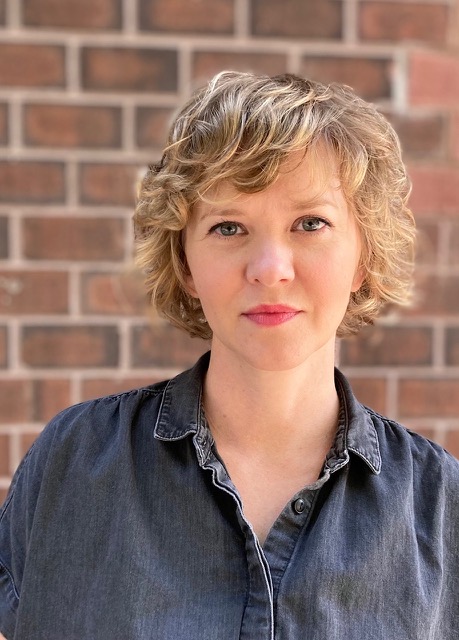 Laura Venita Green holds an MFA in fiction and translation from Columbia University, where she was an undergraduate teaching fellow. “Banned” is part of her linked story collection that she’s currently finishing. Other stories from this collection won the 2021 Story Foundation Prize and appear in Story, Joyland, Fatal Flaw, and translated to Italian in Spazinclusi. They have also been a finalist for the Tennessee Williams & New Orleans Literary Festival Fiction Contest and nominated for a Pushcart and Best of the Net. Originally from Louisiana, she currently lives with her husband in New York City. More of her work can be found at www.lauravenitagreen.com/.
SEE THE ISSUE
SUGGESTED CONTENT

Blast
Jun 04 2026
“Was Home Always This Bad?” by L.F. Khouri
L.F. Khouri’s heart-wrenching microfiction details a father’s reflection on the hardships of war, the weight of survivor’s guilt, and the deep desire for safety and normalcy. “Was Home Always This… read more
Blast
May 21 2026
“The Yellow Suitcase” by Aizhan Yesbolatova
This essay by Aizhan Yesbolatova explores the complicated relationship between a mother and her father as she watches him be a different sort of grandfather to her child. “The Yellow… read more
Blast
May 07 2026
“Handsome Crying Boy” by Lee Conell
In this black comedy by Lee Conell, the emotionally repressed pay for group crying sessions administered by attractive men. “Handsome Crying Boy” asks what it means to be vulnerable with… read more