
Blast | July 19, 2024
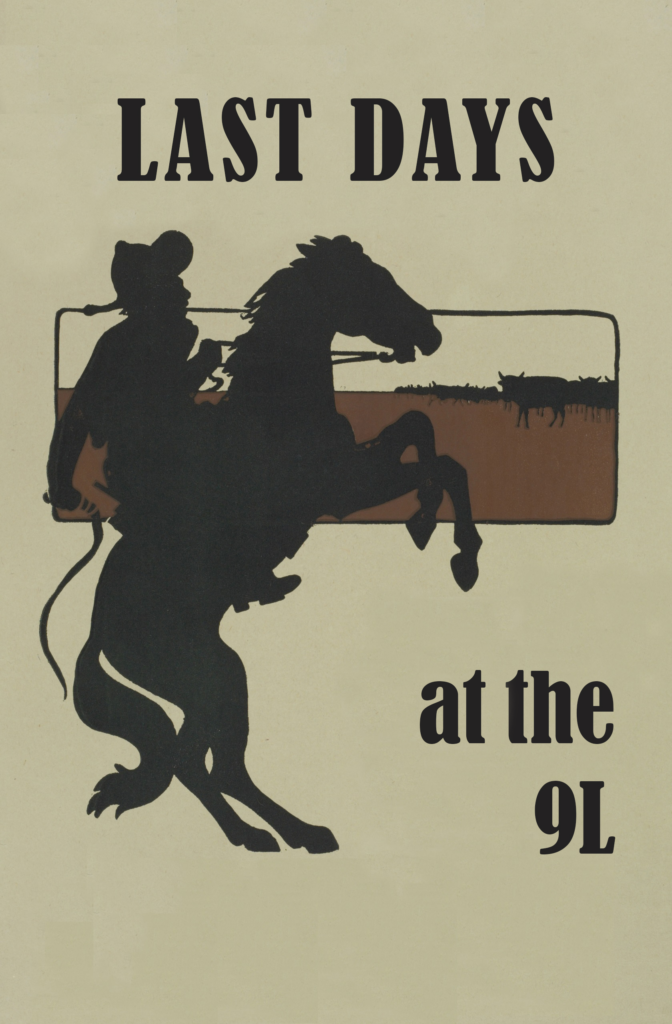
“Last Days at the 9L” by Sam Dunnington
BLAST, TMR’s online-only prose anthology, features prose too vibrant to be confined between the covers of a print journal. In Sam Dunnington’s “Last Days at the 9L,” a young assistant is asked to arrange a tryst between his employer, a dying author, and a wrangler at the dude ranch where the two writers have retreated to work on a new thriller. A deconstructed take on the western, Dunnington’s story is also a study of desire across generational lines.
“Last Days at the 9L”
Sam Dunnington
Clara found me in the study. She wore nothing but her bedspread, arranged like the stole of a priest. Her eyes looked glassy.
“I think I peed blood,” she said. She turned and toddled back to her room. I wondered what exactly was being asked of me.
After a week of hospital tests, we got two consulting doctors, one young, one old, in an office with wainscotting, a banker’s lamp, and a whiff of antiseptic. The doctors murmured her diagnosis in reasonable tones. You couldn’t argue with anything said in a room like that. We drove home.
“I kept thinking about grapes,” said Clara. “Big grapes in my liver, little grapes elsewhere. Raisins. Bunches and bunches.”
We slowed to a crawl behind a yellow pickup truck.
“I’ll cancel the Montana trip,” I said.
“Don’t be ridiculous,” she said.
“Travel seems unwise.”
“I’ve always wanted to see Montana. All those horses. All that open space. We’ll go and bang out Azorian Reckoning.”
“I think we should stay near doctors.”
“They have doctors in Montana.”
“Near your doctors.”
“We’ll go for a couple of weeks. Plenty of time after for me to, you know, wind down.”
“Clara, fuck. Don’t say it like that.”
“Toughen up. And don’t curse. I’ll make them put your name on the book in big type. We’re telling no one right now.”
She leaned against the window. I stared at her. Her silver hair moved with the heater’s breeze. Clara had been a heavy drinker for many years, and the shining tautness of the midstage alcoholic had collapsed into delicate patterns that reminded me of salt flats. I almost rear-ended the truck. It said R A N G E R on the tailgate.
When I was twenty-five, Clara’s publisher had put out my first thriller. I used my advance to move to New York City, and I spent a lot of time preparing for how life would change as my star rose. The book dropped a year later, and the nicest review called it “lively but confusing.” I failed to sell out even a quarter of my advance. They rejected my next two books outright, and my agent dropped me after I sent him a collection of smutty short stories titled The Husband’s Dilemma, which I don’t remember writing. I took lots of Adderall from dubious prescribers, paid for daiquiris with credit cards, and otherwise bulldozed what remained of my life. I wound up living in my brother’s basement. I drank a lot and watched TV until my eyes hurt, every day and every night.
One day, I got a call from an editor who’d advocated for my first book: Clara Beauregard, queen of the horned-up spy thriller, star of their list, had gotten sober recently. Some blunt-instrument drug was keeping her straight but jumbling her mind. Her anger and sulking had dispatched multiple writing assistants. Did I want to take a stab? I would have to move. I would be expendable. The pay was mediocre. Aggressive work schedule. No booze. Seventy-two hours later, just before I turned thirty, I flew down to San Francisco and took a room in an extended-stay hotel near Clara’s Marin County home.
We got a book to the publishers in two months: Balao Nightmare, the story of a Soviet submarine crew gone rogue in the humid south seas: rum, sodomy, and the lash; a team of smoking-hot lady commandoes for seasoning. Clara Beauregard, sixty-five years old, stayed in the game. In the mornings, Clara and I worked on outlines, and in the afternoons, I fleshed them out while she slept or read. When she threw one of her tantrums, I just left. I went walking among the redwoods. As the weeks rolled on, I started driving Clara to her recovery groups and sticking around to cook in the evenings. She told me debauched stories from pre-sobriety life and slipped me extra cash. She invited me to move into the carriage house on her property. By the time of her diagnosis, I’d been with her almost two years.
We got off the plane in Missoula, Montana. The trip had been arranged months earlier as a prophylactic against Clara’s late-spring writing blues. A beefy grinning guy was waiting for us with a sign that said Beauregard – Welcome to 9L! This was Aubrey. He took our bags and drove, with Clara up front. He was a wrangler at the ranch, not a driver, he said, but in the earliest parts of the season they all did a little of everything. He chatted about stream flows and horse breeds. He had a drawl that came and went, and there was something chummy and strained in his affect, but Clara seemed to enjoy it. I watched the Mountain West unscroll in the window: beaucoup sky, plains and peaks, bison like beetles in the distance. Aubrey pointed at the bison. That was the farm where the 9L Ranch sourced some of its meat. He was a wrangler, not a cook, but if we ever got hungry outside of mealtimes, he would make us one of his famous bison burgers.
“Put a griddled hatch chili on there, some cheese, hoo boy,” he said.
“That sounds very nice,” Clara said.
“How does that sound to you, sport?” he said.
I rolled my eyes but caught him glaring at me in the rearview. I gave him a thumbs up.
The 9L Ranch was situated at one edge of a valley, backing up to a jagged mountain range. The property was riddled with streams and pines and meadows. Aubrey told us that the valley was the result of glaciation. We were there for the first week of its season, with much of the best fishing and riding still beneath snowpack, and the only others visiting were a couple families trying to get the dude ranch experience at an off-peak rate. As we drove in, afternoon light lit the valley like a painting and opened a sweet ache in my chest. Aubrey brought us to a cabin on the edge of the grounds.
There was a bedroom each for me and Clara, and a little common area. It was snug and smelled like the logs stacked by the little stove. We put our things away. Clara napped. I felt the same way I had as a kid on vacation with my parents, like everyone else knew how to be in the place we were visiting, but I didn’t. I stayed in the cabin and read. At dinner time we came to the lodge and met some of the hands and the other guests. We ate family-style, in one corner of the large mess hall. Our stay was two weeks long.
Clara and I spent the early hours of each day outlining and writing. After, we’d walk the grounds, springish and green, the air so pine-rich it made my eyes water. There were little hiking trails departing from ranch, headed towards the mountains or away over the grasses of the valley floor. After lunch, I gave her a big yellow pill, and she slept. While she did, I knocked around, hiking, reading, and hanging with the staff. There were a couple of locals, but most came from far afield, just for the summer. There were a lot of dude ranches in the state, but the staff agreed: the 9L was the best combination of pay, lodging, and company.
Aubrey was one of the visiting staff. He tried hard to hide it. I saw him around wearing beat-up Wranglers and work shirts from local outfitters. He dipped with the local boys and each day worked himself almost to exhaustion. The rest of the year, he was a teacher at a boarding school back East, but I only knew this because the woman who ran the place had mentioned it at breakfast one morning. At dinner, Aubrey liked to hold forth about the day’s riding or the previous night’s bar adventures. If I happened to be eating near him, he sometimes kept his eyes on me while he spoke. In his stare I felt threat. I had the sense that Aubrey had built a little kingdom here, and he wouldn’t abide anyone who didn’t take him seriously.
Clara and I were in her room on our fifth day at the ranch. Azorian Reckoning was going slow. We were tinkering with a chapter in which the muscular crew of a US destroyer tries to run a Soviet dragnet. Outside the window, a little kid was trying to play with one of the ranch dogs.
“If they make it through the dragnet,” I said, “we have to come up with an entirely different ending.”
“I want to sleep with Aubrey,” Clara said.
The kid was squatting next to the dog, saying something. The dog, a lanky mutt with one ear, lay in the shade of a water tank, not moving.
“I think they should get caught,” I said. “I like the original ending.”
“Did you hear me? I want to sleep with Aubrey. Can you ask him?”
“I think Aubrey’s full of shit,” I said.
“Because he’s not a real cowboy? None of this is real. So what. His butt, in those jeans,” she said, and made a sucking sound with her teeth.
“You barely have the energy to take walks,” I said.
She didn’t say anything. I looked over. She was beneath the sheets, but her hands rested above them. On her face was the look from her book jackets: mouth tight, berry-black eyes blazing. She looked like she’d been dried in wind and heat.
“Pick one of the others,” I said.
“Don’t be jealous,” she said. “Just ask him.”
My cheeks burned. Clara and I had never been together, but after a few months working side-by-side, I’d decided I would if she asked. Some nights, after dinner, drinking coffee and telling stories, it felt close. Clara was a recluse, and I was restoring myself after a rough couple years. I hadn’t been touched in a long while. She was beautiful in a severe kind of way. I had no idea what it was like to be with a sixty-five-year-old, but I liked the idea of finding out with her, and I liked the idea that she might want that. Desire for Aubrey poisoned this notion. Beside him, I felt gangly, pulpy, and weak.
The kid was prodding the dog’s haunch with a stick he’d found. I turned back to Clara to tell her I’d think about it, but she was already dozing. I stewed through lunch. I tried to keep working and couldn’t. I left on a hike towards the mountains.
The trail climbed hard through ponderosa, and I was soon sucking air. If I did ask Aubrey, he might say yes, and then grin and preen and brag to his friends, here or back east, about his weird adventure with the old lady. Or he might refuse, and then grin and preen and tell stories about the dying author and her strange assistant. I came to a meadow. Glacier lilies fringed the remaining snow. I hated the idea of denying a deathbed request from Clara. I also hated the idea of needing something from a person like Aubrey. Since my collapse, I had found it almost physically painful to be around anyone with such a clearly inflated sense of themselves. I kicked one of the flowers. Its blossom flew off its stem and landed cuplike in the snow.
The next morning, after working, Clara and I took a short walk to a waterfall. She was peeing blood most nights, and she left her sheets sweat-soaked, but you wouldn’t know it from her quick mechanical steps. She had started fighting me about when she could have her pills. We sat on slick rocks and watched the water tumble.
“Have you asked him yet?” she said.
“Why don’t you just ask him? I don’t want to. It’s your thing.”
“I want him to come to me. And if he’s not interested, I don’t want to deal with that.”
“That’s gutless.”
“Just lazy. When you’re peeing blood, you get to be lazy,” she said. “I’ve never seen you so bashful.”
I scraped moss from a rock with the heel of my boot.
“Look,” she said. “This is not a referendum on you. The last couple years have been wonderful, and I owe you deeply. If I had wanted you, we wouldn’t have gotten nearly as much done. The thing with Aubrey just sounds nice.”
She threw a twig into the foaming water.
“Besides,” she said, “the pain’s getting worse. I don’t think we’ll be shaking walls. I just want him to touch me.”
“It’s a hard thing to ask of someone,” I said.
“Of him? Or of you?” she said.
I didn’t say anything. Clara slid from her rock and walked back towards the cabin. I watched the falling water. Back in Marin, as we’d been packing, she had said we would call family and friends after our return from Montana, which I had said was pushing it too late. She had said she had earned the right to tell people what she wanted, when she wanted. I couldn’t understand, because I was so young. I had told her she couldn’t understand what it was like to be made party to something like this. She had waved her hand in a motion like oh, please. That had made me angry. My brain still seemed to be refusing the information that she would be gone soon.
That evening, I signed up at the lodge to go on a trail ride the following afternoon. The ride was to somewhere called Dog Gap. Aubrey was one of two leading it.
Dog Gap looked like a giant finger had dented the ridge between our valley and the next. At the crotch of the gap was a little plateau. It was just me and one of the visiting families on the ride. We rested our horses on the plateau and listened to the wind make strange sounds.
“I’m reaching some sort of splendor-saturation,” said the father.
“Oh, Gerald, please,” said the mother.
The kid was straining in his stirrups to see into the valley beyond. It dipped toward a lozenge of deep-blue lake. I could spur my horse down into that valley, maybe build a cabin on that lake. I loved my horse, whose name was Pontchartrain. He ambled and took everything in with brown liquid eyes. I envied him. He had a course mapped out for the rest of his days. On our return, I maneuvered to be just in front of Aubrey, who was bringing up the rear.
“What do you do when you’re not being a cowboy?” I said.
“I work at a school,” Aubrey said.
“What sort of school?” I knew, but I wanted to hear him to say it. He sighed.
“Look, man, I don’t want to talk about it. It’s a boarding school. A lot of people think it’s snooty, but I love it while I’m there. While I’m not, I let it fade. OK?”
“How did you end up working there?”
Aubrey’s face got brighter than I’d seen all week.
“I went there as a kid,” he said. “I conned my way in. I was a C student at a little school outside Pittsburgh, but I was very good with photocopiers and scanners. After college, I came back to the same little school teach history. You couldn’t get away with that sort of thing these days. I revealed it to them on my fifth work anniversary. They almost fired me.”
When I was living with my brother, my nephews would sometimes come down to the basement after school, just as I was waking up. They would present a piece of schoolwork, a videogame, or some weird bug they’d found. The pride in their eyes as they displayed their prizes was the same as was in Aubrey’s.
“That took stones,” I said. I meant it, but Aubrey seemed to think I was mocking him. He dug into his stirrups like he wanted to ride off, but the trail was narrow. The only place for him to go was back up to Dog Gap. He huffed and settled back into his saddle. I tried not to grin. I thought I even felt a rumbling of laughter from Pontchartrain, but it was a walking shit, enormous even by horse standards. Aubrey’s horse had to walk through it. I patted Pontchartrain’s neck.
“How does working here compare to other ranches in the area?” I said.
“I wouldn’t work anywhere else,” said Aubrey. “There’s a certain spirit to the 9L. A commitment to doing things the right way. We take care of guests, but we don’t pander to them.”
He took a tin of chew from his shirt pocket and packed a meticulous lip. This slight priggishness finally sold me. He was less the shithead I’d made him out to be and more like a butler in the last days of a great house. When I saw a glade up ahead, I pulled Pontchartrain over and asked Aubrey if I could speak to him a moment.
“You know the circumstances under which I’m here?” I said.
“I was so sorry to hear,” he said. I tried to square up and look Aubrey in the eye, but Pontchartrain kept going for these patches of little mountain flowers. I had to swivel and twist as I explained what Clara wanted. Aubrey sat still on his horse. When I was done, Aubrey blinked.
“Insane,” said Aubrey.
“Well, she’s a dying woman. Think about it.”
“Are you two together? We were sort of wondering. Me and the other wranglers, I mean.”
“I’m her writing assistant. And caretaker, I guess. I live on her property, spend most of my time with her, but it’s a professional arrangement.”
“Wow. I’d go crazy.”
“I was coming off some pretty bad years when I got the gig. It was what I needed.”
I choked up as I said this. I tried to hide it by ducking down and pretending to inspect Pontchartrain’s bridle. I almost fell off and let out a snivel as I did so.
“Oh, man, what the fuck,” said Aubrey. “Are you alright?”
“Will you do it?”
“What am I supposed to say here? I wouldn’t say it’s something I want to do.”
“No one’s holding a gun to your head,” I said. “Think about it.”
But for the rustle of tack and scrape of hooves, we rode back down in silence.
I didn’t see much of Aubrey for the next few days. He made himself scarce doing tasks far away from the residential buildings. Clara and I finished the outline of the novel and began working on a draft. Her pain came in rolling waves that left her bedbound for hours on end. The one time I found Aubrey by the stables, I asked if he’d given anymore thought to Clara’s proposition, but he ignored me. I explained to Clara that I was still working on it. She said it didn’t really matter, but her eyes twinkled when she said his name.
The night before all the early-season guests were due to leave, the ranch put on a goodbye spread: brisket, hot links, beans, coleslaw, cornbread, iced tea, buckets of beer. Big picnic tables around a firepit behind the mess hall. Clara was in her room. I didn’t see Aubrey. The other hands still treated me about the same as they had when I got there, and I figured he hadn’t blabbed, for which I was grateful. The kid who had tried to make friends with the ranch dog, who’d peered into the far valley, was at the next table. He was doing a trick in which he would inhale a hot link whole and then honk the link back up unscathed.
“Please don’t give him an audience,” said his mother. “He’ll keep doing it.”
“Hurrrnhluck,” went the kid. The hot link shot out of his mouth and landed in the grass, glistening and red.
“Amazing,” I said.
“For God’s sake,” said the mother.
I fixed Clara a plate and walked back to her room. Propped up by pillows, she ate cornbread in chunks and sipped iced tea.
“Can I have another pill,” she said.
“Not until you’re ready to sleep,” I said.
“I’m ready to sleep if he’s not coming.”
“I think there’s still a chance.”
“It’s a foolish thing. It doesn’t really matter.”
“I’ll ask again when I go back. We’ll see.”
She lay back. Coleslaw and brisket spilled onto the pillow. I wiped it up and dabbed her mouth with the napkin.
“You don’t need to do that,” she said, but she let me. I used my thumbnail to break off a quarter of one of her big yellow pills. I placed it on her tongue and helped her with the cup of iced tea. I broke off another piece of the pill and took it myself.
Back at the picnic area, the families had disappeared, and all the staff were three-beers loud. A fire was built up. One of the hands was doing a dance on a sheet of plywood, his movements exaggerated by the flickering fire. The trays of food were drying or congealing. One of the wranglers passed me a flask. I took a long suck and asked where Aubrey was. She shrugged, grinned, swigged. I got drunk enough it felt like someone else was in charge of me. I went looking for Aubrey and found him at the waterfall. He was walking in tight circles. He held up a finger.
“Listen,” he said. He was also quite drunk. The drawl was gone and he sounded like a professor. “You can’t ask a person to do a thing like that. I feel responsible. It’s fucked me up for the past week.”
“I don’t think she can do much at this point,” I said. “If you do go, you’ll probably just stand naked. Let her touch you a bit.”
I had not really been drunk in the last two years. The booze and the pill were making everything syrupy.
“I want to be a good guy about this,” he said.
“You are a good guy, Aubrey. You can do this.”
“It’s your fault, you know. For putting me in this spot.”
“Whatchoo so scared of,” I said.
He punched me in the stomach. All my air went out, and I sat down hard. He walked back towards the cookout. Cold crept in through my butt. I sat there a long while. When I got back, there was hardly anyone still around the fire, except for two guys really going for broke on a bottle of Bulleit they’d liberated from the bar in the lodge. They looked like toys winding down. I crept up to Clara’s room. I put my ear against the door’s rough plank. I could only hear the rustle of sheets, Clara in the uneven beginnings of sleep. No one else. Aubrey, you pussy-coward, I thought. I put my hand on the handle. I would give her the rest of the pill and call it a night.
“Your legs are like paint cans stacked up,” said Clara’s voice. Her voice was thickly furred. She’d found the pill herself.
“Yours to command, ma’am,” said Aubrey’s voice. She laughed. He laughed. I ground my cheek against the closed door.
“Bring it over here,” she murmured.
I heard movement. I was burning. I reeled away from the door, got outside, wandered around in the cold. Back at the campfire, I took the bottle of Bulleit from one of the guys who’d fallen asleep in his camp chair. The fire was low. That Leonard Cohen song was in my head: They will bind you with love that is graceful and green as a stem. I was outside myself. I took another deep swig. The ring of light kept shrinking.
I woke up on a gritty floor. Behind my eyes and at the base of my skull, all was nausea and throb. There was a coat over me. I rolled over. I did not appear to have puked. I was in the bunkhouse where the hands slept, empty but for one bunk. The two people in the bunk were a local hand and the wrangler who’d given me the whiskey from her flask. She sat up with no shirt on and peered at me.
“I think you’re past check-out,” she said.
“Did you see me come in?” I said.
“Nuh-uh,” she said. “But Aubrey left a note on the door. Said we should keep an eye on you.”
I tried moving my head. I got outside before I threw up beans. A station wagon brimming with one of the families was pulling away from the main lodge. In the back seat was the kid who could honk up hot links. He waved. I waved back.
In business class the seats go way back. I stared at the air nozzles.
“How was the night with Aubrey,” I asked. She rubbed my arm.
“We should talk about you,” she said. “What are your plans for after I’m gone?”
“Don’t worry about me. I’ll figure it out.”
“I worry,” she said.
“Don’t worry,” I said. “Have more snacks. Have a pill.”
She was quiet for a bit, but not sleeping yet. I could tell by her breath.
“It was very nice,” she said. “And you’re sweet for arranging things.”
She rubbed my arm again. She coughed and slept. I tried to watch a movie, but I couldn’t keep my eyes clear.
The next two months were long. Clara entered a new landscape of pain and often didn’t recognize those around her. I tried to care for her for the first week, but we ended up hiring a nursing aide. I would spend a couple hours a day reading to her or sitting with her. I met some of Clara’s family, who seemed to regard me as a predator. She died in the middle of the summer. Wildfire season was just beginning. The funeral was small, held beneath an orange sky.
I kept on living in the carriage house. I finished Azorian Reckoning: the hunky crewmen of the destroyer do, ultimately, escape the dragnet, but they all renounce their mercenary ways and start new lives in Micronesia. The publisher honored Clara’s request to a small degree, and my name is going to be added beneath hers in tiny subscript. I sent Aubrey a note thanking him and explaining what had happened, but I never heard back.
It’s been two months since she died. Some of Clara’s family sent me a note last week saying that they’re coming to kick me out. I don’t mind. I can feel it winding down, anyways. When I called my brother to tell him Clara had died, he was worried that I’d devolve to my old ways. But I haven’t. I’m starting a new book based on some older notes of Clara’s. I feel positively turgid with direction and purpose. This week, I’ve even been sleeping through the night.
I dream mostly of Clara and horses.
***
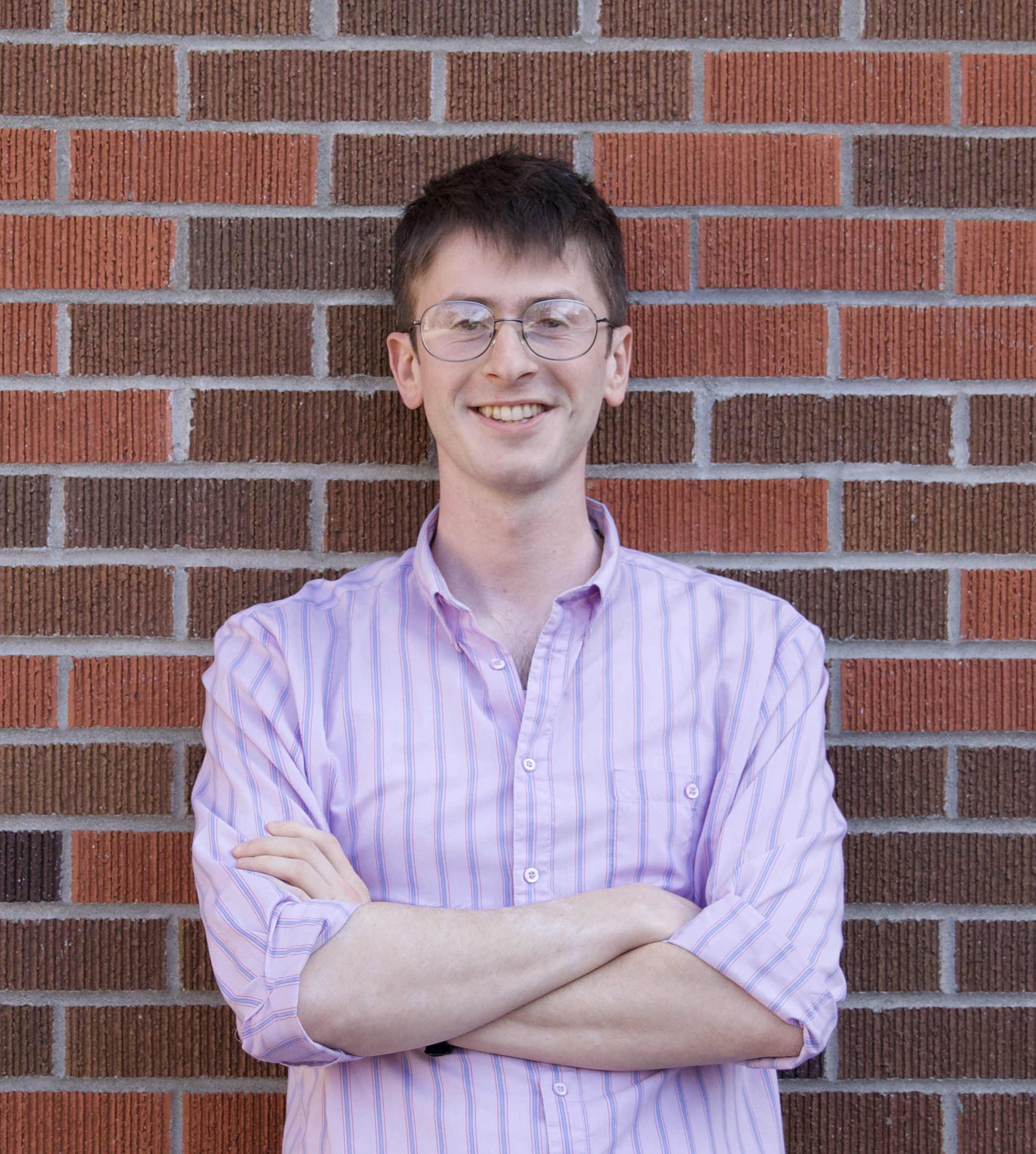
Sam Dunnington is a writer and teacher currently based in Western Massachusetts. He received his MFA in Fiction from the University of Montana, and his work has also appeared in Harper’s and Fiction.
SEE THE ISSUE
SUGGESTED CONTENT
Blast
May 21 2026
“The Yellow Suitcase” by Aizhan Yesbolatova
This essay by Aizhan Yesbolatova explores the complicated relationship between a mother and her father as she watches him be a different sort of grandfather to her child. “The Yellow… read more
Blast
May 07 2026
“Handsome Crying Boy” by Lee Conell
In this black comedy by Lee Conell, the emotionally repressed pay for group crying sessions administered by attractive men. “Handsome Crying Boy” asks what it means to be vulnerable with… read more
Blast
Apr 23 2026
“Coyote Map” by Justin Taroli
Justin Taroli‘s atmospheric short story follows a photographer who returns to Albuquerque after their grandmother’s death. Intertwining themes of grief, spirituality, and collective memory, the mystery of “Coyote Map” takes… read more