
Blast | November 20, 2025

“The Stand-Up Stars of the Funeral Home Circuit” by Jenn Scheck-Kahn
BLAST, TMR’s online-only prose anthology, features prose too vibrant to be confined between the covers of a print journal. In “The Stand-Up Stars of the Funeral Home Circuit,” Jenn Scheck-Kahn remembers coming to a new appreciation for her parents after they make surprise speeches at the funeral for a family member and Holocaust survivor. A portrait of Jewish community and family life, Scheck-Kahn’s essay is about the momentary beauty of seeing those closest to us through the eyes of others.
“The Stand-Up Stars of the Funeral Home Circuit”
Jenn Scheck-Kahn
The rabbi drew our attention to Psalm 23 on the back of the memorial pamphlet for cousin Mark, who had been taken by a brain tumor in his seventies. For an hour, I’d listened to songs and prayers with a throat cinched in grief, lost in the hypnotism of the service, which was being conducted in a large, packed funeral home. Mark’s was a life well lived and well celebrated, I felt, but Mom, stewing, felt otherwise.
“Excuse me!” She projected loudly across the silent pews, shattering the quiet. The smile she cast toward the rabbi was not sweet. It was rigid with determination, defiant. “I’d like to speak about my cousin Mark.”
Every pupil dilated in the direction of our pew, where she sat between Dad and me. Like a rabbit, I froze under their gaze, seeking invisibility.
“May I speak?” she asked again.
A murmur undulated from the updos and headscarves near the front. A vacant smile cut through the rabbi’s furrowed cheeks. “You absolutely may,” he said from the pulpit. We would not descend through the valley of the shadow of death just yet. He raised a hand, encouraging her to continue.
She stood. “Thank you,” she said, side-stepping across our row, then marching down the aisle past glammed-up Long Islanders in meticulous acrylics, flashy lips, furry lashes, and crunchy coifs. Even with youth on my side—I was a mousy late-twentysomething—I felt like a failure of femininity beside those women. The last thing I wanted was to be noticed by them. Mom’s inclination was exactly the opposite. At four feet, eleven inches tall, her hair a golden hive of pins and layered locks, she had never been more visible than she was as she ascended the pulpit.
All my life I’d watched Mom work a room. As a child, I’d peek into the mirrored living room to see the source of laughter: Mom playing the rebel feminist and Dad the easy-going jokester for the entertainment of a dinner party. Nothing centered her like an eager audience. Some friends remained devoted to her for years, while others rotated out, replaced by newer acquaintances who also held her in high regard.
If the rabbi was disturbed to find himself sharing the pulpit with Mom, he masked his feelings behind the call of duty. He pulled a handle on the bottom drawer of the podium to reveal a block of wood that served as a boxy step stool. Mom stepped on it in her patent leather pumps. She rested her arms comfortably on the podium.
“Mark was my favorite person, my only first cousin,” she said. “I loved him from the first moment I met him. You could say it was love at first sight.” Her voice sounded like a raised eyebrow. She leaned into the microphone and, in a deep alto, said, “He was maybe seventeen. I was eight.”
Giggles bobbed from the front row. Mom beamed at three smartly dressed girls and a suited-up boy—Mark’s grandchildren—and flapped her hand in a private wave. Beside them were Mark’s two sons and their wives, to whom Mom nodded, before blowing a kiss to Nusha, Mark’s fast-talking, spirited wife with a heavy Czech accent. Emblazoned on the thin skin of Nusha’s forearm was an Auschwitz tattoo.
Mark’s family turned to Mom, smiling, seemingly delighted by her feisty theatrics. What else could they do? They loved her. Because she hadn’t raised them, they could easily adorn her with the respect that she expected.
“Mark was dashing—European!” Mom said. “And he didn’t speak a word of English. But he loved my sister and me like the sisters he never had, like the brothers he lost.” She gazed meaningfully into the congregation as though we were the fourth-grade students she’d once taught, captive until we’d imbibed her lesson to her satisfaction. I glanced at my watch, hoping, against the odds, she’d notice. She didn’t.
“For years after the Holocaust, my dad searched for family and for years—nothing.” She grimaced. “No one responded to the ads he put in the European Jewish papers. He and my mom, they thought everyone they loved was dead, gone forever. And nearly all were, but one day someone wrote back—their nephew Mark.”
From all around me, I heard “mmmhmm” in acknowledgment—to my surprise. I checked the faces in my row and those behind it: relaxed smiles. Was no one else annoyed, outraged? Couldn’t they see she’d bullied the rabbi, and now she was hijacking the service?
Someone had cultivated a vision for how this memorial should go. They had considered what would be meaningful to Mark and his loved ones, what would get them through this terrible day. With the rabbi, they chose songs and prayers and listed them in a pamphlet printed by the funeral home. But, when Mom had to speak her mind, she eclipsed all else, flinging the scheduled programming from orbit. She made everything about her. Was I the only person horrified by her maneuvering?
I was.
No one can appreciate a Holocaust story with a hopeful twist more than a congregation of somber Jews. If her chutzpah hadn’t hooked them, her material had.
“Daddy did what anyone would do—what you would do,” Mom pointed to a bald man with a mustache in the fourth row. “He scrimped and saved for a steamship ticket,” she said like it was obvious, as Cher’s character in Moonstruck might. “Weeks later—Mark arrived.”
It was a story I knew well. To her parents, who were impoverished, depressed refugees, Mark’s rising from a continent that felt like a morgue gave life new meaning—the way a newborn can. He needed them, but they needed him, too. In time they’d learn how he lost his parents and siblings and how, as an orphan, he’d scraped by—hiding from the Nazis, avoiding the concentration camps—for nearly a decade.
“Picture it! A two-bedroom apartment in the Brooklyn projects, now for five people!” She flashed five fingers, her sudden gesture startling a sharp laugh from people a few rows behind me. “Mark slept on the sofa.” Her mouth gaped, aghast. “I had to tiptoe past this dapper European to use the bathroom in the middle of the night. Can you imagine?” The audience forgot itself and roared with laughter at her disgust.
I sunk into my pew and listened. Their mirth echoed off the walls of the funeral home. This was Mom’s crowd, and she knew it. Her story struck a pin in the ballooning tension we all felt that day. I felt the sound of joy against my rigid body, the edge of their relief.
Mom continued with stories about Mark—about the time he had learned to ride a bike, or how he’d gotten his first job, or how he met his beloved Nusha. I don’t remember the rest of what she said, beyond the effect of her words. Not her words—her performance. She was as at ease in a funeral home as she was at a deli counter. Her certainty was magnetic. Death made sense to that wise ball of fire in her sixties, and she’d help it make sense to us.
When she was done, she thanked the congregation and then turned to the rabbi. “Thank you, too.”
“You’re most certainly welcome,” he said. As she stepped off the box, he held out a hand, which she took politely, as any lady would. “Thank you for lifting our spirits with your comforting words,” he added as she descended the steps, making eye contact with strangers who nodded and smiled. Later, at the luncheon, middle-aged women would reach out to touch her shoulder or clasp her hands as she passed them.
The rabbi began again—“Let’s conclude our service with . . . ”—when another voice rose from the pews. This time it was Dad.
“Excuse me!” he asserted, standing abruptly. The crowd, primed by Mom’s outburst, found him towering over her empty seat and doubled over in hysterics. If Mom had been the warm-up act, they were ready for Dad, the closer.
By their own account, my parents had been meek, obedient children, but as adults, they unified to defy convention, and the older they’ve gotten, the more they’ve wanted others to take notice.
How did Dad regard Mom as he passed her on the way to the pulpit? Did they nod to each other, kiss, high-five? I have no memory beyond the sight of Dad in a classic suit, hair combed, face clean-shaven as always. To him, a tasteful appearance was like the offer of a handshake, the respect you extended to acknowledge a person’s dignity. A sign of good breeding.
He took the pulpit with an air of profound admiration. What did Dad say about Mark, his most treasured male role model, more revered than his own father, who had died five years before Mom and Dad met at a dental school fraternity party? Soon after, Mark had taken Dad under his wing. More than I can recall what he said, I recall Dad’s delivery, tender in comparison to Mom’s flash and flair. His glassy eyes. His dim smile. His voice hollowed and halted by emotion.
That day, Mom’s and Dad’s stories shared a time and place—a setting that was familiar and personal to all of us in that funeral home. The immigrant acculturation of European Jews to the United States after WWII was our beginning in a country that had granted us safety and the right to citizenship. Hearing Mark’s American origin story not only brought him back to life, it bestowed us with new memories of a time that was fundamental to our shared mythology. Everyone in the funeral home seemed to cherish what my parents had given them, I observed with astonishment. Who would have known they were capable of applying their storytelling skills for good? Certainly not me.
As a teen, I was their worst critic, but by the time of Mark’s funeral, I was an adult who had burnt through her teenage vitriol, which let me consider that maybe my parents didn’t feed off everyone who sought their companionship. Our differences, which had felt magnified and agitating when we lived in the same house, appeared to be nearly harmless now that we lived on opposite coasts. Distance had mellowed us; it had made us cautious. Through phone calls or short visits, we curated our behavior, dipping our toes carefully into the adult relationship that we were cultivating. But at the funeral, as I watched Mom derail the service and Dad steal the podium after her, the old resentment and embarrassment returned, then dissipated as I realized that this episode of the Mom-and-Dad show wasn’t subjugating mourners. Here were Mom and Dad doing the thing they were best at, only this time it was for the profound benefit of many.
Despite the tasteful makeup colors and hairstyles muted for the occasion, the air in the funeral home held the chemical smell of manufactured beauty. Mom had looked at the funeral congregation, the accounting colleagues of Mark’s son Richie and the law clients of his other son, Teddy, and sneered at the polish and prestige, all signs of success in every way we count. She wanted those people to know the truth about this family and about our cousin, who had survived hunger, destitution, fear, and isolation to become a powerhouse of gratitude. Mark used to greet me at family functions with his full attention, hands on either side of my face, telling me that I was smart and beautiful and other attributes I hoped I’d someday be.
Mom and Dad repeated one story of his like a prayer of mourning throughout the whole of my childhood.
Mom began, “He was so little, Mark was, already the littlest of the three sons as they boarded the train with their father, who was getting them out of Europe before it was too late.”
“But it was bustling, loud, chaos,” said Dad, throwing his hands in the air. “Everyone was trying to escape at once, and Mark, he started to cry.”
“‘Daddy, I need some water,’ Mark said in a tight compartment surrounded by all of their things, not many, just what they could carry, the essentials for crossing the continent and starting a life on a new one with a new language,” Mom said. “His father tried to shush him, persuade him—the train was leaving soon, there were people squeezed in every crevice—but Mark, he asked again and again for the water until his father relented.”
Dad interrupted. “Maybe his father knew that it would be a long uncomfortable journey and that it might be hours again before water would be so close by?”
“Mark’s father, he told the boys, ‘Stay together. I’ll be right back,’” Mom said. “But he wasn’t.”
“Did the train leave early? Did something happen to the father?” Dad asked.
“What we know is he didn’t return to them before the train took off. And the boys got separated. And Mark never saw his father or brothers again.”
This story haunted my parents. Coming from a person as unassuming as Mark, it carved their beliefs in family, loyalty, resilience, and a potent force targeted to destroy all three. They understood the gravity of being entrusted with his story. Their way of honoring him was to share it, making him as unforgettable to us as he was to them.
It’s easy to love the Mark we all knew. We belonged to him. How had he grown from that lost boy, nourished by tragedy, into the man who’d emerged from a steamship with a brimming heart, poised to cherish whatever he encountered? Mom and Dad missed the person who embodied that impossibility, the person who belonged nowhere and had nothing but his goodness, his emotional prosperity, which had been the source material for the legacy that he built with Nusha: a strong community grounded by sons who had vaulted from the Bronx projects toward social and financial security. Mom and Dad claimed that version of him, introduced the congregation to him, and centered him on the day we gathered to mourn.
Mark’s funeral came at a time when it looked like my relationship with my parents might turn out the way we had all hoped it would. Instead, we supported each other in conventional ways, with weekly phone calls and biannual visits, but there was little gravitational pull drawing us together, particularly between Mom and me. The funeral, though, felt like a possible turning point, because I recognized qualities in my parents that I genuinely admired and believed, for the first time, we might grow close.
Now, twenty years later, I cherish the memory of the funeral for its bittersweet singularity. It encapsulates my great fortune of witnessing my parents on their best day, as they counteracted the disorienting, existential loneliness of grief with a reminder of joy. No one can work a funeral like they could.
***
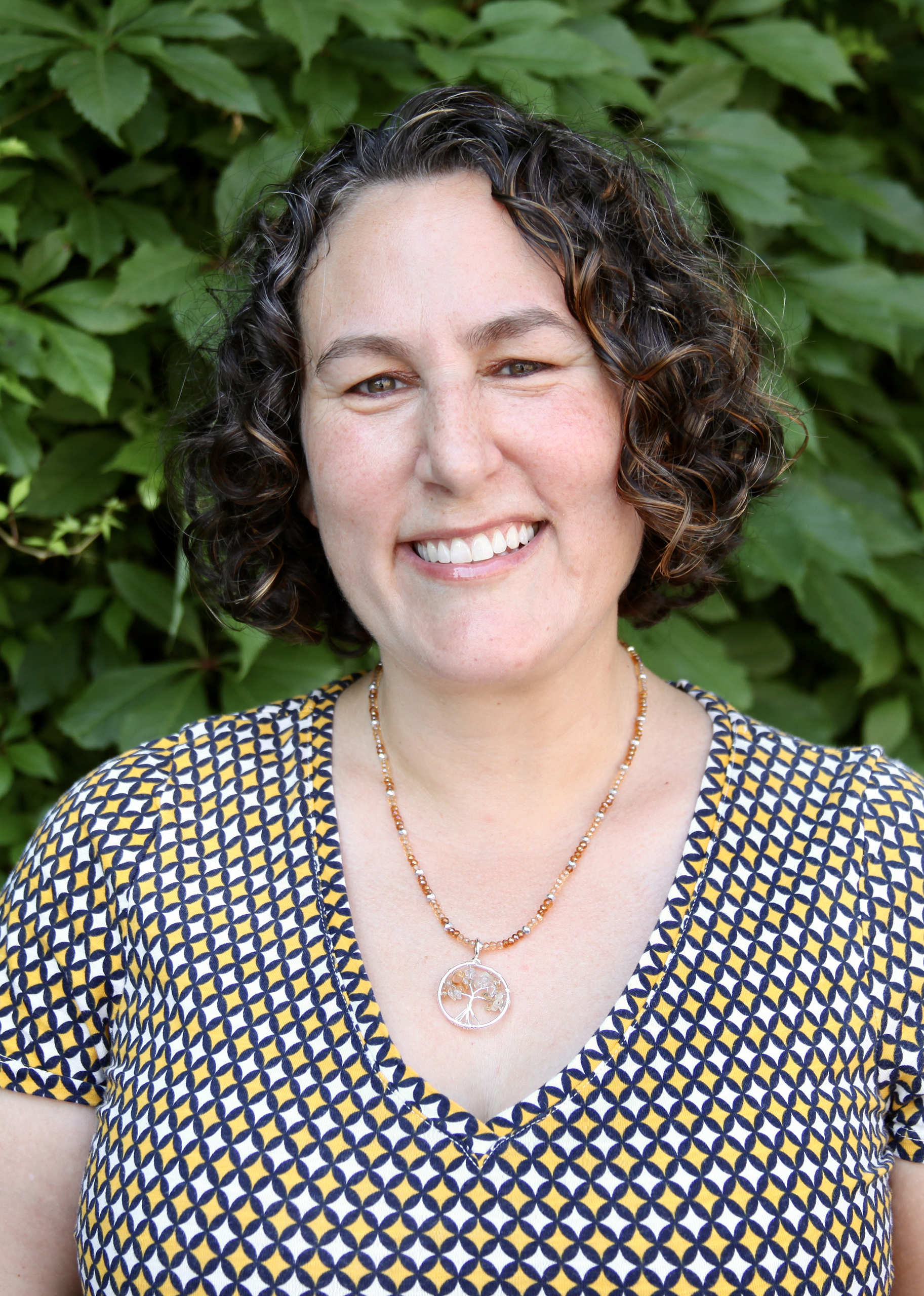 Jenn Scheck-Kahn’s writing has appeared in Ecotone, Creative Nonfiction, and The Washington Post, among a number of other publications. She lives in the Boston area with her family, where she runs Journal of the Month and engages in advocacy work, most recently in the disability space. You can find her complete biography at www.jennscheckkahn.com.
SEE THE ISSUE
SUGGESTED CONTENT

Blast
Jun 04 2026
“Was Home Always This Bad?” by L.F. Khouri
L.F. Khouri’s heart-wrenching microfiction details a father’s reflection on the hardships of war, the weight of survivor’s guilt, and the deep desire for safety and normalcy. “Was Home Always This… read more

Blast
May 21 2026
“The Yellow Suitcase” by Aizhan Yesbolatova
This essay by Aizhan Yesbolatova explores the complicated relationship between a mother and her father as she watches him be a different sort of grandfather to her child. “The Yellow… read more
Blast
May 07 2026
“Handsome Crying Boy” by Lee Conell
In this black comedy by Lee Conell, the emotionally repressed pay for group crying sessions administered by attractive men. “Handsome Crying Boy” asks what it means to be vulnerable with… read more