
From Our Authors | September 22, 2023
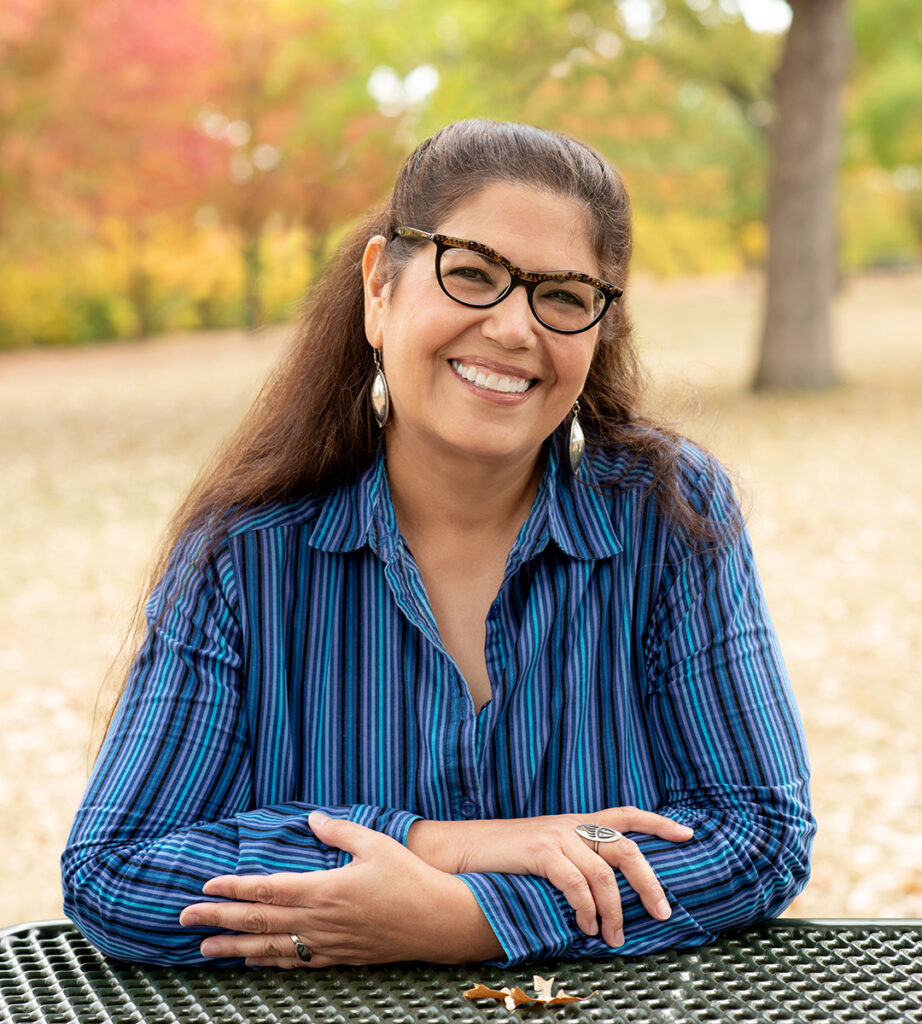
An Interview with Mona Susan Power
Recently, TMR interns Annalisa Geger and Kaitlyn Jensen interviewed Mona Susan Power about her story “Naming Ceremony,” which was a runner-up for the 2020 Jeffrey E. Smith Editors’ Prize. The story is adapted from Power’s celebrated new novel, A Council of Dolls, which was published by Mariner Books in August 2023. You can read Power’s story here. For additional context, you can also read coverage of A Council of Dolls in The New York Times.
Annalisa Geger & Kaitlyn Jensen: Throughout “Naming Ceremony,” the protagonist, Lillian, catalogs her many names. Obviously, names and their significance are important in the story. Were you assigned more than one name in childhood—and if so, what was your favorite?
Mona Susan Power: Names have held such significance in my life, from earliest memory. I was proud of being named after my intelligent, beautiful, activist mother: “Susan Power.” In the Indian community of Chicago, we were known as “Big Susie” and “Little Susie.” I was painfully shy, so never chafed at being my mother’s smaller shadow. It was only in more recent years that I began to feel the odd weight of carrying a name that wasn’t really my own. So now I use the name “Mona Susan Power,” to carve out a separate identity. I was also proud of being given my grandmother’s Dakhóta name as a child—one she bestowed upon me when I was four years old. I paid attention to nicknames as a kid, fascinated by the string of names we carry behind us, used by different people in our lives, in different circumstances.
AG & KJ: The story is told from a child’s point of view, leaving the audience to wonder if Lillian is always telling the truth. Do you think readers might be more reluctant to place blame on her mother (also named Lillian), given that the narrator may not be wholly reliable? Or does the vulnerability of the child’s perspective give us more compassion for Lily’s character?
MSP: I have to admit, the thought of a reader not trusting the narrator never even occurred to me. There’s not much distance between us—she’s very much like I was as a child. So I wrote with great earnestness, conveying the tension she experiences as she tries to safely navigate her beloved mother’s ever-shifting moods. I purposely avoided writing too much of the kind of thing her mother might say during rages, because I didn’t want readers to turn against the mother, but instead to see her as someone wounded. So I have the narrator hear roaring in her ears at such times. Seeing in print the kinds of abusive words that are slung at children by injured parents can be more intense than hearing the words. The narrator’s clear devotion to her mother, as well as her admission that she sometimes gets angry with her mom, made her trustworthy in my eyes. Plus, she was open about her own mistakes and regrets.
AG & KJ: Lillian’s doll, Ethel, has a substantial impact on her actions throughout the story. Can you say a little about how you initially envisioned the role of the doll? Did it change as you were writing the story?
MSP: When I first began writing the story, Ethel’s sudden entry as a character came as a complete surprise, though she’s inspired by an actual doll I carried with me everywhere as a child. I never intended for her to become an “actor” in the piece—a character who might actually intervene and make things happen. That said, I honor the characters who show up in my work, and I don’t try to control them if inspiration moves them in unexpected directions. I follow inspiration as my guide. So I allowed Ethel to become a more powerful figure than intended.
AG & KJ: Lily’s mother is erratic and sometimes verbally abusive to her daughter. Anger is a prevalent “character” in your story. The narrator has a close relationship with her father, yet she never shares with him that her mother gets very angry at her, even though she has the opportunity to tell him. Why does she hide it from him, and why doesn’t he pick up on it, even citing the value of anger at one point when he says, “Sometimes people take their anger and use it in a good way”?
MSP: Many elements of this story were drawn from my own experience. I adored my mother (who passed away in October 2022), though we had a rather “fraught” and challenging connection. A great deal of anger was projected onto me from babyhood, but as a well-behaved child who did as I was told, I didn’t have an outlet for my own accumulating anger except through Art—dancing, singing, and writing. Art saved me. Few people ever saw the completely out-of-control, wrathful side of my mother, so no one ever asked if things were okay between us when we were alone. And in that era, folks would’ve seen such a question as “prying,” which was seldom done. I gave the narrator, “Sissy,” that gift of a concerned adult checking on her welfare. But, as I wrote the scene, I realized that had my father ever asked that question, I would have lied as Sissy does. I was so protective of my mother—never wanting to lose her or be taken from her. I think the father in the story suspects that his wife’s anger might spill over onto his daughter, but part of him doesn’t want to face the truth. So he accepts what his daughter tells him.
AG & KJ: The climactic end of the story is unexpected and grim. It’s also ambiguous. What made you settle on leaving the explanation for what happens to Lillian’s mother open to the reader’s interpretation?
MSP: I’m an intuitive writer, so I don’t always consciously understand the choices I make until much later. If I were to guess, I’d say that some part of my brain, whose creative process is such a mystery, knew there would ultimately be a novel version of the story, and that this ambiguity would create suspense that might hold a reader’s fascination in a longer piece. The conscious reason I decided to leave the ending of the story such a mystery is because I didn’t know for sure what happened. I didn’t discover the truth until more than a year later as I wrote the very last section of the novel, in which Ethel, the baby doll who was present at the time, tells it to us.
AG & KJ: Your new book, A Council of Dolls, follows three girls over a generational span, including one of the girls from this particular story. Where does “Naming Ceremony” fit in the novel? Was this story the original inspiration for the novel?
MSP: Yes, “Naming Ceremony” was the original inspiration for the new novel. I wrote it as a stand-alone story and continued to think of it as complete until a few months after it was published. A dear friend, who is African American, read the story and wrote me how much she loved it. She said that I could write an entire novel on the doll character, Ethel, and “Black protectiveness.” For the first time, I began to think that perhaps there was much more to the story. As the idea of a novel version began to develop, I planned to keep the focus on Lillian growing up in the 1960’s. But then I realized I could also bring in the story of her mother’s childhood. The ideas flew in so quickly after that!
A much-expanded version of “Naming Ceremony” opens the novel, and then I move back in time to the mother’s story, then the grandmother’s. The final section of the novel shows the narrator of “Naming Ceremony” grown up and ready to heal from the trauma she inherited from prior generations so devastated by colonization. There was a point in the process where I contemplated presenting the novel in chronological order, but realized that by moving backward in time, I could subvert readers’ assumptions and allegiances. A parent who might come off negatively in one section will be seen as a child in the next section—someone worthy of warm sympathy and admiration. In this way I was hoping to prevent readers from villainizing any of the parental figures. If there’s a villain in the piece, it’s colonization.
AG & KJ: What are you currently working on?
MSP: I have several novels elbowing each other for my attention (at least that’s the way it feels). The working titles are: The Year of Fury, Harvard Indian Séance at the Lizzie Borden Bed & Breakfast, Ghosts of Sitka, and Angry Medicine. As of today, the Lizzie Borden novel is winning. It focuses on five Native American students of different tribal nations who are seniors at Harvard College. A section of it, titled “Goodreads Warrior,” was published in Ploughshares in 2021.
***
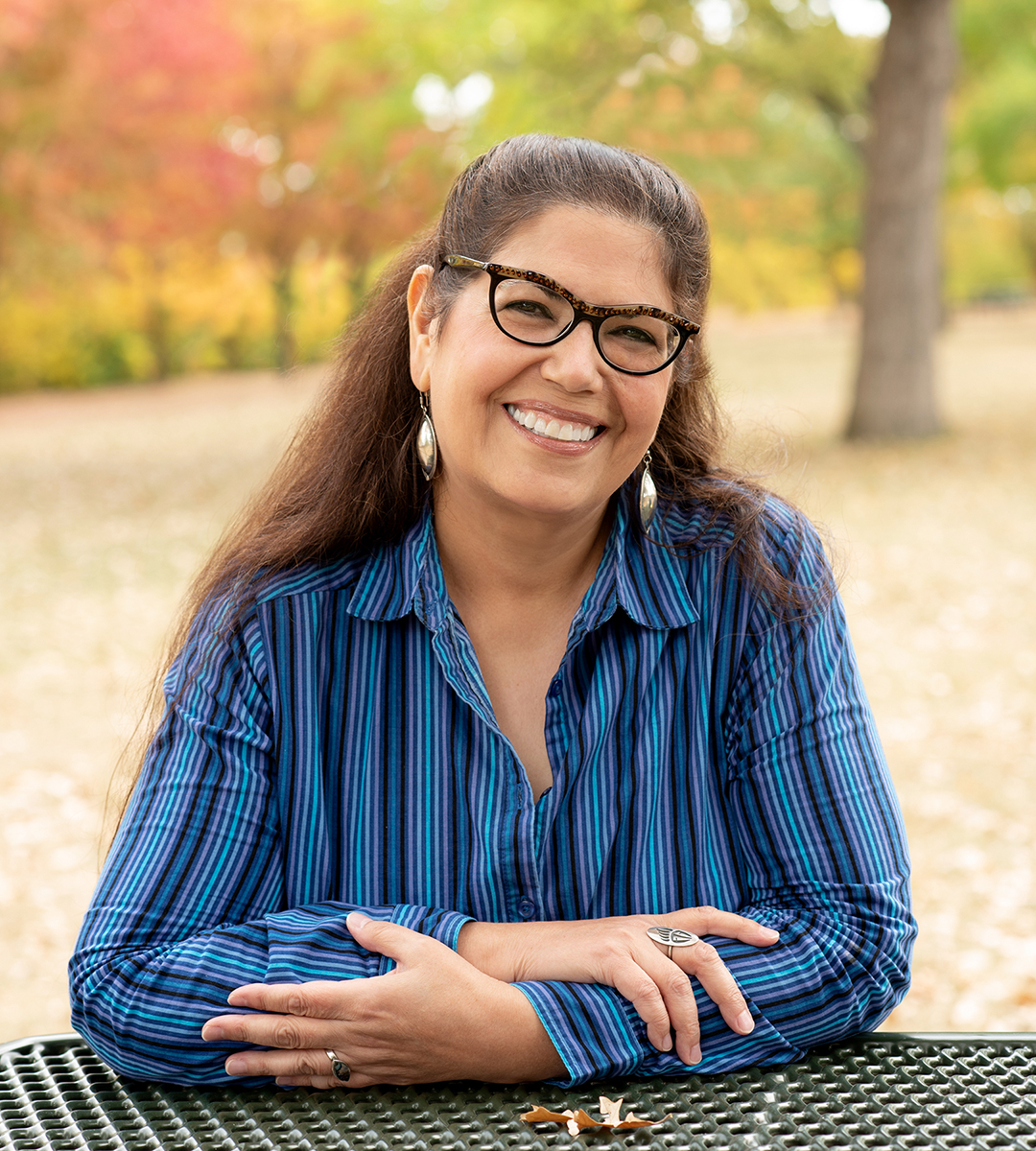 Mona Susan Power is the author of four books of fiction, including The Grass Dancer (awarded a PEN/Hemingway Prize), Roofwalker, Sacred Wilderness, and A Council of Dolls. She is a recipient of several grants in support of her writing which include an Iowa Arts Fellowship, James Michener Fellowship, Radcliffe Bunting Institute Fellowship, Princeton Hodder Fellowship, USA Artists Fellowship, McKnight Fellowship, and Native Arts and Cultures Foundation Fellowship. Her short stories and essays have appeared in numerous publications and anthologies including The Best American Short Stories series, the Atlantic Monthly, the Paris Review, the Missouri Review, Ploughshares, and Granta.
Mona is an enrolled member of the Standing Rock Sioux Tribe (Iháŋktȟuŋwaŋna Dakhóta), born and raised in Chicago. She currently lives in Minnesota, where she’s working on other novels.
***
Kaitlyn Jensen was a 2023 spring intern at the Missouri Review. She is a sophomore at the University of Missouri-Columbia, where she is majoring in English.
Annalisa Geger was a 2023 spring intern at the Missouri Review. She is a senior at the University of Missouri-Columbia, where she is majoring in philosophy and minoring in English.
SEE THE ISSUE
SUGGESTED CONTENT

Featured Prose
Aug 21 2025
An Interview with Peter Mountford
Anne Gimm interviewed Peter Mountford about his collection of short stories, Detonator, published by Four Way Books in September 2025. “Love of Her Life,” a story about a woman who… read more

From Our Authors
Jun 13 2025
An Interview with Tate Gieselmann
TMR intern Haley Schmid interviewed Tate Gieselmann about “Mouse,” a story about a drug addict hustling to pay a debt. First published in TMR issue 47.4 (Winter 2024), the story… read more

From Our Authors
Nov 01 2024
An Interview with Jennifer Anderson
TMR intern Rhéa Krumpelman interviewed Jennifer Anderson about “Rockdale,” an essay in which a young couple confronts the harsh realities of renovating an old Wisconsin farmhouse. First published in TMR… read more