
Featured Prose | April 13, 2023
“Naming Ceremony” by Mona Susan Power
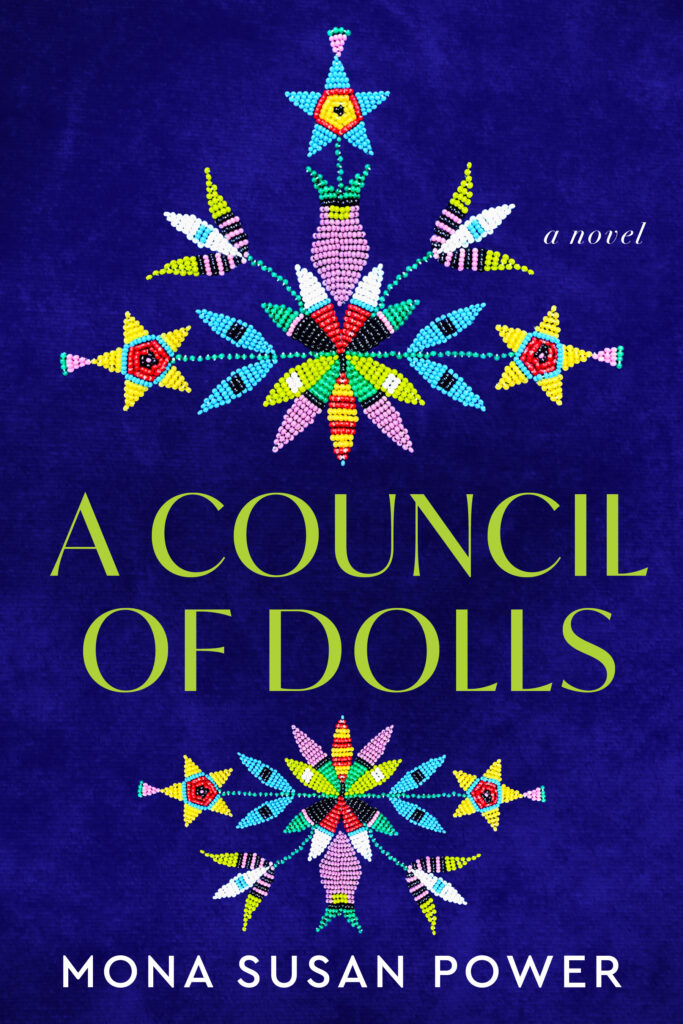
Mona Susan Power’s powerful and authentic story “Naming Ceremony” was a fiction runner-up in the 2020 Jeffrey E. Smith Editors’ Prize contest. The story has been adapted as part of Power’s forthcoming novel A Council of Dolls, a generations-spanning story of three Yanktonai Dakota women. A Council of Dolls will be published by Mariner Books in 2023.
Naming Ceremony
Mona Susan Power
It’s the spring of 1968 here in Chicago, and Mama says Old Mayor Daley has his big fists wrapped around our necks. She says he doesn’t care about brown people like us. “If this city had a proper name, it would be ‘Prejudiced, Illinois,’” Mama tells me while she braids my hair.
I’m in the second grade at school, so I know what that word is all about. It’s a mean word that says we can’t eat in just any restaurant, even if my parents have enough money, and we can’t move into just any neighborhood. If I got to name our city, I’d call it “Happy,” because sometimes you have to be nice to people and places and dolls if you want them to be nice back.
I almost forget what my real name is. I have so many names. When Mama’s in a good mood, she calls me Sissy or Sissygirl or Prunella—after one of Cinderella’s wicked stepsisters. I think she’s the sister whose knee cracks. Mine doesn’t. They play the Cinderella show on TV every year, and one year Mama promised we were gonna watch it together. “It’s a big musical,” she said. “You’ll love it!” She forgot I’d already seen it and knew all the songs by heart. But when I spilled a glass of milk at the dinner table—my hand knocked it over since I can be clumsy like that—Mama said, “No TV!” She said I had to learn to be more careful but changed her mind later when Dad asked her to let me watch. I only missed a little bit, the opening number.
I feel funny when I hear new songs, almost like I forget to breathe. Can you walk inside a song? I think I do.
Mama says I have a “Christian name,” though we left the church in a huff a few months back, when Mama shared in confession that she never felt the presence of God except at the Dakota Sun Dance we go to when we visit her brothers and sisters in North Dakota. Dad said she was looking for trouble to say such things to old Father Weasel (his name isn’t really Weasel). Mama gave him a look, and he went quiet. I know what he was trying to say. Sometimes Mama’s in a mood she can’t keep all to herself; she has to spread it around. She’ll pick a fight with anyone, and it’s no use tiptoeing, being sweet and well behaved, because she’ll get you on that, ask why everyone walks on eggshells near her like she’s a crazy person. Then you’re in the doghouse.
She spread her mood on Father Weasel during her last confession. She even pushed up the sleeve of her nice gray going-to-church dress to show the priest her scars from a flesh sacrifice, though he probably couldn’t see much through the screen that separates him from us. And when Father Weasel told her the Sun Dance is Devil’s work, she said Jesus made his own Sun Dance at the end, if you think about it. Father Weasel lost his head and told Mama she was beyond penance. I heard him, since I was in a nearby pew saying five Hail Marys and two Our Fathers for confessing that I was sometimes angry with Mama in my thoughts. Mama grabbed my arm and dragged me out of church, and I never finished saying penance, so I guess I’m still carrying around that sin of anger inside me, with nowhere to let it out.
***
Mama reminds me that I have a Dakota name, too, on top of the Christian one. She says Grandma gave it to me in a ceremony the year she lived with us. I wish she was still here, with her soft hands and smiles and nice back rubs when I couldn’t fall asleep right away at bedtime. I miss her stories about the day Sitting Bull was killed, how she was three years old, yet she remembered everything. But Grandma didn’t like it in Chicago; she said all that noise hurt her head. So she went back to North Dakota, back to what she calls “buffalo country,” though I’ve never seen any buffalo there. Only one I ever saw is stuffed and dead at the Field Museum. He doesn’t look so happy. I should give him a name the next time I see him.
Mama has all kinds of names for Dad. Some of them I can’t say because they’re not nice and I’d get punished. When she calls him those names, her eyes are so red it looks like the whites are bleeding. She stomps around and throws things. One time she cracked the wall with a heavy pot. Another time she cracked my father’s head, and he had to go to the hospital. I helped her clean the mess. I almost threw up. But when you’re real scared, sometimes you can control that.
Now, when Mama’s eyes get bright red, I crawl under my bed, a trick I learned when I was small. Dad and Mama were watching the news, and I could hear it, though I was playing with the black doll I’d begged Dad to get me since she looked more like us, closer to Indian than white dolls. She cries just the same as them and wears the same clothes. But I can tell the difference. I call her Ethel, after one of Mama’s friends I think is nice. So I was brushing Ethel’s hair the way she likes when my parents went super quiet. Dad put down the book he’s always reading and leaned in as if he couldn’t believe his ears. My Dad’s favorite anchorman, the one who puts his glasses on when things get serious, was talking about a guy named Speck. Which is one of Mama’s choice words when she’s cleaning the floors, going to war against those specks. Every time they mentioned his name, I saw a black spot in my mind, a dark smudge on the wall in there. He’d killed eight student nurses right here in our city, but one of them survived because she made herself real small under the bed.
Dad noticed I was listening and motioned to me. But Mama said, “She’s only four. She won’t remember any of this.” So they kept watching the news and I kept brushing Ethel’s slick hair, thinking all the time about smudges on the wall and hiding somewhere so death couldn’t find you.
***
Dad has a long name I didn’t used to say right: Cornelius. If someone asked me, “Who is your father?” I’d have said, “Corny,” because the rest was too big to get past baby teeth.
For as long as I can remember, I’ve gotten strange ideas in my head. One of my strange ideas is to picture Dad’s name backwards, as Kneeling Corn. Sometimes I see it as the corn kneeling, yellow cob almost cracked in half as it bows to itself. Other times I see my Dad kneeling on corn, which must be painful. But he stays down there because it’s safer than standing up and facing Mama. Both my parents are tall, my father Lakota tall from South Dakota, my mother Dakota tall from North Dakota. Dad was in the Korean War, fought near a place called the Yalu River. Mama wrote the name down for me, along with the name of Dad’s medals and his Marine unit. She said I should be proud of him, as if I wasn’t. She said he was so tough, being an Indian from the Dakotas, that he could stand the cold better than most troops, and he wasn’t too fussy to eat anything. No one thought he’d come home alive, but he did. His older brother died over there, the one Mama was supposed to marry. The one she said should have been my father. She said it real quiet, when she thought I was asleep. But I heard her. I wondered who I would be if my uncle had been my dad. Maybe I wouldn’t be Sissygirl who dreams herself into songs, who spills her milk at dinner, who makes Mama so angry. I have a bunch of secret thoughts, and one of them is that I’m glad Dad is my father, even if it means I have to be Sissygirl and not the better version Mama wishes I’d be.
Dad lets me sit on his lap sometimes when he’s reading, and now I can read along, but he used to let me pretend, when I was too little to figure out the words. He doesn’t mind when I latch an arm around his neck and rest on him like he’s my pillow. I like to look over at Mama, sitting on the couch. She’s reading too. And I pretend she’s the one I’m hugging. I try to love them both the same. But with Mama, I have to picture what it looks like in my head because it’s the only place she lets me show her. She doesn’t like to be touched.
***
Mama calls me her shadow, so that’s another name. She says I’m always underfoot, but I can’t help it when she takes me everywhere. She doesn’t like to be alone. She tells stories about what she was like at my age, when she was seven years old. How she went to Indian boarding school with her sisters, but they were older, so they slept on a different floor. How she cried and cried until some Ree girls almost smothered her with a pillow. She always stops the story there and says to be careful around Arikaras, the ones she calls Rees, because they used to be our enemies. There were two nuns who were mean to her because they didn’t like that she was smart and that she’d taught herself to read before she ever went to school. They locked her up in a dark closet when she knew all the answers, because she was supposed to be dumb. They told her the Devil was in there with her, and she sassed back that she didn’t care.
“But I did,” she admits. “I was scared of the Devil. I held perfectly still for however many hours they locked me in there. And sometimes, I swear, I could feel his hot breath going up my neck, and my skin would burn, like it had touched fire.”
She tells me I’m lucky to have teachers who want me to learn, instead of nuns who want to keep me down. But I can’t imagine anyone keeping Mama down, not even Dad, a Marine with medals. She’s the only person I know who grows when she gets mad, gets bigger and bigger until it’s like she fills the whole room, and there’s no air left to breathe.
***
Mama likes spooky movies. Not Dad. He says he’s seen enough to scare him for the rest of his life. So I watch them with her. We have an old TV that flickers and makes everyone in the film look shaky. Mama lets me hold Ethel while we watch, though I keep her turned away from the screen because I don’t want her to be scared. We see movies about ghosts and about angry men who kill people and try to get away with it. We see movies about monsters with sharp teeth, mummies wrapped in what looks like toilet paper, and creatures called zombies that are alive and dead at the same time. You don’t want them to bite you. Even though Mama doesn’t say so, I remind myself to be careful of zombies. I guess they must worry me because I had a nightmare after that show. The dream started out fine. I was walking in the park near where we live, and it was a shiny day, the sun nice and warm so I could wear my favorite dress that has what Mama calls “spaghetti straps” instead of sleeves. I was walking by myself, something she would never let me do when I’m awake. There weren’t any people around, but then I saw a puppy on the path ahead, a tiny, curly-haired poodle the color of Mama’s gray going-to-church dress. It had a funny fur-do on its head, a little puff like a cloud, held together with a red ribbon. I named it even though it didn’t belong to me. I called it Judy. Judy stared like she heard me think up the name for her. She grinned at me with tiny puppy teeth. She was the cutest puppy I’ve ever seen. She picked up something in her mouth and tried to run with it, but it was too big and kept tripping her. So I went over to save her all the work. When I got close, she dropped the thing in her mouth as if she were giving me a present. I started to reach for it until I saw it was a long finger still wearing a turquoise ring like the one my dad gave my mother. Judy grinned at me again, and I saw there was something wrong with her. She was a zombie poodle with blood-stained fur, and if I wasn’t careful, she would bite me! What I did surprised me, but it worked like magic. I started singing my favorite song, “Over the Rainbow.” And Judy sat as if I’d trained her and stopped chewing on the finger. When I got to the last line of the song, the one that ends with a question nobody ever answers, I woke up.
***
I don’t tell Mama about my nightmares. She doesn’t like to hear what bothers me. So nightmares get piled up next to my angry thoughts that don’t get cleared away by penance anymore. I didn’t think I’d miss confession or receiving the Host on my tongue. I’d just had my First Holy Communion two months before we left the church in a huff, and during the time we were still there, it was a relief to share those angry thoughts with someone outside my head. I especially wish I could sort them out with Father Weasel after I see the scariest movie of all, one Mama has me stay up late to watch with her. She even makes me nap earlier in the day, so I’ll be wide awake past my bedtime. Dad is asleep when the movie starts. She has me read the title aloud, the list of actors’ names as they come on the screen, so I can practice my reading skills. Pretty soon, the names are going by too quickly and I can’t keep up, and Mama laughs and laughs because she says I sound like I’m speed-talking. But then we get quiet because the story is all about a mother and her daughter, a little girl named Rhoda. At first, I think the little girl is perfect, the kind of kid my mother wants; she never spills things or dances at the wrong time. But after a while I figure out she’s like the zombie poodle in my dream: if you get close enough you see there’s something wrong, and you’d better look out. Rhoda doesn’t think twice about hurting people to get what she wants. She’s scarier than ghosts or monsters, because at least you can see them coming. I get a new name after Mama and I watch that movie. She starts calling me “Bad Seed.” You wouldn’t think I’d like that, but she smiles when she uses the name and even swipes my nose with the end of one of my braids like we’re playing.
***
Mama’s teaching me to do housework because she says she kept Grandma’s cabin clean back when she was a kid. It was all on her shoulders, since her brothers and sisters didn’t want to waste the day trying to clear out the “damn flies” and keep the place free of all the dirt raining on them since they lived in the Dust Bowl. Mama does the floors, and I do the dusting with old rags that were clothes until Mama couldn’t patch them anymore. I dust everything I can reach and stand on a chair when I can’t. Mama laughs at how I look, wrapped up in one of her aprons that’s too big. She says I’m a Hausfrau, like one of those German wives she saw living on her reservation. “Hausfrau” is my cleaning name.
I’m careful when I’m dusting, try not to walk into a song in my head, try to be graceful like my favorite ballerina, Maria Tallchief, and not a clumsy mess. But I’m not perfect like Rhoda. So one day I slip when I’m reaching up to replace a Hopi pottery bird Dad bought Mama at a powwow. The bird is one of my favorite things, a dark baked red with black designs on its open wings. Its back forms a dish, though we never put anything in it; that would cover the design. Since I don’t know any Hopi names, I call the bird “Julie Andrews,” imagine her flying through that song “Climb Every Mountain” and taking me with her. I’m probably humming that tune in my head when I fall off the chair and take the bird with me. It flies out of my hand and crashes on the hard linoleum floor that Mama keeps so shiny, without specks. Julie Andrews cracks into two big pieces. I don’t crack in half, but some part of me wishes I had. Mama comes running when she hears the noise, and now she calls me the name she never uses, the Christian one we walked away from in a huff. The name sounds angry, like it’s a pair of flying scissors that will cut off my hair or even cut my arms like a flesh sacrifice.
Mama is howling over the pieces of Julie Andrews, and when she looks up at me, her eyes are red. For the first time, I put together that story about the Devil keeping her company in the school closet with the color of her eyes when she’s mad. Maybe the Devil drops in again when I make mistakes. Maybe he wants me to be perfect, the way Mama does. But I thought it was God who wanted that, not the Devil.
I tell myself to shut up because Mama is moving toward me now. I run to my bedroom that is small as a dark closet and zoom under the bed, crouch in the back corner away from Mama’s hands. It’s a heavy old bed that somebody left when they moved out because it was too hard to carry away. Even Mama and the power of her red eyes can’t lift that bed, though she tries to thwack at me with a broom. I just push it away when the bristles attack. I don’t come out from under the bed until Mama gives up and has been quiet for a long time. By then she’s glued Julie Andrews back together. And every time I look at her, I feel bad for breaking her back. You can see the crack that runs straight through her.
***
Dad shows me his name in the paper when a big article of his gets published. He writes at a newspaper for a living. Mama says I should be proud of him for being the first person in both their families to go to college, the first Indian to work for a big Chicago rag. As if I’m not proud of him. He doesn’t get too many big stories in the paper, so we don’t make much money. But that never bothers me the way it does Mama. She hates living over a drugstore that has a small diner in the back. She hates the constant smell of chicken noodle soup that comes up through the floors. But I like the sound of the machine that whips up ice-cream malts. It’s a friendly noise that makes my mouth water. And the druggist who owns the shop is always nice to me, gives me a gold foil-wrapped toffee when no one is looking. I keep the wrappers in my secret hiding place, and every now and then I take them out and count them. Today there are twenty-four. I pretend they’re worth a million dollars each and then fall over laughing because I can’t imagine that much money in the world when every penny in our family is so important. Mama checks on me to see what’s so funny, and I have to sit on the wrappers quick, to keep her from noticing them. I give her a polite smile and shake of the head, just like that perfect girl, Rhoda. So Mama shrugs and goes back to whatever she was doing.
She must be cooking something with hamburger because I can smell the meat. I hold Ethel up to sniff the air. We’re both hungry. Mama calls me into the kitchen. Today I’m Prunella instead of Sissygirl. “Prunella, you’re big enough to set the table,” she says, and she nods at a pile of dishes and silverware, and my father’s favorite coffee cup. One by one I carry each piece as carefully as I can, pretending I’m as perfect as Rhoda was before she went mean. I’m so scared of messing up, I hold my breath the way Dad taught me when he showed me how to swim. Mama says I’m too slow, but I don’t care. And when a tune goes off in my head, the sad one from Carousel about walking through storms, I tell it to go away. Dinner is about ready by the time I finish my job, and I held my breath so hard for so long, I feel stuffed with air. I’m not hungry anymore. Ethel tells me to eat, and it’s a surprise. I’m supposed to be her Mama, not the other way around.
***
Dad says Mama and I are glued together, but he’s teasing. Dad and I aren’t alone much, so I’m excited when Mama says we’re on our own for dinner because she’s got a meeting. We’re not really on our own, though. Mama’s got some vegetables and chipped beef for us to heat up when we’re hungry.
Dad tries to hug Mama as she grabs her purse and heads out the door, but she ducks under his arm so quick he’s left standing there, holding nothing. He sees me watching and smiles.
“Your Mom’s off rabble-rousing,” he says. One of his arms is still open, so I slide into it. He scoops me up. I’m so high in the air against his chest that I almost drop Ethel. Dad carries us to his reading chair, and all three of us sit down, one on top of the other. Ethel makes a face at me like she’s sick, and I make a sorry face back at her. She doesn’t like being swooped around.
“I shouldn’t have said that.” Dad pushes my hair behind my ears. “Your Mama is great at fighting for us, fighting for our community. Sometimes people take their anger and use it in a good way.”
I don’t feel like talking. I just listen. I’m leaning against Dad’s chest and like how my head goes up and down with his breathing. I hold Ethel the same way. Her head goes up and down, too.
Dad asks me something he never asked before: “Is Mama nice to you when I’m not around?”
His question scares me, so I close my eyes.
“You know she loves you?”
I’m a dead rock. I don’t move.
“She had it so hard growing up. Saw some awful things. Her older sister died in that school she talks about.”
Where the Devil sat with her in the closet? I almost speak what I’m thinking but can feel Ethel pinch my hand like she’s trying to warn me. Mama might not like me telling Dad one of her stories. I didn’t know one of her sisters died. I wonder if it was Sister Frances, who hurt her. Mama hates Sister Frances the most. That nun would sniff at Mama right after she stepped out of the shower and tell her, “You stink. Wash yourself again.” She tripped Mama once when she was going down the stairs, then looked away like it was just Mama being clumsy. Mama chipped her tooth, and she said she looked like a wolf on that side of her mouth until someone filed it down for her.
Dad asks me again, “Is Mama good to you?” And my head is filled with so many pictures. Mama brushing my hair and teaching me to bake oatmeal cookies. Mama chasing me under the bed with her red eyes, her mean words. Mama surprising me one night when I’m sick, so sick I wonder if I’m making it all up? No. I see her sitting in the dark with me, singing a song that begins, “Go to sleep, my little Owlet.” I don’t know what an owlet is, but it sounds nice. Her voice is so different, my eyes are crying. But when she sees the tears, she gets mad and says, “I can’t do anything right!” And she stomps out of my room. Then I really cry because Mama took it wrong. She thought I was upset when it was just all this love for her pouring out of my eyes.
So I tell Dad, “Yes.” And I can feel Ethel nod her head yes too, though after Dad puts us to bed, she whispers that she crossed her fingers because it was a lie.
***
Mama is sad on my birthdays, so they make me sad, too. She usually spends the day in bed with a hot water bottle, and Dad takes me to the drugstore to pick out a present. Dad says we’re playing a game where we try not to make a single sound until Mama is up and about again. He reads, and Ethel and I talk to each other without moving our lips. I show Ethel the gift Dad bought me, something I’ve been wanting a long time: a set of metal jacks with a ball. I can’t play the game yet because it would make too much noise, but the set is packed in a small cloth bag that’s tied to the belt of my pants. Every now and then I squeeze the bundle, and it makes me happy. Mama told me that when she’s feeling better, she’ll teach me how to play jacks, and that’s another birthday gift.
“We can wait for that,” I whisper to Ethel, and Ethel scowls because she’s just a baby, so she isn’t patient.
The next morning, after Dad leaves for work and Mama has washed the breakfast dishes, she gets down on the floor with me. The kitchen linoleum is so clean it makes the little rubber ball bounce. Mama scatters jacks on the floor and shows me how to toss the ball and swipe the jacks into her hand before the ball bounces two times. She makes it look easy, like magic. I make it look like a disaster—one of my favorite words, which Mama uses when her hair gets caught in a storm and she doesn’t have a scarf. But I’ll practice, even if Ethel can’t stop laughing.
The phone rings, and Mama gets up to answer. She likes to talk to her friends, the ones Dad calls her “fellow rabble-rousers.” She drinks coffee and twists the phone cord around her fingers. I practice and practice my game until I can swipe up one jack at a time before the ball messes me up. After a while I don’t even hear Mama’s voice anymore. I get the way I do when I’m learning a new song. I walk into the jacks game like I walk into a song. It’s like I’m all alone in the world, and even Ethel is forgotten. Until I hear a crash! I scattered my jacks too far, and Mama tripped on some. She falls hard on her rump, and her shoe flies off. It knocks Ethel over, but Ethel doesn’t make a sound. Neither do I. Either the clock has stopped, and the fridge that hums, or I’ve gone deaf and can’t hear anything. Can’t move. I’m stuck with fear.
Mama pulls herself up and stands over me. She’s shouting, I guess, but there’s still no sound. She is so tall, and her eyes are big. They get bigger and bigger and so red it looks like they’re full of bleeding spiderwebs. Mama swipes a few jacks into her hand and places them in mine. She curls my hand into a fist and covers it with her own. Her face comes in close, and I can smell the coffee on her breath. She’s telling me something, and I know they’re angry words, but I can’t hear them, and now I know why. My heart is roaring in my ears like a hundred drums. Her hand crushes mine, and the metal spikes of the jacks cut into me. She’s squeezing my hand and staring into my eyes. I’m screaming on the inside, but Ethel is upside-down somewhere under Mama’s shoe, telling me to keep my head.
Just when I can’t stand the pain anymore and think blood will start squishing out from between Mama’s fingers, she lets go. I fall on my back and realize I’m wet all over, sweaty like it’s a hot summer day. I start hearing sounds again, and Mama patches up my hand. She tells me the story we’ll tell Dad about my hand and has me say it again until I get it right. Perfect. I teach the story to Ethel, but she won’t say it back.
***
On my father’s birthday, we celebrate by going to his favorite Italian restaurant in Piper’s Alley. I like how the brick tunnel we walk through has torches on the walls, like we’ve left Chicago and stepped into a castle. We sit down, and Dad hands me a plastic menu, even though I always get the same thing: mostaccioli. It makes me feel grown up to trace all the dishes’ names with my finger. I ask Ethel what she would like to eat. She sits in my lap, on my napkin. I ask her to be polite; she only ever wants a meatball.
The nice waitress, Sylvia, isn’t working tonight, so we have someone new. She says her name is Tricia, but she doesn’t smile. And when she sees Ethel resting her small dark hand on my brown one, she makes a face. I squeeze Ethel’s hand to make her feel better. Mama’s lips pinch together, and I know it means she’s chewing on the soft place inside her cheek. Dad tells Tricia what we all want, including Ethel’s meatball, but he won’t smile either, even though it’s his birthday.
As soon as Tricia turns her back, Mama stops chewing her cheek. She says, “Ignorant!” like that’s the waitress’s real name. “I thought we left all this behind when we moved to Chicago,” she says. Her voice is angry air, like the hot steam inside her soup kettle.
Dad shrugs and piles up the plastic menus Tricia forgot to take. “Sometimes white people are just gonna be white people. Racism follows wherever you go.”
Mama breaks all the breadsticks that are in a jar on the table. She snaps them to pieces, then mashes them to crumbs. She and Dad are still talking, but I don’t hear them. Ethel is whispering something, talking to herself the way Grandma used to when she forgot we were right there with her. I listen hard so I can hear what Ethel is saying. She copies what Dad said, “Racism follows wherever you go.” But then she adds more: “Into your future. Into your soul.” I don’t know what she means, but the words make me cold. My arms get bumps like the skin of a chicken.
Seems like Mama heard Ethel, since all of a sudden, she glares at her. “Sissy, why do you have to bring that damn doll with you everywhere?” Now Mama is staring at me, hard, and I don’t realize I’m squashing Ethel’s arm like it’s a breadstick I want to snap until Ethel cries out, and I let her go.
***
I don’t tell Dad or the policeman what really happened because grownups don’t believe us. They pretend to believe sometimes, but that’s just play. You can tell because they’re smiling or using a different voice that is too high. So when the policeman keeps asking me questions, I just shrug and lean into Dad’s side. His hand is resting on my head, and it’s heavy but also nice. I wish I could tell him, but I don’t think I will. I’m holding Ethel against my stomach, and every time I look down at her, she shakes her head just a little bit. She’s warning me to keep quiet. Acting like she’s my mother again. I put one hand on her head like Dad’s rests on mine, and because I feel so safe like that, like a daisy in a beaded chain Mama taught me to make, the truth runs through me like it’s happening all over again.
Mama and I are walking home from the A&P store. She’s got her hands full with one big bag of groceries and a heavy glass jug of milk. She’s wearing her pretty fall coat, which is red as her lipstick, with large black buttons.
I’m kicking at leaves on the ground when I see a small gray poodle in the park outside our building, just like Judy, the zombie dog from my nightmare. Judy grins at me, and I’m so scared she’s gonna come after me that I run the other direction from where she’s standing, held on a leash. I’m not too fast. Ethel is heavier when I run. Her head is bouncing in a way I don’t like; it might hurt her, but I don’t have time to do anything else. Mama is slowed down by groceries and the big jug of milk. I hear her shoes slap the pavement, and each smack is almost as scary as Judy coming out of my dreams. Mama’s calling at me, but I block her out. It’s the only way to be brave enough to save my life and Ethel’s from a zombie bite. Then, just like Ethel can read my thoughts, she says, You might save your life only to lose it when Mama gets hold of you. Her voice shakes like my running has given her hiccups. She’s right, but I can’t stop. Fear’s whipping me along, getting bigger, not smaller. Bigger when I gain our entranceway. Bigger when I hit the stairs. Bigger and bigger as I go up and up and up, past our second-floor apartment, because now I’m running from Mama as well as Judy.
My hearing opens again, though a drum is beating in my ears. Mama hollers that Christian name we don’t use anymore. Her voice is louder because she’s in the entranceway below me. There’s a loud smash that finally makes me stop. I look through the banister rails. There’s a wide-open space where I can see all the way down to where Mama is standing, four stories below. She’s dropped the jug, which has broken, splashing her legs with milk. I see shiny bits of glass. She sets down the groceries and sidesteps the mess. She starts chasing up the stairs, her red wool coat with black buttons flapping around her legs. I’m one floor from the top, and when I get there I’ll be stuck. There’s just an open landing and doors to an apartment on either side. I don’t know the folks who live there. I run up those last stairs anyway, then back up against the wall. Mama is so fast I don’t have time to do anything else. She’s near the top step. I’m scared to look at her face, but Ethel whispers that I better. So I make myself. Her eyes are red like her coat.
Mama’s anger is a second person on the stairs. Like it’s so big it can’t fit inside her anymore. Mama’s anger is hot red, smoking red, like coals for barbecues. Ethel keeps whispering scary things. For once she isn’t helping. She says it looks like the Devil never left Mama when the nuns let her out of the closet. She says Mama’s going to hurt us, the Devil’s going to hurt us. I’m so crazy scared in my head that I’m screaming in there, though my lips are stuck together, so no one hears. The only thing to do is close my eyes and give up. Let whatever Mama does happen. Because she’s big and I’m small, and Ethel is only a doll. I even raise my arms like bad guys do on TV shows when they’ve had enough. I’m frozen like a rock of fear when I hear the noise. A crack, a scream that’s moving away from me. I make myself open my eyes. Mama’s gone. It’s just me and Ethel, standing there together. I’m squeezing Ethel so hard it hurts. She tells me to stop. Then she says, I took care of it. Somebody had to. And I look at her little hands, smaller than mine, and I look through the banister that runs along the landing like a fence. Mama is at the bottom, lying on top of milk and glass. The red from her eyes is all around her head, and she’s staring up at me but doesn’t see anything.
Dad is saying something now, and I’m glad because I don’t like to remember how Mama looked. He’s giving the policeman information. Mama’s age, our phone number. Mama’s Christian name: Lillian.
“Just like this one here,” he says, and he strokes my hair. That’s right, I’m Lillian, too, named after Mama because she said we have to have a Lillian in every generation. But later that night, I whisper to Ethel that I’m never gonna use that name. I want to be me, not Lillian. Ethel says that sounds right. She doesn’t want to be anyone but Ethel. Then she hushes me and tells me to sleep.
***
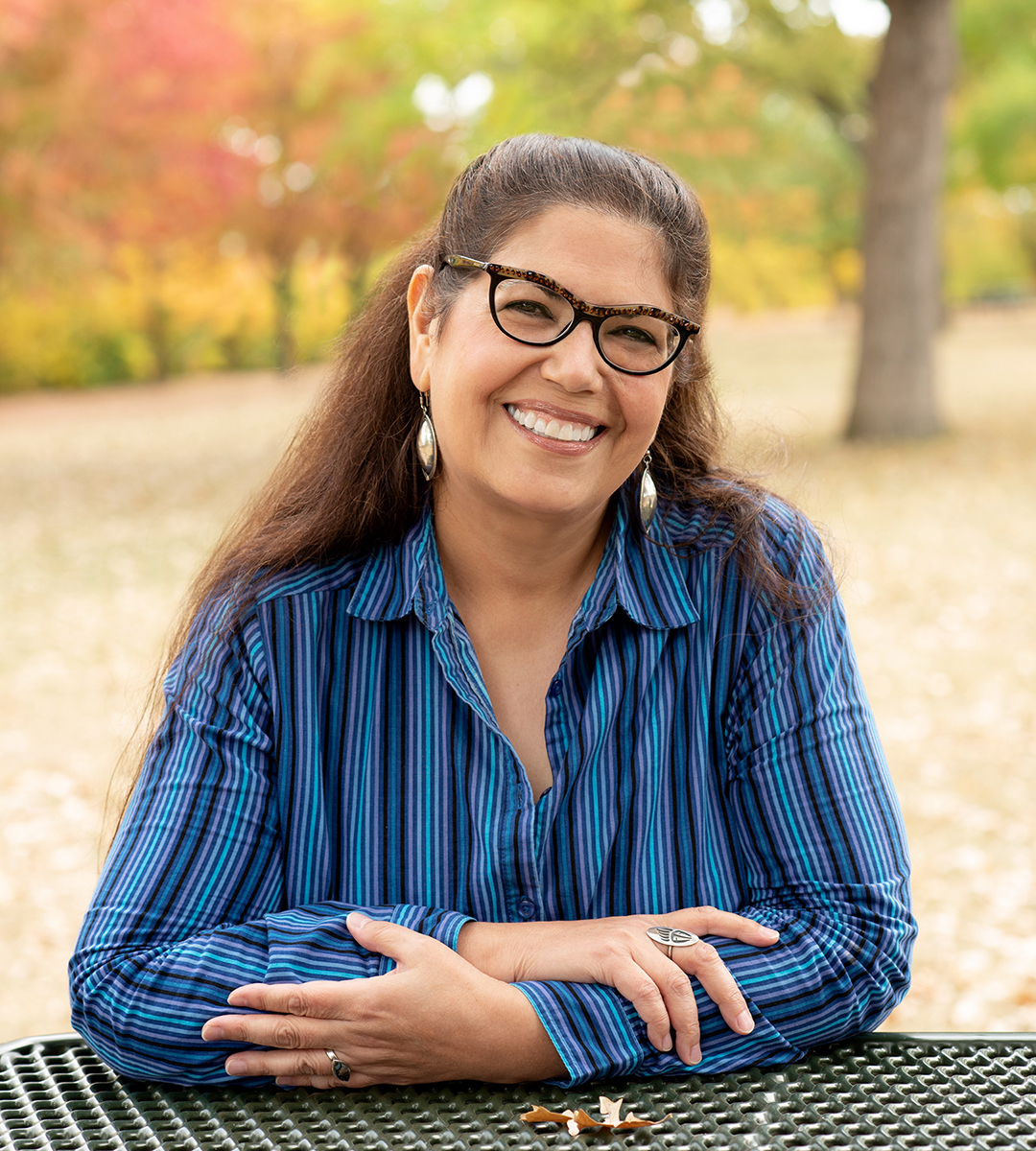 Mona Susan Power is the author of four books of fiction, including The Grass Dancer (awarded a PEN/Hemingway Prize), Roofwalker, Sacred Wilderness, and A Council of Dolls, forthcoming from Mariner/HarperCollins in August 2023. She is a recipient of several grants in support of her writing which include an Iowa Arts Fellowship, James Michener Fellowship, Radcliffe Bunting Institute Fellowship, Princeton Hodder Fellowship, USA Artists Fellowship, McKnight Fellowship, and Native Arts and Cultures Foundation Fellowship. Her short stories and essays have appeared in numerous publications and anthologies including The Best American Short Stories series, the Atlantic Monthly, the Paris Review, the Missouri Review, Ploughshares, and Granta.
Mona is an enrolled member of the Standing Rock Sioux Tribe (Iháŋktȟuŋwaŋna Dakhóta), born and raised in Chicago. She currently lives in Minnesota, where she’s working on other novels.
SEE THE ISSUE
SUGGESTED CONTENT

Featured Prose
Jun 11 2026
A Conversation with Tom Junod
Tom Junod is a widely read longform investigative journalist whose work has earned both broad acclaim and occasional controversy. He spent the first two decades of his career at men’s… read more

Featured Prose
Apr 16 2026
A Conversation with Richard Smith
When I picked up Richard’s first book, Not a Soul But Us, I knew only that it was a story in eighty-four sonnets about a boy and his dog struggling to… read more

Featured Prose
Mar 05 2026
A Conversation with Kelli Russell Agodon
Kelli Russell Agodon is a bi/queer poet and editor whose newest poetry book, Accidental Devotions, will be published by Copper Canyon Press in May 2026. Accidental Devotions, a collection dedicated to… read more