
Featured Prose | June 11, 2026
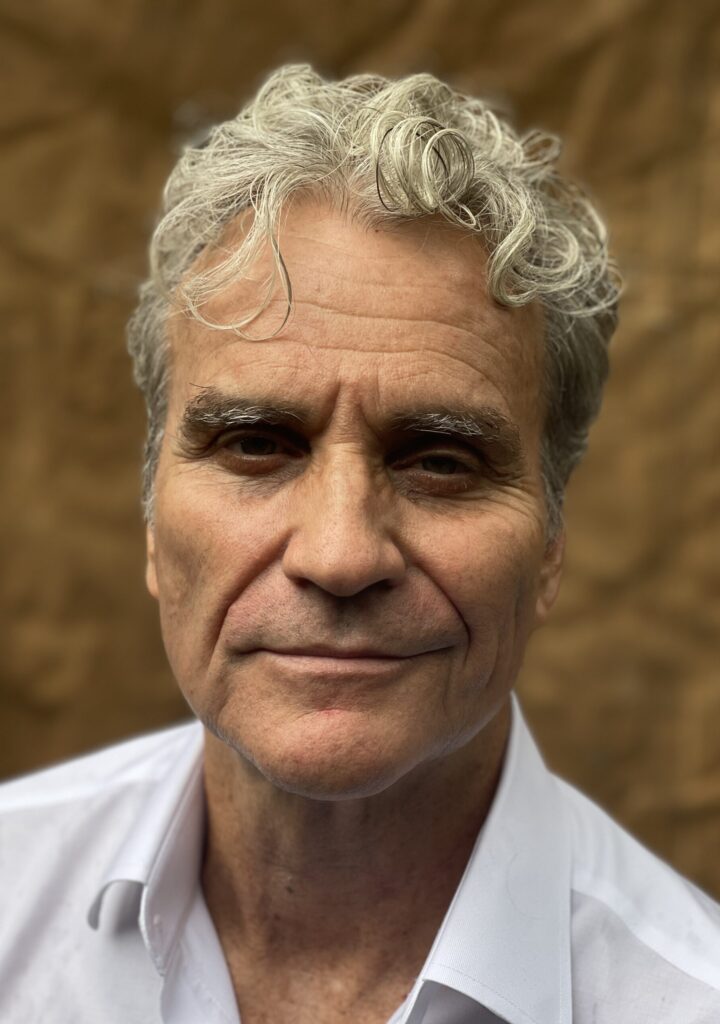
A Conversation with Tom Junod
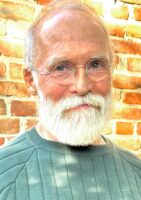
Tom Junod is a widely read longform investigative journalist whose work has earned both broad acclaim and occasional controversy. He spent the first two decades of his career at men’s magazines writing profiles and deeply reported stories that became classics still read today. While at Esquire and GQ, he won a National Magazine Award for “The Abortionist” and “The Rapist Says He’s Sorry” and was a finalist for the award a record eleven times. For Esquire’s seventy-fifth anniversary, the editors of the magazine selected his 9/11 story “The Falling Man” as one of the top seven stories in Esquire history. Junod won the James Beard Award for his essay “My Mom Couldn’t Cook,” published in Esquire in 2010. In 2019, his story on the beloved children’s TV host Fred Rogers, “Can You Say . . . Hero?” served as the basis for the movie “A Beautiful Day in The Neighborhood,” starring Tom Hanks and Matthew Rhys. Since joining ESPN as a senior writer, Junod has continued to specialize in deeply reported stories. He was nominated for an Emmy for his work on “The Hero of Goodall Park,” an E60 program on the ancient secrets that were revealed when a car drove on a baseball field in Maine during a Babe Ruth League game in 2018. He and co-author Paula Lavigne won the Dan Jenkins Medal for Excellence in Sportswriting for their 2022 piece, “Untold,” which uncovered the horrific crimes of Penn State football player Todd Hodne. Junod’s work has been widely anthologized in collections including The Best American Magazine Writing, The Best American Sports Writing, The Best American Political Writing, The Best American Crime Writing, The Best American Spiritual Writing, and The Best American Food Writing. Born and raised on Long Island, he lives in Marietta, Georgia, with his wife and daughter. In the Days of My Youth I Was Told What It Means to Be a Man is Tom Junod’s first book.
Michèle Dawson Haber interviewed Tom Junod over Zoom on March 23, 2026.
Photograph: Tom Junod, © Lee Crum
* * *
Michèle Dawson Haber: Congratulations, Tom! I was riveted by this book; it was immersive, dramatic, gobsmacking, and uplifting. I loved your opening scene: your father’s funeral and the one surprise eulogy that underscored your suspicions about your father and all you didn’t know about him. From there, you take us back to when that need to know first began: your childhood. You write that even then, you’d been making yourself the authority on your father’s life. As someone who also went through an all-consuming quest to discover my father’s true history, I recognized the obsession, and man, you were obsessed!
Tom Junod: I am sort of an obsessed character.
MDH: What do you think drives that obsession to know the truth about the past? Is it the secret-keeping that makes us go in search of more solid ground?
TJ: So many things in life are linked; there’s a continuum, if you can find it. When I was growing up, a part of me felt broken, and I don’t think I ever articulated it to myself, but there was definitely a part of me that felt like I could put myself back together by putting together the pieces of what I knew about my dad.
MDH: In your opening pages, you write, “I knew what I couldn’t tell, and because I couldn’t tell, I couldn’t see.” It’s become axiomatic to say children understand more than we know, and yet, the idea that as children, we convince ourselves we don’t see or that it means nothing is so interesting to me. Why do we do this? Why did you?
TJ: When I was three years old, we rented a summer house in West Hampton Beach. Three houses away lived a man named Chip Schocket, who my father worked for, his wife Valerie, and their son Michael, who was my first friend in life. And my father was having an affair with Michael’s mother, Valerie. That nearly finished off my parents’ marriage. I think that was the summer of knowledge for me. After that, things were different. Could I possibly have known what was going on at age three? The answer to that is most definitely yes.
Back in 1996, I took my father back out to West Hampton to do a GQ story called “My Father’s Fashion Tips.” But that was all a ruse. I knew my father’s fashion tips. I wanted to get my father in a place where I could turn a tape recorder on and ask him questions. And the first questions I asked him were about Valerie and Chip. Nobody in my family talked to me about Valerie and Chip; the only way I could have known about them was as a three-year-old. I think that really shaped me forever. It made me alert to him, and it bonded me with my mom on a nervous-system level. It made me realize the facade that we were different from everybody else because of my dad and mom’s beauty, charisma, and money was not necessarily the story. It’s a significant thing for a child to grow up with the awareness of a gigantic family secret, which was that my parents didn’t love one another. That’s a very generalized way of saying that my father was fucking around on a colossal scale.
MDH: Yeah. I remember a time when I was twelve catching my dad drinking when he was supposed to have stopped, and he said to me, “Don’t tell your mother.” And I said, “Of course I won’t.”
TJ: Of course. That’s the whole thing about it. Of course you won’t.
MDH: And so that child grows up but is still The Child. Do you think most children would prefer to keep their parents in that parent box and not learn who they were as three-dimensional, flawed characters or know how their lovers, friends, and enemies saw them?
TJ: I definitely think so. I think that’s why secrets are as powerful as they are. It’s not simply a matter of authority; it’s a matter of survival. Also, secrets are beguiling. Secrets by their nature tell you something, and what they tell you is what you want to hear. I think this might be the next thing that I wind up writing about.
MDH: I’d like to return to your identify formation in those early years. You wished you could be more like your father. You longed to be seen by him, and that longing shaped you. You now know how deeply and irredeemably he damaged the lives of your mother and possibly your sister. How has uncovering the reprehensible elements of your father’s nature changed your understanding of your nature? You write, “Whenever I took it upon myself to scrutinize him—okay, to snoop on him—I always discovered something shocking and at the same time crucial about him and our family and myself.” Can you talk more about how his story—the good and the bad—is also your story?
TJ: I like to think that I can somehow swear off my dad the way some people swear off booze or marijuana or another bad habit, but when you yearn to be someone like my dad, that’s not something you can turn on and off. You wish you could, but you can’t. In my case, his relationship to the world and my relationship to him was very physical. I mean, my dad was a physical presence before he was anything else—the way he spoke, the way he sounded, the way he smelled, the way he looked, the forceful way that he touched you, kissed you. All of it. And it’s all still there with me and will be there with me forever. I mean, even just like the way I deal with Jacques, my fifty-two-pound pit bull—I come home from a trip, and I wrestle with him, smack him around, pull his ears, hit him on the head. That was how my dad dealt with me and dealt with the world. So now that I know him to be, in some ways, as you call it, reprehensible, I try to go with the good and leave behind the bad. I think there’s a certain amount of picking and choosing there. You know, the things that I’ve done in my life that I regret, a lot of them have come from trying to walk in his footsteps. I can name a bunch of them, and they’re all in the book. There are some things that do work for me about his legacy, and there are some things that don’t work for me, and that’s called growing up. That’s called maturing. That’s called becoming a man. Becoming a man used to be becoming like my dad. It is no longer, and thank God for that. And thank the book for that, to some degree.
MDH: You describe your father as never talking about his past, as if there were simply no history.
TJ: He told a lot of stories about his past, and they were all very much the same story: amusingly heroic. There was one story I asked him to tell me again and again, and that was the story about The Swede. The Swede was a guy in Brooklyn who had terrible acne, and he was made fun of by all sorts of people, including my dad’s best friend. My dad’s best friend was this tough guy who had the greatest tough-guy name of all time: Johnny Rail. So Johnny Rail used to pick on The Swede for his acne, and one night, my father said, “Hey, Johnny, lay off The Swede.” And Johnny said, “Hey Lou, go to hell.” So they took it outside. And when they got under the glowing neon light of the bar in Brooklyn, Johnny coldcocked my dad. My dad pulled himself together the next morning and went to Johnny Rail’s house with a huge shiner, knocked on the door, and Johnny Rail’s mom answered. He said, “I need to see Johnny. He coldcocked me last night, and I’m going to lay him out.” Mrs. Rail looked at my dad, began to laugh, and gave him a steak to put over his black eye. They wound up eating the steak. And so those were my dad’s stories. It was all, like, straight out of the movies. He would speak very willingly of this sort of cartoonish, tough-guy past, but he didn’t have and/or wouldn’t share the essential stories. And when you asked my dad a plain question: “Dad, tell me about your father,” he would say, “I never had a father.” When I did begin looking and found evidence of a past that was very different from the past my father allowed to be told, he said, “It never happened.” And when I said, “Dad, what do you mean it never happened? I have articles that prove it happened,” he said, “Listen to me: it never happened.” So that is not a sin of omission, that is somebody saying, don’t go there.
MDH: So you let him shut you down?
TJ: I did. But then I went to see my aunt Marie. My father had essentially disowned her. Why did he disown her? Because she was prostituted by the mother my father worshiped. And that whole story, to me, shows how secrets come into being. I mean, who is my father going to blame for that colossal wrong? Well, he’s not going to blame his mom; he loves his mom. He blames his sister. She was fourteen when she was prostituted by her mother.
MDH: How awful! In the MPE community, there’s a lot of talk about what not having an origin story does to someone—
TJ: What’s an MPE?
MDH: The term MPE is an umbrella term that stands for Misattributed Parentage Experience. But the term relevant to your family’s experience is NPE. NPE is a term initially created by geneticists who needed a way of identifying someone conceived from a sexual encounter outside of marriage, so they coined the term NPE, which stood for non-paternal event. So your half-sister Lizzie is an NPE.
TJ: Wow, I didn’t know there was a term for this!
MDH: Yes, there is. So, yeah, in these communities, there is a lot of discussion about the identity consequences of not having an origin story. Do you think you would be a different person today if you had known your father’s history?
TJ: It was missing, really, on all sides. My mother and I didn’t know where her family came from either. It’s hard to say if I’d be different when I haven’t had the experience. The interesting thing is that although we didn’t have the typical family’s knowledge of the family tree growing up like my wife, Janet—she knows when all of her forebears came to Ellis Island, what they did, where they lived, and the jobs they had—my dad’s presence and power was such that a part of me lived in a country where he was my father and also the founding father. We weren’t quite Americans; we were Junods. We lived in our own country. I suppose it was something I felt as a lack because here I am many years later writing an entire book about it.
MDH: The third part of your book is about you uncovering the family history you were never given and finding close relatives who might have stayed hidden forever, if not for your quest for the truth. We hear “You don’t choose your family” all the time, as a way of saying, “You get what you get.” But when someone discovers new genetic family, in a sense, they do have a choice. You could have walked away and moved on; lots of people do that. But you forged a relationship, however belated. So can you talk to me about that choice you made and what it’s given you?
TJ: I don’t look at it as a choice; I look it as choices. The first people I found were my cousins, Vicki and Steve and then Ralph. I was writing a book, so I wanted information from them. But I think all along I was definitely looking for something larger. I can tell you that the feeling of kinship I got from all of them made the hunt for the information worthwhile. I was taking a chance calling, knowing that I needed something from them, and then finding out that what I needed was not quite what I was looking for. What really changed things for me was learning that my father might have had a child with Peggy Monahan. My father’s relationship with Peggy Monahan was the alternate reality version of my life. She was a woman my father professed to love. And so there was an enormous “what might have been” component in trying to find out who Peggy was and then who that potential sibling might be. It felt like I was climbing into a world that was broken and yet promised completion at some point in some way. It is still hard to name. You talk about making a choice. Calling up cousins and saying, “Hey we go back to the early twentieth century when our family was bound together and then split apart,” that’s one thing. But calling a stranger and saying, “Your mother was the love of my father’s life,” is very different. That was much scarier because I really had the power to hurt them. And so I had to decide whether I wanted to risk that to find who and what I was looking for. In the beginning, in 2008, I didn’t think I would do it. But things changed when I began researching the book. There was just so much that happened, and I felt like I needed to try to put some of that back together for myself, and, I hoped, for the Monahan children.
MDH: I’d like to hear more about those risks you took in the pursuit of your truth. You’re approaching the writing of memoir as a journalist with an established and very impressive career. When you interview a public figure for a profile, there’s tacit consent from that person, and the public has an interest in your uncovering that truth. But I think memoirists approach the question of truth from a different perspective. They ask, who has the right to tell someone else’s story, and where is the line between my story and another’s? I’m really interested in knowing where that right-to-privacy line is for you—depending on whether you’re wearing your journalist shoes or your memoirist shoes.
TJ: I’ve always been the journalist. Long before I even knew what journalism was, I took it upon myself to be something of a snoop. I’ve taken that into my career. I have written many, many stories about taboo subjects, and “The Falling Man” is really the best example of that. It’s an honored story now, but it was definitely not an honored story when I set about writing it. People were like, “What is wrong with you? Why would you ever write that story?” The what-is-wrong-with-you question is something I’ve had to deal with as a son and as a journalist all my life. And it was a question that I had to answer again
writing this book. I ultimately came to believe, and still believe, that you don’t get many chances in your life to tell the truth. And this was my chance. When I first began this book, I was writing a novel I really thought had a chance of success. I abandoned that book because I realized that if I was going to write the book that I’d wanted to write my whole life, that I was meant to write, I had to do it now, because the people were going to go away. And, you know, I became pretty obsessive. I mean, it’s not the first time. I’m a journalist and I get really obsessed with the stories I write. I went to see my aunt Ellie when she was in a coma, and when she came out of her coma, what did I ask her? “Will you tell me about your relationship with your brother?” I went to my mom the day before she died. What did I ask her? “Mom, tell me about Dad.” I went to see Lizzie, and she said to me later, “You know, you were really pushy.” I’d decided that this was it. I’d compromised with the truth of the consequences of my father’s life, and I didn’t want to compromise any more. And that’s the presiding spirit and obligation of this book. I needed, at last, to tell the truth.
MDH: No matter who it hurts?
TJ: I never thought of it like that. I never said, “I’m going to do this no matter who it hurts.” I said, “I’m going to do this and hope that the hurt that it causes is ultimately worth it and ultimately healing for the people who are in it.” I never even once said, “I don’t care.” I hoped that telling the truth and the pain that it causes can be justified ultimately by the love that it brings. That was the deal I made, and I think it’s the deal the book represents. Do I think that it was a risk worth taking? I really do.
MDH: The love that you mentioned – tell me more about that.
TJ: The love that I have for my cousin Vicki. She’s a wonderful person. And my sister Lizzie. They are not the gifts that you get when you say, “I don’t care who I hurt.” I made a different deal, and I’m glad I did. You know, the day before publication, I called my cousin Vicki, and I said, “I am a nervous wreck.” She said, “Why did you write the book?” And I said, “I wrote the book to tell the truth.” And she said, “Did you tell the truth?” “Yeah,” I said, “I told the truth.” She said, “Then don’t be nervous. You’ve already succeeded.” That’s the cousin who, until 2016, never knew I existed, and she’s telling me that the risk of getting to know her was a risk worth taking.
MDH: The women in your book are so finely and lovingly drawn.
TJ: Yeah, I love them.
MDH: I love them too. Their emotions are so keenly observed, particularly the indignities they suffer at the hands not only of your father but other “manly” men. And I have to say, it was a wonderful surprise to encounter these women, because I wasn’t expecting to based on the book’s title. I’d like to know who you imagined your ideal reader to be and how that impacted your choice of title. In other words, why did you hide the women?
TJ: It was my editor’s title. He gave it to me when I began rewriting the book in 2020. I’d decided then to write the book from the perspective of this child who does not know how to deal with his dad. That change made the book happen. I was really struggling with the book when it was about my dad, rather than a book about me and my dad, or a book about me dealing with my dad. My editor gave me the title because it was literal. I mean, we all know that it’s the first line of the first song of the first Led Zeppelin album, but in the days of my youth, I was told what it means to be a man. That’s the literal truth. But I kind of wish I could have had some sort of subtitle or subhead that said the people who helped this writer on his quest are women. I wish there was a way to communicate that. The title puts the book squarely into a discussion about manhood and masculinity, but there’s no doubt that the people I met along the way and who helped me get to the end were women. My mom, my sister, my sister, my wife, my daughter, all my wonderful aunts, my cousins, and even Peggy’s best friend, Vern—they all played phenomenal roles in this book. I have a total weakness for women of that generation; my mom was one, Vern, and Peggy—these were beautiful women who could have ruled the world, but most of them barely had a high school education, and they were kept in their houses. They exerted their power, gifts, and charisma in ways that they were allowed to then, but it doesn’t make them any less charismatic or miraculous. That story is worth telling. I really wanted to get that and get them into the book.
MDH: Yes, you conveyed that wonderfully. I definitely got it.
TJ: Valerie Schocket was another one. And Muntu Law, of course.
MDH: Yes. Valerie was a tough nut to crack, wasn’t she?
TJ: She was a tough nut to crack. But, man, she finally just put it out there. For me, my interview/confrontation/contest with Valerie is one of the most unforgettable parts of the book.
MDH: What about your ideal reader? Who were you writing for, men? Did you hope for women?
TJ: You’re my ideal reader! Seriously. I want readers who understand the power dynamics of family, who know that not everything is as it seems, and who understand that when you have a man like my dad with a tremendous amount of power, the woman who is standing in his shadow has her own kind of power.
MDH: Did any of these people who you interviewed know you were going to write about them? Did you share with them what you wrote beforehand? What’s your protocol around that?
TJ: They knew I was writing a book. That’s the only protocol I had. Nobody had any edit or veto power in the book other than me and my editor. I will say that Valerie and Muntu died several years before the before the book was published, and Vern not long after I spoke to her. So a lot of the women that I spoke to passed, and it’s one of the reasons I decided to write the book when I did; I knew my time was running out.
MDH: Yeah, I understand that completely. What about the younger people who are still alive? I found myself wondering about your brother, Michael, and your half-sister Lizzie, who specifically said, “I don’t want to be a part of any book on the trauma.” How did you manage all that?
TJ: I’ve had long conversations with both of them. Lizzie came to understand that the book gave birth to our relationship and understands the role the book played in us being brother and sister. Michael has definitely struggled with the book. There’s a lot in there that he didn’t know about my dad. I think it’s been hard on him.
MDH: He wanted to keep the parent in the parent box?
TJ: I don’t want to speak for him, but I think that that’s probably pretty close to it.
MDH: I would love to hear how you arrived at the structure for your book and if this was, as it is with many memoirists, a key challenge for you. You saved the investigative parts of your quest for the last third of your book, and it is here where you uncover one startling secret after another. Did you worry that you might not be able to keep the reader by your side long enough to get them to the really juicy stuff?
TJ: No, I didn’t worry about the third section. When I was writing my first draft, I kept on wishing for the gift of a voice that would take me through the book, that would make me a better writer than I had any right to be, because that’s what happens with voice. It didn’t come until I began writing the sections of me as a very young child trying to get at the magnitude of my dad’s presence.
MDH: That really felt so authentic. Did you rely on your journals for any of it?
TJ: There are definitely a lot of parts that I consulted my journals for, but not the raw stuff. Like me waking up in the morning at age four or five and hearing my dad’s ankles cracking. That was never in my journals, that was in my mind and in my memory. But the thing that was a concern about the third part of the book was whether I was going to lose the voice that took me through the first two parts. I was really worried about that. The thing that helped me was that I had to finish; I was on deadline. So I went back up to Long Island, where I have a writing shed, and lived by myself for two and a half months, spending every day writing. What was cool about that was that the voice of the beginning stayed with me, but it sort of grew up—it grew up the way I grew up. I was a little kid who snooped around, and out of that I became a journalist. It’s the same person, it’s the same voice, but it’s different. The secret thing that enabled me to do that is that I wrote most of part three in the second person, and then I diligently edited it back into first person. And so that was the trick that I used to meet my deadline. I’m really gratified that I was able to hold on to whatever magic that early voice had. And then, of course, the book doesn’t end with journalism. It ends with me writing a letter to my dad. The voice I use in that letter is all things: it’s the little kid, it’s the journalist, it’s the guy who is in the process of finishing this book. It’s an adult voice, but it’s written with a kid’s umbrage but also a kid’s desire to make things right.
MDH: What’s next for you?
TJ: I’m still trying to figure out what kind of book to write. I’m thinking of writing a novel. There are one or two in my head that seem to be knocking on the door, so maybe I’ll open that door. But if I do write a nonfiction book, I’d like to return to the question of what do you do with secrets and how do you live with them? My book is full of secrets, and it lines up firmly on the side of disclosing them. The books I’ve read about secrets are mostly not narratively driven. If I could write a narrative book about secrets, I think it would be helpful to people, including me. You know, most Sundays, I read The Ethicist column in the New York Times Magazine, where readers’ ethical questions are answered, and it’s astonishing to me how many of those questions are about the ethics of disclosure. I would love to delve into a book that tries to get at how we deal with this huge part of our lives that is, by design, invisible and silent.
* * *
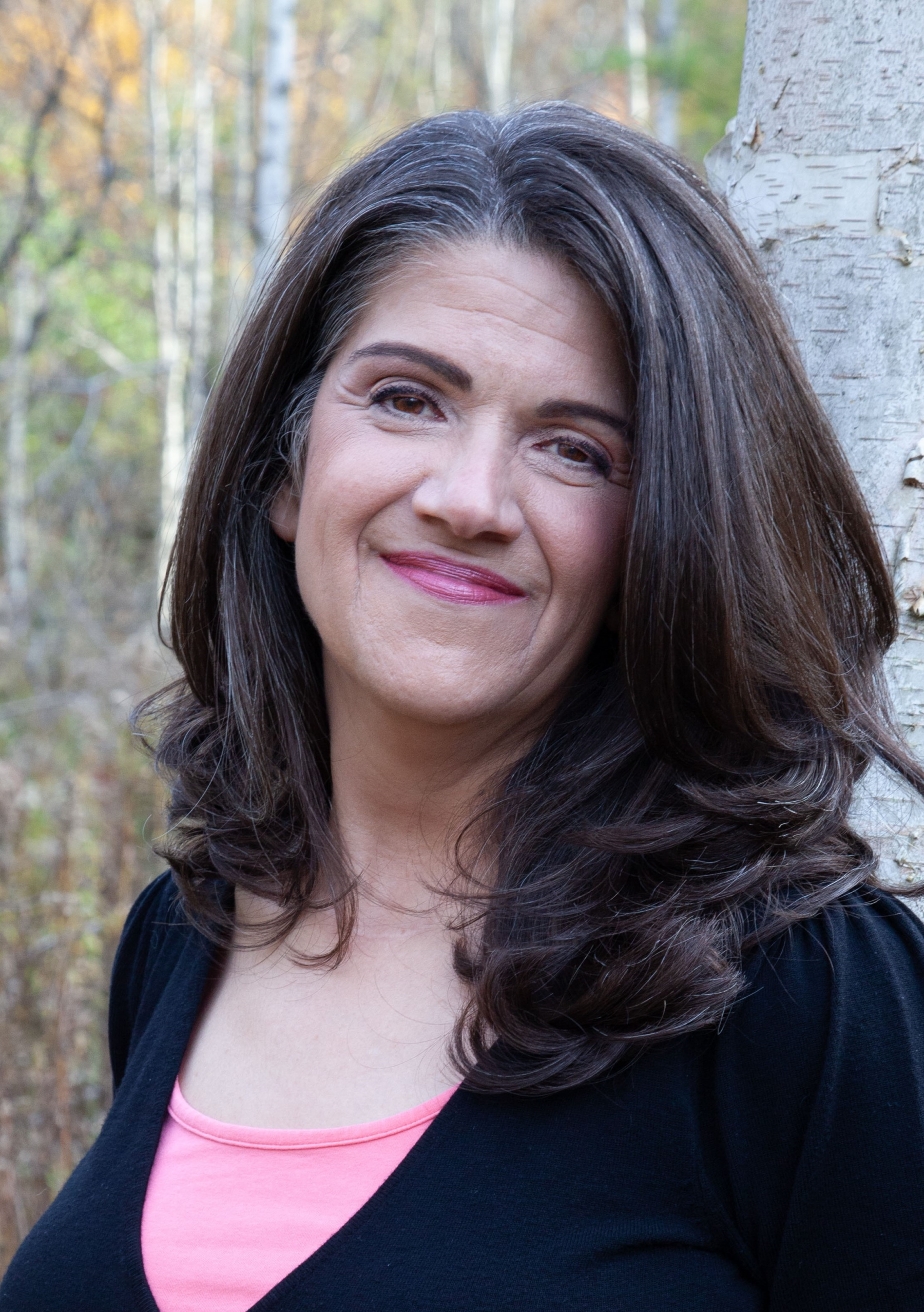
Photograph © Heather Goldman
Michèle Dawson Haber’s essays have been published in the The New York Times, The Manifest Station, Salon, and Oldster Magazine. She’s also appeared on This American Life, CBC’s Tapestry, and other popular podcasts. Her Substack Who’s My Daddy? explores the links between identity and having one unknown birth parent. She is a contributor to the anthology Relative Strangers: Inheritance, Identity, and the Meaning of Kinship (edited by B.K. Jackson, ELJ Editions). From her home in Toronto, Canada, Michèle also dabbles in pottery and is a worker advocate in labor relations disputes.
SEE THE ISSUE
SUGGESTED CONTENT
Featured Prose
Jun 11 2026
A Conversation with Tom Junod
Tom Junod is a widely read longform investigative journalist whose work has earned both broad acclaim and occasional controversy. He spent the first two decades of his career at men’s… read more
Featured Prose
Apr 16 2026
A Conversation with Richard Smith
When I picked up Richard’s first book, Not a Soul But Us, I knew only that it was a story in eighty-four sonnets about a boy and his dog struggling to… read more

Featured Prose
Mar 05 2026
A Conversation with Kelli Russell Agodon
Kelli Russell Agodon is a bi/queer poet and editor whose newest poetry book, Accidental Devotions, will be published by Copper Canyon Press in May 2026. Accidental Devotions, a collection dedicated to… read more