
Featured Prose | April 16, 2026
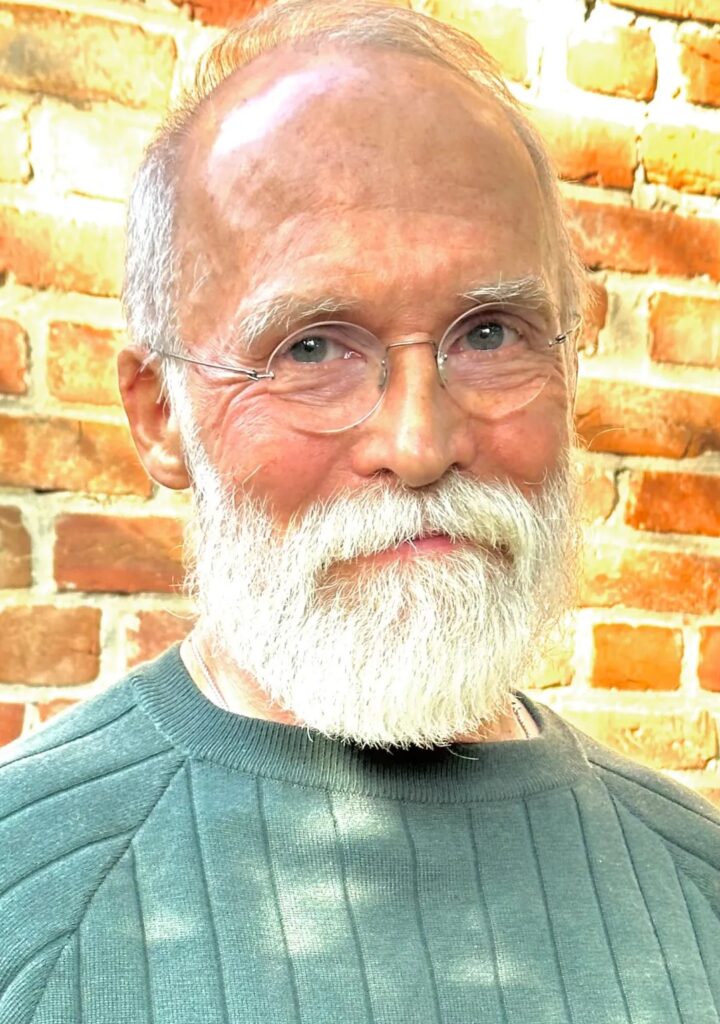
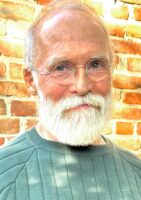
A Conversation with Richard Smith
When I picked up Richard’s first book, Not a Soul But Us, I knew only that it was a story in eighty-four sonnets about a boy and his dog struggling to survive in plague-stricken medieval England. I read it while COVID, the plague of our time, still raged through the contemporary mind. I read it on a cold day in winter, racing through sonnet after sonnet as the world around me grew dark, the wind howled outside, and the boy and his dog trekked across the snowy moors of Yorkshire. Did it actually snow while I was reading? I feel that it did, but perhaps I felt the presence of snow in the story so keenly that I later superimposed it onto the memory of reading.
So I started Richard’s new book, Beyond Where Words Can Go (Bauhan Publishing, April 2026), with anticipation. This is another narrative told in sonnets—two hundred of them, the ambition of which amazes me—and it’s another journey. This time, both protagonists are human, striving to maintain bonds of friendship, companionship, and love against the grinding forces of political oppression. The setting is Tudor England, and the tyrant is a king, but once again, the story has exceptional contemporary resonance. Richard combines empathy for his characters with rich sensory details to create an engrossing historical drama.
I interviewed Richard over Zoom on February 27, 2026.
***
Catherine Arnold: The opening line of your new book, Beyond Where Words Can Go, is full of yearning and desire: “The first thing that I notice is your hands.” Simon, the narrator, is reporting the arrival at the monastery of Philip, who becomes his fellow novice, close friend, and later, his lover. Their story forms the emotional heart of the book. That first sonnet ends: “I scarcely have been touched since I was a child.” Wow, that packs a punch. Did you always know you would begin the book that way?
Richard Smith: As far as I remember, yes, I knew I wanted to begin and end with Simon focused on Philip’s hands. As you say, the relationship between these two men forms the core of this book, and I like narratives to start with some immediate sense of what’s at stake. So, within the first three sonnets—420 syllables—the reader has key information: Simon’s attracted to Philip, physically and emotionally. They’re both nineteen, about to spend a year as novices to become monks in this monastery. As a newborn infant, Simon was left at the doorstep of the monastery; Philip is the youngest son of a lord who’s sent him off to become a monk so that he won’t have to pay for his upkeep.
So we know what both men have been thrown into. The question now becomes, what will they do with that? Raising that question is like pulling back an arrow. You need to build enough tension in the bow and bowstring that when you release the arrow, it has the energy to fly for the entire arc of the narrative.
CA: In some ways, the plot could make your book sound academic, all about Tudor-era Benedictine monks, the Protestant Reformation, and Henry VIII’s dissolution of the monasteries. But you make it a story about people—people living through a time of great change and upheaval. The first half of the book introduces the characters and shows us how the monastery works. It’s a complicated, self-sustaining institutionalized organization. And it’s also a family: Simon is a foundling; the other monks become his brothers; the abbot assumes the role of father. We feel a deep sense of peace and security in this monastery—a home for Simon and Philip and all the monks who live there.
And then you introduce a threat: King Henry VIII. His actions are arbitrary and terrifying, and he communicates through propaganda. By the time the monks understand just how dangerous Henry is, it’s too late—and they end up losing their home. Did you plan the structure in advance, or did it evolve as you wrote?
RS: The basic structure was in place when I started writing. Now, where did the basic structure come from? I can think of two launching points.
First, I’ve always been drawn to England in the late medieval/early modern period. And since I was a kid, I’ve had an image in my mind of a medieval peasant standing in a field, looking up at a church spire. That image encapsulates a lot of long-standing imaginings on my part. What was life like on the ground during this time? Much of it must have been excruciatingly difficult: plague, high infant mortality, short life spans, wars at home and abroad. But then there’s that church spire, and the idea of a God who creates a protective shield over us humans, the promise that if we’re faithful to the Church and follow its prescriptions, we can eventually spend eternity with God.
So that image of the medieval peasant conjures up both earth and heaven—the mortal and the divine. I find the tension between those two poles interesting and uneasy.
The second origin point: my partner, and many of our friends, are journalists—and began mostly as print journalists. As the internet swept through our lives, and their jobs were altered or eliminated, I thought of late medieval monks watching Gutenberg’s press churn out in one day books it had taken them months to copy by hand. A major part of these monks’ function was made superfluous.
Furthermore, the greater access to books and rise in literacy contributed to the Protestant Reformation. So here’s another technological revolution contributing to a cultural shift. A huge one: The Protestant Reformation kind of cracked the sky open. There were always Jews and Muslims and other types of believers in medieval Europe, but for the vast majority, there was one church and one faith, which served as the lens through which all of life was understood.
Suddenly, in the 1500s, you have whole states, whole countries, becoming Protestant. So what’s true depends on where you live. Imagine: if your own country becomes Protestant because the government says so, would anything feel as certain as it had in the past? Mindsets of relativism or skepticism must have become more possible. And yes, that shift greatly expanded intellectual freedom and unfettered the imagination. But it must also have created unease, uncertainty, and fear.
CA: OK, here’s a very short question. Why sonnets?
RS: I’ll give a long answer, most of which is anything but lofty.
I think this was in 2016. My partner and I had had our first dog, Barney, for three years. I’d always loved dogs, but still I was stunned by the relationship with him—the depth of connection and breadth of communication. I was listening to a lecture about Romeo and Juliet and was reminded that when they meet, they cocreate a sonnet, and I thought, Well, I love Barney, I’ll write sonnets for him.
So I did. One of them imagined me and him as a medieval shepherd and his dog, and then I thought, Let’s raise the stakes: let’s set this during the Black Death, and let’s make the narrator not an adult but a kid who’s been orphaned and abandoned. Just him and the dog. So with this idea I wrote one sonnet, then three. Then eighty-four—my first book, Not a Soul but Us.
Maybe more crucial than how I started writing sonnets is why I’ve kept writing them. Art forms that develop organically over time seem to end up being well-suited to the human apparatus. Petrarch was writing sonnets more than two centuries before Spenser and Shakespeare and Donne, and the form weathered the transition into English, where it caught on big. Think of it. Most people can pay attention for fourteen lines. Iambic pentameter—da-DUM-da-DUM-da-DUM-da-DUM-da-DUM—has great momentum. And whatever kind of sonnet you write, the rhyme schemes are fun.
I found that using sonnets in a narrative had distinct advantages. One is flexibility: you can write a stand-alone sonnet that describes one moment, or you can string sonnets together in one continuous scene. Because the reader will take each sonnet on its own, you can sometimes leave out the less interesting narrative bits you need in prose. (“Simon walked up the stairs and knocked on the door.”) The breaks between sonnets give readers a chance to pause, or not, as they please.
So I found that a narrative in sonnets can pack in a lot. This creates a texture I like—both spare and dense.
Here’s how I think about it: Writing sonnets is like dancing with a partner who’s more talented and experienced and knowledgeable than I am. It forces me to up my game.
CA: So the sonnet is the leader, and you follow?
RS: Definitely.
CA: At one point, Simon reflects on his role as a confessor: “Confusion, pain, fear, hunger, sadness, need, . . . / One must attend the soul that nursed the act.”
You’re a writer, and you’re a psychologist. Like Simon, you hear people’s secrets. You see people at their most vulnerable. How does your role mirror Simon’s, and how is your experience as a psychologist different from that of a priest?
RS: There’s one huge difference. As a psychologist, I’m an agent of social control only in narrowly defined cases. If somebody talks about planning to harm themselves or someone else, or if I hear about a child being harmed, then I legally have to take action to try to prevent such harm. But otherwise, I don’t stand in for any authority or any supposed source of truth—which I’m glad of, because the fact is, I don’t have to live my patients’ lives; they do.
With that difference, though, there are a lot of parallels. Many societies create a role for someone set apart, whom you can talk to in some confidence, whether that’s a priest, shaman, healer, therapist, elder, mentor—the list goes on. Talking out their thoughts and feelings helps people put them into words and understand them better. It also requires a slowing down, which can help calm the nervous system into greater capacity to reflect instead of merely react.
I find that there’s both a face-to-face mode, in which I look at and into someone to try to understand them, and a side-by-side mode, in which I sit beside the person (so to speak) so we can look at their lives together. Simon does both of those things, with the added wrinkle of knowing pretty much everyone his parishioners might talk about.
CA: One of the things that I love about your writing is that it makes me think and feel equally. You often describe emotions for the physical effects they have on the body. For example: at one point, Simon is thinking about how much he simply wants to be touched: “My skin was always lonely, always ached.”
But you’re equally interested in pushing beyond the obvious to expose the complex moral dilemmas that your characters face—to focus on the realm of thought. Do you consciously set out to strike a balance between the head and the heart?
RS: Nope, that’s just where I personally am always stuck, somewhere in that balance—or imbalance. I’m always on that seesaw, so I don’t have much choice, really. It’s just the way I experience things.
It took me a long time to figure this out. I was with two friends—who are also therapists—and was describing somebody who explained that, when he was deeply absorbed in thinking something through, his thoughts were like huge geometric shapes moving around in his mind. They had nothing to do with words, and if interrupted, he’d need a bit of time before he could speak.
One of these friends said, “Wow, for me, everything happens in words.” Then the other friend and I said, pretty much in unison, “It’s right here,” gesturing toward our torsos—chest and gut. Initially, I experience everything emotionally and physically. Sooner or later, it moves into words. That might be right away, as when I’m angry (which is why me losing my temper is a terrible idea). Sometimes it takes a while, if it’s overwhelming or complicated or elusive. The feeling loiters around on the edges of consciousness, and then I start to talk and I realize, Oh, that’s it, here it comes. And I may not know the end of the sentence when I start it, but by the time I finish, I do.
CA: A lot of people, when they find out you’re writing about a Benedictine monastery and the Tudor era, would assume it’s abstract or remote. It’s anything but those things. That shows up particularly in the way you write about religion—how the prescribed forms of worship give shape to the monks’ day, how a belief in God can manifest in intense personal experience. How did you approach writing about Simon’s visionary faith?
RS: It’s easy to look back on an older religious faith, or an older iteration of a faith that’s still extant, and focus mainly on doctrine. And, given that doctrine was so important in the Protestant Reformation, one could get snagged on it when thinking and writing about faith during this period. But any living faith is not just ideas; it’s a way of organizing and understanding human experience.
Catholicism, especially in the Middle Ages, was a highly physicalized faith. And in some ways—and in some areas of the world—it still is. Medieval churches were full of color: paintings on the walls, painted statues, stained glass windows, gold chalices, and candlesticks. And during the English reformation, that all got whitewashed or streamlined.
In Benedictine monasteries, there were worship services eight times a day—liturgy that was usually sung. Over the course of a week, the monks would sing all 150 Psalms at least once; ten or so were sung daily. If you didn’t doze off, that would tend to be a massively meditative experience. During the Mass, the bread and wine were believed to literally become the flesh and blood of Jesus Christ. Seen from one perspective, that might seem like a throwback to ritual animal sacrifice. But for a believer watching that process of transubstantiation, it was a miracle every time: Here and now, in this place, in this moment, Christ’s body and blood are being given to us—again.
I wanted to try to capture some sense of how all this might have felt. That seems particularly urgent because Protestantism and its worship practices tend to become increasingly non-physical—de-corporealized. Think, for instance, of the early American Puritans. We tend not to imagine a lot of joy and wonder and color and sensuality during their worship. This more embodied aspect of medieval Catholicism seemed central and important.
So I wanted to make it clear that the removal of those aspects of worship and understanding was, for believers, a massive loss. At the same time—for plot purposes, more or less—I wanted my protagonist, Simon, to retain a strong personal experience of faith all through the vagaries of the English Reformation, which takes place over the second half of his life. So I had him tap into the vein of mysticism and deeply personal experience of the divine that runs throughout Christianity. I’m thinking of people like John Cassian, Benedict of Nursia (founder of the Benedictine Order), Bernard de Clairvaux. My favorite, by far, is the anonymous late–fourteenth-century monk or priest who wrote The Cloud of Unknowing and The Book of Privy Counseling. He describes the direct experience of God as a profound awareness of God’s love and an understanding that we as humans cannot know what God is, we can only know that God is. Simon has repeated experiences he calls “the tug toward God,” during which he loses awareness of his present environment and the passage of time. Those begin in early childhood and continue through his life, and in many ways they’re the bedrock of his existence.
CA: Both your novels in sonnets are historical—one set in the Middle Ages, and one in the Tudor era. What interests you about the creative challenge of imagining another time and bringing it to life? Are there any pitfalls that you try to avoid?
RS: To me, one of the most interesting questions in life is, what’s it like to be somebody else? That’s one of the reasons I enjoy my work as a psychologist so much: People are wonderfully diverse and interesting and creative in ways I find beautiful. I’m interested also in what it was like to be human at other times. And this period I seem to be drawn to—the late medieval/early modern period—feels close enough to us in time that we do know a good bit of the culture and history, but distant and different enough that we have to stretch to understand it. What did it feel like to live so enclosed within a faith, within a social hierarchy so much more fixed and rigid than ours? I think those people had the same basic physiology we do, so the question becomes, how did that physical apparatus fare in a substantially different culture?
The first obvious pitfall is the mistake of projecting a contemporary mindset onto the characters. That’s a losing fight, of course, but I do what I can, which includes reading as much as possible about the material, social, intellectual, and religious life of the time. How did that peasant feel, standing in the field, looking up at the church spire?
I also try to avoid language that’s clearly anachronistic. Of course it would sound ludicrous to attempt writing in pseudo-Middle English or some hashed up approximation of Early Modern English. But I also try to not include phrases or words that would pull the reader out of the flow of the story. Example: “How are you?” “I’m good!” This sounds off even in a TV show set in the 1980s; we didn’t talk that way then. Colloquialisms age fast, so I try not to use them.
My first book is narrated by an illiterate mid–fourteenth-century peasant. Given how French and Latinate words trickled down from the upper classes during the Middle Ages, I figured he’d use primarily an Anglo-Saxon–based vocabulary. I checked in Shakespeare, and his lower- or working-class characters do tend to stick to Anglo-Saxon words, and sometimes the humor is based on them using more sophisticated French- or Latin-based words—but incorrectly.
Beyond Where Words Can Go is 150 years closer to the present day, and the narrator grew up literate and bilingual in English and Latin. So he would have had a much broader vocabulary. But if I was uncertain how a particular word or phrase might sound, I’d check the Oxford English Dictionary. When in doubt, I’d go for a word that was in use during the period of the book.
CA: Simon, the narrator, was abandoned as a baby on the front step of the monastery, then taken in and cared for by monks who became his family. How do you think Simon’s birth shapes his life, and why did you decide to make him a foundling?
RS: First of all, a character who’s a foundling or orphan is thrown right into the world and has to start figuring things out. Oliver Twist and Jane Eyre, for instance, are on their own from a very young age. That heightens the question of agency, of what the character chooses.
I also wanted Simon’s life to feel precarious to himself. He knows his mother could have kept his birth a secret and simply drowned him in a ditch and hidden the body. So he knows he’s lucky the monks took such care in raising him.
Now, a sidebar about these monks. The early histories of the last years of the English monasteries were written by Protestants, who tended to believe the reports written by Thomas Cromwell’s henchmen to justify the monasteries being forcibly closed or pressured to surrender. They weren’t exactly impartial observers, and many monks were—unsurprisingly—portrayed as fat, lazy, corrupt, sexually lax, impious. Some later accounts written by Catholics seemed to take the opposite tack, practically beatifying the monks, which doesn’t ring true either.
More recent historians have sifted through historical details and demonstrated that some monasteries must have been thriving in the 1530s, given how many novices they attracted, or the extensive repairs they made to their buildings, or how much assistance they gave the poor. It’s a much more nuanced picture. I wanted to depict a monastery that was on the pretty good side. It’s certainly not perfect, and some of the monks are problematic people. But it’s credible that such a group of men would have taken good care of a child.
This makes it all the more poignant when Simon hits puberty. He notices hair sprouting on his upper lip and other places, and his voice going haywire, and at that point, all the monks suddenly avoid even touching him. This is a huge change in what had been an affectionate upbringing, and I wanted Simon to have been contending for a while with that loneliness when Philip arrives at the monastery.
CA: Secrets play a powerful role in the book. There’s the central secret that Simon and Philip must keep, because their love for each other is forbidden by the church and by society. There’s the secret of Simon’s birth. And, as the king becomes more powerful and more greedy, the monks learn to keep everything secret, even their thoughts. A few careless words could cost them their lives. How did you reflect on that as you wrote? As a psychologist, you must be used to hearing people’s secrets and feeling the weight they carry.
RS: Well, I assume everybody has secrets. All cultures and societies and families have rules of one sort or other. And the rules help define what must be kept secret, because if you’re not abiding by those rules, you need to keep quiet about certain of your thoughts and feelings and actions. It can be a matter of survival.
So secrets are a great barometer of ways any social group is restrictive. One thing I try to offer patients is the chance to think through what they’re having to keep secret, whether that cost is worth the membership in whatever system is imposing these rules, and how to stay safe if they decide to let a secret out into the world.
CA: Tell us a bit about your writing practice. Do you write at the same time every day? Do you like to keep strict boundaries between your writing time and the rest of your life?
RS: I’m not sure that the way I write merits the term “practice.” Every day is different, depending on what’s scheduled and how I feel. I grab time to write when I can. If I’m in a research or planning stage, long chunks of time aren’t that essential. But if I’m actively writing, I try to set aside a stretch of time for it every day. That keeps what I’m working on percolating in the background, and my brain then comes up with words or phrases or ideas at seemingly random moments while I’m going through my day. It’s especially important to have stretches when I’m physically active—walking the dogs, doing chores or yard work—something that doesn’t require analytic thought. I never listen to music or podcasts at those times, as that seems to distract my background thinking. I need a lot of quiet.
CA: In your first book, Not a Soul But Us, you tell the story of a boy whose entire family has died in the plague that swept England in the mid-1300s. Your new book is about a close-knit family, what nowadays we might call a found family. And yet that family is also attacked, scattered, and almost destroyed. The idea of home seems to be central to your writing. What does home mean to you?
RS: That’s a great question. In today’s world, home seems like something we keep creating and losing and recreating all through our lives. It’s become rarer to live one’s entire life in the same spot, with all the pluses and minuses that entails. For me, home means people—and dogs—with whom I feel an ease, affection, shared values and interests, communication, a sense of belonging.
Place also matters—the shapes of rooms, the quality of light, relative quiet. And trees. I live in Washington, DC, a block from Rock Creek Park—seventeen hundred acres of old-growth forest. A handful of those old-growth trees stand in our yard. They feel like friends and protectors.
Apparently, human hearing is most acute in the range of birdsong. One theory holds that when our prehistoric ancestors were wandering around whatever continent they were on, birdsong could guide them to spots with trees and water—safe places where they could settle.
CA: Simon and Philip, the couple at the heart of the book, are both artists. Simon draws and paints illuminated manuscripts. And Philip is a musician, a singer.
You describe the beauty of Philip’s voice in vivid, surprising terms: “If it had shape, your voice would make a perfect sphere. . . . If color, blue, the deepening blue / when twilight’s almost over.”
I know music is important to you. What was it like to try to describe sound through words?
RS: This goes back to my earlier comment about how I initially process experience emotionally and physically. It’s a little odd: on one level, I experience music as a sequence of muscular tension and relaxation inside my torso. So music is like a pattern of tugs and releases inside me that define a series of shapes. It’s no accident that, twice in the book, Philip’s voice is discussed in terms of the flight path of a bird.
Even the blue mentioned in the line you quoted: that blue is about the feeling twilight evokes in me—a simultaneous calm and unease at the ending of the day. Peace and loneliness side by side.
CA: What do you think your obsessions are as a writer? Which themes do you find yourself returning to again and again?
RS: Well, loss. Also, the ways we’re held in life by the people who are close to us, including people we’ve lost, who’ve died. Who and what we love. The crucialness of the present moment. And then, as I said before, what is it like to be someone other than myself?
CA: What are you working on now?
RS: Two things. Simon, the protagonist of this book, is a foundling. Initially I didn’t know who his mother was. But I got curious. What did this young woman go through? How did she get to the point of choosing to leave her child on the doorstep of a monastery? And how dangerous was it to be female in Tudor England? So she’s getting her own book.
The other project pretty much forced itself on me. I have long COVID—for more than three years now. In many respects, I have a mild case, without the severe physical symptoms many others have—the debilitating fatigue, the severe pain, the disruption of the autonomic nervous system (causing random dysregulation of heartbeat, breathing, body temperature, balance). My symptoms are primarily neurological, and plenty bad, but if I keep stress low and avoid overstimulating environments, I can usually focus and think, write, talk.
So I found myself writing sonnets about this experience. That got out of hand, and it’s turned into a book-length illness memoir. I think I once again got snagged by the question of what it’s like to be someone else. In this case, what’s it like to be me when massive inflammation interferes with my brain’s ability to generate consciousness as it normally does? Among many other things, the experience is interesting.
* * *
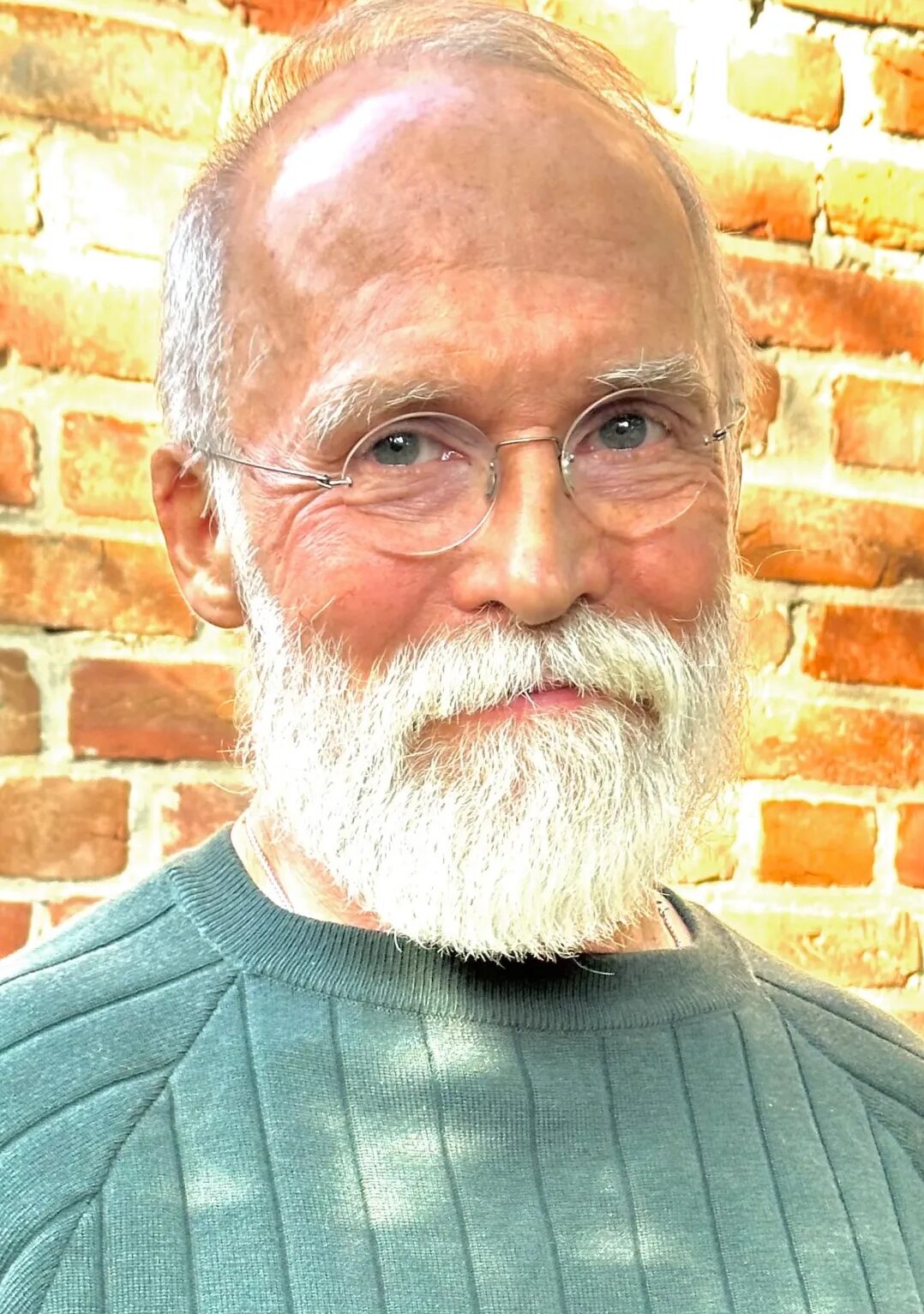 Richard Smith’s first book, Not a Soul but Us, won the 2021 May Sarton New Hampshire Poetry Prize and was released in 2022 by Bauhan Publishing. His next book, Beyond Where Words Can Go, was published by Bauhan in spring 2026. Both are narratives told in sonnets: Not a Soul but Us follows a twelve-year-old boy orphaned and abandoned during the plague pandemic in mid–fourteenth-century Yorkshire, and Beyond Where Words Can Go tracks a group of Tudor-era monks before, during, and after Henry VIII’s dissolution of the monasteries. Smith is a psychologist with a clinical practice in Washington, DC.
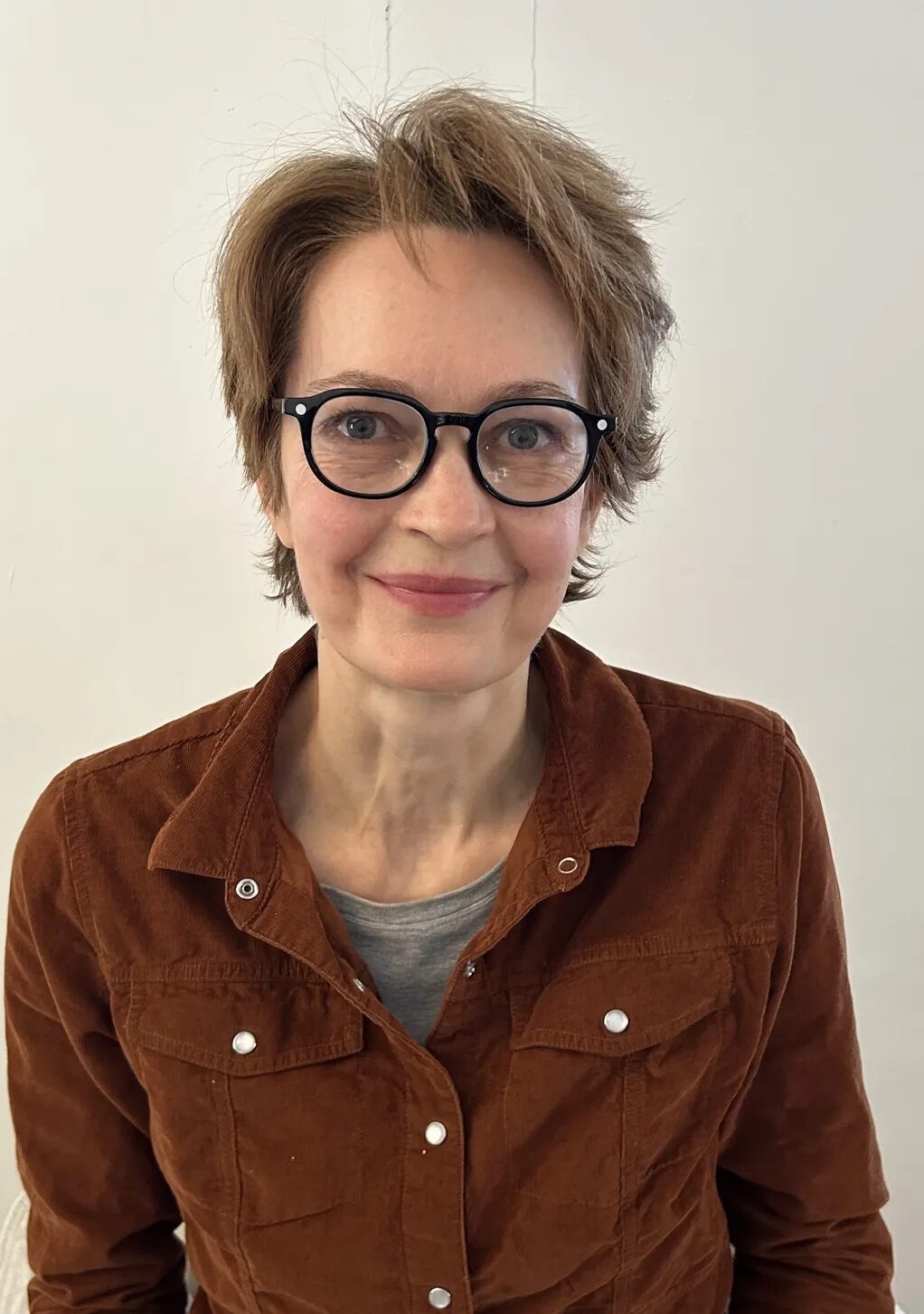 Catherine Arnold is a writer and artist living in western Massachusetts. Her poems and prose have appeared in The Cincinnati Review, The Gettysburg Review, Natural Bridge, and Prairie Schooner, among others. Her debut poetry collection, Receipt for Lost Words, was published by Bauhan Publishing after winning the May Sarton New Hampshire Poetry Prize; her second book of poetry, The Apple Tree, was published in April 2025.
SEE THE ISSUE
SUGGESTED CONTENT
Featured Prose
Apr 16 2026
A Conversation with Richard Smith
When I picked up Richard’s first book, Not a Soul But Us, I knew only that it was a story in eighty-four sonnets about a boy and his dog struggling to… read more

Featured Prose
Mar 05 2026
A Conversation with Kelli Russell Agodon
Kelli Russell Agodon is a bi/queer poet and editor whose newest poetry book, Accidental Devotions, will be published by Copper Canyon Press in May 2026. Accidental Devotions, a collection dedicated to… read more
Featured Prose
Feb 05 2026
An Interview with Julia Ridley Smith
Fall 2025 Missouri Review interns Graham Medric George ’27 and Sofia Louise Ottolini ’27 interviewed Julia Ridley Smith about Sex Romp Gone Wrong, her recent short-story collection, when she visited… read more