
Blast | April 25, 2025

“A Kosovar Guide to Darts” by Hope Edelman
BLAST, TMR’s online-only prose anthology, features prose too vibrant to be confined between the covers of a print journal. In “A Kosovar Guide to Darts,” Hope Edelman reflects on a brief but impactful relationship with a young Albanian man whom she met while traveling in Switzerland in 1989, shortly before the collapse of European Communism and the Eastern Bloc. Edelman’s memoir testifies to the power of youthful romance while remembering the traumas experienced by Kosovar Albanians during the period.
“A Kosovar Guide to Darts”
Hope Edelman
“From the splendor of a Greek temple perched above the emerald waves of the Aegean to the hopelessness of the cement and wire that divide Berlin, Europe will move you with reminders of the best and worst of Western civilization.”
– opening sentence, Let’s Go: The Budget Guide to Europe, 1989
Silent and sleek, the Zurich trams glide across the city’s surface beneath an orderly chaos of wires. I purchased a ticket before boarding, but no one seems interested in seeing it. If instructions are printed on the ticket face, I can’t tell. The writing looks like English in a blender, with a couple of extra characters tossed in.
“There is trust here.” It’s a male voice, from just above my right ear.
I look up. Soft, kind eyes. A gentle half smile. Dark curls tumble over a forehead and graze a white collar in the back. He’s about my age, give or take. I notice he has a strong jawline.
Always, with me, it’s about the jawline.
“The ticket. No one will ask. They want you to pay and trust that you will.”
His English is halting, careful. He doesn’t have a Swiss accent, that much I can tell.
“In New York, you can’t get on a train without paying,” I say.
He nods slowly. “Ja, that is different.” He has a calm, steady ease about him. “You are from New York.” A statement, not a question.
I’ve just left a job in Tennessee. In six weeks, I’ll start graduate school in Iowa. I have no permanent residence at the moment, but I grew up in the New York suburbs and flew out of JFK last night. After ten hours in Europe, I’ve already learned that communication is contingent on keeping it simple.
So, yes. I’m from New York.
“You are staying at the hostel?”
“I am.”
“You will want the next stop.”
“Danke,” I say.
When I arrived at the Jugendherberge Zurich this morning, straight from the airport, the hostel receptionist was locking up for the day. He took pity on an exhausted traveler with an absurdly large green backpack and let me check in and drop off my bag. Lockout was from 10 to 4, I was informed, and curfew at 1 a.m. If I wanted dinner, I needed to be back by 6 p.m., he made a point of adding, or I’d risk losing a seat.
I check my watch on the tram. 5:45 p.m.
Through the window, I see people bicycling home from work with loaded grocery bags swinging from their handlebars. I squat a little and peer over the heads of the seated passengers, greedily sucking in every detail. Storefronts slip by. Parfumerie. Drogerie. I’ve never been to Europe before, never been outside of the US other than two days in Montreal. I received my first passport just a month ago, at age twenty-five. It has exactly one stamp inside: Zurich Flughafen, 05.07.89.
In a different storyline, the one I was expecting to live in, I’m standing on a Swiss tram with my new husband. We’ve eaten at an outdoor café along the Zurichsee, where we picked food off each other’s plates and marveled at our matching wedding bands. Then we strolled through the Old City, practicing our accents by reading German shop signs out loud. I’d look up at him on the tram, amazed by what we’d pulled off to be here together. We would have spent the day drunk on each other and Feldschlösschen beer.
We’d met during the summer between my sophomore and junior years of college and tumbled into an all-consuming love. He proposed at Christmastime three and a half years later, with a teddy bear that had a diamond ring tied into the bow around its neck. Young, we were. Twenty-three and twenty-four.
Why did I end it five months later? Immaturity. His family’s disapproval. Fear. I knew that if I married a promising young attorney, I would seek refuge in the security of his position. I would become the dutiful wife to his rising star. I would not take risks. I would not go to graduate school. I would never write a book. I could see it all laid out before me, the path I would eagerly follow to recapture the safety I’d lost as a child and so desperately craved now. But it would all be coming from him. I would never learn how to create it myself. And so I shredded two hearts in the pursuit of my autonomy. It was selfish, and it was necessary. I understand that now.
I had loved him fiercely, and now there was no place to put that love. My attachment neurons kept firing in his direction, even a full year after the engagement ended. Even worse, the rupture had been my doing. No one could understand the depth or the duration of my distress. It had been my choice, after all.
Traveling through Europe myself, for what would have been our honeymoon, could have been viewed as an act of closure. But it felt more like an attempt to wrest myself free from an agonizing year of oscillation between resolve and regret.
As my flight lifted off from JFK at 10 p.m. on the fourth of July, I looked down on the fireworks busting out across the black carpet of Queens like tiny explosions of star matter. I’d never seen an aerial nighttime view of New York City before. The world is my oyster was the phrase that came to mind, though I couldn’t tell you why. I had never eaten an oyster before, either.
The overnight flight landed in Zurich on July 5, 1989, the day after Poland’s Solidarity party took its seats beside the Communist leadership in the Sejm. Two months earlier, Hungary had dismantled 150 miles of barbed wire along its border with Austria, symbolically snipping the Iron Curtain. The continent I stepped onto that summer was cracking apart, and much of it would look different by fall.
I hadn’t slept on the seven-and-a-half-hour flight from New York, and I was woozy as I joined the airport immigration line with a thick orange copy of Let’s Go Europe: 1989 clutched to my chest. The mechanical cla-clunk of the immigration agent’s stamp against my passport was both a form of punctuation ending the flight and a declarative statement of arrival: You’re. Here.
“Willkommen in der Schweiz,” the agent said as he pushed my passport back across the counter.
This was four years before the EU formed. Europe was still a collection of twenty-seven distinct countries with separate currencies, languages, and border controls. My knowledge of European history was similarly siloed, determined by whatever elective courses had fit among my required college classes. I could go on about Atatürk’s interpretation of democracy during late Ottoman rule but knew embarrassingly little about the Eastern Bloc. Before leaving New York, I’d obtained a Yugoslavian travel visa to visit the friend of a friend in Belgrade, though I had only the vaguest idea of what was unfolding in Yugoslavia that summer. Land of Slavs and Tito—that was how I imagined it then.
The Number 7 train slides into the Morgental tram stop. The man beside me motions toward the door with his chin. “It is this one,” he says.
I nod a goodbye on my way to the door. “Danke.”
Morgental and Mutschellenstrasse meet at a four-way intersection, and the tram stops right in the center of the X. I spin around on the asphalt, searching for a sign with the hostel symbol and an arrow.
“It is that way,” the man says.
Wait—what? He just followed me off the tram?
It occurs to me, in a spasm of insight, that generic Tennessee-friendly might signify something different coming from an American woman traveling alone on a Swiss streetcar.
The man drapes his sweater over his left shoulder. “I am going there also, to meet my friends,” he says. “I will walk with you, ja? It is more safe.”
I assess him carefully. Dark, clean jeans. A soft white cotton dress shirt, pressed but not starched and buttoned all the way to the top. Gentle brown eyes. His cheeks show the faintest hint of shadow, as if he shaved that morning but needed to every day.
And that jaw. That jaw.
He raises his eyebrows and smiles just enough to reveal a small gap between his top front teeth. Involuntary, it is, the way my heart hopscotches at the sight of it.
I smile back.
“Okay,” I say. “Ja.”
He is from Yugoslavia, he tells me as we walk past boxy white homes with evergreen wooden shutters. His name is Tony. “But I am not a tiger,” he adds. “All the Americans like to ask me that.”
Tony walks with a fluid, easy gait, as if perfectly attuned to living inside his body. He studied English at university in Prishtina, he says, where he took a degree in physics and worked for a few years, but the Yugoslav economy is bad, very bad, so he left a few months ago to settle here, where his uncle lives. Now he has a job washing dishes at a restaurant. It’s a story that speaks of dislocation and humility, but I see only resourcefulness and adventure. It does not occur to me that Tony’s comfortable stride might have come at great cost.
“Is your first language Serbo-Croatian?”
He shakes his head. “Albanian. I am Albanian.”
“Not Yugoslavian?”
“I am Albanian. But Prishtina is in Yugoslavia, ja.”
He does not say “Kosovo,” though if he did I would not have known what it meant, would not have known that 90 percent of that Yugoslavian province was comprised of ethnic Albanians who, in the summer of 1989, were struggling with 300 percent inflation and 35 percent unemployment. I would not have known that three months earlier the Serbian parliament revoked fifteen years of Kosovar semi-autonomy, and the week of rioting that followed in Prishtina resulted in twenty-nine deaths when Serbian policemen fired into an unarmed crowd.
The Yugoslavia chapter in Let’s Go Europe: 1989 makes no mention of Kosovo or Prishtina, though it describes modern Yugoslavia as a “fascinating example of ethnic coexistence,” a sentence that will later cause Tony to noisily blow air out of his mouth and ask, “What person is writing that book?”
“So you’re Albanian, from Yugoslavia, living in Switzerland,” I say.
“It is confusing, ja.” He raises a hand toward a man draped casually against a low cement wall. “There is my friend.”
The friend flicks his cigarette to the pavement and grinds it out with a single twist of his black leather boot. Paler and shorter than Tony, he leaps forward to grab his friend in a raucous hug.
“This is Hope, from America,” Tony introduces me in English, after they part.
“Ej!” his friend says. I extend my right hand but he ignores it, gripping my shoulders and planting loud kisses on both my cheeks instead.
“A good name! I am Tony.”
“You’re Tony, too?” I look to the first Tony for explanation.
“Ja,” Tony One says. “It is a usual name.”
“Many Tonys where we come from,” says Tony Two.
“Okay.” I shrug. I’ve just left a job where my boss was named Hope. These things happen.
Tony One holds the glass entry door open for me. Tony Two offers me his arm. And into the Jugendherberge Youth Hostel we stroll, the girl from the New York suburbs and her darkly handsome Albanian entourage.
In the dormitory room I’m assigned to, two college students from North Carolina have spread all their belongings across the two lower bunks to determine what to bring back to the US in the morning. They gift me their leftover deutschemarks, a red nylon daypack, and assorted travel tips from the road.
“I called one of my professors this morning, and he said, ‘You’re in Switzerland? Good! A country that works!’” the girl with the blonde wedge cut says.
“Spain, forget it,” her friend adds. She rips the Switzerland chapter out of her Let’s Go Europe and offers it to me. After a month of backpacking, her book is only half as thick as mine.
“Thanks,” I say. “I’ve already got one.”
I check my watch. 6:15. The Tonys are in the lobby, waiting for me to join them for the night.
In an alternate version of this story, I slide between the cool sheets of a top bunk to start sleeping off my jet lag and the Tonys recede into a colorful, charming anecdote. I do not see them again. But in this version, the real one, the roommates’ packing enterprise looks complicated and time-consuming. So I change into clean clothes, thank them for the red daypack, and step into the hall.
Maybe I have a naive sense of safety, heading out into an unfamiliar city on my first night in Europe with two men I’ve known for barely an hour. Maybe my exhaustion is obscuring sound judgment. But I don’t think so. In a full reversal of the typical, I don’t feel any anxiety, fear, or doubt. I’ve aspired to this kind of casual certainty for most of my adult life, admiring others who possess it from what has seemed an impassable distance. Acting on it now feels like a form of relief.
In retrospect, this choice will become a turning point in the story. Staying in the dorm room would have resulted in a brief, and perhaps forgettable, anecdote. The decision to go downstairs propelled an anecdote into a narrative, this one, the story I’m telling you now.
The discos favored by Tony Two are packed tight with undulating miniskirts and cropped velvet jackets in shades of crimson and plum. Figures emerge from and recede back into a haze of cigarette smoke while Madonna’s Like a Prayer plays on heavy rotation.
It’s my thirty-first hour without sleep, and the room wobbles with the steady thrum of a bass beat. Tony One places his arm around my waist to steer me though the crowd. When I feel too dizzy to keep dancing, we sit in a second-floor windowsill and guess at the nationalities of passersby below. Tall and blond: probably German, Swiss, or Dutch. Stylishly dressed: French or Italian. Each time I guess “Yugoslav,” Tony explains why not. Wrong shoes, wrong hairstyle, too drunk, not drunk enough by 9 p.m.
The sun sets late in Zurich in July. By the time we reach the Oliver Twist Pub, our third stop, the night is a shade of gunmetal gray. Tony guides me toward a red-leather booth just inside the door, where five or six of his friends sit around a small, wooden table littered with cigarette butts and pint glasses of amber beer.
They shout in unison when they see us. Much backslapping and hugging follows and goes on for a while.
Shpresoj, they call me. My name in Albanian. One of them heads toward the paneled bar to buy us beers.
“This is Edi, my good friend.” Tony One grips the shoulder of a broad-shouldered man in a black leather jacket by his side. Edi lifts his hand and grins in greeting. Next to him sits another man with delicate waves of ebony hair and a neatly trimmed beard. My god, are all Albanian men this gorgeous?
“I am Tony,” this man says and kisses my hand.
“Your name is also Tony?” I ask. I mean, seriously?
Almost imperceptible it is, how Tony Three’s eyebrows lift just a millimeter in the direction of Tony One.
“Ja,” says Tony One. “There are many by this name.”
The beers arrive, requiring a hearty toast. “Gezuar!” the group shouts, raising their glasses. I lift mine.
“To Shpresoj with us tonight!” Edi says.
“To Shpresoj!” the men bellow.
A television high in a corner of the pub airs a shot of Greg LeMond pedaling round a bend. The Tour de France. A cheer erupts from the back of the room. Tony One lifts my hair off the back of my neck and gently lets it drift back down. An image of my former fiancé inside a glass office tower comes into focus, pinches my heart and twists it, then recedes. I consider this progress.
Tony Two’s girlfriend—not the woman he married for the papers, he explains, but the one he lives with—is a statuesque Dutch woman in a sky-blue T-shirt and white shorts. She slides into the booth at my side and casually tosses an arm around my shoulders, asking where I’m from. Edi offers his pack of cigarettes around the table before extracting one for himself. In Prishtina, he studied architecture; in Zurich, he works in construction. “Moving the dirt around,” Tony Three says, and the table roars.
I have never been in the company of men like this before. The men I knew in college, journalism and pre-law students mostly, engaged in endless and exhausting acts of one-upmanship to assert their dominance and social currency. Someone was always trying to best or better someone else. But these Albanian men seem wholly self-assured in their masculinity and their fraternity. Their raw joy in just being together feels contagious and inclusive. They move me in a way I don’t have words for and still struggle to articulate now.
I lean toward Tony One. “Your friends,” I say. “They act like brothers.”
“Ja,” he says. “Edi, he is like a brother to me. We have a friendship that is whole, because we never argue. We try to make the other happy out of respect. But with Tony”—he tilts his head toward Tony Two—“it is different. When we have a problem we have to look outside the friendship to fix it.”
“Would you all have been friends if you’d met in Yugoslavia?”
He looks at me quizzically. “Ja, of course. We were friends in university, too.”
I do not yet know that in 1989 Kosovar Albanians are the most oppressed immigrant group in Switzerland, or that university-educated men were among the first wave to flee Kosovo for Western Europe. But I should have noticed the incongruity, should have realized that a group of smartly dressed, educated men working as cooks and laborers probably had stories more complex and not quite as romantic as the ones I was creating for them.
Edi offers his pack of cigarettes around the table again as two men amble over. The taller one looks like a younger, less amiable version of Robert Redford. His friend wears round, John Lennon-esque glasses and a white Polo shirt. In six weeks’ time, I will look out at my first freshman comp class and see multiple variations on this theme in the rows of strapping farm boys. But tonight, this Swiss pair stands out only for their contrast to the Albanians and their black leather jackets and dark beards.
Robert Redford asks Tony Two a question in German. This causes Tony Two to frown. He consults with the group in Albanian. Pint glasses are placed down on the tabletop. Cigarettes are tapped. Tony Two juts his chin in my direction as he speaks. The Swiss men stand with their arms crossed, waiting.
Tony One rubs his chin. Considering. “Ja, okay,” he says and stands, motioning for me to follow.
“What is it? What’s going on?” I ask. They could have just sold me for a bottle of vodka, for all I can understand.
“We will go now to play . . .” Tony One mimes a quick nod of the wrist.
“Darts?”
“Ja. We will play darts. Okay? We will be the team, me and you.”
I can’t think of a single time I’ve thrown a dart, other than to aim at colored balloons at a carnival at some indeterminate time in the past.
“Oh, no. You don’t want me on your team. Trust me on this.”
“We will be a good team,” Tony says, offering me his hand.
The dartboard is nailed to a paneled wall in the back of the club. A small, square chalkboard hangs against a wall to its left.
John Lennon splits a pile of darts with Tony One and steps behind a thick stripe of red tape affixed to the floor. The first dart he releases pierces the board inside a black triangle at 1 o’clock.
“Scheisse!” he yells, flapping his hand in the air. His teammate writes “18” on the chalkboard.
Tony One extracts a single dart from his bouquet and hands the rest to me. He positions the toes of his black boots just behind the tape.
“Watch him,” Tony Two whispers as Tony One cups the dart in his right hand and bounces it a little.
“Is he weighing it?” I whisper back.
“Ja. He can do that.”
Tony One rests his left foot behind him, aims, and releases. Not a bullseye, but close. Twenty-five points.
Robert Redford throws next. Bullseye. A cheer breaks out from the small crowd of spectators who have wandered over with their pint glasses.
Tony One hands me a dart. “Take time,” he says. “Throw when you feel right.”
The dart is a miniature javelin, heavier than I expected. I pinch the notched metal barrel delicately between my right thumb and forefinger and take aim. I try to mimic what I’ve just seen, but really, I have no idea what I’m doing.
The dart arcs through the air and—“Ah, it’s okay,” Tony One says—ricochets off the paneled wall.
If Tony One considers me a liability, and there is no way he cannot, he doesn’t show it. Instead, he compensates mightily through the next six cycles. He makes two consecutive bullseyes, sending the Albanians into paroxysms of shoulder slaps and hollers. Tony Three gives me a double high five and goes off to buy another round of beers.
I’ve now gone thirty-four hours without sleep, which might explain why I’m a little slow on the uptake. Because only as I watch Tony Three walk away do I notice how the room has cleaved in half, with the Swiss teammates and their local friends gathered behind the red tape and the Albanians and assorted other expats and immigrants standing three-deep to our right.
Oh.
My performance to that point has been a source of mild embarrassment, little more. Win or lose, what does it matter? But now the extent of my naivete stuns me. It doesn’t matter that I’m bad at this. That’s the whole point: I’m the handicap. I didn’t see any money put on the table. I don’t know what, exactly, is at stake. But now when I scan the room and see its clear demarcation, I want to win. Badly want us to win.
Last throw. My turn.
I press my dart against Tony’s chest. “You take it,” I plead. I don’t want this loss on me is what I mean.
“No-o.” Robert Redford wags his finger. “No-o.”
“It will be okay,” Tony says. Taking my elbow, he gently guides me over to the board and presses his index finger against a green sliver rimmed by silver wire.
“It goes here,” he says.
The sliver he points to is two inches long by a half-inch wide. There is no possible way I can pierce that tiny green caterpillar from eight feet away. I tell Tony as much.
“You can, of course,” he says.
He paces the heel of a black boot against the wall and paces heel-to-toe all the way back to the red line, selects a dart for me, and closes his eyes as he bounces it in his hand.
“What?” Robert Redford says. “No way, mon!”
I take my place behind the red tape, blinking hard to stay alert. Tony stands behind me, resting his chin on my shoulder. He places the dart in my right hand and guides it up alongside my eye. The scruff on his jaw rubs up against my cheek, and a shudder of pleasure ripples up my spine. I lean back into the solid pillar of him. The heat from his chest warms my back.
This, I know, is how it always begins.
“I said no, mon!” Robert Redford shouts. “Fokking hell, you!”
I feel Tony’s jaw go hard against mine. “You don’t have to take this from him,” I whisper.
“Don’t hear him. He is an idiot. Do this—” Tony draws my right hand back and then pushes it forward with gentle force. “Not too hard, not too soft. And you vision the dart in the right place. This part is important. You understand?”
“I think so,” I say.
Tony steps back and I close my tired eyes. The room crests at the top of a steep wave and tumbles back down.
“Come on!” someone shouts from great distance.
I pull my wrist back and picture a skinny green caterpillar pinned to the wall by a silver dart. Go there, I mean to think as I release it with a quick jerk, but the word that forms instead is Please.
I hear the cheers before I open my eyes. “Ja, Shpresoj!” Tony Two hollers and slaps his thighs. “Ja!” Edi strides over and lifts me off the floor. Over the top of his head, I look toward the far wall, where the dart sticks out of the thin green slice at a nearly perfect ninety degrees.
If ever I have seen an image of the impossible made possible, this is it.
“Scheisse!” Robert Redford slaps the chalkboard, smearing the numbers with his hand.
Tony One places his hands on my waist and gently turns me toward him. He smiles slowly, exposing the little gap between his teeth.
“We did it!” I shout.
“Ja, of course,” he says, calmly. “I told you.”
I cup his jaw in my hand. “You are magic,” I tell him. In that moment, I believe he is.
When you’re twenty-five, single, and traveling through Europe for a month solo, falling in love happens in the present tense, with little thought of the future or concern about the past. Against stratospheric odds, two people have managed to intersect in the same time and place. Latitude, longitude, ley lines, synchronicity, whatever is involved: there’s awe enough in all that.
When you’re twenty-six and living full time in Europe, it’s a little different. On our second day together, Tony asks me to stay in Zurich with him, for the whole month or more.
Fast track to an American passport? I think.
“What?” he says. “No. I live here. I want you to live here, not me go there.”
I once knew a woman who’d flown to Europe with friends for a month-long trip, met a man in England her first day there, and stayed for six years. I could be that person, I think.
I could learn German, teach English, hike in the Alps. Learn how to make, I don’t know, baklava and fondue? Whatever American expats in Switzerland with Albanian boyfriends do. It’s an enchanting prospect for the fifteen seconds that it lasts. But I’ve made plans to visit a friend in Cologne this weekend and to meet my college roommate in Amsterdam three days after that. And there’s Munich to see. And Paris. And graduate school this fall. So.
Three days, that’s what we have. We need to fill them wisely, to pack in as much as we can. While Tony works during the day, I climb spiral stairwells in churches and sip dark coffee in outdoor cafes. At night we wander aimlessly, holding hands. We have no privacy in the hostel or at his uncle’s house and no money for a hotel room. We kiss in parks and on street corners and in the backs of clubs. Sex isn’t an option. Public space is our domain.
In 1989, staying in touch across continents involves effort and expense. Relationships formed while traveling are, for this reason, temporary and intense: people come together, share profound experiences, and go their separate ways without expectation of seeing one another again. It’s part of the appeal. For better or worse, in 1989 we know how to say goodbye in a way I’m not sure we’ll ever have to again.
The morning I leave Zurich, Tony carries my green backpack to the Hauptbahnhof for the 11 a.m. train to Cologne. I press my face into his neck and try to imprint the clean scent of him on my memory. He smells faintly of soap.
I don’t want to leave. But of course, I can’t stay.
“I won’t ever forget you,” I tell him.
“Don’t be sad, Shpresoj,” he says, kissing my eyelids gently, first the left, then the right. “You will see me again.”
Zurich becomes Cologne becomes Antwerp becomes Amsterdam, where girls with garter belts and empty eyes sit in Red Light District shop windows, and I sit in a plaza with a group of twentysomething squatters demonstrating for lower rents. Amsterdam becomes Luxembourg becomes Munich, where local workers strip down and sunbathe naked during lunch hour in the Englischer Garten. I’m humbled by my lack of experience as I hopscotch around the map, sharing dorm rooms and Let’s Go chapters with Canadians, Brits, Australians, Spaniards, Germans, and a random Afrikaner.
Munich becomes Paris, where I spend five days with a group of young American fashion models who date French glam rockers, weigh themselves daily, and live on gum and cigarettes. One of the models tells me she soaks a cotton ball in juice and sucks on it for as long as she can, just to taste something sweet. Then Paris becomes Barcelona, where the stately charm of La Rambla stands in brutal contrast to the shacks clinging to the surrounding hills.
Everywhere I go, I think of Tony. Of his calm, measured nature. His slow, gap-toothed smile. His image becomes my steady constant amidst the month-long kaleidoscope of colors and faces and languages that follow. As do his friends, who folded me into their small circle without reservation. It has been a long time since I’ve felt that kind of indiscriminate inclusion. It will be a long time before I feel it again.
It would be inaccurate to say a single night in Zurich changes the course of my life. As an isolated event, it doesn’t. But it’s the kind of inciting incident that sets into motion a chain of events that lead to other events, which lead to others, until one day you look back and realize you couldn’t possibly be where you are now if not for a night spent in an English pub in Zurich with a group of Kosovar Albanian men.
I never made it to Yugoslavia that summer. Or to anywhere in the Eastern Bloc. I didn’t know how soon the chance to witness European Communism would disappear. I was touring the United Nations Headquarters in Geneva the day the US Congress passed two resolutions condemning Yugoslavia for human rights violations against Kosovo’s ethnic Albanians. If I’d known anything about Kosovo’s fight for independence, I might have understood something, something important, about Tony and his friends. But maybe it’s better that I didn’t at the time.
Tony was correct. I would see him again. In the years that followed, I would see him whenever I met a man with a gentle, calm manner, and whenever I saw a white dress shirt buttoned all the way to the top. I would see him whenever I held a dart in my hand, and whenever I came across a group of men laughing loudly and uninhibitedly in a restaurant or a bar.
And then in the spring of 1998, Kosovo exploded on the world stage and suddenly everyone knew where Prishtina was and the terrible consequences at stake.
I was thirty-three by then, living in California, married to a tall, calm man with dark curly hair and a strong jawline. (I know.) Our daughter was six months old, too young to wonder why her mother spent hours glued to CNN.
The footage from Kosovo of young mothers carrying toddlers into Albania and Macedonia; of elderly ethnic Albanians pushing wheelbarrows of haphazardly packed possessions away from burning villages; of mass graves filled with bloody, broken men—these images unraveled me. It felt like the rules of civility had completely broken down.
In time, we would learn the terrible details: more than 700,000 displaced, nearly 20,000 raped, more than 10,000 killed.
“Ethnic cleansing,” the news called it. Genocide is what it was.
I did not know how to live in a world filled with such cruelty. Some mornings I started crying before I made it out of bed. I lost the ability to focus on simple tasks. My husband panicked. I started seeing a psychiatrist. I mean, it was that extreme.
The doctor, a kindly, older gentleman with sharply pressed trousers and wire-rimmed glasses, told me that some people feel the pain of the world more deeply than others. A massacre on a distant continent can practically paralyze them out of empathy and despair. Maybe I was such a person, he suggested.
No. This is something different, I said.
Nine years had passed. I’d witnessed much more of the world. Soul-crunching poverty and drug addiction in the UK. The intifada in the Middle East. Maori slums in New Zealand. Shell-shocked Bosnians arriving in New York.
The wide-eyed girl who’d traipsed around Europe with her big green backpack, oblivious to borders dissolving in her wake; the blissfully naive girl who believed that achieving personal freedom was as simple as relinquishing a diamond ring; the romantic girl who could not recognize suffering even when it held her in its arms: that girl no longer existed. The woman who’d replaced her knew that freedom is a privilege and mercy is a choice. And that every story is just a snapshot of the storyteller’s perspective, at a specific point in time. Give any story ten years, and watch it change.
Footage on CNN showed Kosovar Liberation Army soldiers trudging through mountain passes with Kalashnikovs balanced on their shoulders and standing elbow to elbow for the cameras, outfitted in camo gear. Many of them had returned to fight after years of exile in Germany and Switzerland, where the dissident movement had formed cells and thrived.
History books would later refer to the KLA as “an ethnic Albanian separatist militia.” I could imagine Tony blowing air through his mouth. What person is writing that book? he would say.
I searched the faces of the Kosovar soldiers for any that looked familiar, but it had been too long. I could remember only the broadest strokes. The black leather boots. The laughter. The back slaps. I was looking for one face in particular, of course. But the images flashed by too fast.
I wondered if he was safe. I wondered what his real name was. I wondered if what he and his friends found in Zurich had ever felt enough like freedom, or if any of them had returned home to fight for it there.
Many of the men in the camouflage fatigues had the same delicate, angular chins and waves of black hair. I touched my finger to the television, tracing their outlines on the screen. They were all named Tony to me.
***
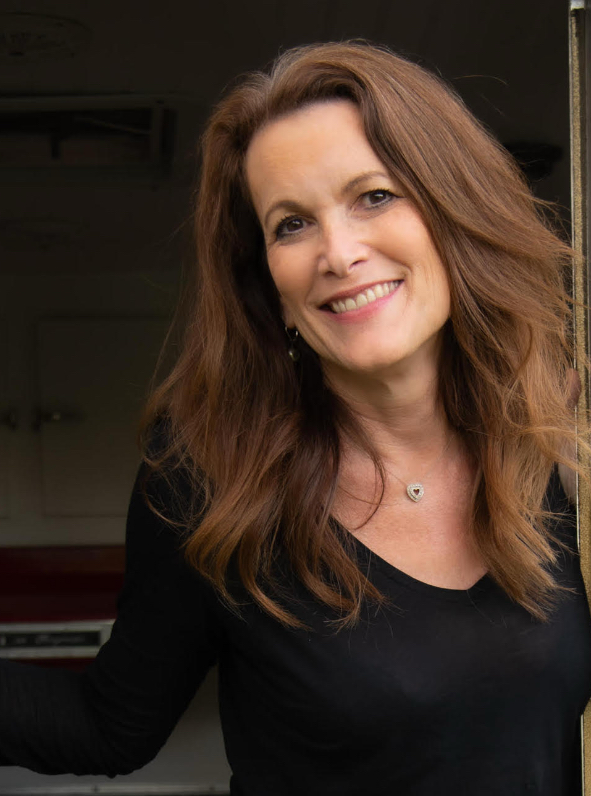 Hope Edelman is the bestselling author of eight books, including Motherless Daughters, Motherless Mothers, and the memoir The Possibility of Everything. She is a graduate of the University of Iowa’s Nonfiction Writing Program and the recipient of a Pushcart Prize and a New York Times Notable Book of the Year award. Her essays have been widely anthologized, and her writing has appeared in the New York Times, the Washington Post, Writer’s Digest, the Iowa Review, and on CNN.com. Read more about her work at www.hopeedelman.com.
SEE THE ISSUE
SUGGESTED CONTENT
Blast
May 07 2026
“Handsome Crying Boy” by Lee Conell
In this black comedy by Lee Conell, the emotionally repressed pay for group crying sessions administered by attractive men. “Handsome Crying Boy” asks what it means to be vulnerable with… read more
Blast
Apr 23 2026
“Coyote Map” by Justin Taroli
Justin Taroli‘s atmospheric short story follows a photographer who returns to Albuquerque after their grandmother’s death. Intertwining themes of grief, spirituality, and collective memory, the mystery of “Coyote Map” takes… read more
Blast
Apr 09 2026
“The Dogs” by Zoe Ballering
In this sparkling, spare sci-fi by Zoe Ballering, the descendants of Earth’s elite trawl space for “the barest hint of life,” aching for what, and who, they left behind. Most… read more