
Foreword | January 13, 2026
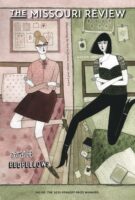
Strange Bedfellows
Speer Morgan
Strange Bedfellows
Shakespeare used the phrase “strange bedfellows” in The Tempest when court jester Trinculo, shipwrecked on a stormy island, crawls under the cloak of the beastly Caliban: “Misery acquaints a man with strange bedfellows.” In 1611, this could be taken as half literal and half metaphoric—zeugma, a rhetorical phase I never thought I’d get to use. At that time and throughout most of human existence, we have slept together, often both humans and animals, for warmth and safety. Even those who didn’t absolutely need to have bedmates chose to (for example, Queen Elizabeth almost always had someone with her in the royal bed). Seventeenth-century diarist Samuel Pepys records many nights of sleeping with friends, during which they talked, laughed, and described dreams. Some of his anecdotes are less cheerful, for example on the night a fellow sleeper boyishly “fell to play.” Pepys kicked him out, then sorrowfully lay alone all night. A few months after the outbreak of the American Revolution, two of America’s Founding Fathers got into a squabble over whether to leave the window open: John Adams was freezing while his bedmate, Benjamin Franklin, gave a lengthy scientific explanation about why circulating air did not itself cause colds. Franklin went on so long arguing that Adams finally fell asleep from boredom. It wasn’t until the mid-nineteenth century that sharing beds began to fall out of fashion, even for married couples, because of rising concerns about hygiene.
Over time, “strange bedfellows” came to be more plainly metaphoric, suggesting any alignment of two highly unlikely individuals or groups for some common purpose. The saying spread to other causes—“adversity,” “poverty,” “necessity”—until the most widely used one was first recorded by John Adams’s son, John Quincy Adams, in an 1813 letter to his wife: “Politics makes strange bedfellows.”
Like Trinculo, the characters in this issue’s fiction are driven to form surprising alliances, finding “no other shelter hereabouts.” Rachel Lastra’s “Multitudes” describes an odd couple of an eighteen-year-old grocery bagger and a woman from outer space who serves as the boy’s guide to the larger universe that he longs to enter, finding his own home inhospitable. Jeanne Rogow’s “Endings” is the story of a woman reluctantly drawn to an old rival at a dinner party where she doesn’t fit in with anyone else. When a true enemy appears, their awkward reunion blossoms into a delicious revenge tale. In “The Feeding,” Laura Dedmon’s first short-story publication, a woman paddles her surfboard out at dawn and contemplates true-crime documentaries as gruesome, faithful guides to women. Having learned since girlhood how to watch for trouble, she tracks signs of another predator beneath the water’s surface. Melissa Yancy, winner of this year’s Perkoff Prize in Fiction, writes about an aging psychiatrist and father who goes on an ayahuasca retreat, seeking a breakthrough for the problem of how to reconcile his feuding adult daughters. The cohorts for his trip are “the terribly young” and his embodied memory of a patient who desperately wanted to save everyone.
If you are a student, faculty member, or staff member at an institution whose library subscribes to Project Muse, you can read this piece and the full archives of the Missouri Review for free. Check this list to see if your library is a Project Muse subscriber.
Want to read more?
Subscribe TodaySEE THE ISSUE
SUGGESTED CONTENT
Foreword
Apr 23 2026
The Cost of Living
The Cost of Living The rise in cost of living throughout much of the world is a current concern for good reasons, though the value of money in the United… read more
Foreword
Jan 13 2026
Strange Bedfellows
Strange Bedfellows Shakespeare used the phrase “strange bedfellows” in The Tempest when court jester Trinculo, shipwrecked on a stormy island, crawls under the cloak of the beastly Caliban: “Misery acquaints a man with strange bedfellows.” In 1611, this could be taken as half literal and… read more
Foreword
Nov 04 2025
Under the Influence
Under the Influence Much of this issue concerns altered states of consciousness caused by illness, personal struggles, and drugs. In written world history, the dominant mood-altering drug has been alcohol.… read more