
Blast | July 16, 2026
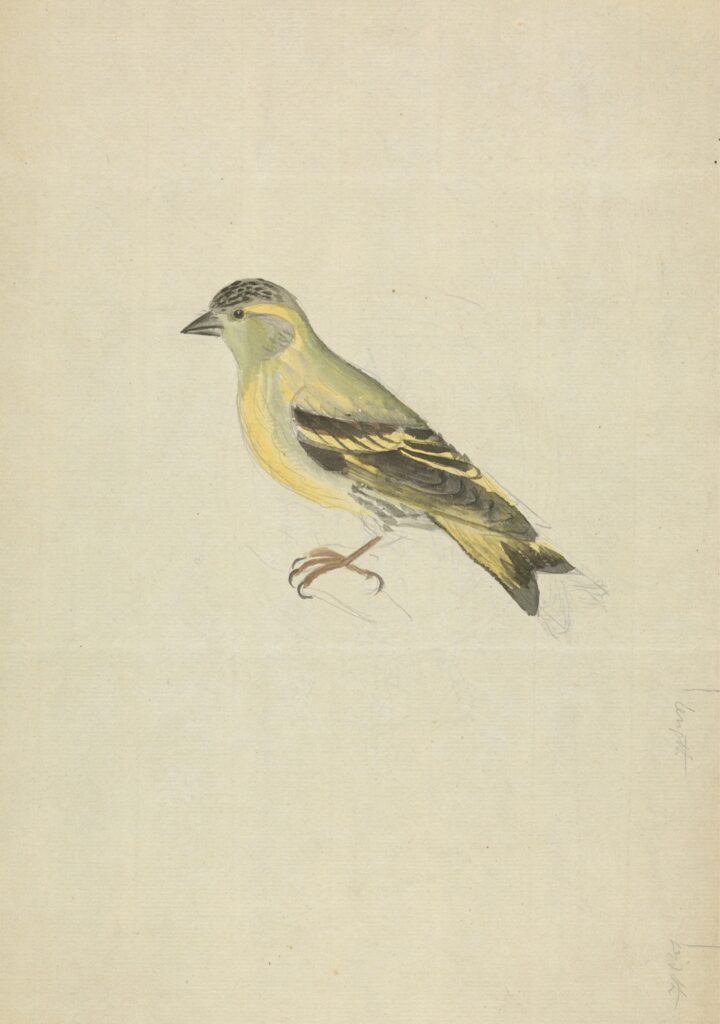
“The Finch” by David Ryan
“The Finch” by David Ryan creates a contemplative mood in less than seven hundred words. One editor said, “This is a simply gorgeous little prose piece about love and mortality and the immortality of the essential substance, or whatever you want to call it.”
TMR’s online-only prose anthology, BLAST features prose too vibrant to be confined between the covers of a print journal.
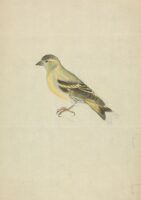
Artwork: A Finch. James Sowerby (English, 1757–1822), Artvee.
* * *
The Finch
He walked with his daughter every morning to the library at about the same time, and though she’s grown and gone, he still walks along the same route, where memory holds and slows and sometimes stops him. The walk to the library wasn’t far, but she was just learning to walk. They took their time. The memory feels like praise. Of a kind where what once was will always someday go away, and in this, become invisible. The praise: he’s with his daughter; she’s a toddler again. One thing he missed most now was how funny she thought he was. The man walks as if simply following a punctuating light. He’s trying to remember one of his silly jokes, the light guiding him darting from one memory fragment to another, landmarks so particular and unimportant, and therefore strange to most people: the small cathedral where three discarded statues lean against an old garage in grimed beatitude, where beyond the large red doors of the cathedral, the interior was washed in the spectacle of stained glass. A length of latticework spans a dark crawl space beneath a Victorian house, scroll-sawed with eyes and eyebrows, cut with lacy intricacy. His daughter called this place the House of Eyes. Here is a fieldstone wall he’d prop her up onto, as his memory does now. Holds her hand and guides her. At the library, downstairs, the librarian dressed like a harlequin and read books to the children. The librarian retired years ago. His daughter grew older, went to school, then to another, and another, and left for her own life. She’s been gone, now, for a few years. Many years, it would seem. If he asked her, she wouldn’t remember any of this. She moved to a city across the country. They talk on the phone now and again. The toddler in her: vanished, unrecognizable. Everything exists to become invisible, though never gone. You hope to live a little longer each day. The man ages, his skin papers over, his eyes glass, his steps slow. Memory distills each step. One morning, before the sun rises, the old man dies in bed. Here, take my hand, the silence says to him as he sleeps. And he lets it.
***
But the walk continues, the memories so given to each step. Each day at the same time, the same route. The walk holds the toddler’s hand, and they pass the three saints, where one now smokes a cigarette. The walk passes the House of Eyes, and the eyes blink and grin; at the stone wall, the walk lifts the dead man’s memory up, and the wall groans and trembles under his heavy feet. On the other coast, the adult daughter sleeps. A woman in a colorful gown reads a children’s book about a man who walks with his toddler each day. If she’s lucky, bits of the dream will linger. The librarian reads another page, turns the book outward to the daughter: a watercolor of a girl and a father, stained glass facet, a cathedral window. The librarian and the girl are alone in a dark, empty room. The daughter feels a deep, familiar love for the dark. And she wakes laughing. A face disintegrates. And then she forgets there was a face. It’s morning. There was a picture book, and a librarian dressed like a harlequin. Fragments flash, each before she can hold them.
***
A new deacon removes the disgraceful saints from the garage wall. The House of Eyes is torn down, and a new, garish house too big for the lot is built. The stone wall is bulldozed to fieldstone and torn mortar. The stones lifted and dropped near a copse of fir trees.
***
Everything exists to become invisible. So that it can be praised.
A slash of sharp yellow darts through the sky and slices against the black bones of the copse. The finch lands on the fieldstones and praises the crisp, dead moon in the blue sky. The bird’s small voice, so enormous and exulting now, flits off and is gone.
* * *
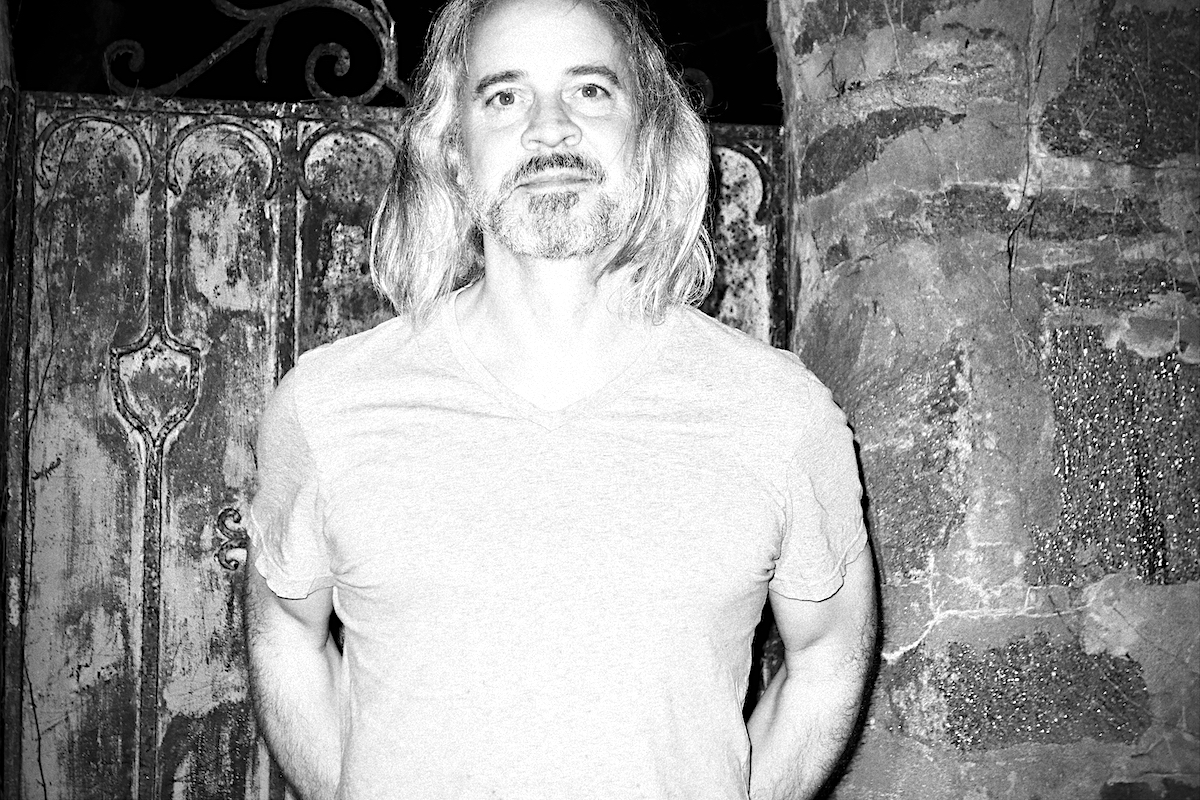
David Ryan is the author of the story collections Alligator (C4G Books) and Animals in Motion (Roundabout). His work has appeared in the O. Henry Prize anthology, Ploughshares, The Georgia Review, Conjunctions, Threepenny Review, Chicago Quarterly Review, and elsewhere. He teaches at Sarah Lawrence College and in New England College’s low-residency program. There’s more about him at www.davidwryan.com.
SEE THE ISSUE
SUGGESTED CONTENT
Blast
Aug 13 2026
“Old Friends: A Memoir” by Jane Gillette
“Old Friends: A Memoir” by Jane Gillette examines the makings of the people we know or once knew. No matter the passage of time or furthering of distance, the love… read more
Blast
Jul 30 2026
“Butterfly Jeans” by Ben Austin
Ben Austin’s “Butterfly Jeans” is a story of adolescent love that sees a boy out of a borrowed identity back to himself, and then sustains him throughout his life. “It’s… read more
Blast
Jul 16 2026
“The Finch” by David Ryan
“The Finch” by David Ryan creates a contemplative mood in less than seven hundred words. One editor said, “This is a simply gorgeous little prose piece about love and mortality… read more