
Featured Prose | February 05, 2026

A Conversation with Julia Ridley Smith
Fall 2025 Missouri Review interns Graham Medric George ’27 and Sofia Louise Ottolini ’27 interviewed Julia Ridley Smith about Sex Romp Gone Wrong, her recent short-story collection, when she visited the University of Missouri campus to give a public reading at the Museum of Art and Archeology in honor of her 2024 Peden Prize. This annual Missouri Review prize is selected by an outside judge in honor of William Harwood Peden, cofounder of The Missouri Review and professor of English at Mizzou from 1946 to 1979. Julia’s winning short story, “Mrs. Foxfur” (TMR 47.4, winter 2024) was selected by John Fulton. The following is a short excerpt edited by Nora Crutcher-McGowan ’26 of Julia’s conversation at the Missouri Review offices with Sofia and Graham in October 2025.
***
Sofia Louise Ottolini: How did you get into creative writing? What inspired you to want to teach it?
Julia Ridley Smith: I think I was always a writer. I always loved writing, even when I was little, or any form of storytelling. I did a lot of drama when I was a kid, and ballet. I would play with my dolls and make up stories. I was always making up stories. I love anything pretend-y.
I went to tour at Chapel Hill, and there was a teacher there named Doris Betts. My dad and I went in, and we talked with her, and she was so sassy and funny and a little mean. And I was like, “Oh, I recognize this vibe.” I have a lot of women in my family who are like that, and I was like, “I think I want to come here.” And I did. So, I went to Chapel Hill, and I studied with her for multiple semesters. I [also] studied with Jill McCorkle, who was there at the time.
SLO: What effect do you feel like your copyediting experience has had on your current writing habits, like your preferences and topics that you gravitate toward?
JRS: That practice of getting into somebody else’s manuscript, trying to understand their voice and their writing style, and then sometimes having to make changes so that the sentences are working better . . . that was really valuable training for me as a writer, because it kept me paying attention so closely to sentences, to word choice, to repetitions, to whether patterns are intentional or unintentional.
Graham Medric George: I’m curious about the title of your short-story collection. I know it’s also the title of one of the stories in there.
JRS: “Sex Romp Gone Wrong,” which is fun to say fast.
GMG: It’s such an attention grabber. I guess it gave me some expectations about the stories, but then I got into it and there were scenes of a nursing-home aid assisting someone in the bathroom. That’s not necessarily what I was expecting.
JRS: That was not what you signed up for. I know. I do feel like it’s a little tricky, but at the same time, I always say people just stop at the “sex romp” and don’t read on to the “gone wrong” part. So many situations are the “gone wrong” part.
I had been submitting the collection with one of the other names that were less grabby. My husband was the one who was like, “You should really make that the title of the collection.” I was like, “Isn’t it too silly?” You know? And at a certain point, I just was like, “But you are silly. You are kind of a silly person.” Which is not to say that, of course, there aren’t many serious things in the book too. And I have some seriousness. I think I have gravitas as well as silliness.
SLO: Duality of woman.
JRS: There you go. Also, great, if it gets somebody’s attention. It’s hard to get people to pay attention to a short-story collection, so why not give it a grabby title?
GMG: I’m right there with you. I do definitely see aspects of the title throughout the stories and the collection, even if not so direct.
JRS: Right. I think there’s just so much about romance and love and sex, all that stuff that’s just awkward. There’s something really funny about that to me, and tender and sad. If you have to have your metadata words, those would be the three words that I would pick for my work and for the kind of books that I like to read, too.
SLO: Will you tell us about how you balance drawing from life experience and fictional invention?
JRS: That’s a good one. There are a lot of people who know me who read these stories. There are things that they would recognize as overlapping with my own life. That’s how I think of it sort of overlapping.
Often, I might take a situation or a place or even a character trait from life. For instance, my parents were antique dealers, so there’s a story that’s set in an antique shop. That kind of milieu is very familiar to me, so I could draw on that. My parents were in assisted living, so there are two stories that have nursing homes in them. And so, again, that’s a place that feels really familiar to me, but the things that happen with the characters are different.
I was not having an affair while my father was dying in the nursing home. I did go to the library the day that my father died in the nursing home, so some of those things are drawn very directly, but then they have to operate in the service of the story.
GMG: The story “Cleopatra’s Needle”—I think that one was my favorite that I read. I was really taken with the ending, the kind of choose-your-own ending. I wanted to ask where the inspiration came from for that kind of ending, and maybe what was the goal in the story ending in that way, instead of one decisive way?
JRS: It’s been a long time since I wrote that story, so I’ll say that. I wrote that story long before, I think—Carmen Maria Machado has a story that ends with a choose-your-own-adventure.
I’m older than Carmen, but, you know, those of us who grew up in the eighties [remember that] there was this whole series of books, the Choose Your Own Adventure books, and I always kind of loved them, but they also sort of drove me crazy.
I can’t remember exactly what the impetus was to make that story have those multiple endings. But I think when I look back on it now, it feels like such the right move. It makes a lot of sense for that character, who’s so young and kind of on the brink. You guys are still at the choose-your-own-adventure stage of life, which is exciting, but also nerve-racking.
I’m fifty-two, and I feel like I’m at a new choose-your-own-adventure phase of life, because my son is grown. I’ve hit this new kind of phase in my career. I now have some books published and I’m teaching and doing these other things. It’s exciting to me because I’m looking around, too, and a lot of other women my age are kind of reinventing themselves in midlife. It’s funny to think about that story now, because for a minute, I wanted to say, “Oh, I’m in the phase where I’ve already chosen my adventure.” And I’m like, no, I did choose an adventure. It went like this, and now I’m doing it again. And I think that to keep your life lively, you want to kind of keep feeling like that’s what you’re doing, that you’re not just dried up and done with choosing adventures.
***
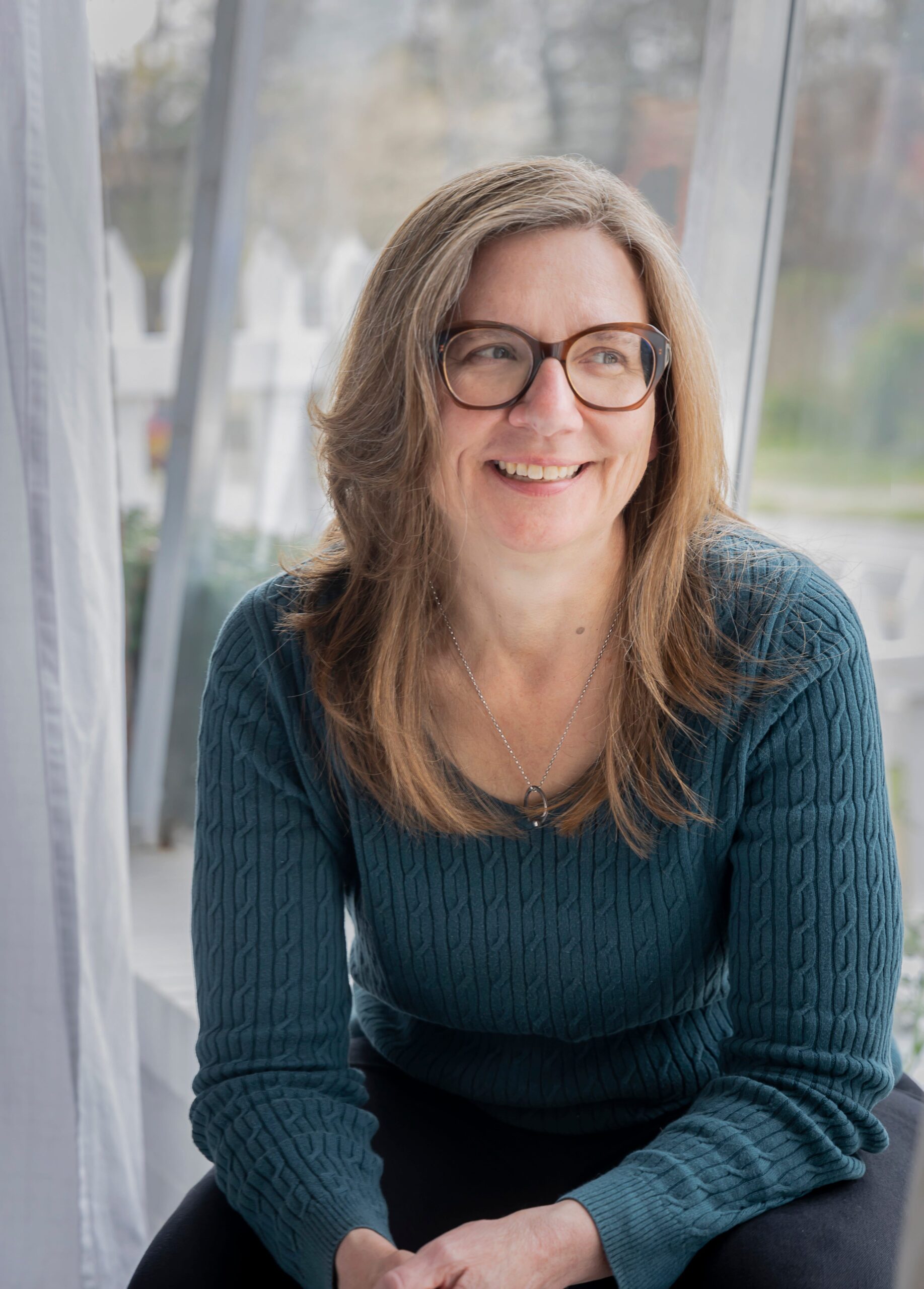
Julia Ridley Smith is the author of a short-story collection, Sex Romp Gone Wrong (Blair, 2024). Her first book, The Sum of Trifles, is a memoir about cleaning out her antique-dealer parents’ house, grief, and what the objects we live with mean to us. Smith’s short stories and essays have appeared in Alaska Quarterly Review, The Cincinnati Review, Ecotone, Electric Literature, The Missouri Review, New England Review, and The Southern Review, among other places. Her work has been recognized as notable in Best American Essays and supported by the Sewanee Writers Conference, the Virginia Center for the Creative Arts, the United Arts Council of Greater Greensboro, and other arts organizations. She teaches creative writing at UNC Chapel Hill.
***
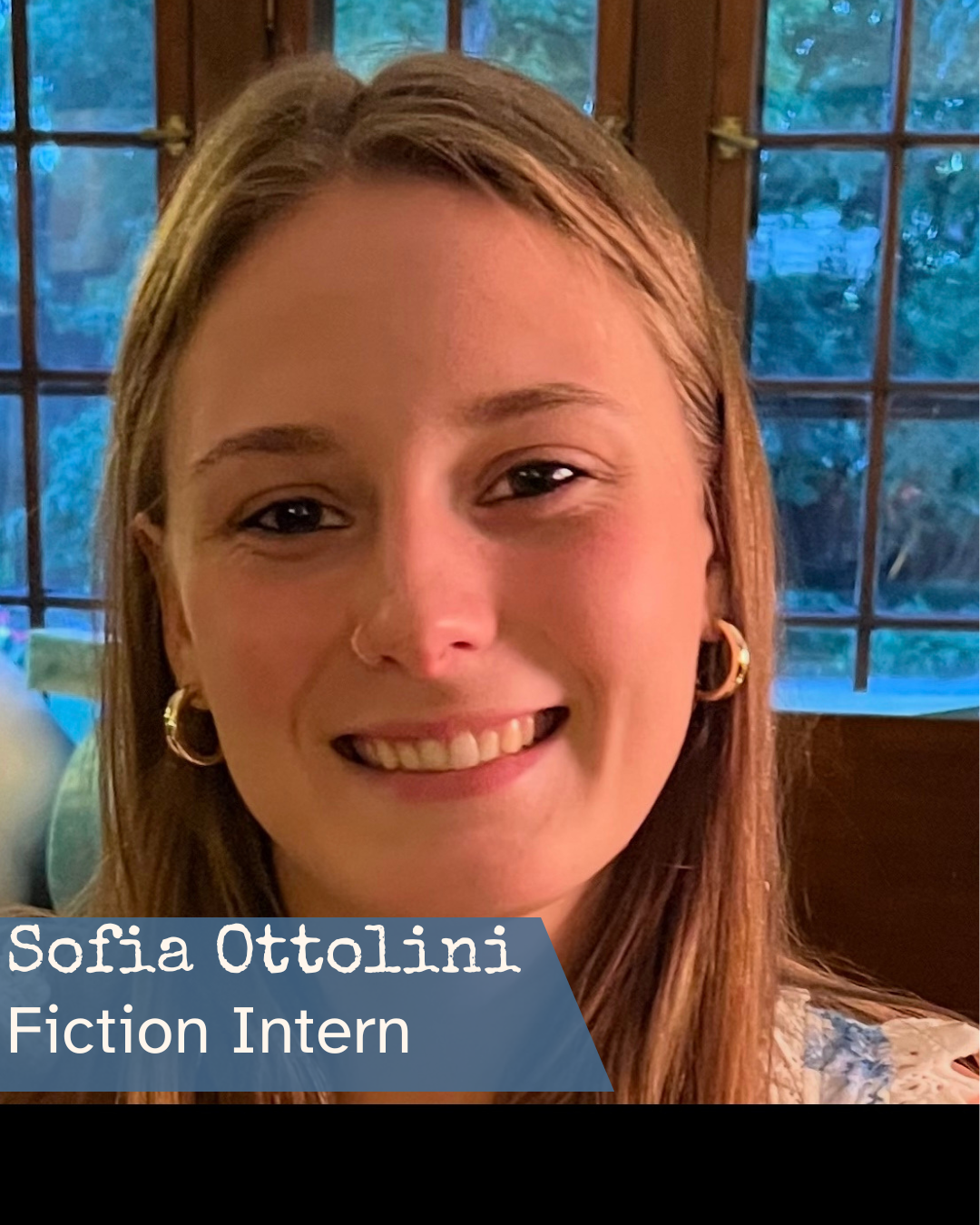
Sofia Louise Ottolini is a junior and Honors College student majoring in French and English at Mizzou. She was a fall 2025 fiction intern at The Missouri Review and contributed to the internship development team. Ottolini is from St. Louis, MO. She is the vice president of Mizzou’s French Club and is currently studying abroad in a small town in France. A fun fact about her is that she plays the harp. She chose to work with TMR to gain experience in the publishing industry, in which she hopes to pursue work after graduation.
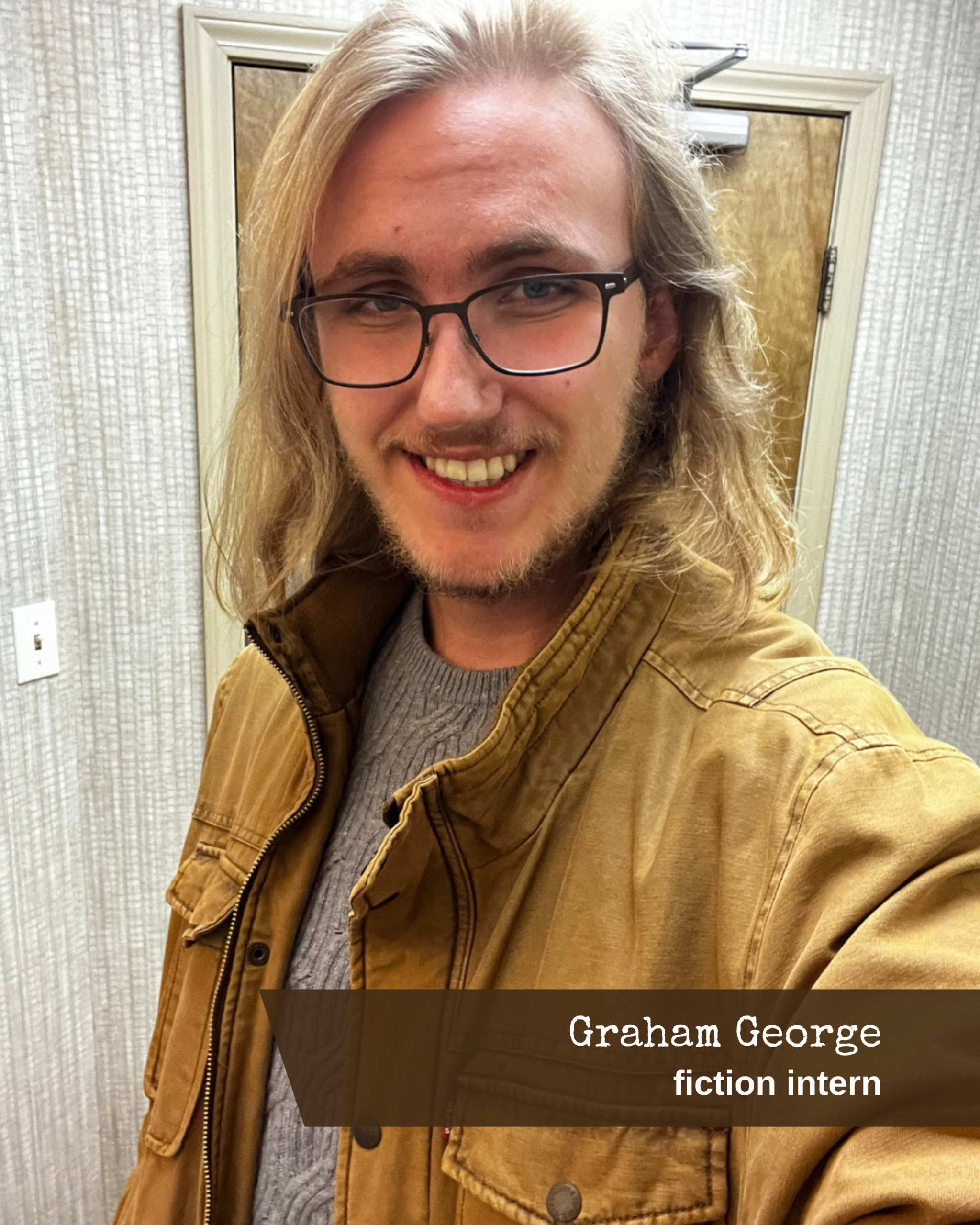
Graham Medric George is a junior and Honors College student majoring in German and international studies (peace studies emphasis) at Mizzou, with minors in English and creative writing. He read fiction for The Missouri Review in fall 2025 and contributed to the internship development team. He is from Wentzville, near the St. Louis, MO area. He runs a free playlist-making service in his free time. He signed up to intern with TMR because he is a writer and wanted to take a peek into the publishing industry before graduation, and learn about what goes into writing an impactful story.
SEE THE ISSUE
SUGGESTED CONTENT

Featured Prose
Jul 09 2026
A Conversation With Rufi Thorpe
Rufi Thorpe is the author of the Clark Fiction Prize-winning novel Margo’s Got Money Troubles, as well as The Girls from Corona Del Mar, Dear Fang, With Love and The Knockout Queen, which was a… read more

Featured Prose
Jun 11 2026
A Conversation with Tom Junod
Tom Junod is a widely read longform investigative journalist whose work has earned both broad acclaim and occasional controversy. He spent the first two decades of his career at men’s… read more

Featured Prose
Apr 16 2026
A Conversation with Richard Smith
When I picked up Richard’s first book, Not a Soul But Us, I knew only that it was a story in eighty-four sonnets about a boy and his dog struggling to… read more