
Blast | June 07, 2024

“Jungleland” by Cindy Bradley
BLAST, TMR’s online-only prose anthology, features prose too vibrant to be confined between the covers of a print journal. In “Jungleland,” Cindy Bradley remembers growing up near a zoo outside Los Angeles, her childhood tinted with enchantment and glamor in proximity to Hollywood. Featuring an appearance by the movie star and Playboy Playmate Jayne Mansfield, Bradley’s memoir is about yearning to “transcend the mundane,” if only for the briefest moment.
“Jungleland”
Cindy Bradley
Childhood nights I’d fall asleep listening to the lions roar. I’d notice the cadence in their clamor, the way the sound echoed as it reverberated up the hills and through my bedroom window, carried along by an indulgent spring breeze. Some nights their cries rolled across the darkness like thunder, and I half expected a jagged shaft of lightning to slice through the sky. Other nights a lone lion’s shriek pierced the night’s stillness, his solo tugging at my pre-adolescent loneliness. Their rumble served as background noise, an accompaniment to long summer evenings sitting outside eating popsicles, an undertone to autumn’s Santa Anas, or a muffled rumor against windows closed early to keep out winter’s chill.
My parents, wishing to escape life in Los Angeles’s busy San Fernando Valley, moved to the quiet community of Thousand Oaks in the early 1960s. First inhabited by the Chumash people thousands of years ago and named for its abundance of shady oak trees, Thousand Oaks lies only forty miles north from downtown Los Angeles, but in my youth it felt like a hundred. Home was Thousand Oaks, and Thousand Oaks was home to Jungleland, and Jungleland was home to the lions as well as a mélange of other exotic animals.
More than a zoo but not quite a theme park, Jungleland was created in 1926 by a former Universal Studios employee, Louis Goebel, to obtain, train, and rent lions for Hollywood. A few years later, after acquiring a variety of animals, Jungleland opened as a roadside attraction to the public, featuring a “lion tamer” among other assorted shows. Jungleland’s residents included Leo the Lion, MGM’s feline mascot, Timba, the chimpanzee featured in the Jungle Jim film and television series, and Mister Ed, the talking horse of the same name, and it earned a reputation as the place that Hollywood’s animals came to retire, often featuring many of these animals in toned-down versions of the acts they had performed in their heyday.
On those days when every little thing irritated my mother and she wanted to be left alone, Jungleland delivered the perfect escape. My brother and sister and I and all the other kids in town would scour the perimeter and the interior, discovering nooks and crannies, stopping to look at each animal along the way. We’d ride trains, safari buses, sky trams. We’d run around the grounds like we owned the place, hop on giant tortoises, ride on elephants, skip past lions or tigers chained to oak trees without giving them a second thought. It was a wilder and more lenient time. Trainers walked lions and tigers down Thousand Oaks Boulevard for exercise and no one blinked an eye.
Whenever we’d head north on the 101, I’d peer out the car window, looking for the familiar sight of Jungleland’s back lot hugging the freeway. I searched for zebras, tried to spot big cats as we cruised by, scanning for any sight of the animals wandering around. Jungleland was our backyard, always close at hand, occupying a space between the everyday and the extraordinary.
I had always felt ordinary, even as a child. Maybe especially as a child. The oldest of three, with a brother thirteen months younger, and an extroverted sister almost four years younger, I was quiet and shy, disappearing into the background, allowing others their share of attention yet yearning for a little dose of my own. I favored my mother in looks: my skin browned in the summer courtesy of my Mediterranean-born grandfather, and I shared her penchant for sweets and tendency toward a few extra pounds. Along with her cheekbones, I’d also inherited her love for all things Hollywood.
My grandfather had built movie sets for a living, and his daily stories fueled my mother’s fascination. When she graduated high school, instead of marrying and becoming a young mother like most of her peers, she entered the work force, ultimately landing a job as a secretary for a movie producer. In contrast to my grandfather, a natural-born storyteller, my mother held back, answering my pleas for stories with vague responses: “Oh, no one came in that you’d know, maybe Howard Hughes once or twice.”
But sometimes I’d notice a look in her eyes when she reminisced on those days, young and single in Southern California, defying conventions, and she transformed from the traditional housewife and mother I knew into someone I didn’t recognize, someone who had lived a life I knew nothing about but hankered to know. Someone who, even for the briefest moment, had transcended the mundane.
One of the most notorious members of Jungleland’s “chain gang” was Jackie the lion. His tawny mane neatly trimmed, his mouth perpetually hanging open, Jackie was usually found chained to either the inside or the outside of a cage, with a large table nearby for him to sit on. Children were encouraged to stand next to Jackie and have their pictures taken, an instant Polaroid keepsake. Situated near the lion attraction was a water fountain in the shape of a lion’s head with its mouth gaping open. Having been so close to the real deal, children who weren’t even thirsty lined up for a chance to stick their heads into the mouth of a lion.
Occasionally we’d be reminded that we lived in close proximity to animals that were dangerous if not exactly wild. Shortly after we arrived in Thousand Oaks, a black panther escaped from Jungleland’s premises. The community was urged to lock down and stay indoors at night until the animal was found. I had been afraid that the panther would make its way up the hills into our neighborhood, invisible in the darkness, and find and hurt our dogs or be found and hurt itself. For two or three days we retreated into the house when the sun went down, and I gazed from my bedroom window, on the lookout for the panther’s eyes, a glittering mosaic of gold and green. When our community heard the panther had been found, we all exhaled a ragged breath we hadn’t realized we’d been holding.
My parents weren’t happy, fought with a ferocity that I knew wasn’t normal. I stopped inviting my friends over when my parents’ arguments spilled into our watching Dark Shadows after school or doing homework together. I stood by, quietly embarrassed, when my friends asked to use the phone, calling their parents to please come pick them up now, hours earlier than they had planned to leave. The seeds of wanting to feel normal and accepted but also extraordinary were planted during these years.
My mom met my dad on a weekend trip to Catalina Island with her best friend. She was twenty-nine; he had just turned twenty-eight. My gap-toothed dad had dark, wavy hair, deep blue eyes, and killer dance moves. My mother, a green-eyed redhead, was two years older and loved to dance. The way she told it, she quickly learned that he had quite a reputation as a ladies’ man, a quality that attracted her in the beginning before becoming a source of perpetual irritation. They married in Las Vegas two years later.
My dad started out as a truckdriver for a restaurant supply company, where he was promoted to salesman, and for a few years he co-owned a restaurant, a venture further contributing to my parent’s troubled relationship. Any fears or insecurities my mother had, real or imagined, grew until they became impossible to ignore. She’d erupt in jealous tirades over female employees and customers alike, bold brunettes or brassy blondes, all of whom seemingly came to the restaurant with one purpose in mind: my dad.
“I saw the way that hostess spilled herself all over you! You think I don’t have eyes. Sonofabitch, I have eyes! Just what in the hell did you think you were doing, fawning all over that tramp! I heard she doesn’t wear underwear, but I guess you already knew that, didn’t you, you shitfaced bastard!”
My dad did his best to ignore her, tried not to provoke her. He was born under the sign of Leo the Lion, prone to wounded pride, and she was a Gemini, the fickle twin, lacerating tongue, air to his fire, whipping sparks into a combustible frenzy. My mother fought with feral abandon and could explode at any time, her outbursts sending me and my brother and sister fleeing to the refuge of our rooms. I tried drowning out her shouts with Fleetwood Mac or Elton John blaring through my stereo, but their voices did little to quiet the rumble ricocheting through the house.
I rebelled against comparisons to my mother. I knew I looked like her and shared a love of reading among other characteristics, but her mercurial moods kept us all on edge. She was loving, indulgent, strict, and unyielding. She rarely spoke of her past, finally admitting to having been engaged twice before my dad, but she clammed up when my interrogation began. I hungered for stories of romance, intrigue, a life beyond the ordinary.
Movie stars weren’t ordinary. They were glamorous and shone brightly, whether on the silver screen or in the pages of movie magazines like Modern Screen or Photoplay, which my mother religiously bought and I pored over, fantasizing about their dazzling lives.
Jayne Mansfield was a relatively famous movie and television star, a successor to Marilyn Monroe with her bleached blonde hair, hourglass figure, and proclivity to showcase her generous assets in as little clothing and as often as possible. With her wide smile and ditzy demeanor, she brought a coquettish, comedic flair to her roles, more sex symbol than girl next door.
On a clear, mild Saturday afternoon in late November, Jayne descended on Jungleland with her eight-year-old son Miklos, six-year-old son Zoltan, and two-year-old daughter Mariska, her children with her former husband, Hungarian movie strongman Mickey Hargitay. Both Jayne and Jungleland were at the peaks of their popularity, and she was instantly recognizable as she strolled through the grounds with her children in tow. It was Thanksgiving weekend, and had I known a celebrity was less than two miles away, I would have begged my parents to take me, hoping for a glimpse of someone famous. Instead, I remained unaware, and later imagined Jayne in oversized sunglasses, smiling indulgently at her giddy children as they ran through the compound, riding the elephants and sky trams, mimicking the chimpanzees or tossing fish to barking seals, enjoying everything Jungleland had to offer. Jayne Mansfield may not have been like most mothers, but it was easy to imagine that her children were no different than the thousands who had visited before.
But they were different, or at least Zoltan was. After hours of zipping through the attractions, Jayne stopped to pose for publicity shots with Sammy, one of the big lions, while Zoltan stood next to his brother and sister close by. Sammy was attached to a fence with a seven-foot chain, allowing him about fourteen feet to move from side to side. As Jayne preened for the camera, one of the photographers noticed that Sammy seemed edgy, causing her publicist to suggest they move along to a calmer female lion. Zoltan dawdled behind as his mother’s entourage proceeded down the path, watching Sammy as he restlessly paced back and forth. Zoltan inched closer, oblivious to the animal’s agitation.
The screaming began just as Jayne positioned herself next to the smaller lion, smiling for the camera. A spectator yelled “He’s got the boy!” and Jayne and her crowd turned to see Zoltan lying face down on the ground, Sammy’s mouth around his neck. Two men jumped in, frantically struggling to free Zoltan from the lion’s grasp. Sammy, frightened by the commotion, released his hold, retreating to his spot along the fence. Zoltan lay bloody and unconscious, a deep red slash on the left side of his face below his ear and another deep wound at the base of his skull.
Reports would later claim it was the family’s first visit to the park and they hadn’t
realized the animals were dangerous. Jungleland’s relaxed attitude was partly to blame, along with the tinsel-town mentality the children grew up with, where everything was make-believe and nothing was quite as it seemed. When Zoltan went to pet the chained lion as his mother posed for pictures, perhaps he thought the lion was tame or some sort of feline prop. Maybe Jungleland looked like a giant movie set where nothing was real. Maybe he had put his head into the lion-mouthed water fountain and thought he could lean into this live lion the same way. No one had ever been attacked by one of the animals before, and this first time, involving a movie star’s child, made national news. One local newspaper’s headline ran “Lion Mauls Actress’s Son!” and our small community was immediately caught up in the aftermath.
“I think I’ll invite her to dinner.”
My mother and I sat at the kitchen table, soft autumn light filtering through the windows, The Beach Boys’ “Good Vibration” playing on the radio, our conversation revolving around the incident at Jungleland. Like everyone else in town, we were preoccupied with the attack and talked of little else. Zoltan had been rushed to the local hospital, where he was treated for severe head trauma. Jayne held vigil at the hospital, the news claiming she was placed under sedatives, refusing to leave his side.
I set aside the magazine I had been flipping through. “Wait, what? Are you talking about who I think you are? Why ask her to dinner?”
“I feel sorry for her. She has a little boy who was hurt badly and is in the hospital. She has nowhere to stay, nowhere to go. I want to offer to help in any way I can.”
My first thought was that a movie star could afford to go and stay anywhere she wanted, but I kept that to myself. “But why would she want to stay with us? She could stay at a hotel. She doesn’t even know us!”
“I know her. Well, I mean, I knew her. We met when I worked as a secretary for Albert Broccoli, that movie producer in Hollywood, back before I married your father.”
This was news to me. “But I’ve always asked you if you knew anyone famous and you always said no.”
“She wasn’t famous then. She came in one day and I remember she seemed kind of sad, so I talked to her. She was new in town, didn’t know anyone. We kept in touch for a few months, then she started getting parts and I got married and that was that.”
“But she’s famous now, and you never said anything! How well did you know her, and who else have you not told me about?”
“We didn’t know each other all that well, and there’s no one else that I remember.” My mother shrugged and turned away, indicating her readiness to shut down the conversation, her silence a stone wall signaling she had said all she wanted to say on a subject.
When I say my mother exploded in jealous tirades, I mean volcano-style, spewing molten insults like lava—her elemental defense against my dad’s offenses, whether real or imaginary, I didn’t know. What I did know was my mother went out of her way to steer my dad away from any woman she saw as a threat, particularly if they were younger, prettier, or blonde. So, as shocked as I was to learn that my mother had met someone like Jayne Mansfield, it was even harder to believe she’d ask Jayne to dinner, seating her at the same table with my dad and family. It was one thing to have the women of Playboy magazine tucked in snug at the bottom of our magazine rack, hidden out of sight, but another thing entirely to have a former Playmate invited into our home.
At forty-two, with dark smudges under her eyes, my mother was almost a decade older and fifty pounds heavier than the star. Riddled with insecurities, many of which I’d one day inherit, it was impossible to believe my mother would allow anyone who looked remotely like Jayne Mansfield anywhere near my dad, let alone Jayne Mansfield herself.
Yet from the way my mother talked, she was going to do just that. An idea was beginning to take shape.
The next morning my mother, armed with a plan to call the hospital in hopes of reaching Jayne, dropped me off at school. Without realizing it, she had given me a chance, and I wasn’t going to miss it. I told my fifth-grade classmates, anyone and everyone who listened, that a real-life movie star was coming to my house for dinner. As most of my friends didn’t share my obsession with Hollywood, they were less than impressed, most of them not knowing who Jayne Mansfield was. But once I pointed out that she was the mother of the boy who had been mauled by the lion, their interest grew. As did their opinions.
“Well, he never should have stuck his head so close to the lion” was one reaction.
“Yeah, he kinda had it coming. I mean, who does that?” was another, followed by “but it’s pretty keen his mom is coming over. Hey, can I come too?”
Zoltan clearly was not going to get any sympathy from the fifth graders at my school. We were a fiercely protective bunch when it came to Jungleland and its inhabitants, often preferring the animals over the humans when we felt they hadn’t shown the proper respect.
The news spread quickly. Popular kids who had never spoken to me pointed as they passed by in the cafeteria, some pausing with “Jayne Mansfield’s going to your house? You’re so lucky!” and “I wish I were you!” and adding “Be sure to tell us all about it!” before scattering back to their tables. Others glanced in my direction with a smile and a wave. Kids came up to me at lunch recess, others in the hall: “Hey, let us know how dinner goes—make sure you take a picture.” I’d never had so much flattery and attention in all my nine years, and I was totally basking in the glow.
By the end of the day, I became known as “The Girl Whose House the Movie Star Mom of the Boy That Got Mauled by The Lion Was Going Over to for Dinner.” I felt buoyed by the attention I received, riding the crest of a wave of instant Meadows Elementary stardom, all the way towards a shore studded with tinsel and dreams.
My mother filled me in. She had left a message at the hospital, was waiting for a call back, hopefully from Jayne herself.
“I don’t even know if Jayne will get the message, or if she’ll call. And if she does call, and does accept the invitation, your dad is going to take you kids out to dinner.”
“What? No! I don’t want to go out to dinner. I have to be here!” Visions of sitting around the dining room table, Jayne Mansfield our guest of honor, our star attraction, shimmied in and out of the projector in my mind.
“Yes, I can, and no, you don’t. I’m not going to turn this house into a circus. She’s going through enough with her son in the hospital; she doesn’t need to deal with the three of you running around.”
“But she has kids. She’s used to having kids around and plus, we’ll be good!” I needed to be here. Because if I wasn’t here, who’s to say Jayne Mansfield was here? “Please, I have to be here. I told everyone at school she was coming over to dinner. No one will believe me if I’m not here!”
My mother sighed.
“You shouldn’t have done that.”
She opened her mouth to say more, then shook her head, threw her hands up in the air, and walked out of the room, strains of The Supreme’s “You Keep Me Hanging On” softly taunting. My dream stuttered, the distance between me and dinner with a movie star—and all its budding attention—receding with every step my mother took.
The telephone call came later that afternoon. My mother had busied herself in the kitchen, scrubbing and rescrubbing the sink, practically leapt at the telephone when it started to ring. She clutched the avocado-green receiver to her ear, the long cord wrapped tightly along her forearm. Jayne expressed gratitude for my mother’s invitation—of course I remember you! Mary, you were one of the few women who were nice to me!—and then launched into an explanation that arrangements had been made for Zoltan to transfer to a larger hospital in Ventura, twenty miles north, where he would undergo further brain surgeries with a more experienced trauma unit. She couldn’t bear to leave his side even for an hour.
Jayne thanked my mother for her thoughtfulness, promising to call again soon. She said that once Zoltan was healthy, she’d love for our families to meet and the kids to get to know each other, that it would be good for her kids to have ordinary friends with ordinary lives.
My mother repeated ordinary under her breath, like an incantation, like she was trying out the word, trying out an iteration that sounded better than it felt.
As much as I dreaded going to school the next day, so sure I’d be surrounded by curious classmates and swarms of students asking about dinner, wondering what the movie star was like, is Zoltan going to make it, I needn’t have worried. I tucked into myself, avoided eye contact, skimmed along the periphery of the daily routine. I mumbled answers in response to the few questions, either in the classroom or the cafeteria, and by the end of lunch I was once again relegated to the girl in the back of the room.
My mother moped. Then busied herself with Christmas decorations, the tinsel a little lackluster that year. When her friends telephoned, she told us to say she was busy, that she’d call back later, then didn’t and complained when contact became infrequent. I was too deep in my own disappointment to recognize the signs, too young to see the similarities in ourselves and in what we were going through. Maybe in this town of discarded dreams and a home drenched in desire and discontent, we were both a little lost.
Jayne Mansfield kept her promise to my mother and telephoned right before Christmas, thanking her again for the unexpected kindness and generosity. Jayne, itching to tend to her waning career, planned to return to the studios to film a cameo role before setting out on a six-week tour of South Vietnam after the New Year, but she vowed she’d carve out time in the spring for their families to meet. My mother held on to a glimmer of hope that maybe, just maybe, Jayne would make it happen. The flurry of phone calls started up again. My mother picked up the telephone, relaying the details of Jayne’s call through a chain of conversations with her friends, each subsequent phone call supplying a bigger smile and bigger dose of possibility.
Seven months after the lion attack, Jayne Mansfield was involved in a horrific automobile accident. On a dark, desolate stretch of highway deep in the belly of the South, between Biloxi and New Orleans, the car she was riding in crashed into and buckled under the rear of a slowed trailer truck shrouded in a pesticide-induced fog from a mosquito spray truck, killing her and two adult companions instantly. Milos, Zoltan, and Mariska, asleep in the back seat, survived with minor injuries.
My mother cried for days. We tiptoed around her, unsure of how to navigate her grief. I knew she cried for Jayne’s life cut so short, her suddenly motherless children. I also knew she cried for her own loss, for what Jayne had meant to her and her silent hopes for a future that would never be. Her tears seeped into my dreams. I slipped on my mother’s distress and wore it like a second skin—wholly, completely, and without hesitation.
After undergoing three surgeries and a bout with spinal meningitis, Zoltan made a slow but full recovery. Jayne Mansfield sued the park for negligence in the amount of $1,600,000, roughly $13,000,000 in today’s dollars.
Although Zoltan recovered, Jungleland never did. The rising competition from Southern California theme parks was cited as the main reason, but the talk in the town told a different story. The lawsuit, coupled with the negative publicity, sent the facility spiraling on a path towards bankruptcy, which ultimately forced it to close its doors. A two-day auction was held in 1969; any animals Goebel didn’t keep were auctioned to the public. A hippo sold for $450, a lion for $600, a tiger for $750, a giant tortoise for $2,500 and an orangutan for $10,000.
These days the sleek, contemporary Thousand Oaks Civic Arts Plaza stands where Jungleland once stood; the performing arts center and city hall, which features a 1,800-seat theater, a three-acre park named for Richard Carpenter of The Carpenters, and a large, beautiful water fountain area that lights up at night, has effectively erased all traces of its wild predecessor.
But sometimes, on hazy mornings or starry twilights, the memories are roused. Echoes of the monkeys’ chatter, the elephants’ trumpeting, and the lions’ roar rumble across the hills and into my mind, and I ache. And just like that, the beasts are back, tumbling in and out of suburbia and my dreams, a liminal space between the tamed and the untamed.
***
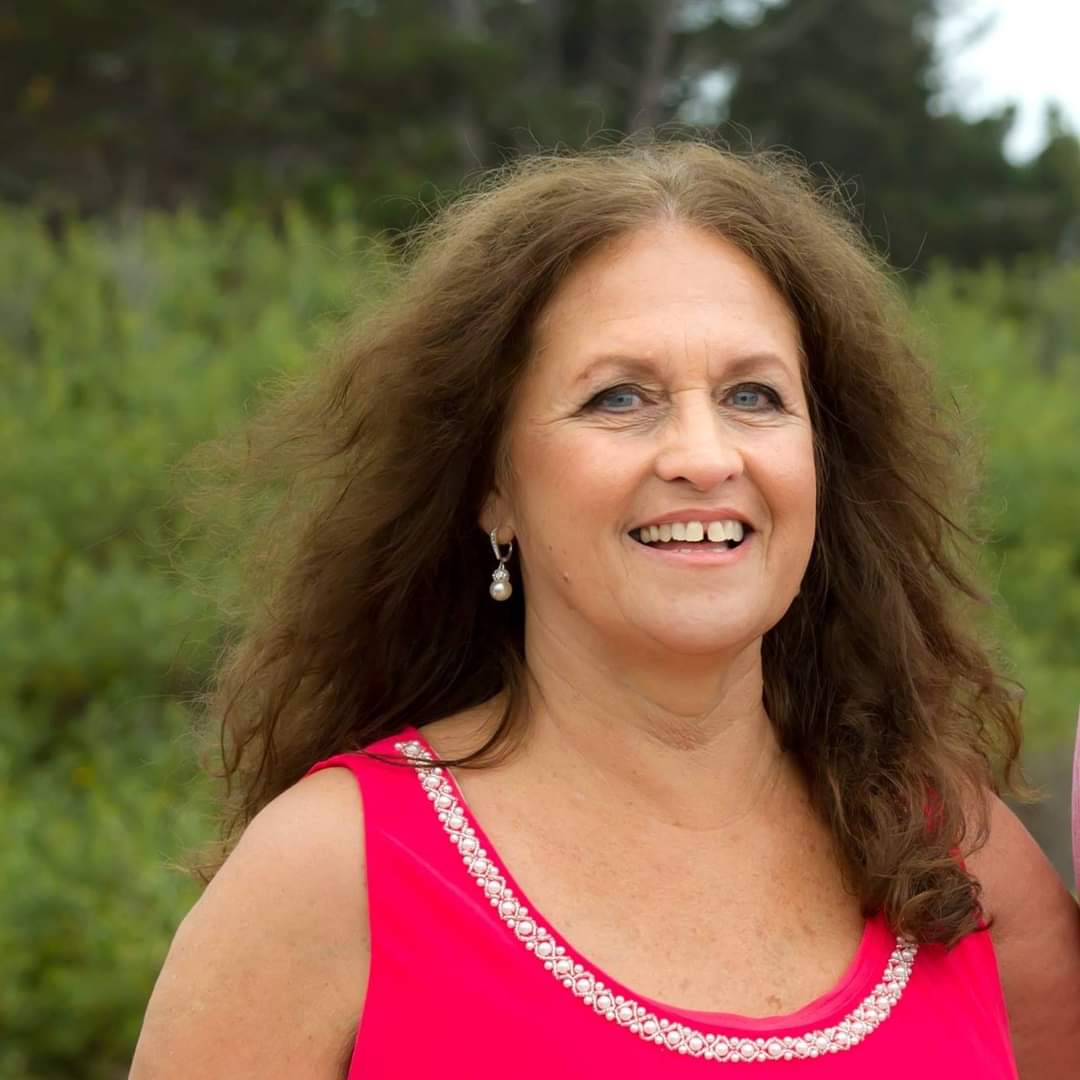 Cindy Bradley received her MFA in Creative Nonfiction from Fresno State University, where she also served as an editorial assistant for the Normal School. Her essays have appeared in 45th Parallel, Aquifer: The Florida Review Online, Brevity, and Under the Sun, among others. Her work has earned a Pushcart nomination and Notable mention in Best American Essays. She is currently an editor for Under the Sun and is seeking publication for her first book, an essay collection exploring desire and discontent, family, longing, and nostalgia in California during the 1960s, ’70s, ’80s, and beyond.
SEE THE ISSUE
SUGGESTED CONTENT
Blast
Apr 23 2026
“Coyote Map” by Justin Taroli
Justin Taroli‘s atmospheric short story follows a photographer who returns to Albuquerque after their grandmother’s death. Intertwining themes of grief, spirituality, and collective memory, the mystery of “Coyote Map” takes… read more
Blast
Apr 09 2026
“The Dogs” by Zoe Ballering
In this sparkling, spare sci-fi by Zoe Ballering, the descendants of Earth’s elite trawl space for “the barest hint of life,” aching for what, and who, they left behind. Most… read more
Blast
Mar 26 2026
“The Art of Falling Water” by Darryl J. Benjamin
Darryl J. Benjamin’s “The Art of Falling Water” is a short story about a man who applies for a challenging new job to support his daughter’s future. Learning the traditional… read more