
Blast | February 17, 2023
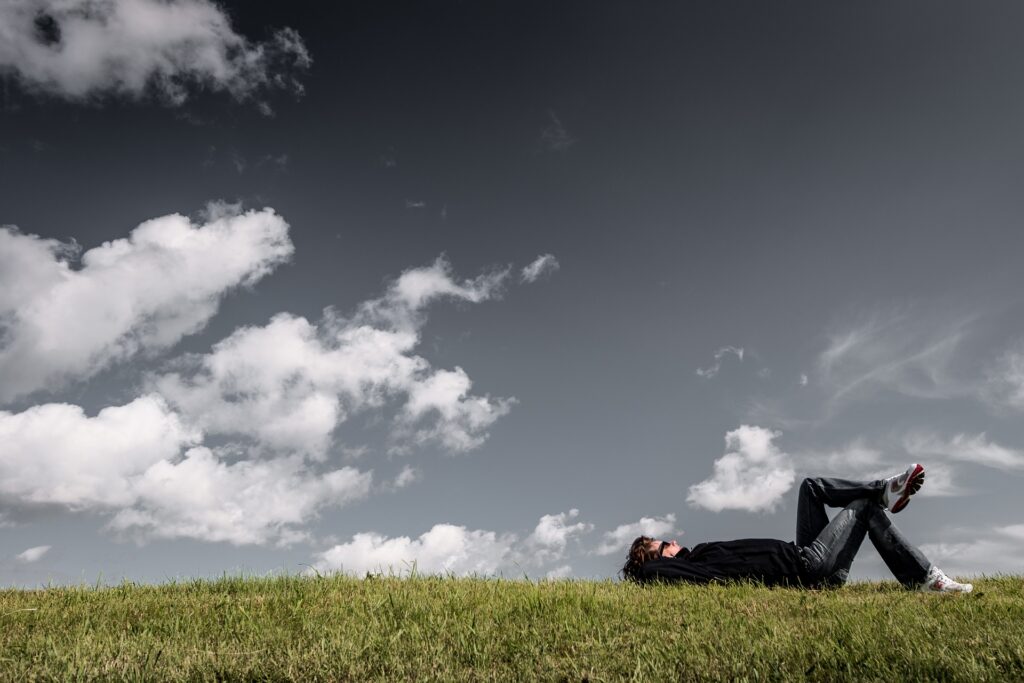
“My Students’ Future Lives” by Vivé Griffith
BLAST, TMR’s online-only prose anthology, features prose too vibrant to be confined between the covers of a print journal. In her Editors’ Prize finalist essay “My Students’ Future Lives,” Vivé Griffith writes about the idealism, hope, burnout, and amazement she’s experienced at various points in her years of teaching adult learners. She says, “Sometimes I sit back while students write, heads bent over notebooks, and am awestruck again that we have somehow managed to come together.”
My Students’ Future Lives
Vivé Griffith
They want a house by the water, a son named Ewan, a ranch large enough to graze a herd of rescued mustangs. They want to teach Sunday school, run for office, gather their grandchildren in Italy to eat together in a courtyard shot with sun.
I teach in a program for adult learners, and each fall I give them an assignment: Think about your life in the future. Imagine that everything has gone as well as it possibly could. You have worked hard and succeeded at accomplishing all of your life goals. Think of this as the realization of your life dreams. Now, write about what you imagined.
The prompt isn’t mine. It was developed by Laura King, then a professor at Southern Methodist University. In a controlled study, she found that just completing the exercise—writing for twenty minutes, four days in a row—led to better subjective well-being among participants. Five months later, the benefits remained. Participants felt better about themselves, and they’d been sick less often than those who didn’t complete the exercise.
The idea is irresistible: the classroom as a place that promotes well-being and stronger immune systems. A space for people to see futures for themselves that are bright enough to keep them moving forward. And all I must do is ask students to write.
They want to drink a mug of peppermint tea while watching a daughter complete an art project. A child’s bedroom with piles of Star Wars blankets. A house in a neighborhood with good schools.
Of her future, J writes, “Before we moved, I used to keep ocean landscapes all over my house: seashells in jars in the bathroom, a starfish mobile catching what little wind blew through outside. Now I breathe in ocean air on my own back patio.”
***
For nearly a decade I directed this program, a year-long college-credit course in the humanities for adults who had been shut out of higher education. I picked it up after its first year, a young, wobbly thing burst out of someone else’s vision. I carried it through nine classes of students, through administrative changes and funding crises and grant proposals, through years that were smoother and years that were bumpier, through awards and memorial services and the time we held class in a charter school cafeteria and hauled heavy tables from behind the curtained stage to form a makeshift circle in the cavernous space.
It was the work of my life.
Once, when friends circled my kitchen table with their glasses of wine on a Saturday night, a student called. His voice was rushed and whispery. I stepped to the other room, perched on the edge of my bed. He told me he’d been kicked out of his apartment, had nowhere to go. He was scared. I began to say, “Here, come here, we have space.” But I paused. I remembered my job, remembered my boundaries, remembered the problems I was not equipped to solve. I called the social worker. I called the student back. Years later, I don’t remember what I said, only how I felt when I returned to my kitchen and found my friends nibbling salami and Manchego off my grandmother’s cut-glass platter, as if we were living a scene from my own future life essay. My stomach vibrated somewhere beneath my ribs.
Which world was my real world? Which world did I actually inhabit?
That Monday, the student arrived in class early. His eyes were a little wild, his clothing rumpled. I scooted over on the bench at the back of the classroom. He was tentative as he sat down, shrugging off a damp duffel bag and placing it at his feet.
I offered him thirty dollars for food. The social worker handed him a list of emergency housing facilities. The student unzipped the duffel bag. Amid the jumble of clothes was every one of the books we’d given him at the start of the semester, the stack we’d piled with such certainty on the table, suggesting that if he just read those books, he’d live a different life.
He’d lugged the books through the rain and the streets all weekend. They were with him through the night he slept in a park until the police kicked him out, every single book, even the thick and weighty Howard Zinn, A People’s History of the United States.
***
They want to write music for the movies, to work for the US Embassy, to sit in front of their ranch just to take in the willows and count the magnolia blossoms. They want to go to the Kentucky Derby, to become a domestic violence counselor, to have a cozy kitchen where on Sundays the grandchildren call to share their weeks.
I read their words and think, This is what we are meant to do—help people have the things they wish for a fulfilling life. Those of us who have been given the fulfilling life, who have been able to make the life we wanted to make, even those of us who haven’t.
The student with the duffel bag moved away to live with his sister. I stayed, seeing through one class, then the next, then the next, until at some point my stomach had been vibrating that way beneath my ribs for years, and I couldn’t anymore. A counselor with kind eyes leaned forward when he talked to me. He asked, “Have you ever heard of compassion fatigue?”
That was five years ago.
***
Sometimes students declare that to imagine the future is a luxury when the past has been too hard. How do you dare to dream when the world has let you down so dramatically? When the person who was supposed to love you has labeled you worthless or sent you to the hospital? When your parents threw you out on your sixteenth birthday? When addiction has chased you all the way to the darkest streets?
One student writes, “There’s nothing left after the endless hustle.” Another, “I have risen from the ashes. I am already living my dream.”
***
I ask them to do the full four-day assignment but to turn in only one day’s worth of writing to me. They need privacy for their dreams. They need their futures to belong to themselves, free from evaluation. But this is a college class, and they also need to earn credit. And so I come home with a stack of handwritten lives. They are scribbled on lined paper or torn out of spiral notebooks, shaped in pen and pencil, one offered in a pink composition book with glittery emojis on its cover.
The youngest among them is only twenty, already a mother. She just wants a simple life, when so little of her life has ever been simple.
But mostly they are older: sturdy and experienced. They come to the table having raised families or worked multiple jobs or spent some nights in a shelter. They come after having lost children or faced incarceration or been told they don’t have what it takes to succeed in school. They come in spite of it all. The program offers free tuition, books, childcare, and a hot meal on class nights. But first they have to arrive. They have to step out of whatever circumstances, whatever stories, have kept them from their education.
If I were to sum up these years of futures on paper, I’d tell you that what my students want is straightforward, uncluttered: to own a house, to have a kind and supportive partner, to do work that has meaning, to see their children thrive. They want what I already have, what you may already have as well, reading this essay wherever you are. Sitting in a green chair holding their words, it is not enough to say that I am humbled. I am made keenly aware, again, that I was given a running start.
***
No, I answered. I hadn’t heard of compassion fatigue or of its twins of secondary and vicarious trauma. I didn’t enter the classroom as a therapist or social worker, as someone trained in how to work with people whose lives are complicated and marked by struggle. I was an English major. I had taught in university settings and in the community, bringing poetry to children. I went hurtling toward this job with more energy than anything I’d ever taken on, sure that it was where I was supposed to be. And I was underprepared.
At the time the counselor leaned forward, looking like he might take my hand to comfort me, I’d been in my job for more than seven years. A student had died, suddenly, in the middle of the semester. She was discovered in her apartment.
There is more to it, more that I still can’t share. But what I can tell you is that after she died, I couldn’t sleep. It wasn’t the first time I’d sat on the couch and cried for a lost student. There’d been a former student run over by a car in the middle of the night. Another dead of a fentanyl patch while she napped, her husband watching their two young children in the next room. But this student was the first to die in the middle of the school year, and her death rocked our classroom.
When I went hurtling toward this role years earlier, I didn’t understand what would be asked of me. No job description said, You will make sure that twenty-five students have their Shakespeare texts and their museum tours and their writing instruction to help them advocate for themselves and their families more effectively. You will lay out bowls of pasta and purchase grocery cards when someone loses a job and write assignments on the board. You will lead a group of adults through shock and grief. You will decide which questions to answer about how someone died and which questions to skirt, as the truth becomes clear. You will plan the memorial service.
A coworker came with me to buy a tree. I chose a redbud for how flashy it is in the first days of spring, the exact time that the student died, a student who wore ruffled blouses and painted her nails bright purple. On a Saturday afternoon, our students, faculty, and staff gathered around a table draped in green cloth. We read poems. Someone said a prayer. Then one by one, we poured pitchers of water on the tree, sealing it into the ground.
I stopped sleeping. Instead, I stayed up at night and made lists while my husband slept in the next room, frenzied lists of every hard thing that had happened to students while in the class. One night, two, another, of writing lists in a notebook, a crazed catalog of seven years of my students’ lives, my smart, committed students’ present lives.
I dragged myself into the employee assistance program office for my session with a counselor. And he said, “Most people in these jobs last five years. You’ve beaten the odds.”
***
They want a small house close to their daughter, to be the cool uncle who is always on your side. They want to be able to pay for groceries for themselves and also the two families behind them in line. To write a novel. To see their words in print.
Occasionally, interviewing for a spot in the class, someone will look at the books we’ve splayed across the table—Shakespeare and Frederick Douglass, Plato and Sandra Cisneros—and burst into tears. It’s hard to articulate what’s happening then, but our guts understand. Here is a world they’ve been asking to join, a seat at the table they’ve been denied. Here is a future life that could be theirs.
Sometimes their dreams are modest—they want to refinance their car for lower payments, to keep taking college classes after this one. To bake CBD treats to give ease to those suffering from serious illness. To get butterflies when their partner comes through the door after a day at work.
For these tender future lives, they will work hard. I have seen it. They will rise early and stay up late, show up in class in rainstorms and bitter cold and nights when the parking lot is full and they have to walk across the commuter rail tracks holding their kids’ hands. They will change buses downtown, read in the hours after those children are in bed. They will write papers and poems and underline passages in Ways of Seeing on their lunch breaks. They will take on extra shifts and student loans to make something better for themselves, for their families.
So how can I talk about compassion fatigue? It is a malady of the privileged. The science of secondary trauma argues that although those things are happening to other people, they are also, in a small part, happening to us as we bear witness to them. But how easy it is for me to dismiss this. Because what is happening to my students when hard things are happening to my students is not actually happening to me. I am tucked in my cozy kitchen with friends eating fennel salami. I am not alone in the park with all of my belongings shoved into a worn duffel bag.
Still, after I left the job, I took a nap every afternoon for months. My shoulder froze up, and I became someone who couldn’t carry anything, not even a sack of groceries.
***
For a long time, I didn’t see my running start as a running start. I’d spent too much time adjacent to people who had far more than I did, and I would have told you that it wasn’t all handed to me. And it wasn’t. Growing up, my parents shredded each other over the dinner table. There was never enough money. I was ashamed when I outgrew my seventh-grade jeans, when I needed things I knew we couldn’t afford. Mine was the house with the shoddy enclosed carport, with overgrown weeds in the yard. There was the poor public high school that readied me for nothing close to college work. I could keep on listing it, but it doesn’t mean much.
I was loved. I was white, my right to be was assumed. My parents had degrees, even if their careers didn’t line up in a way to create financial stability. They had both been teachers, and they believed from day one that I’d go to college. They told me that I could do whatever I wanted. They told me I could make the future life I imagined. At eighteen, a very good college offered me a very good scholarship, and I accepted it and moved away far from home.
It’s easy to dismiss our privilege because none of us is fully privileged. None of us didn’t struggle. For some that struggle happens inside the house. For some, in the very world in which they try to make a life.
***
They want a vacation where they can lie alone on the beach with a book. To own a Mexican restaurant in their hometown. To work on an offshore oil rig. To have a bathroom with a clawfoot tub.
One year, I completed the assignment alongside students. For four days I wrote for twenty minutes about my ideal life. It was a few months after I’d stopped directing the program, and I felt uncertain about everything. The assignment—trust me—is hard. On paper, it is an invitation to dream big. In reality, it requires a willingness to leap across the large chasm between now and then, between what is and what might be. On day one, I said I knew less about my dreams than I thought I would. But by day three, I knew I wanted a life of making things—poems, soups, curricula. And by day four, I knew I wanted to be in the classroom still, always.
It was the work of my life. Except now, instead of leading the program, I come in six nights a semester to teach. I ask them to write.
But sometimes I question even that. Who am I to ask students to write out their futures, to reach for the things that may have been denied them because of forces beyond their control and beyond mine? Can I ask the mother who is late to class every single night, not because she wants to be late but because she has six kids scattered in six corners of this trafficky, overwhelming city, to spend four days imagining her future? Or the student whose brother died in a motorcycle accident in front of her, a moment that halted her belief in goodness? Or the veteran whose PTSD lands him in the hospital again and again?
What if the assignment leads to all those positive outcomes when it’s given to private college students, students who can easily imagine the lives they are going to live because the systems are already set up for them to succeed? What if the study is terribly, terribly flawed?
***
They want to have crawfish boils in the backyard with their three children. They want a home free from negative comments. They want to help Syrian refugees make new lives in this country. They want to open a bakery, publish a book, see their daughter go to college.
When I ask students to write about their future lives, I hope I am inviting them to see their lives as bigger than what has happened to them, bigger than what is happening to them right now, stretched out far beyond the long bus rides or the grades on their old transcripts or the apartment they no longer have access to. If it is our pasts that we carry into the classroom, it is our futures that draw us there. And it is our futures that keep us there.
I learned that three decades ago when someone gave me a scholarship to a place I could have never gone on my own. And I learn it night after night in this space I have returned to for a dozen years, a space where sometimes I sit back while students write, heads bent over notebooks, and am awestruck again that we have somehow managed to come together. Here a student stands to embody Prospero’s grandeur, his deep voice booming, “Our revels now are ended.” Here we share poems about kids and coffee and a father’s roughened hands. Here the conversation about Beloved runs long and deep. Here a mother prepares her graduation speech, a speech she will give while her son squirms and wiggles in his seat, beaming up at her at the podium.
So yes, yes. I will keep asking: Think about your life in the future. Imagine everything has gone as well as it could. Now, write about what you imagined.
***
 Vivé Griffith is a writer and community educator in Austin, Texas. Her essays, poetry, and journalism have appeared in the Sun, River Teeth, Oxford American, the Washington Post, and elsewhere. For more than two decades, she has brought poetry to kindergarteners, seniors, and everyone in between, and she now shares a new poem in her curbside poetry box each week. She is pursuing a certificate in narrative medicine at Columbia University. More at vivegriffith.com.
SEE THE ISSUE
SUGGESTED CONTENT
Blast
Apr 23 2026
“Coyote Map” by Justin Taroli
Justin Taroli‘s piece, “Coyote Map,” follows a photographer who strangely encounters coyotes throughout the city of Albuquerque, after returning once their grandmother passes away. As the mysterious sightings progress, they… read more

Blast
Apr 09 2026
“The Dogs” by Zoe Ballering
In this sparkling, spare sci-fi by Zoe Ballering, the descendants of Earth’s elite trawl space for “the barest hint of life,” aching for what, and who, they left behind. Most… read more
Blast
Mar 26 2026
“The Art of Falling Water” by Darryl J. Benjamin
Darryl J. Benjamin’s “The Art of Falling Water” is a short story about a man who applies for a challenging new job to support his daughter’s future. Learning the traditional… read more