
Featured Prose | December 20, 2024
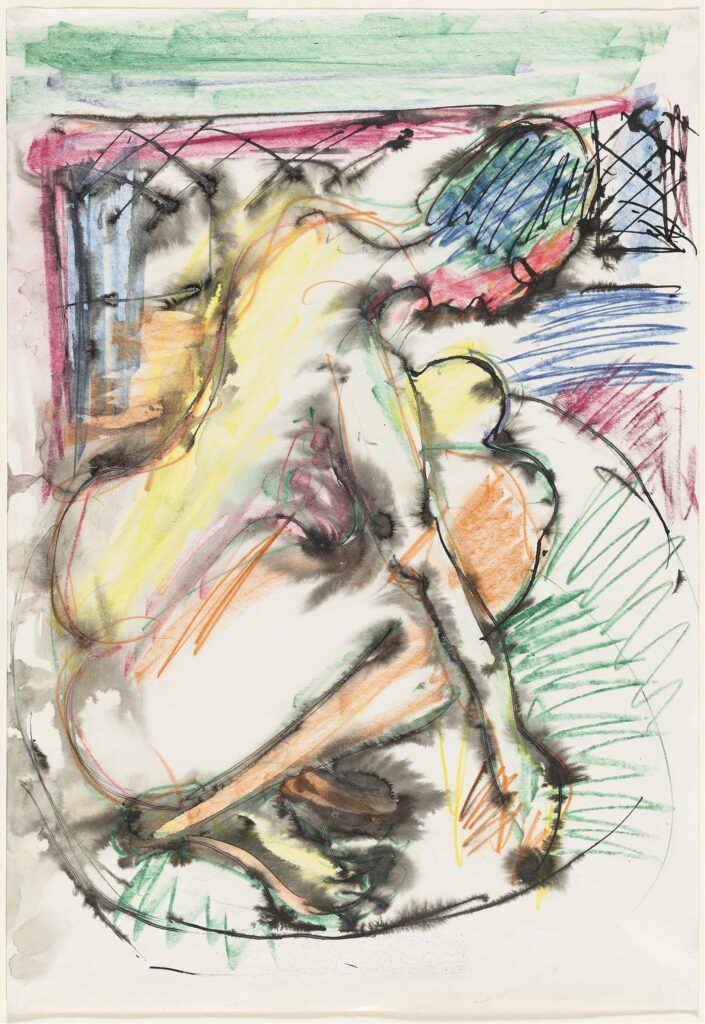
“Naked” by Hana Choi
First published in TMR 47.2 (Summer 2024), Hana Choi’s “Naked” tracks a young woman’s growing awareness of her mother’s vulnerability as an immigrant. When a customer at the Korean spa where the mother works makes a racist remark, a public confrontation results in a stunning reversal of power. Sharp-eyed yet tender, Choi’s story showcases some of the subversive tactics for countering racism available to those oppressed by it.
Naked
Hana Choi
He was supposed to make breakfast. I didn’t think he would, but I was still surprised to find my father pouring soju into the tall water glass that morning, craning his neck to slurp the near-spill at the rim. It was ten past seven. I was fully dressed, hair parted and brushed, backpack ready. The noise from the bathroom had woken me up, my mother’s hair dryer blaring until my mind was rinsed clean of sleep. It was my mother’s first day at work, her very first job. I didn’t know much about it, only that she would work at a Korean bathhouse in North Dallas, a few miles down the highway from where we lived.
The apartment was quiet now, but my mother wasn’t in the kitchen. I stood next to my father and reached for the box of cornflakes on the counter.
“I don’t know how you eat that thing,” my father said. He was in his boxers, no shirt, his eyes mapped with veins. “American food—it fucks up your bowels.” He raised his glass and took a large sip. I poured myself a bowl of cornflakes. No milk, just the cereal, so I could eat them like chips.
He was closing his jewelry store and taking a break, my mother had told me the night before. We were in my bedroom with the door shut, but she still whispered, as if my father were standing outside with his ear pressed to the door. She didn’t fear him so much as pity him, I thought, her discreetness a form of kindness.
My mother walked into the kitchen just as I sat down with my bowl. She looked different. Gone were the T-shirt with faded flowers and loose jeans. She was wearing a white blouse—spotless, ironed—tucked neatly into a slim black skirt. Her eyes seemed bigger, her lips brighter.
My father leaned forward and squinted. “Are you wearing makeup?”
“It’s my first day,” my mother said flatly.
My father belched and then wiped his mouth with his wrist. “And look at your clothes. Ya, you think you’re working at a bank?”
My mother frowned at my bowl. “Jaehee-ya, is that what you’re eating for breakfast?”
I glanced at my father, but his eyes were pinned on my mother. “You’re loving this,” he said. “You’ve been hoping for this.”
“You need milk.” My mother clunked open the refrigerator and took out a carton of milk.
“Oh, let me. You’re a career woman now.” My father yanked the milk from my mother. The carton slipped from her hand and fell to the floor, splattering milk across every surface—the floor, the cabinets, my mother’s skirt.
A moment of silence. Then my father jerked his head back and laughed.
That was the last time I saw my father.
My parents had moved to America ten years before, in the ’80s, with me, a six-month-old then, strapped to my mother’s back. My father had been a high school history teacher in Seoul, a skill that had lost its currency instantly upon our arrival. But he had taken the demotion as a challenge rather than an insult, according to my mother, or at least appeared to do so for the first few years. “Anybody can have a spark of ambition,” my mother said, “but Jaehee-ya, life is long. Much longer than you think.”
We were tallying the few remaining items in our near-empty apartment. My father had claimed everything that could plausibly be declared his, right down to the last set of chopsticks. The sweep had been carried out by his friends two weeks after he had left—three ajeossis who stomped around the apartment and threw things into moving boxes. They were terse and offered little explanation except for one of them saying, “A man has made his decision, can’t do nothing about it.” He repeated the line under his breath as if to remind himself of some universal truth.
So I was fatherless. Fatherless, fatherless, I said to myself once my mother had gone to bed and I had the night to myself. I liked the sound of it, the substantial, striking quality of it. I was going to be okay as long as I had my mother—she was the strong one, the good one, I knew—but now I had an indisputable badge of loss. By then I had developed an inkling, a working theory about the ways of the universe. When something bad happened, it was a sign that good fortune awaited. That was how the universe kept its balance, by constantly correcting its course. So when I started fifth grade in the fall, I expected the universe to unleash its goodwill, a stroke of luck to greet me.
But what greeted me was something else: a white boy named Tyler whose family had recently moved from Wisconsin. He had a pointy face and a long tail of hair that fluttered up like a skirt. He noticed me in the way certain boys spotted their prey, but he didn’t call me names or pull my hair. He sent me messages. First, notes with vaguely sinister words written in capital letters (MOUTH-WATERING, TEETH) and then envelopes filled with disposable chopsticks, those thin, splintery ones you would get from Chinese takeouts.
When I spoke to Miss Barnett, my homeroom teacher, she chuckled. She was a big white woman around my mother’s age who hummed to herself and wore stiff floral dresses that made bright, crunchy sounds as she swept about the classroom.
“When boys act like that, that means they like you,” she said. “And let me tell you, I’m not surprised.” She was particularly tickled by the chopsticks, which she said were not unkind if you really thought about it. “It’s just that you’re special,” she said, patting my hair, “and some boys like that.”
Special how? I wanted to ask, but I already knew the answer to that. At school there were three other girls who looked like me: Angie Chen, Minjee Kim, and Jane Lee. We avoided one another with a searing vigilance, with the unspoken understanding that being seen together would likely cement our membership in the specials club.
Miss Barnett added nothing Tyler had done went against any rules—the things from him, they were a type of gift, weren’t they? Before I left she made me promise not to dye my hair ever, for she adored how black and shiny and straight it was.
That evening at home, I told my mother I should quit school. Why? I posed the question myself. Because it was unnecessary. Because I could go to the library, borrow books, and learn things on my own. Because I was smart and resourceful, just like her.
My mother didn’t say anything for a while, simply carried on with her nightly task of ironing our clothes on the kitchen table, which served as her makeshift ironing board. Over the summer, we had moved into a smaller place, a one-bedroom apartment with grime-coated walls, the air smelling chronically of grease no matter how often we opened our windows. I didn’t mind. My father’s absence had brought about a certain clarity, a shared understanding of my mother’s authority and my loyalty to her.
“Tell me what happened.” My mother lifted the iron as it hissed out steam. “Just tell me.”
And that was all it took.
When I finished, my mother turned off the iron and set it aside. “Jaehee-ya, here’s what you do,” she said. “You picture him naked.”
“Naked?”
“Yes, you picture everything. Tell me, what is this boy like? Skinny? Chubby?”
“Average, I think,” I said. “But kind of short. He’s shorter than me.”
My mother asked some more questions about Tyler, and I described him as best as I could. My mother nodded along, asking more questions. Yes, he had blond hair, but was it straight or curly? What about his eyes? What color were they, and did he wear glasses? Ah, so he liked wearing boxy T-shirts, but why? Was it to look bigger than he actually was?
“Okay, I see him now,” my mother said, staring into the space before her. “I see his arms, they are like little twigs you can snap in half.” She raised her hands, holding them side by side with her fingers curled around an imaginary arm. Then she rotated her wrists as if to bend it. “I see his chest too. It’s pasty and hairless. Smooth as rubber.”
I pulled up my chair. “What else?”
“Let me see.” My mother drummed her fingers on the table. “A small, flabby butt. Covered with pimples.”
I didn’t laugh. I couldn’t, because my mother kept her voice flat, her face stiff with seriousness. She narrowed her eyes and remained quiet for a moment. Then she said, “Aigo!” and slapped her knee. “Someone needs to teach this boy how to wipe his butt because I see these crumbs of poop stuck in there.”
“Ewww, Mom.”
“What else do I see here? Jaehee-ya, what do you call those tiny sausages?”
“Little smokies? Cocktail sausages?”
My mother nodded. “Yes, this boy, he’s got a cocktail sausage penis,” she said, laughing now. “And little wrinkled balls, like boiled chestnuts.”
We repeated this exercise over dinner, over rice and kimchi and a big plate of hot dogs chopped up and slathered in ketchup. The meal lasted over an hour because we broke into a fit of laughter whenever one of us forked a piece of hot dog.
By then, I understood what my mother did for a living. She scrubbed people’s bodies from head to toe—ddaemiri, or Korean body scrub, it was called—to remove the dead, dry layers of skin. A common treatment in Korea, according to my mother, though it was just starting to catch on in America. “It’s better than anything you can get from a dermatologist,” she told me. “I’m not making this up, Jaehee-ya, it’s science. Without the dead skin your body can breathe in more oxygen and generate more new skin cells.”
She had recently been offered a job at an upscale place downtown, which called itself spa instead of bathhouse. It was owned by Mr. Lee, who had been introduced to my mother as a man who used to work at Samsung and knew how to run a true American business, and there she scrubbed more white ladies than Korean ajummas. I gathered she enjoyed this change, because she told me stories about her work.
“These women, they roll into the spa wearing their fancy clothes and carrying their fancy handbags,” she would begin as we sat in the living room after dinner. I would be on the couch and she on the floor, me hunting for her grays. She gave me a quarter for each plucked, though I would have done it without the money, happy that I could be of use to her. “But listen, Jaehee-ya. They’re nothing but naked flesh when they come to me. I spread their arms and legs, I flip them over like fish. Aigo, your mother sees more than their husbands and boyfriends ever do!”
She told me about faces stripped of makeup, about bruises and scars and tattoos—the catalog of secrets, all laid bare before her. And it was with no less scrutiny and amusement that she undressed Tyler over and over despite the imaginary nature of our exercise.
Our routine lasted for quite some time, throughout that fall and early winter, even after Tyler had made friends and whatever fascination he had with me had faded into benign indifference. Not that we lacked material. There was Beth, my newfound nemesis, who kept asking me why my face was so flat, and Mr. Murphy, my gym teacher, who appeared to have mastered a dozen seemingly accidental ways to touch his students’ breasts.
Then, one windy day in January—windows rattling, dust whipping the streets—my mother came home from work with her eyes red and swollen. Without a word she made her way to the kitchen and pulled a bottle of soju from the top cabinet. I knew about this bottle, although I had never seen her drink from it. Soju looked no different than water, but I knew what it was like. My father had once goaded me into taking a sip, and that was how I learned that to drink was to burn yourself.
“That woman,” was all my mother said as she downed her drink.
Another night of drinking after that. Then a new bottle appeared in the cabinet.
On the third night I went into my room and took out my favorite dress from the closet. I cut it up with scissors until slips of fabric scattered on the floor. I twisted my favorite hairband until it snapped in two. I grabbed the books I treasured and tore off their pages. They were my offerings to the universe. If I created enough unhappiness for myself, my plan went, the luck would bounce back, restoring our lives to the way they had been.
The next morning I woke up to the smell of my mother’s cooking. Rice and rolled omelet, stir-fried fish cake, and beef radish soup—a feast. My mother glided through the kitchen. She tapped the stove with a wooden spoon as if keeping time to a melody in her head. At breakfast she said she was taking the day off and I was free to stay with her and skip school. My offerings had worked, I thought, the universe had accepted them. So when my mother asked if I wanted to take a trip downtown with her, I said yes without hesitation.
We arrived at a building where every wall seemed to be made of glass. Brightness surrounded us and even the air seemed to glint. The floor of the lobby was smooth like a skating rink, and I had to clutch my mother’s skirt to keep from falling. We were dressed in our finest clothes. My mother had picked out a yellow dress for me and for herself a cream-colored blouse with a round collar and a billowy skirt. Our bulky jackets had been left in the car.
A man in a dark suit sat at the front desk. A pale, angular face and close-cropped hair. He glanced at us but then looked down at the newspaper in front of him. He stayed like that for a long time without turning the page even once.
“Excuse me,” I said. “Could you tell us where Dr. Glass’s office is?”
I was used to being my mother’s English spokesperson, but it still felt strange to say the lines she had made me practice in the car. After we left the apartment, she told me we were going to a doctor’s office, although for what she didn’t say. Was this why she was upset? I imagined all the fatal illnesses I could think of—cancer, brain tumor, leukemia—but my mother remained cheerful throughout the drive, her eyes bright in the rearview mirror. She talked about the old Korean tale of the tiger and the rabbit, how the rabbit fooled the tiger over and over until the predator was captured by the hunters. That was the best kind of power, she said. Not the kind you were born with but the kind you created for yourself, using your wits.
“Excuse me,” I said again to the man at the front desk.
“Can you read?” He tilted his chin toward the wall where the building directory was posted. My eyes quickly located Richard Glass, M.D. and Associates. 5E.
When the elevator reached the fifth floor, my mother stepped out first and walked down the corridor, her heels clomping on the floor. I wanted to clutch her skirt again, but she was walking fast, always a few steps ahead of me, and no matter how much I tried, I couldn’t seem to bridge the distance.
“Just need a second,” she said, entering the restroom. She stood at the sink and looked in the mirror. Her hair, which she had let grow since my father’s departure, was styled in a way I had never seen before. Thickly curled and voluminous, it framed her face like waves. Her eyebrows drew a sharp arch, and her lips gleamed a deep red.
“Do I look all right?” my mother asked.
I nodded. She looked beautiful, of course, but I kept the thought to myself. Saying it out loud, I feared, might break the spell we had cast upon ourselves with our lavish breakfast and fine clothes, the spell that would shield us from whatever news awaited my mother in the doctor’s office. This much I was sure of.
My mother bent down to me and tucked my hair behind my ears. “There,” she said. “You look prettier like that.”
The doctor’s office was just as bright as the rest of the building. Everything was white—the walls, the floorboards, the ceiling—and the space seemed to expand as we walked in. It was just after eleven in the morning, and the waiting area was well occupied. A dozen women sat reading their magazines, their feet calmly planted on the rug. There were sofas and side tables, real plants in ceramic pots. Nothing like the free clinic where my mother and I went for our checkups, with its dim blinking lights and folding chairs that creaked.
My mother found herself a seat under a glossy picture of orchids. On the wall next to it were large, embossed letters that spelled ob/gyn. It looked like a puzzle, just as being there with my mother was. I walked up to the reception desk.
“Excuse me,” I said to the white woman behind the desk.
She stopped tapping on her keyboard and looked up. She had a broad forehead, halved by a deep horizontal crease. “Yes?”
I said the line just as I had practiced in the car. “My mom has an appointment with Kathy.”
The receptionist scanned the waiting area to find my mother, her face folding into a scowl, as was often the case when people realized why I took up their space: my mother’s imperfect English.
“You said what—Kathy?” the receptionist said. “You mean Kathleen, our nurse?”
I had no answer prepared in return. I turned to my mother, but she was staring into space, her eyes glazed and opaque. She had disappeared, I knew, into that faraway place inside herself. I understood this to be a place where grown-ups shut themselves in to make certain decisions about themselves. It was there, I imagined, that my father had made the decision to leave us.
“My mom has an appointment with Kathy,” I said again.
The receptionist sighed. “What’s your mom’s name?”
When I told her she tapped on the keyboard, a bit harder than necessary, it seemed. After a moment she said, “I don’t see her name. You sure your mom has an appointment here?” There was a subtle yet unmistakable emphasis on here.
Heat rose up the back of my neck. I looked down at the framed photo on the reception desk. In it the receptionist stood beside a smiling man, her head angled into his shoulder, and posing before them was a girl around my age, her arms extended in a large V. They were at some foreign location, a castle-like building looming in the background. I felt something inside me harden.
“I told you my mom has an appointment,” I said, louder this time, “with Kathy.”
A tall white woman appeared from the hallway then, taller than any woman I had ever seen. She was wearing blue scrubs, her hair gathered up in an oval bun. It sat on her head like a hat, making her look even more towering.
“I heard my name?” she said as if posing a question.
It was then that my mother came up and stood beside me. “I look for you,” she said in English. “Me.”
The nurse looked from my mother to me and back. “How can I help you?”
My mother spun around and faced the waiting area. A few cursory glances, but nobody paid much attention to us, all seemingly occupied with their magazines. Except an elderly lady who wore a pearl necklace over a beige cardigan, who looked up and smiled at me.
“This—” My mother swung her arm to point at the nurse. “This woman!”
The heads shot up then. Now everyone in the waiting area was looking at my mother.
“Who is she?” the nurse asked the receptionist. “Is she a patient?” “Took ninety minute to clean this woman,” my mother said. “So much dirt and shit!”
The receptionist’s fingers froze on the keyboard. The women in the waiting area held their breath, their magazines forgotten in their laps. The nurse stood still, hands at her sides, facing my mother. There was a faint rustle of fabric, a shifting of legs. An errant cough, quickly muffled.
“She a nurse, but filthy—filthy!” my mother said. “You think she skinny? No, no, no, her fat sucked. Sucked with needles! I seen her tummy, so I know. Oh, I know.”
“Jesus Christ,” someone said. “She’s crazy.”
“Is she drunk?” another voice said.
My mother turned to me. She nodded and smiled the way she did when we undressed people at home. I was expected to smile back, her face suggested, maybe even join in. But we weren’t at our kitchen table. This was the farthest place we could get from our kitchen table, I thought, even farther than Korea or any other country. I wanted to say that to my mother, but no sound came out when I opened my mouth.
My mother returned to her audience in the waiting area. “I tell you about her vagina,” she said, her voice scaling up an octave. The elderly lady touched her pearls nervously, her lips frozen in a grimace. I turned to look at the nurse, who was still standing by the reception desk. Her eyebrows were furrowed, but she seemed more confused than anything else. She whispered something to the receptionist, who then picked up the phone.
“It shave like bald head,” my mother said. “Bald vagina.”
“Is there a problem?” A man in a white lab coat appeared, a stethoscope around his neck. This must be a play, I thought, everything was staged, all these people were actors. “Ann, do you know who these people are?” he said, a look of concentrated annoyance on his face.
The receptionist shook her head. “I already called the building security.”
Someone in the waiting area whispered something about Chinese.
“How did they get in here?” another person wondered.
The man we had seen in the lobby entered the office then. He pulled the door with such force that it thundered shut behind him, a gust of air blowing in my eyes. My mother flung her head back and snorted. “You kick me out?” She held up her hands. “I leave, no problem. Everyone now know.”
The security man grabbed my mother’s arm, and she held him back like they were lovers. I followed them under the blinding light, my feet doing the walking, it seemed, without any command from my head. Just as I was stepping out of the office, I saw the nurse glancing at me before returning her attention to the receptionist. “My god,” she said, shaking her head. “That poor little girl.”
My mother drove us to a mall not too far from the doctor’s office. We walked on the sidewalk along the parking lot until she spotted an ice-cream shop. The place was empty, and the woman at the counter looked surprised when we entered. My mother ordered two large cups of strawberry ice cream. Her favorite flavor—and what she thought was my favorite. This was how I had made most of my decisions until then, by mirroring my mother or not objecting, because how was I to know what I was supposed to like? Except it felt wrong now, my mother not asking me; it felt offensive.
We sat down at the table by the window. My mother wrestled her jacket off. Her blouse was limp and sticking to her chest, the collar stained with makeup. I kept my jacket on.
“Why did you do that?” I heard myself say. “What did that woman do?”
My mother sliced her ice cream with the spoon and mashed the chunks until they turned into a puddle. The air smelled of strawberry, syrupy and fake, and I pushed my cup away.
“Mom, why did you do that?” I asked again. The accusation in my tone surprised me, but it did make my mother speak. The nurse was someone whom Mr. Lee, the owner of the spa, had offered a complimentary body scrub. She was a friend of his sister’s, Mr. Lee told my mother, the two of them had gone to nursing school together, and now the woman worked at a fancy doctor’s office where his sister was hoping to work too. The practice was in that new glass tower next to the post office—surely my mother had seen the building? And guess what the doctor’s last name is, Mr. Lee added with delight. Glass!
In the days leading up to the day of the woman’s visit, Mr. Lee repeated this observation over and over as if it were some private joke he and my mother shared. But my mother understood the message: she’d better give this woman special attention. And that my mother did, even though she didn’t expect much of a tip for a service given as a personal favor. After the treatment was over, my mother stepped out to get water, and that was when she heard the nurse talking on the phone in the changing room.
I only said yes not to be rude, but my god—the whole thing is barbaric. … You know these people eat dogs! The woman’s voice was pitched, but my mother could see she was smiling. You should see this woman. … No, not a masseuse, I don’t even know what to call her. A butcher—.A burst of laughter, which continued even after her eyes had met my mother’s.
“She probably thought you didn’t understand what she was saying,” I said. And it was true—people often assumed my mother didn’t understand a thing because her spoken English wasn’t half as good as her listening. I used to think it would make her a great spy, people blithely revealing secrets in her presence. But I had never imagined those unguarded comments might concern my mother herself.
My mother drew her lips tight. She blinked repeatedly as if her eyes didn’t work.
“Why didn’t you say something then?” I said.
My mother shifted her gaze down to my cup with sudden concentration. “Your ice cream, Jaehee-ya. Eat it before it melts.”
“You should have said something then.”
She pressed the heels of her hands into her eyes and circled them slowly. She peeled them from her face one by one. “Your father,” she said in a voice I didn’t recognize. “Maybe he was right.”
“What are you talking about?”
She shifted her legs. She raised her spoon to her lips only to put it back down.
“Mom.”
“He said I was an embarrassment. He said it was no different than being a maid, my job—no, worse, it was like being a servant. He said he didn’t come all the way to America to see his wife cleaning other women’s armpits.” She hunched forward and looked me directly in the eye. Her face was pale and strange. “Jaehee-ya, do I embarrass you?”
Outside the window a group of women walked by. They were dressed in what I had come to understand as office clothes, crisp fabrics in white and gray and black, badges swinging from beaded chains around their necks. It was the same kind of clothes my mother had worn on her first day of work, I remembered, except now I realized something else. She had looked out of place that morning, awkward, unlike the women I was looking at now, who seemed like they had been born wearing those clothes. They were talking to one another, laughing, perhaps on their way to lunch. The universe didn’t care about me or my mother or anyone else, I thought, there were better lives and worse lives and that was it.
“You know who’s embarrassed?” My voice shook a little but righted itself as I answered my own question. “That nurse. Really. I mean, did you see her face?”
My mother and I never undressed people with our words again, nor did we ever speak about the day at the doctor’s office. Eventually she would stop scrubbing strangers’ bodies for a living, and I would leave home and go to college.
But that afternoon, it was still just the two of us, my mother and me, against the world. So when my mother looked at me in doubt but not without hope—she wanted to believe me, I knew, to believe in the nurse’s supposed humiliation—I told her we should go home. My mother asked me why, as if she needed a reason to do so, to move from the chair where her body seemed to have sunk. I said I wanted to go home so I could pluck her grays.
And it was true, that was all I wanted to do that afternoon: to go back to our small apartment, to breathe in that greasy air, to have her sit on the floor with her body cradled between my legs, so I could touch her hair and feel the soft heat of her scalp, not searching but knowing that I would catch her when she fell.
***
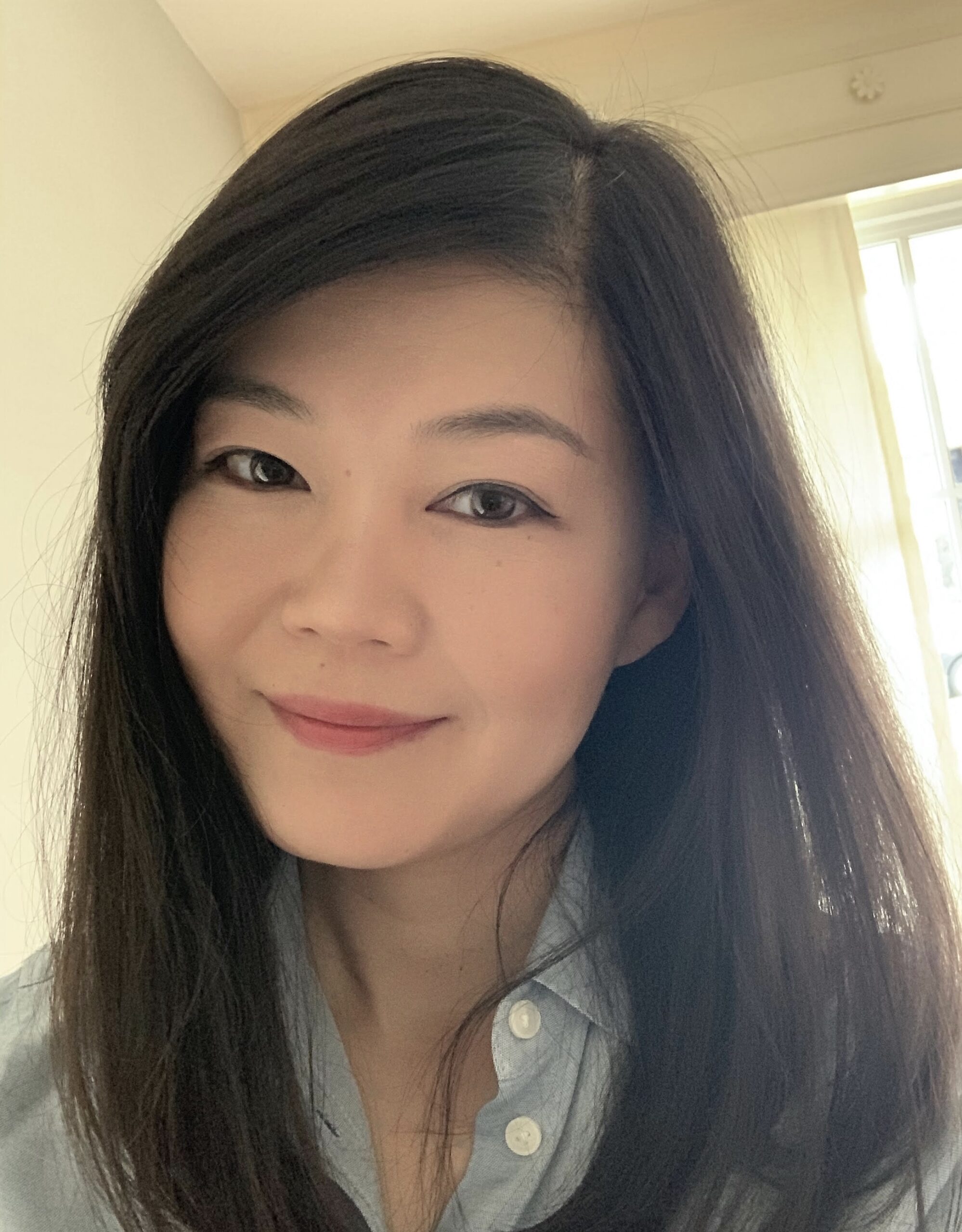 Hana Choi is a bilingual writer, translator, and attorney. Her work has appeared or is forthcoming in Epoch, Mississippi Review, the Florida Review, and elsewhere. She is a recipient of the Grants for Artists’ Progress from Artist Trust and a fellow of the Jack Straw Writers Program. A native of Seoul, South Korea, she now lives in Seattle, where she is at work on her first novel and collection of short stories.
SEE THE ISSUE
SUGGESTED CONTENT
Featured Prose
Apr 16 2026
A Conversation with Richard Smith
When I picked up Richard’s first book, Not a Soul But Us, I knew only that it was a story in eighty-four sonnets about a boy and his dog struggling to… read more

Featured Prose
Mar 05 2026
A Conversation with Kelli Russell Agodon
Kelli Russell Agodon is a bi/queer poet and editor whose newest poetry book, Accidental Devotions, will be published by Copper Canyon Press in May 2026. Accidental Devotions, a collection dedicated to… read more
Featured Prose
Feb 05 2026
A Conversation with Julia Ridley Smith
Fall 2025 Missouri Review interns Graham Medric George ’27 and Sofia Louise Ottolini ’27 interviewed Julia Ridley Smith about Sex Romp Gone Wrong, her recent short-story collection, when she visited… read more