
Blast | September 01, 2023
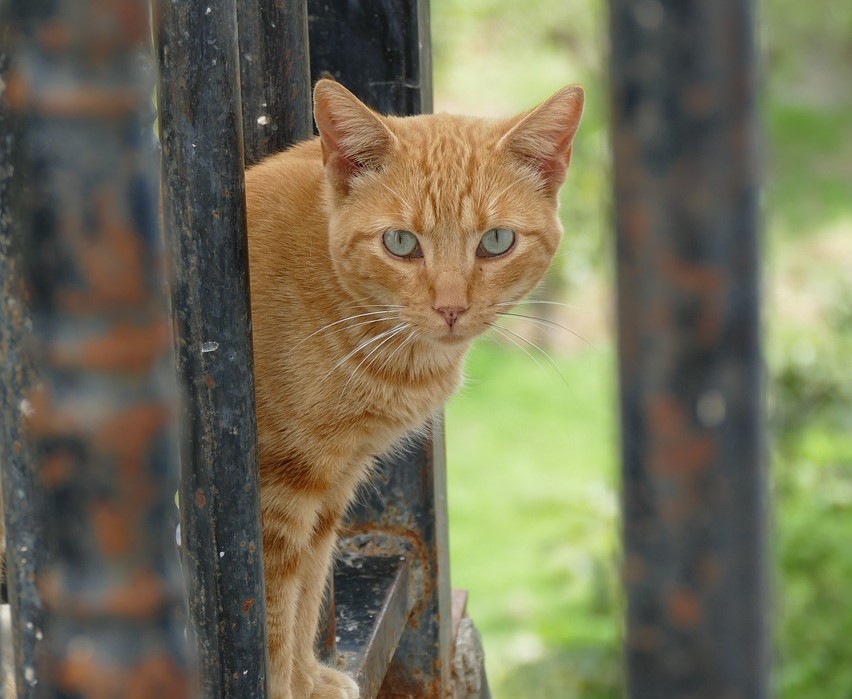
“Ronin” by Gary Enns
BLAST, TMR’s online-only prose anthology, features prose too vibrant to be confined between the covers of a print journal. In Gary Enns’s story “Ronin,” a divorced bike mechanic and his single neighbor face off over the fate of a stray cat, until one of them makes a surprising move toward reconciliation.
Ronin
Gary Enns
I’ve got this cat, a big orange warrior. Just appeared one night, you know how cats do. Your life can be in ruins, the bike shop you built with your bare hands crashes, your wife cheats on you with your business partner, and they both leave you high and dry. You try to put it all back together, but you can’t. No sense trying to pin an avalanche back up onto a mountain.
But then this cat appears out of the mist in the backyard. Not like a refugee, nothing pitiful, no begging, and it’s not cute at all; it’s dirty and rough looking with droopy, wide-open golden eyes that don’t seem to move. He sits there on the mound of my back yard like a displaced warrior that walked into a new country.
You won’t hear me complaining. I’ve got a job in the bike shop down the road. It’s not my place, but I’m doing what I love. At least I’m not in the oil fields greasing pumpjacks. I’ve got wide windows that let the light in, I build bikes for people, help people fix their flats, get them moving. And I don’t have to worry about all the capital, about the taxes, broken windows, back-stabbing partners. I help people every day, I get paid a check at the end of the month, and I make my mortgage payment.
About the cat: my neighbors hate him. Maybe they’ve got good reason, I’ll admit. Ronin is feral, wild. Never neutered, never will be. He slips like a knife through the darkness, without boundaries. He eats the neighbors’ pet food like it’s tribute. In the witching hour, you can hear him humming away, facing down lesser beasts.
But none of that is my fault. I didn’t seek him out. A few months back, there he was, this big gargoyle of a cat watching me from the shadows.
For weeks we’d just gaze into each other’s eyes, him on the grass mound of my backyard, and me sitting in my chair behind the glass of my sliding door. Around eleven at night, he’d be there, and I’d sit with him, letting him get to know me. Then I started putting out a half can of tuna midway up the mound before he’d arrive. Day after day I put it out, and he’d come and recline there and not budge. He’d be looking at me and then calmly turn his head to his surroundings. He’d never even glance at that tuna, like he was making a clear point of it not being any big thing at all.
And then one day, the wall came down. He sat there on his mound as usual with that can between us, just ignoring it. About ten minutes in, he got up calmly, glided over all nonchalantly, and cleaned out the can.
The threshold had been crossed. Nothing incremental, nothing by degree. It was an all-or-nothing deal for him. After that, I could put that can on the back step, sit right there next to it, and he’d stroll on up. I could reach out and smooth his damp coat, even touch his head at the back of the ears. I’d earned my way in.
***
The neighbors post a nasty online thread, thinking I’m a Luddite and won’t see it. It’s Peggy, my back neighbor, who starts it—she and her adult son, Kevin. She’s sixty-something, always at home puttering about. He’s about thirty-five going on forty, a big guy with a developing middle tire and thinning hair. He pressure-washes people’s cars and driveways for a living. You see him rolling around Bakersfield, pulling a washer trailer behind a clean, copper-colored Chevy with tires shining from Armor All. In the thread, they’re going on and on about this terrible alley cat’s transgressions—their growing dog food bill, the cat spray on the doggy door, her little Yorkie’s scratched retina. Other neighbors are chiming in, saying someone should call animal services. They don’t surprise me. Kick some spurge seeds around, and you’ll get weeds. It’s Peggy and Kevin I hold accountable for starting all this.
I let the conversation roll for a good long time, until finally Peggy mentions that she’s bought a trap. I jump in. Just one sentence: Now I know who to hold responsible when my cat disappears.
After that, crickets—the end of conversation. The next morning, the thread has been taken down.
I trust them as far as a baby can ride a bike.
***
The next day I put up a tiny camera, nestled into the ivy leaves on my back fence and pointed into Peggy’s back yard. You might call this an invasion of privacy, but I call it protecting my rights.
I connect my phone at work and glance at it every so often while assembling a bike. I’m building a carbon-frame Émonda for a rich dude, Dura-Ace components, the best of everything—a ten thousand dollar ride he’ll putter around on down Alfred Harrell Highway with the local amateurs.
I’m watching off and on, and finally Peggy comes out, hobbling with this shiny wire cat trap, the kind with the spring-loaded door and the little trigger step that slams it shut. She sets it down by the garage and puts her Pierre’s food bowl in there on the trigger, that little dog nosing all around it, a white bandage covering one eye. She picks the dog up, and they head inside.
Sure enough, Ronin steps into the frame. I watch as he goes up to the trap and looks inside, calm as usual. Then he walks away, around the side of the house. That cat’s smarter than Peggy and Kevin combined.
Peggy comes out not a moment later, like she’s watched the whole thing from her window, and the little dog runs out right between her legs and into that trap, swear to God. I watch her for ten minutes trying to figure out how to open it up, and I’m dying. Soon Kevin shows up in what looks like an old high school hoodie too small for him and figures it out for her. Then he just stands there like a big kid, shoulders tight, like the kind of person who never returns a hug.
I finish up the Émonda and call the guy to let him know it’s ready for pickup the next day, then I close up shop and ride home. I walk right through the back gate, up their drive and to their back door. I peek through the side window and see the inside all lit up and warm, Kevin at the table, sitting there for dinner. I have to admit, it looks nice. Little Pierre is in his little bed. The trap is resting there beside the couch.
I knock three times. Peggy opens the door. Her eyes are anxious.
“I want you to know,” I say, “that I know what you’re up to, and if anything happens to that cat, I’ll be at your door again, and you and I”—and I’m looking over Peggy’s shoulder at her son,—“you and I are gonna work it all out.”
He stands up then, pushes his chair with the back of his legs, throws those tight shoulders back as best he can. “Are you threatening me?” he says. He actually looks like maybe he has some kind of backbone.
“I’m not threatening anybody. I’m just making a promise. Now if something happens to my cat, it would be a shame if something happened to this little guy,” and I glance over at the dog.
“I hear you, all right,” Kevin says in a low tone, clenching his teeth.
And that’s that. I clarify my position on the matter.
Ronin is smart, but dumb people still find ways to punch, so I get a collar and cut a tag for him at the pet store. It’s got his name on it and my address and phone number, and on the back an etching of crossbones. I put it on him that night on the back step.
Then I keep watching.
***
Nothing happens for a few weeks. I’m fixing some homeless guy’s flat tires, pro bono, when Danika, my ex, calls the shop phone out of the blue to chat, to see how I’m doing. I’m thinking, How the hell are YOU doing, shacked up on Murder Mountain, raking in a load of cash with the guy who owes me twenty-five thousand dollars?
“Just peachy, Danika. Everything great with you? Enjoying your gardening up there in misty Humboldt?”
“Don’t be like that,” she says, and I’m off to a terrible day with a smelly homeless guy crowding my personal space and Danika on her high horse, telling me about how she cares for me, how I need to love myself, make space inside myself, be more accepting. I feel like yanking the phone out of the wall. Then I glance at my screen on the counter, and there’s Kevin on the back step, making some kind of steamy slush in a bowl, Peggy standing there directing him. Probably some slurry of valerian root and sardines all cooked up and smelly. Online cat haters post all kinds of twisted recipes for other degenerates to follow. No way he’ll go for this trick, I think.
“Talk to you later,” I say to Danika and hang up. Peggy and Kevin get the trap all set up again and head inside. I get back to finishing the guy’s tires to move him out the door, but I’m still watching.
And then there he is, Ronin sitting in the corner of the frame. He moves a little closer, lifting his nose up and down like cats do when they smell something irresistible. He circles all the way around the trap.
“Don’t you do it,” I say out loud. But whatever that concoction is must be too much to resist. He steps in. All the way. A moment later, SLAM!
I pump up the guy’s tires real quick and get him and his bike out the door, lock the place down, and ride home in a heartbeat. On my way out back, I grab a baseball bat from my garage. I head through the gate, down the driveway, and into their yard.
They’re both standing there around Ronin, that little Pierre sniffing about the cage.
“You couldn’t stop yourselves, could you?” I say. “You just had to push it to the next level.”
They’re nearly falling back like they hadn’t expected this. “I told you I’d be back.”
Kevin takes a step forward like he’s thinking he’s going to make a move, but I’ve got the bat, so he stops. I get to the cage, and that little punk dog takes off through its doggy door like a Piccolo Pete.
Ronin is crouched and humming real low like he’s about to kill someone. I lift the door on its spring, and a moment later he’s shooting through the yard and around the corner.
“Maybe you didn’t see the collar around his neck,” I say. “That cat belongs to me!” Then I go to town on that trap. I hammer away and hammer and hammer until it’s nothing but a mess of mangled wires. I’m in my rhythm with that bat, and when I’m done, I turn to them. Peggy is there on the steps, dialing on her cordless. Kevin is standing next to her, eyes fixed on me. Some guys, you know they’re trying their best to contain themselves, to push down their inner beast. Whatever karma they’re carrying around from their past, they know taking on more is just going to run them to ruin, so they rein it in. That’s what he looks like to me, like a guy trying hold himself back. Come on, blow up! Let me see it. But he’s not coming near me at all, just stands there next to his mom.
“I see you dialing that phone,” I say. “Go ahead and make the call, let’s get law enforcement involved here, and we can talk all about your little illegal pet-trapping operation, your disregard for other people’s property, and about whatever else Kevin’s got going on. I’m sure there’s lots to talk about with the police.”
Kevin reaches over and takes the phone out of her hands, presses the button. Seems like he’s got his own reasons for flying under the radar.
“Well, now you know I’m a man of my word,” I say.
And then I’m out, down the drive and back through my gate.
I wonder if Ronin will ever come back, but that cat’s got adamantine nerves. There he is, the very same night, sitting on a chair in my backyard, surveying the darkness.
I fix him up a dinner and watch him eat, his tag clinking against the metal bowl.
***
I figure I’ve heard the last of them for a while. What else is there to say or do after a neighbor takes a baseball bat and goes berserk in your back yard and you decide not to do anything about it?
Truthfully, maybe I feel a little bad. Who knows what kind of mess is running through their lives? I used to hear a little kid’s laughter back there about once a week, and when I’d ride by to the Smart & Final, I’d see the boy playing in the driveway, rumbling around on a plastic Big Wheel while Kevin and Peggy sat on the porch, watching him. But a few months ago, all that stopped. When you think about the possibilities, there doesn’t seem to be any best-case scenario.
But what can I do? I don’t put on an act for anyone. With me, you see one side or you see the other, depending on whether you stay on your plate or step onto mine. Maybe some people can paint the walls gray, but I’ll show you straightaway who I am. I’ll be honest with you. You know who I am.
***
My days are looking up. I killed it with the rich guy’s Émonda, and he’s become my biggest cheerleader, gave me a two-hundred-dollar tip, a fifty-dollar coffee card for the Filling Station, and a call to the shop owner about what a master craftsman I am. It’s not my shop, but I’ll work for bonuses and keep the folks coming back for more.
Then one evening there’s a knock on my door. I push back the curtain, and there’s Kevin, standing two steps off my porch. I open up.
“Peggy wants you over for Chinese food,” he says without smiling. “She’s buying.”
I wonder if this is some kind of setup, and I must have a suspicious look on my face.
“She doesn’t want us all to be on bad terms,” he says.
I understand that. It can suck your energy to be living with an enemy at your back, and if the enemy isn’t going away, the only option other than war is to make amends somehow.
“What do you think about it?” I ask.
“Whatever,” he says. He doesn’t look happy, just resigned, but I say, “Sure, let’s do it.”
This is how the world works. Your neighbors hate you, and then they ask you to dinner. You’re married, got a business, and suddenly the market slams you to the pavement and your wife tells you she’s banging your business partner. I had a buddy move to Manhattan to live out his dream as a bike messenger. He’s hustling down Lexington and gets mowed down by a New York City bus driver who forgets to check his side mirror. Alive one minute, dead the next. The only constant in this world is change.
***
I kick the local scooter kids out of the shop at a quarter to five, bolt the scissor gates, and ride home. I wash up, head over, and knock three times. Pierre starts yipping, and then Kevin comes to the door. Peggy is in the kitchen, looking busy.
“I called the order in fifteen minutes ago,” she says. “It’s paid for and bagged up. Can you two go get it? Maybe you can talk.”
“Sure,” I say and look at Kevin. “I can hike you on my bike, or we can take your truck.”
He hasn’t fully accepted Peggy’s plan to befriend me. Why would he? Maybe it’s me bringing him down, or maybe I’m simply the final straw, but those shoulders say, I’m living with Mom. They say, I pressure-wash rich people’s driveways. They say, What the hell, where’s my pot of gold?
We get into his truck and pull away, the pressure washer trailing behind us.
“Look,” I say, “we got off on the wrong foot, but there’s no reason we can’t be neighbors.” He just keeps looking straight ahead, keeps his eye on the road, lips tight.
We pull up in back of Bamboo Chopsticks downtown and park where there’s room for the rig. Some of the Chinese cooks are crouching back there outside the kitchen door, smoking and looking around. There’s this ganky-looking homeless dude, young, in a green jacket and ripped jeans, heading toward us.
“Look at this guy,” I say.
“I’m hungry,” he says to us, “Got any money?” Just like that. No pride. I’ve got empathy for the homeless. I’ll help a guy fix a tire or put a new link in a chain, but I’ll never send a guy like this off with money in his pocket because I know exactly what he’ll do with it; I can see it in his eyes. His is a hunger for something, all right, but it’s not food. He’ll never play it straight, though, because if he does, no one will give him a dime.
Kevin looks like he’s going to say something, but then we walk on in.
The bag is ready and stapled, but Kevin puts in an extra order of broccoli beef with rice and gravy. I figure he’s hungry. We wait for a bit,; then the little girl at the counter bags up the order, and we head back out.
Before we reach the truck, Kevin stops and puts the bags down on the waist-high wall, busts the staple from the order, and takes the extra food over to the guy, who’s now sitting on the ground. Kevin’s got everything the dude needs: the chopsticks in their paper sheath over the top, packets of soy sauce, a to-go cup of red pepper flakes.
“I got you this,” Kevin says to the guy, and wonder of wonders, guess what that guy does? “I don’t want that,” he says, “I want money.” He swats the food away, and it all falls from Kevin’s hands to the ground, a big sloppy mess of gravy and broccoli, a total waste.
“No, no, no,” I say under my breath. I don’t say anything more than that. I’m ready just to leave. Lesson learned. Give the guy some choice words and walk away the wiser. But Kevin, I see all that tension in his shoulders release. He’s suddenly animated, possessed, the pink neon of the back alley glinting in his eyes.
“Aaaaaaaaaaargh!” he yells like a Viking, like a big juggernaut rushing at that skinny guy. He pushes the dude against the back wall of the restaurant, and the cooks are on their feet, shouting in Mandarin. One runs in and comes back out with a butcher knife in one hand and a phone in the other. Kevin pulls the guy by his coat to the dumpster and slams him against the edge so he’s doubled over with his feet off the ground. Then he grabs the dude’s legs and flings him over like a rag doll, right in with the old chow mein and moldy cardboard.
The guy pops up in a moment like a prairie dog, fear in his eyes. Kevin pulls the lid over him, and the guy pops back down quick, before it smacks his head.
“Better stay in there, kid,” I say. “You pulled your act with the wrong person tonight.”
I hear the guy inside, rustling around, and then he gets quiet. Kevin is just standing there like he’s released some great ball of energy and he’s now spent.
I wish for his sake we’d headed out a few moments earlier, but now the cooks are yelling and pointing at Kevin as the squad cars roll into the alley. The guy in the bin is deathly quiet.
Kevin says nothing, just reaches into his pocket and hands me the keys to his truck. “If they take me in, can you drive it home? The wheel clamp is in the back box.”
The cops talk to the cooks; then they cuff Kevin, sit him on a parking block, and open up the dumpster. The guy peeks out over the edge and says something to them about it not being his fault. The cops pull out their blue rubber gloves because they can see what they’re in for. They let him crawl out on his own steam, cuff him up, and sit him down two parking blocks away from Kevin. The radios on their shoulders are squawking.
“Are you taking him in?” I ask one of them and point to Kevin.
“We just ran his ID. What do you think?”
I make eye contact with Kevin, and he nods, so I grab the food off the wall, hop in the truck, and head back to Peggy’s.
I pull the rig up to the curb in front of their duplex. I unlock the box, take the yellow boot lock out, and boot up a trailer wheel nice and tight so no one gets any bright ideas.
I grab the food, head up to the front door, and knock. Peggy opens the door. She looks over my shoulder, surprised at first, and then invites me into that warm house.
I tell Peggy what happened. After a moment, she closes her eyes like it’s exasperating but not surprising. She’s standing there in the living room with her eyes closed, taking deep breaths.
“OK,” she says, finally. “Bring that food over and come have a seat. I’m hungry.”
She sits me down at the table, all laid out with blue placemats and cloth napkins. She takes the food over to the bar and opens up all the containers in a row. She gets down some wide bowls from the cupboard and starts serving with big spoons, mounds of pan-fried noodles and broccoli beef and sweet-and-sour pork and potstickers. The smell fills the room. She puts a spring roll into each bowl, jutting it out like a garnish; she throws the cheap chopsticks away and brings out some nice bamboo ones and places the bowls on the mats with their chopsticks resting across the rims.
“We’ve got lots of food,” she says. “And I almost forgot, we’ve got beer in the fridge. It’s Kevin’s. You want one?”
She opens two and brings them over.
And then we eat. We eat and eat. We take our time, savoring each flavor.
“Have more,” she says, and I do.
I ask about the little boy, and she tells me about the mother, Char, about how she brings him over only when she wants more money than the child support she’s getting from Kevin, about how CPS hasn’t taken an interest in her yet but that they wouldn’t give Kevin custody if they did. Char took the boy with her when they split, said Kevin wasn’t a fit caregiver, even threw mud at Peggy for an old relationship she’d had with a guy who turned out to have domestic abuse charges against him from ten years prior.
Char is no better, was on drugs along with Kevin, probably still is. Kevin has told Peggy how when he met Char, she was hanging out with a very bad crowd, gutter punk types, the kind who party in garages, and he’s seen her mixed up with them again. But until something bad happens to the child, the judge doesn’t seem to care about Kevin’s side of things. As the mother, Char has the power, and no past convictions, and she’s logged two calls to the police for domestic disturbance involving Kevin, plus she had a video of him yelling at her and shattering a wall mirror with his fist. All of this, and the judge grants her custody.
“If I were her,” Peggy says, “I’d probably do the same, but I’m on this side of things.”
She opens two more beers for us. We sit in silence for a bit, just sipping the beers.
“Kevin has always had anger problems,” she says, “ever since he was a boy. You blame yourself when you’re the parent. Lately it seems he’s been better at keeping a lid on it. I thought maybe with you and the cat and everything, maybe he was going to lose it again, but you were a good challenge for him. A big challenge, but a good one. He just lost his cool on something else. And someone so random, too.”
Maybe not random, I think. Maybe he saw something of himself in the eyes of that guy in the alley, or some frightening vision of his son in a not-too-distant future. Maybe that’s why he reached out to him and why he flipped. I think this, but I can’t say it to Peggy.
“I’m sorry for trapping your cat,” she says. I’m half expecting a follow-up, like “but it was terrorizing my dog,” but there isn’t one; it’s just one big gracious sorry laid down there for me.
As she is telling me everything, I study her face, her loose jowls and crepey skin, her crooked front teeth, the cloudy eyes, and I catch a glimpse of the little girl she used to be. You know how that happens sometimes. I see her young hazel eyes and strawberry blond hair, I imagine her on an old playground in the dust, standing there among the swings, and I hope kids were kind to her. How could she ever imagine, back then, her life as it is now? If she could see her future self, fifty-five or so years later, living with no one but a toy dog and her adult son in a not-so-nice back unit of a duplex in downtown Bakersfield, could she even comprehend that the woman was her? And if she could, would she then second-guess every decision she was going to make from that point on?
I feel sad for her, but Peggy isn’t crying. Her back is straight, and she isn’t losing her breath or looking around the way people who can’t see their way through the mess of their lives do. I guess she’s spent all of that pointless effort already. She’s not pitiful, and my sadness feels unfairly placed. She doesn’t need pity; she just needs me to listen.
I take another sip of beer. Peggy does, too.
“I don’t know why that cat means so much to me,” I say. That’s the truth. I don’t. And then I’m thinking of Kevin’s child out there somewhere, living with a mess of a mom, of that young guy in the dumpster—someone’s son, scared, cold, thrown out with the night’s uneaten dinners. I think of Danika up north, my beautiful wife, what we used to have, what I might be like as a dad if we’d ever had a child, and I can’t hardly imagine it.
“I’ll pay for your cat trap,” I say.
She smiles at that, starts to laugh. She’s laughing so hard, tears come to her eyes. “Oh,” she manages to say, “I needed this,” and I start to laugh, too.
We talk and talk. Finally, we look at the clock, and it’s eleven. She hasn’t heard from Kevin yet, so she says she’s going to call, and it feels like time to give her that space.
She boxes up all the leftovers and insists that I take them for lunch the next day.
At the door, she reaches out and stops me. She puts her arms around me, like a mother, as far as they’ll go, and I lift mine and hug her back, the bag hanging from my hand. “You take care of yourself,” she says against my shoulder, and I feel her warmth.
The house is dark when I get home. I put the food in the fridge.
I head back out to the fence, to the spot behind my garage. Though it’s dark, it’s easy to reach over the ivy and unclip the camera. I put it in a junk drawer in the garage.
That night I’m in and out of sleep until two AM. I get up, get a drink of water, and for some reason go to the back of the house, to the glass of my sliding door. I sit down. Light is flooding through the window from the nearly full moon rising up over the rooftops. There, on his mound in the back yard, is that big orange beast, just lying there facing me with his paws straight out in front of him like a sphynx, eyes glistening in the moonlight. He has the collar on, but he isn’t mine. He’s far from that. What does it mean to be mine, anyway? And my heart aches. It aches for more—a lot more than what I have, a lot more that seems like it should have come to me already, but I don’t know what any of it is, out there beyond the moonlight, and I gaze out, into those eyes and beyond, mourning the loss of something big that was never really mine to begin with.
***
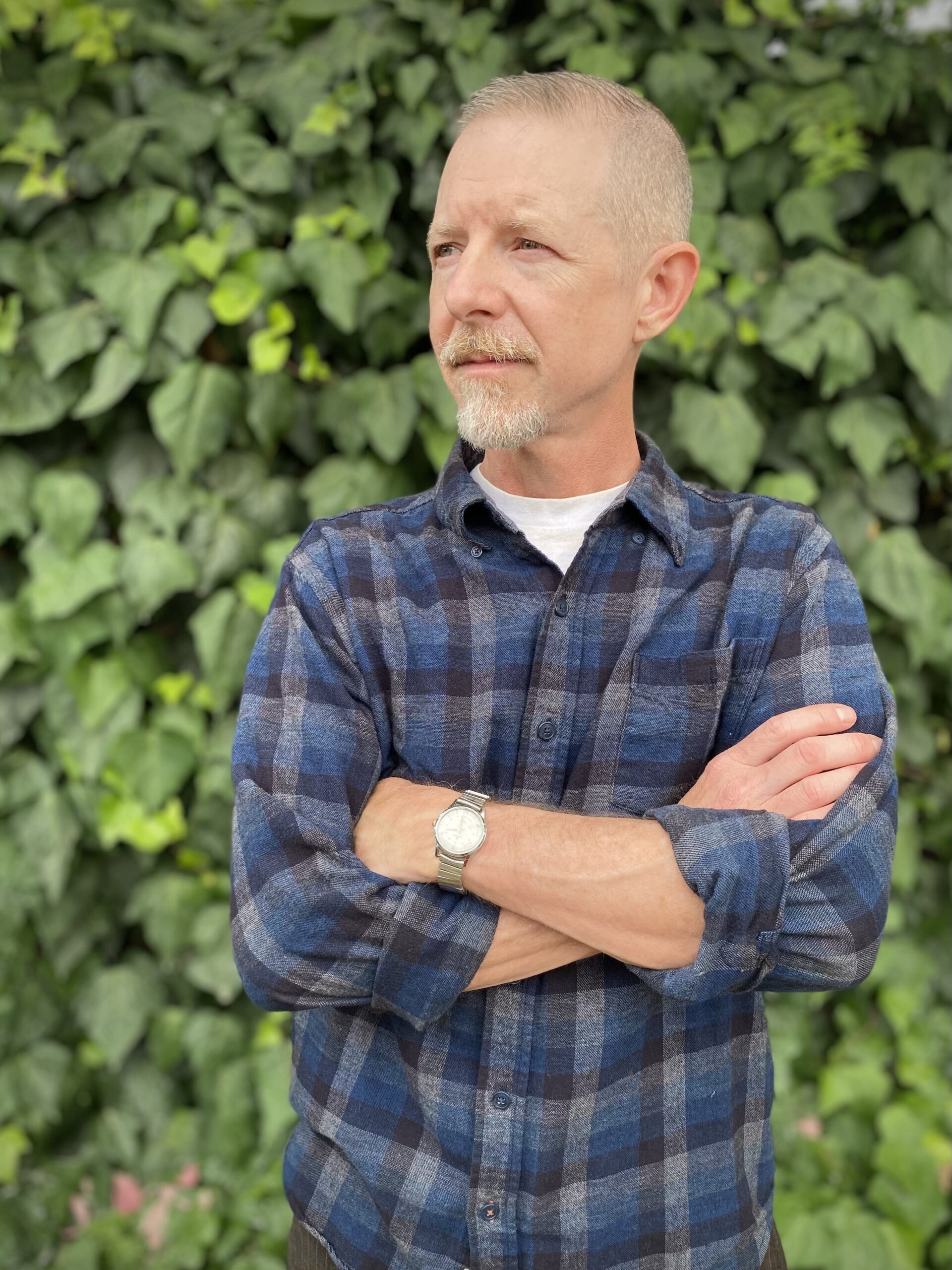 Gary Enns writes about bike mechanics, Zen-practicing Mennonites, farmhands, punks, fairground carnies, and push truck drivers in the rural California towns of the Central San Joaquin Valley. He resides in Bakersfield with his family, within walking distance of Buck Owens’ famous Crystal Palace. He has published stories and poems in Granta, Crazyhorse, Southern Humanities Review, the Wayfarer, and many other literary journals. This is his first story in the Missouri Review. Find him online at garyenns.com and on Instagram @gary.s.enns. [hyperlink https://www.instagram.com/gary.s.enns/ ]
SEE THE ISSUE

SUGGESTED CONTENT
Blast
May 07 2026
“Handsome Crying Boy” by Lee Conell
In this black comedy by Lee Conell, the emotionally repressed pay for group crying sessions administered by attractive men. “Handsome Crying Boy” asks what it means to be vulnerable with… read more

Blast
Apr 23 2026
“Coyote Map” by Justin Taroli
Justin Taroli‘s atmospheric short story follows a photographer who returns to Albuquerque after their grandmother’s death. Intertwining themes of grief, spirituality, and collective memory, the mystery of “Coyote Map” takes… read more

Blast
Apr 09 2026
“The Dogs” by Zoe Ballering
In this sparkling, spare sci-fi by Zoe Ballering, the descendants of Earth’s elite trawl space for “the barest hint of life,” aching for what, and who, they left behind. Most… read more