
“Live Fast Die Young Bad Girls Do It Well” by Kirun Kapur
Kirun Kapur was a 2025 finalist for The Missouri Review’s Editors’ Prize in poetry. She grew up in Hawaii and now lives along the banks of the Merrimack River. She is the author of three books of poetry: Women in the Waiting Room (Black Lawrence Press, 2020), a finalist for the National Poetry Series; Visiting Indira Gandhi’s Palmist (Elixir Press, 2015), which won the Arts & Letters Rumi Prize and the Antivenom Poetry Award; and the chapbook All the Rivers in Paradise (UChicago Arts, 2022). She serves as editor at the Beloit Poetry Journal and teaches at Amherst College, where she directs the creative writing program.
“Live Fast Die Young Bad Girls Do It Well” by Kirun Kapur is our Poem of the Week.
Live Fast Die Young Bad Girls Do It Well
When the last days come, may I be driving
too fast down the Pali Highway, swimming the bay
in the dark, laughing and swallowing water.
May my wet hair fly out from the back of a motorcycle—
no need now for a helmet. May I wind my way up Tantalus
to shout curses and blessings over the city
where I was young and happy, young and harmed.
Now, I’m armed with stars miles above.
May I lie in a bed of uncapped pens, books
with wrecked spines, my tea-stained drafts—
all lost in the sheets when friends climb in beside me
to read. In my last days, I want to take off my shoes
in the middle of dancing, carry armfuls of peonies
in from the garden, walk the neighborhood
after a dinner, admiring the rectangles
of lit up lives. In my last days, I want to remember
how almost everything was better in the dark
and at higher speeds, how I never regretted
doing anything naked, flashing my middle finger,
taking long unnecessary trips in cars, wrapping
my arms around complete strangers, going
up to the edge, then one step too far.
***
Author’s Note
This is a poem about the wildness, joy, and pleasure that is sometimes unleashed in the wake of great fear or sorrow. When you know—really know in your bones—that your time is short, that you don’t have any more days to waste, what should you do? You might give the world the bird. You might dance in random places. Or lie in bed with books and beloveds. Or speed bareheaded through the night. If you could choose, what would you do with your last glorious bursts of strength and energy? It’s also just a poem inspired by a song.
An Interview with Grace Plowden
Recently, TMR intern Michael Fegan interviewed Grace Plowden about her essay “Naff: A Rumination on Taste and Tastelessness,” which was a runner-up for the 2022 Jeffrey E. Smith Editors’ Prize. Plowden’s autoethnographic study of “naff”—a British/Polari term for a specific form of tackiness—first appeared in TMR issue 46.2 (Summer 2023). You can read her essay here.
Michael Fegan: In “Naff,” you bounce back and forth between your personal experiences and the sociopolitical meaning of the term. Do your other essays follow this pattern?
Grace Plowden: Yes. The personal is always serving a larger purpose in my work. Mostly I use it as an ethical disclaimer: a way to show my nose butting into the essay’s frame. By bouncing between the two, I can achieve a slightly different kind of authority than if I were just to write about the sociopolitical. It’s a little more modest. It’s not “this is how things are” as much as “this is how things seem to me.” I feel more comfortable writing about big ideas through this lens.
MF: In your essay, you discuss your love for Viennetta, an ice cream dessert. Would you say that it was the catalyst of your love for naff things?
GP: It was one of several. There was a pastel pink, diamante-studded T-shirt that was also particularly key. But because the essay was about taste, I wanted to foreground a naff foodstuff.
MF: Are there other slang words or niche concepts that interest you as much as “naff”? If so, could you tell us about them?
GP: I tend to be more interested in popular words and phrases than niche ones. I like tracking how they’ve been used over time. Even small differences can reveal significant shifts in public opinion and social values. Here I was fascinated by the history of Polari: how it went from a slang used by immigrants and outlaws to one with a royal stamp of approval. This history, which is effectively a history of class mobility, complicated the main ideas of the essay in a way that I found really exciting.
MF: At the end of your essay, you mention your compulsion to write about the topics of class and money, despite the risks you take in doing so. Could you talk about the role of risk in your writing process?
GP: Of course, there are few real risks. I’m not saying anything revolutionary or even particularly outlandish. By far and away the biggest risk is upsetting my family. Still, writing always feels risky. Maybe scary is a better word. I find it scary to say what I really think. Scarier still if I’m writing about something I’m not supposed to write about. Over the course of this essay, I realized that the way we talk (/don’t talk) about class plays a big role in keeping its hierarchies in place. It thus felt important for me to try to be explicit, even though I imagined that a handful of fusty Brits might send me to exile.
MF: What can we expect from you in the future?
GP: I’m working on a collection of essays about self-fashioning. I used to model, and during my time in the industry I became fascinated by how identities are constructed and deconstructed. On set and off, mine was dependent on decisions made by other people, predominantly by clients and agents. After I retired, I noticed the extent to which it was still shaped and determined by external forces. It made me wonder how much agency we really have to self-fashion. The book tries to answer this question through essays on starter-pack memes, shoplifting, navel-gazing, “finding yourself,” ancient Andean quipu, and signatures.
***
 Grace Plowden was born and raised in the UK. She now lives in New York, where she’s pursuing an MFA in nonfiction at Columbia University. She received a first-class degree in English literature from Trinity College Dublin, where she was awarded Trinity’s Gold Medal. Her essay “Naff: A Rumination of Taste and Tastelessness” was her first published personal essay.
***
Michael Fegan is a 2023 fall intern at the Missouri Review. He is a senior at the University of Missouri-Columbia, where he is majoring in English and Ancient Mediterranean Studies.
An Interview with Alexander Ramirez
Recently, TMR intern Michael Fegan interviewed Alexander Ramirez about his essay “On Defeat and Diego,” which was a runner-up for the 30th Annual Jeffrey E. Smith Editors’ Prize. Ramirez’s personal meditations on prizefighting first appeared in TMR issue 44.2 (Summer 2021). You can read the essay here.
Michael Fegan: Boxing and writing are very different activities. What got you into writing?
Alexander Ramirez: I probably got into writing because there was always plenty of reading material in my home. I read newspapers and magazines and comic books. My dad had subscriptions to Ring Magazine and KO Magazine. He collected back issues of Sports Illustrated. So, when I think of sports, I think of sports literature, too. I remember the 1990s well, and I remember missing plenty of games and fights on television, and the only way I could experience them was through the words of a sportswriter.
MF: In your notes “From the Author,” you discuss how boxing can illuminate social issues. For instance, Jack Johnson’s career can help us think about “race relations in America at the turn of the twentieth century.” Can you expand on the social value of boxing?
AR: Everyone I have ever known seems to be reeling, in one way or another, from the major world events of the twentieth century. For example, both sides of my family were transplanted to California because of the Bracero Program instituted during the Second World War. The popularity of state-sanctioned pugilism sprawls across the twentieth century, creating vivid portals into the past. It’s one thing to hear that Jim Jeffries, former heavyweight champion of the world, was persuaded to come out of retirement to challenge Jack Johnson, the first Black man to hold the title. It’s another thing to learn that more than six hundred writers were on hand in Reno to transmit more than a million words of copy through Western Union; that the fight was staged on the Fourth of July; that the band played a song called “All Coons Look Alike to Me” as Johnson stepped through the ropes to defend his title. To understand why the identity of the World Heavyweight Champion was important to people at any given point in history, you’ll also have to learn a great deal about geopolitics. Adolf Hitler was deeply invested in the outcome of the return match between Max Schmeling and Joe Louis. An expatriated James Baldwin saw fit to return to the United States to sit ringside and report on Sonny Liston’s second demolition of Floyd Patterson. Whenever people collide with money and each other, stories burst into being. Accessing these portals have helped me understand why the world is the way it’s been throughout my lifetime. And the history of prizefighting is more than a ledger of wins and losses and title changes and gate receipts. I’m convinced that many of the stark truths of contemporary American life are embedded in this history.
MF: Throughout “On Defeat and Diego” you refer to boxing as a language. What does this mean to you, and do you think that this language can express certain things better than verbal language?
AR: Boxing is body language, certainly. There are standard rules of engagement, so all practitioners will find an expression that suits their bodies and their temperaments. James Toney held his guard differently than Winky Wright. George Foreman used his jab differently than most. Roy Jones Jr. flouted many rules with great success for a long time. They were all athletes of the highest caliber, and the ways they performed defined their character. Pugilists and pundits will sometimes refer to the boxing ring as a “chamber of truth,” and I love the metaphor. Fighters will face resistance. They don’t get a teammate to step into the ring with them and take on some of the responsibility. There’s no debate or interlocution portion of a boxing match. Once the promotional tour is over, the combatants have their mouths stopped by their mouthpieces. As a boxer, you just have your hands. Your opponent has hands, too. And that reality makes the result of the contest undeniable in most cases.
MF: As someone who knows the language of boxing, how is your interpretation of it different from a more casual viewer of the sport?
AR: I’ve noticed that some fights and their results can be effectively illegible to the casual viewer. That is, the casual fan will sometimes grossly misread what they’ve witnessed in a boxing match. Over the years, I’ve noticed that the second fight between Evander Holyfield and Mike Tyson seems to be one contest that many people are able recall. This was the fight where Tyson was disqualified for biting a chunk of Holyfield’s ear off. And what the casual fan seems to take away from that spectacle is the madness and barbarism of the offender. It doesn’t seem to occur to the casual viewer, at least not at first, that Tyson was simply looking for a way out—that he wanted to quit. Tyson was a phenomenon in the eighties. He was one of the sport’s finest knockout artists. But Holyfield possessed a strength of character that he could never overcome. Tyson knew, of course, that biting ears was against the rules, and that’s precisely why he did it. He wasn’t mad. He wasn’t a big, bad barbarian. Holyfield was just better. And Tyson’s actions that night were nothing less than an acknowledgment of his opponent’s mental and physical superiority. He conceded that fight.
MF: Do you have any ongoing projects? What can we expect from you in the future?
AR: I took “On Defeat and Diego” with me to Colgate University as an Olive B. O’Connor Fellow in 2021, and I spent my time there researching and writing essays in the same vein. My work on that collection is ongoing, and I suspect that the sport of boxing—and pugilism at large—will wring words from me forever. I’ve been writing short stories and scripts and essays since I was a boy. I do it because I don’t know what I think about anything until I face the blank page and write it all down. I’ve published fiction and nonfiction and refereed articles in irregular cycles for years now. You can expect me to continue that for as long as I live.
***
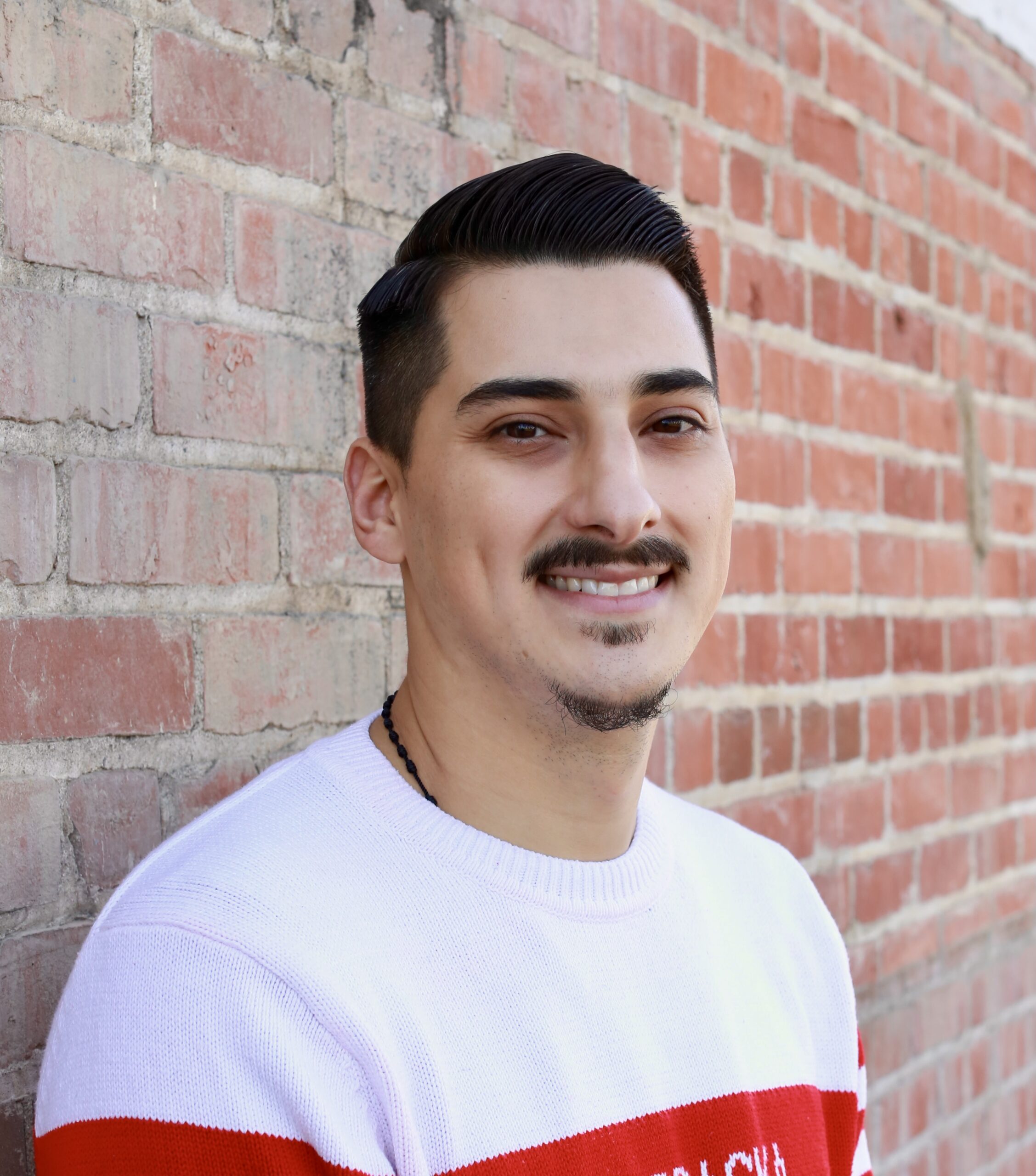
Alexander Ramirez, an Olive B. O’Connor Creative Writing Fellow at Colgate University from 2021-2022, received his Ph.D. in English from the University of Nebraska-Lincoln. His writing has appeared in the Potomac Review, The Journal of American Culture, and Image Journal, among other publications.
***
Michael Fegan is a 2023 fall intern at the Missouri Review. He is a senior at the University of Missouri-Columbia, where he’s majoring in English and Ancient Mediterranean Studies.
An Interview with Mona Susan Power
Recently, TMR interns Annalisa Geger and Kaitlyn Jensen interviewed Mona Susan Power about her story “Naming Ceremony,” which was a runner-up for the 2020 Jeffrey E. Smith Editors’ Prize. The story is adapted from Power’s celebrated new novel, A Council of Dolls, which was published by Mariner Books in August 2023. You can read Power’s story here. For additional context, you can also read coverage of A Council of Dolls in The New York Times.
Annalisa Geger & Kaitlyn Jensen: Throughout “Naming Ceremony,” the protagonist, Lillian, catalogs her many names. Obviously, names and their significance are important in the story. Were you assigned more than one name in childhood—and if so, what was your favorite?
Mona Susan Power: Names have held such significance in my life, from earliest memory. I was proud of being named after my intelligent, beautiful, activist mother: “Susan Power.” In the Indian community of Chicago, we were known as “Big Susie” and “Little Susie.” I was painfully shy, so never chafed at being my mother’s smaller shadow. It was only in more recent years that I began to feel the odd weight of carrying a name that wasn’t really my own. So now I use the name “Mona Susan Power,” to carve out a separate identity. I was also proud of being given my grandmother’s Dakhóta name as a child—one she bestowed upon me when I was four years old. I paid attention to nicknames as a kid, fascinated by the string of names we carry behind us, used by different people in our lives, in different circumstances.
AG & KJ: The story is told from a child’s point of view, leaving the audience to wonder if Lillian is always telling the truth. Do you think readers might be more reluctant to place blame on her mother (also named Lillian), given that the narrator may not be wholly reliable? Or does the vulnerability of the child’s perspective give us more compassion for Lily’s character?
MSP: I have to admit, the thought of a reader not trusting the narrator never even occurred to me. There’s not much distance between us—she’s very much like I was as a child. So I wrote with great earnestness, conveying the tension she experiences as she tries to safely navigate her beloved mother’s ever-shifting moods. I purposely avoided writing too much of the kind of thing her mother might say during rages, because I didn’t want readers to turn against the mother, but instead to see her as someone wounded. So I have the narrator hear roaring in her ears at such times. Seeing in print the kinds of abusive words that are slung at children by injured parents can be more intense than hearing the words. The narrator’s clear devotion to her mother, as well as her admission that she sometimes gets angry with her mom, made her trustworthy in my eyes. Plus, she was open about her own mistakes and regrets.
AG & KJ: Lillian’s doll, Ethel, has a substantial impact on her actions throughout the story. Can you say a little about how you initially envisioned the role of the doll? Did it change as you were writing the story?
MSP: When I first began writing the story, Ethel’s sudden entry as a character came as a complete surprise, though she’s inspired by an actual doll I carried with me everywhere as a child. I never intended for her to become an “actor” in the piece—a character who might actually intervene and make things happen. That said, I honor the characters who show up in my work, and I don’t try to control them if inspiration moves them in unexpected directions. I follow inspiration as my guide. So I allowed Ethel to become a more powerful figure than intended.
AG & KJ: Lily’s mother is erratic and sometimes verbally abusive to her daughter. Anger is a prevalent “character” in your story. The narrator has a close relationship with her father, yet she never shares with him that her mother gets very angry at her, even though she has the opportunity to tell him. Why does she hide it from him, and why doesn’t he pick up on it, even citing the value of anger at one point when he says, “Sometimes people take their anger and use it in a good way”?
MSP: Many elements of this story were drawn from my own experience. I adored my mother (who passed away in October 2022), though we had a rather “fraught” and challenging connection. A great deal of anger was projected onto me from babyhood, but as a well-behaved child who did as I was told, I didn’t have an outlet for my own accumulating anger except through Art—dancing, singing, and writing. Art saved me. Few people ever saw the completely out-of-control, wrathful side of my mother, so no one ever asked if things were okay between us when we were alone. And in that era, folks would’ve seen such a question as “prying,” which was seldom done. I gave the narrator, “Sissy,” that gift of a concerned adult checking on her welfare. But, as I wrote the scene, I realized that had my father ever asked that question, I would have lied as Sissy does. I was so protective of my mother—never wanting to lose her or be taken from her. I think the father in the story suspects that his wife’s anger might spill over onto his daughter, but part of him doesn’t want to face the truth. So he accepts what his daughter tells him.
AG & KJ: The climactic end of the story is unexpected and grim. It’s also ambiguous. What made you settle on leaving the explanation for what happens to Lillian’s mother open to the reader’s interpretation?
MSP: I’m an intuitive writer, so I don’t always consciously understand the choices I make until much later. If I were to guess, I’d say that some part of my brain, whose creative process is such a mystery, knew there would ultimately be a novel version of the story, and that this ambiguity would create suspense that might hold a reader’s fascination in a longer piece. The conscious reason I decided to leave the ending of the story such a mystery is because I didn’t know for sure what happened. I didn’t discover the truth until more than a year later as I wrote the very last section of the novel, in which Ethel, the baby doll who was present at the time, tells it to us.
AG & KJ: Your new book, A Council of Dolls, follows three girls over a generational span, including one of the girls from this particular story. Where does “Naming Ceremony” fit in the novel? Was this story the original inspiration for the novel?
MSP: Yes, “Naming Ceremony” was the original inspiration for the new novel. I wrote it as a stand-alone story and continued to think of it as complete until a few months after it was published. A dear friend, who is African American, read the story and wrote me how much she loved it. She said that I could write an entire novel on the doll character, Ethel, and “Black protectiveness.” For the first time, I began to think that perhaps there was much more to the story. As the idea of a novel version began to develop, I planned to keep the focus on Lillian growing up in the 1960’s. But then I realized I could also bring in the story of her mother’s childhood. The ideas flew in so quickly after that!
A much-expanded version of “Naming Ceremony” opens the novel, and then I move back in time to the mother’s story, then the grandmother’s. The final section of the novel shows the narrator of “Naming Ceremony” grown up and ready to heal from the trauma she inherited from prior generations so devastated by colonization. There was a point in the process where I contemplated presenting the novel in chronological order, but realized that by moving backward in time, I could subvert readers’ assumptions and allegiances. A parent who might come off negatively in one section will be seen as a child in the next section—someone worthy of warm sympathy and admiration. In this way I was hoping to prevent readers from villainizing any of the parental figures. If there’s a villain in the piece, it’s colonization.
AG & KJ: What are you currently working on?
MSP: I have several novels elbowing each other for my attention (at least that’s the way it feels). The working titles are: The Year of Fury, Harvard Indian Séance at the Lizzie Borden Bed & Breakfast, Ghosts of Sitka, and Angry Medicine. As of today, the Lizzie Borden novel is winning. It focuses on five Native American students of different tribal nations who are seniors at Harvard College. A section of it, titled “Goodreads Warrior,” was published in Ploughshares in 2021.
***
 Mona Susan Power is the author of four books of fiction, including The Grass Dancer (awarded a PEN/Hemingway Prize), Roofwalker, Sacred Wilderness, and A Council of Dolls. She is a recipient of several grants in support of her writing which include an Iowa Arts Fellowship, James Michener Fellowship, Radcliffe Bunting Institute Fellowship, Princeton Hodder Fellowship, USA Artists Fellowship, McKnight Fellowship, and Native Arts and Cultures Foundation Fellowship. Her short stories and essays have appeared in numerous publications and anthologies including The Best American Short Stories series, the Atlantic Monthly, the Paris Review, the Missouri Review, Ploughshares, and Granta.
Mona is an enrolled member of the Standing Rock Sioux Tribe (Iháŋktȟuŋwaŋna Dakhóta), born and raised in Chicago. She currently lives in Minnesota, where she’s working on other novels.
***
Kaitlyn Jensen was a 2023 spring intern at the Missouri Review. She is a sophomore at the University of Missouri-Columbia, where she is majoring in English.
Annalisa Geger was a 2023 spring intern at the Missouri Review. She is a senior at the University of Missouri-Columbia, where she is majoring in philosophy and minoring in English.
“On Defeat and Diego” by Alexander Ramirez
In his essay “On Defeat and Diego,” a runner-up for the 30th Annual Jeffrey E. Smith Editors’ Prize, Alexander Ramirez discusses the world of competitive boxing and connected events in a side-by-side comparison between his own experiences and those of the renowned boxer, Diego Corrales. This essay first appeared in TMR issue 44.2 (Summer 2021): “Moving On.” Keep reading to learn more about boxing, the brutal training required for the sport, and the lives of the people who have experienced it.
On Defeat and Diego
Alexander Ramirez
Once, while I was training at the Police Athletic League in Oak Park, Diego “Chico” Corrales walked into the gym holding a trophy half his size. He was a local amateur standout, a home-grown offensive dynamo poised to terrorize the professional ranks in another year or two. My dad followed his career in the newspaper, so I’d been told about his reputation as a heavy-handed bogeyman. I watched Diego balance the trophy against his hip. He was still a teenager then; I was seven years old.
I stepped across the canvas to get a clearer view of him between the ring ropes. At the time, Oak Park’s Police Athletic League was, among other things, the house that built Diego. And he didn’t just win, he knocked motherfuckers out. I’d only ever seen his picture in the paper, his face behind his headgear, but I knew it was he. The trophy flashed as he moved from the doorway. He was long-limbed and lean, like me. His body—that long, skeletal framework—was an organic marvel that generated tremendous power at the end of his blows. Men tipped forward like felled trees, fell asleep under the lights, were upright and then suddenly, irrevocably down. I was aware, even at that age, of one of fistiana’s favorite truisms, the one that declares that punching power is the last attribute to abandon an aging prizefighter. And something about the construction of tall, angular bodies—be it torque or geometry or alchemy—rendered many of them some of the sport’s greatest punchers. I’m not the only aficionado who wonders what Diego might have done as a light welterweight, who he might have been if he had fought into his thirties. All we know for sure is that years later, its development arrested at age twenty-nine, Diego’s body still looked capable in his coffin. Power, in pugilism, is a mysterious thing. When my dad finally noticed Diego had entered the gym, he turned to me and whispered his name like a vesper.
*****
A fight is not a fight until there’s resistance. There must be something to overcome. In preparation for forces beyond my comprehension, I was instructed on how to arrange my digits into a proper fist before I could speak. My dad made sure of it. Boxing’s most exhausted truism is, perhaps, its enduring legacy as an outlet for the underprivileged. The sport has a celebrated history of champions who used the discipline of the ring as an avenue to escape their circumstances, their neighborhoods, their social stations. Not long after the first formal composition of the Marquis of Queensbury rules in 1865, poor people began finding solace and recognition—and a paycheck—in boxing. Irish, Jewish, and Italian fighters reigned over the first half of the twentieth century; since then, Blacks, Latinos, and Asians have dominated the sport. It makes perfect sense when considered economically. Golf clubs are expensive, after all, and the game requires a massive plot of land to play. All the boxer has ever needed are two hands and a sense of purpose.
Diego was brought up in the Oak Park area of south Sacramento. The building that housed the Police Athletic League stood against the neighborhood, a refuge in a desert of tarmac and shattered glass. Oak Park, now gentrified, was once notorious for its violent and drug-related crime. It earned that reputation during Diego’s childhood. “I was just a mean kid,” he once said in an interview, “always getting into fights.”
The presence and influence of Diego’s stepfather, Ray Woods, steered the mean kid away from those early, unsanctioned dustups. Woods—in Diego’s view, his real dad—was aware of both the allure of street gangs and the discipline of organized sports. So, as a proactive measure against the violence just beyond their front door, he told Diego that he would start taking him to a place where he could get into a fight every day but never get hurt or arrested. The father-son team began training at the boxing gym, and Woods would shepherd Diego’s early professional career, where twenty-three of his first twenty-eight wins came by way of knockout.
In 1999, with his father in his corner, Diego would challenge for the IBF super featherweight championship. He towered over southern California’s Roberto Garcia, the reigning, defending titlist. Garcia, an undefeated twenty-four-year-old, had been born into a boxing family. His father, Eduardo, worked his corner. The Garcia camp had already successfully defended their claim to super featherweight supremacy twice, and on the night of Garcia’s defense against Diego, the television commentators mentioned that Roberto looked forward to meeting fellow super featherweight star “Pretty Boy” Floyd Mayweather later that year. The potential matchup would unify the 130-pound weight division.
None of that mattered, however, once Diego started swinging.
Garcia’s eyes widened after absorbing a flush blow; in the moment, he might have thought Diego’s power preternatural. Soon, Garcia hit the canvas. He was dropped three times in total, and the ballet of blood ended in the seventh round as the defending champion’s body splashed over the bottom ropes. The referee waved his arms at the sight of Garcia’s lolling head, signaling an end to the bout.
After Garcia was picked up and wiped clean—of blood and sweat and any other evidence of defeat—Eduardo instructed his son to walk across the ring and congratulate his opponent. Diego was a world champion at the age of twenty-two.
*****
My parents were raised in south Sacramento. After high school, they agreed that all they ever wanted was to have children and raise them together. I was their first child, born at the tail end of the crack-cocaine ’80s, the decade in which they both came of age. When my dad found a house for us to live in, my mom was elated, eager to move on from our one-bedroom apartment. But when he told her that he wanted to buy the house next door to his childhood home, her smile fell.
My mom had always been reluctant to visit my dad’s family home. Her neighborhood was far from the safest in the city, but my dad lived down Detroit Boulevard, a mile-long stretch of asphalt sealed off by a dead end. Detroit was a great, cracked alleyway that collected Blacks and Caucasians, Mexicans and Indians and Pacific Islanders, and Vietnamese refugees who had been pushed toward the California shoreline by the napalm spilled across their mountains. The chains on the dead-end gates left residents with only a single outlet from their stations. When the Tongan Crip shouts, “Detroit Boulevard: One way in, one way out,” he is attesting beyond the literal, groping toward some nascent poetry. My mom knew that my dad and his brothers stood on those corners with their friends. She’d heard that some of those boys threw up hand signals at passing cars. At least one time, one of those passing cars circled back with a gun, and she’d heard that as he was fleeing the sweep of gunfire, a stray bullet ricocheted off the pavement and caught the toe of my father’s Reebok.
But my dad’s old neighborhood was what they could afford, so I grew up on Detroit, too. My mom was looking for ways to send me to school out of district almost as soon as they began packing up the apartment.
Outside observers, pundits and casual fans alike, often draw connections between boxing and life. It’s inescapable: the sport has always been fertile ground for metaphor. All contests feature a direct conflict. The action is structured by time. And it’s streamlined, featuring only two combatants. A fight can stand in as a mimetic vehicle for virtually any human struggle. The looming specter of a potential knockout even imitates life’s chaos and occasional brevity. O. Henry and Jack London wrote short stories on the subject. Ernest Hemingway chose to open The Sun Also Rises with the history of Robert Cohn’s reign as middleweight champion of Princeton. It can become difficult to conceive of the sport through the ever-accumulating plaque of its cultural associations. The idea of a boxing match as life in microcosm has been worn to the nub. Consider how Rocky Balboa keeps coming out for one more round, how John Steinbeck’s Elisa wonders aloud about blood-soaked boxing gloves after she sees her chrysanthemums shattered on the road. Maybe it’s simply the concentrated violence that makes it so appealing—so familiar—to so many people.
Romantic ideas of boxing, of boxing as life, are more likely to occur to the observer than to the practitioner. Joyce Carol Oates, who writes better fiction about boxing than the Hemingways and the Arthur Conan Doyles, skirts truisms and clichés whenever she thinks through the sport’s endurance. In her classic essay collection On Boxing, she writes, “No one whose interest began as mine did in childhood—as an offshoot of my father’s interest—is likely to think of boxing as a symbol of something beyond itself, as if its uniqueness were merely an abbreviation, or iconographic.” When Oates writes about boxing, her words drill the plaque away. She bores toward the stark enamel of its cultural resonance. Another of the sport’s truisms is that it’s not a game: unlike football or basketball, boxing is never something you play. And boys like Diego and me, we weren’t playing; we were just learning that we could depend on ourselves, that our bodies were under our control, that what we had was enough to survive.
There have always been voices arguing to abolish the sport, and the idea is not without reason: fighters still die in the ring. It happens every other year, it seems. Sometimes, even under the supervision of credentialed officials, the sport kills. It always seems rather preventable after the fact. But those voices, they don’t understand. When my dad’s friend Jason was shot, the people with him panicked, and they couldn’t get him to the hospital in time. And his friend Leon never had a chance; a man walked right up to him and fired a bullet through his neck.
We might die in the streets. We might die in our sleep. We might die on the freeway, driving downtown for our court dates. “Life is like boxing in many unsettling respects,” Oates writes. “But boxing is only like boxing.” Better, then, to die in the ring.
*****
Boxing, in practice, is very much like a language. It requires time and repetition and immersion to attain fluency. Professionals who come to the sport in adulthood are few and far between; when they are exemplary, emerging as contenders or sometimes as champions, they are aberrant. Their paucity of experience is still evident in the rhythms of their bodies, the lack of fluidity with which they feint and strike; their styles announce themselves like heavy accents as they move.
When I was five years old, my dad enrolled me at Niavaroni’s Kick Boxing in Roseville, California. The boxing gyms in Sacramento had all turned me away, telling us to come back when I was six or seven. I was the youngest pupil at Niavaroni’s, but it helped that I was as tall as or taller than most of the boys who already trained there. More than that, though, I benefited from the fact that my dad had begun training me before I could remember.
I learned the language of boxing as a child. It was a program written into my body. Video footage survives of those days I can’t recall, days when I am three years old, wearing boxing gloves in our garage. My dad instructs me and slaps me on the head each time I throw a punch incorrectly, telling me it doesn’t hurt. “Keep punching,” he says. “Do it right.” I’d get my ass beat, I was always told, if I ever picked up a gun. I’d get my ass beat for sure if I ever became a gangster. Gangsters were losers. I couldn’t become another bullet-riddled boy on Detroit; I couldn’t become a loser. “That doesn’t hurt. Keep punching,” my dad says. “That doesn’t hurt,” he says, and then he flips my head back with his hand.
In Niavaroni’s back room, as I paced my corner in the ring, my dad stood against the apron and aimed a video camera between the ropes. In the surviving footage, my fist disappears somewhere in the hollow of another boy’s chest. He turns to our sensei and begins to weep softly. I trap the only boy larger than me against the ropes; I don’t stop swinging until the sensei stops me. I shoot my gloved right hand into the mouth of a six-year-old, like a grenade, and then I step back and watch him explode on the canvas. My dad tilts up to capture me pacing the corner again. I shrug at the camera.
*****
Power, in pugilism, remains mysterious. Knockout artists, as they are called by pundits, are often the superstars of the sport. Speed can dazzle, toughness can inspire, but only power can write the climax and denouement of a fight with a single punch. Power, if it is present, dictates the terms of the drama. The knockout artist, then, becomes the orchestrator of the tension, the director of a fight’s suspense. At any moment, he or she can rush the opponent’s cerebrum through its fluid barrier.
As Oates has observed, many contests feature young boxers who are “so evenly matched they might be twins.” On January 20, 2001, Diego faced fellow 130-pound champion Floyd Mayweather at the MGM Grand in Las Vegas. Mayweather’s WBC belt was on the line, but the stakes were considerably higher. Both fighters came into the bout with undefeated records. Both were in their early twenties. Superstardom twinkled on the horizon for the winner. Mayweather, a former Olympian, was better schooled, but Diego’s punching power was regarded as a great equalizer. The experts at ringside were split. It would be a veritable “pick ’em” fight for super featherweight supremacy.
Diego was in his physical prime then. He stood a shade under six feet. He had rehydrated to over 140 pounds after successfully weighing in at the 130-pound limit. The weight was distributed mysteriously, improbably over the long latticework of his body, a system of delivery for the power he carried in each hand.
But that night, Mayweather was both flesh and not. The young champion from Grand Rapids, Michigan, was the son of a former welterweight contender and the nephew of former WBA super featherweight and WBC super lightweight champion Roger “The Black Mamba” Mayweather. Floyd shot out of his corner in the first round and maintained distance with a battering-ram jab. By the third round, he had begun striking Diego at will by varying his punch selection off his feints. His attack was fluid, beyond fluent, and so utterly competent that the result seemed predestined. Floyd had worn boxing gloves since before he could walk, had been fighting—in one way or another—since he could stand on his own two feet. His uncle Roger was his trainer and served as the head of his corner that night. His father, Floyd Sr., recently released from prison for trafficking cocaine, sat in the crowd nearby. When his son began taking over the fight, the elder Floyd stood and shouted instructions at the corner, predicting the round of the impending knockout.
Diego was beaten badly that night. Watching footage of the fight now, it’s difficult to identify a moment where he held any kind of advantage over his opponent. The fifth and final time Diego was sent tumbling to the canvas, Ray Woods climbed onto the ring apron to drape his white towel over the top rope. “Throwing in the towel” is the expression, a phrase that has been assimilated into English parlance, but you’re never actually supposed to throw it during a match. Not for real. Not literally. Woods knew.
Though battered, Diego was never unconscious, so he noticed his father trying to stop the fight before the referee did. His reaction was to rush Woods. He charged across the ring and tried to shove his father off the apron. Ultimately, he had to be restrained.
In the postfight interview, Diego’s swollen face had new planes, new angles. His eyes were closing from the inflammation, but you could still tell he was crying. He faced the camera and told the world that he wanted to finish the fight “on his feet or on his back.” He was aware Mayweather had outlanded him 220–60. He knew that. Still, the fight shouldn’t have been stopped, he said. He paused to catch his breath. Then he said, “There were two more rounds of this fight.” But when the interviewer asked him about a return to the ring, Diego hesitated. All he could muster was “I never planned [for] a loss.”
*****
I didn’t remain undefeated at Niavoroni’s for long. The first time the sensei matched me with a young purple belt, we fought to a messy draw. I had tried to impose my jab, my size, my will. Those rudimentary tools were all I had then. The purple belt was more intelligent. He made adjustments. For our second meeting, he considered the data accumulated from the first sparring session and changed the geometry of the fight. He struck me with precision punches. I did not, could not, find him at the end of my blows, and my skull rattled in my headgear. I fired back at him through tears until our sensei decided he’d seen enough.
Sometime afterward, my dad took me to a trophy shop. Sensei Niavoroni had suggested that buying me a laurel of some kind would be an appropriate reward for the work I’d done. It had a handsome resin column and a plastic boxer painted gold on top. The shining plastic man was forever posed with his jab hanging in space. I read the inscription in the car, over and over, after we picked up the finished product. Second Place. It flashed, right beneath my name.
The lights over the ring in Niavoroni’s gym were darker than usual on the day I lost. I know that for a fact from the sliver of video footage that still exists of us touching gloves in center ring. The footage is interrupted before we back away to our corners, however. It makes a dramatic leap in time and space, cutting to a birthday party or some other pleasant event, because my dad taped over my defeat.
*****
In the aftermath of his first professional loss, Diego was sentenced to two years in a California state prison after pleading guilty to felony domestic violence. He never specified publicly what had happened between him and his wife. She was pregnant with their daughter at the time of the assault, too. Diego maintained throughout the years that there was more to the story than the media reported—that he had been, in some way, locked in a confrontation that he simply could not extricate himself from peacefully. He took the plea deal that was offered and served a year—he was a model inmate at the facility in Tracy, jogging and shadowboxing in the yard—before resuming his fighting career.
Eventually, after the comeback, Ray Woods would no longer be invited to captain his corner, and for some time after his loss to Mayweather, Diego stopped speaking to his father altogether.
“You and your opponent so evenly matched,” Oates writes, “it’s impossible not to see your opponent is you.”
*****
My dad’s inclinations toward a firm hand and swift discipline were passed down by his father. It was a minor miracle, by his estimation, that he’d been raised in that neighborhood and still lived to see his thirties. All credit went to structure and ass-whippings. Those proclivities, and a staunch dedication to them, manifested themselves in his new career: my dad became a peace officer for the California Department of Corrections and Rehabilitation. He’d spent most of his twenties working in mills and warehouses, and now, for the first time in his life, he would be doing something he enjoyed, something he was proud to claim as his vocation. And why shouldn’t he enjoy the work? A lot of his friends from the boulevard lived in the facility he was assigned to.
But when my dad left for the academy, my mom expressed no desire to continue driving me into Oak Park at night. And that decided it. I stopped going to the Police Athletic League. I stopped boxing when I was eight.
Still, I carried the discipline of the ring around in my body during adolescence. I was often told in middle school that I didn’t talk very much. That I must be shy. It was something I hadn’t realized until I was confronted, and I never quite knew how to respond. I knew a language of action, that was all. Words can be cumbersome things, easily misunderstood. Action is much harder to misinterpret. A thrown fist bears only one meaning. So—shy, or introverted, or wise beyond my years—I just kept my mouth shut.
In the seventh grade, I dyed my hair blue. I liked it, and the girls in the seventh grade liked it, too. But the boys who wore red on Detroit Boulevard felt differently. My mom sent my siblings and me to schools far outside our neighborhood district. I had to walk the length of the boulevard every day, from the bus stop to the dead end. Gang members who could be my twins would send their friends, like emissaries, to accost me on my way home. The boys always wanted to know who I was, where I lived, why I did my hair like that. They asked who I ran with and which set I claimed. After a while, they invented things I’d said about them, and someone would tell me that I needed to back up what I’d said with action. An argument is preamble to violence. That’s what the burst of adrenaline in your chest is for: to help you knock the motherfucker out. I was never not scared. But if they had really wanted a fight, talking shit wouldn’t have been what they did best. And maybe they sensed that, too—if only subconsciously—because they never touched me. Unlike them, I knew I could depend on myself. I knew what my hands could do. And I knew, then and now, that people talk most when action isn’t an option for them. So, when the blue dye faded after many washes, I dyed it again.
Out in public, at restaurants or shopping malls, strangers would approach my parents to compliment them on how well behaved my siblings and I were. How we didn’t fret or fight or seem to speak out of turn or make any sound at all.
“Do you use time-outs?” they would ask.
And my dad would say, “No,” before pausing to time the punchline just right: “I use knockouts.”
*****
Diego returned to the ring and lost his next title fight. He and Cuban super featherweight Joel Casamayor traded hard knockdowns before Casamayor’s fist snapped Diego’s mouthpiece in half. The jagged end burst through Diego’s lip. That prompted the ringside physician to step in and determine that the fight should be stopped to prevent the gash from opening any wider. It was recorded as another loss by technical knockout.
But his comeback would prove successful. After the profound hole between his lip and his cheek closed, Diego defeated Casamayor in the rematch via split decision. He was a champion again. That victory helped set up a date with Mexican brawler José Luis Castillo to unify the lightweight division. The fight took place on May 7, 2005, at the Mandalay Bay Resort and Casino in Las Vegas. It was expected to be thrilling. The combatants were both come-forward pressure fighters, each determined to knock the other out. More tantalizing than the fact that they were both ruthless, concussive punchers was the fact that they were both highly skilled executors of that strategy in the ring. They were regarded as powerful and tactical. Spectators were poised for a war. What they got was what many pundits believe to be the greatest boxing match in modern history.
After nine rounds of relentless action, what happened in the tenth round was this: Diego was hit hard and knocked down twice. Both times he was dropped, he spit his mouthpiece on the canvas. That’s because, by rule, the referee is required to take time to rinse off a fighter’s dislodged mouthpiece before having it reinserted. Diego was hurt badly. His opponent knew. The referee knew. Everyone knew. He needed the extra time to survive, and so the referee rightfully deducted a point the second time he had to have the mouthpiece cleaned. More than half of the three-minute round still remained when the fighters fell back into action. Castillo tried to finish the fight then and there. Diego fired back for his health and his career. He landed a counter right hand that stunned Castillo. He landed left hooks. He pushed Castillo backward with desperate power punches. Then he trapped him on the ropes and unloaded an assault. Diego landed a left hook that made Castillo’s arms drop involuntarily, his eyes roll in their orbits, and his head snap back over the top rope. The referee leaped between the fighters to prevent Diego from landing another clean punch on his helpless opponent. It was over. Diego raised his weary arms to salute the spectators, his eyes swollen half shut. His trainer—not his father anymore—rushed into the ring and lifted him in the air. He was the new unified lightweight champion of the world.
“Diego Corrales said he would go through hell before losing this fight,” the television commentator told the viewing audience. “He may have.”
*****
I found the sport again as Diego’s career was winding down. I was nineteen years old, and for two consecutive semesters, I boxed at my community college. At the time, of course, no one could have known just how close Diego was to the end.
My parents were divorced by then. My dad had left our home just as I entered high school. He made a point of telling me that I was the man of the house now. And then he left. Sometimes, when I couldn’t sleep at night, I would hear my mom crying softly in her room across the hall. Sometimes, my dad and I weren’t on speaking terms.
When he heard what I was doing at college, he told me he wanted to come and watch the sparring exhibitions that were held at the end of each semester. He asked if he could bring a video camera to record my matches. To keep the peace between us, I told him that would be fine. In college, I had become fluent again. My dad had always said it was just like riding a bike. Every combination I threw was like recovering some Spanish clause I’d forgotten. I felt good. I boxed well. In my second semester, I embarrassed the coach’s star pupil.
Before my final sparring exhibition, my dad messaged me to say he couldn’t get his shift covered at the prison hospital. Because I’d done so well in previous sparring sessions, the boxing coach decided to match me with a much larger opponent, a man who outweighed me by about fifty pounds, because there was no one else in the class capable enough to work with him. I never went down, but a punch landed early that took away my vision. Shapes were indistinct. The light was overwhelming. I could only guess where my opponent stood in front of me. Still, I knew how to behave in a contest, how not to panic, how to survive. I danced around until my eyes recalibrated, and I fought to the end. Another vein of calcified scar tissue began to form along the bridge of my nose. Afterward, I texted my dad to tell him I’d lost.
*****
On May 7, 2007, two years to the day after his immortal battle with José Luis Castillo, Diego crashed his motorcycle a stone’s throw from the Mandalay Bay Resort and Casino in Las Vegas. He hadn’t lived in Sacramento for many years, not since before his time in prison. When he fought on television, the chyrons listed Las Vegas as his home. His exwife’s family and friends were still in Oak Park, so Diego would visit his own family in the place he was raised only intermittently, briefly, and always in secret. I know people from his old neighborhood. One night, in my cousin’s backyard, I was drinking with a friend who had ties to Oak Park, and he told me that they still wanted to kill Diego for what he’d done to his ex-wife while she was pregnant.
He was wearing his helmet when he crashed, but he was drunk. And, according to witnesses and the spot where his body landed, he was going approximately 100 miles an hour. Diego died in the middle of the street. The authorities left his body there, under a sheet, for hours as they investigated.
Years later, Floyd Mayweather attended a sweet-sixteen birthday celebration for Diego’s daughter. He felt compelled, you might say, to be there in his double’s tragic absence. Days before Diego’s death, Mayweather had defeated Oscar De La Hoya in what was the richest prizefight in history, seizing a super welterweight title and De La Hoya’s cultural capital as the sport’s most salable superstar in the process. The win preserved Mayweather’s undefeated status, which became the selling point of every one of his subsequent pay-per-view events. But Mayweather’s record is not without controversy. While Diego was in prison, he fought José Luis Castillo twice. And in their first meeting, Castillo seemed to impose his will on Mayweather, often smothering him against the ropes and landing sharp, meaningful combinations on the inside. To many viewers, Castillo deserved the decision. But the three official ringside judges gave the bankable American star the benefit of the doubt; they awarded Mayweather the victory by a slim margin. An immediate rematch was ordered, of course, and the second meeting between Mayweather and Castillo failed to live up to expectations. That was because, on that night, Mayweather was once again nonpareil. He’d adjusted his fight plan based on what he’d learned from their first encounter. He plucked knowledge from defeat and beat Castillo easily. To his credit, Mayweather has never judged any of his lopsided victories to be easy; he has only conceded that, at times, his aptitude has made them look easy. It’s unfortunate that that resilience, that ability to adapt and mature and succeed, is not his legacy.
In 2011, Mayweather was sentenced to ninety days in a Nevada jail after pleading guilty to battery domestic violence. He would serve two months before resuming his fighting career. I imagine he must have passed the time like Diego did, shadowboxing in his cell. He never specified publicly what had happened between him and the mother of three of his children. After his release, however, he said that he’d only accepted the terms of the plea deal to spare his children the trauma of having to testify on the witness stand. They had been present during the confrontation between their parents, and the prosecution was interested in hearing from them. No one’s really undefeated. Mayweather must have known that his son would tell the truth about what he’d seen.
*****
I saw my dad up close for the first time in years on Father’s Day. We didn’t speak. We don’t speak. Not a word. Not a nod. We haven’t been on speaking terms since I was nineteen years old, fighting at the college.
Over the intervening years, we have been able to exist in the same space—at funerals, at a birthday party. I was at a Father’s Day barbecue in my grandfather’s front yard, and as the get-together wound down, my dad walked up the driveway with my teenaged half-brother trailing him. They opened the gate and handed my grandfather a gift, a box of chocolates. I was sitting next to my grandfather on a lawn chair.
When I see my half-brother, I wonder about how he’s being raised. Twice in my lifetime, my dad has apologized to me for how I was disciplined as a boy. He was a young father, he says. He was hard on me because he loved me. But he was too hard, he admits. He didn’t know any better. And I believe him. I understand what he was trying to accomplish. But I also think of the story my brothers tell about the time at the dinner table when my dad slapped our half-brother so hard that his eyes rolled and his head flipped over the back of the chair. “Like at the end of Corrales-Castillo,” they say.
My grandfather, as he advances in age, has forgotten much of the English he learned during his time in this country along with the regard he once held for common social tact. And he and my dad have maintained a strained relationship themselves. That Father’s Day, I watched my grandfather look down at the box of chocolates. They weren’t cheap candies, but they weren’t a particularly thoughtful gift, either. In Spanish, the only language he’s comfortable communicating in now, my grandfather looked up and told my dad, “You must not know me very well.”
My dad continued to engage him. My other brothers were in the yard, and I could feel their eyes cut to me as our dad hovered in my proximity. He looked his age. For many years, my dad looked like he could still be in his thirties, but that day, in the yard, he looked suddenly frail. His clothes were too baggy on his frame, and I wondered, for a moment, if he had always had that body. My dad was never a boxer. He never practiced in a gym, and as I studied him, it occurred to me that his body wasn’t built for power. Growing up, he would spar with his friends for fun, sure. There’s home video of them pantomiming the sport—playing boxing, really. In it, my dad’s rhythms betray his ineptitude. His movements are effectively illiterate. It’s a language he only wishes he could speak.
My younger brothers told me that he keeps my second-place trophy. They overheard him telling a girlfriend that it was his.
My dad continued loitering near my grandfather, near me. I listened to them talk about nothing that mattered. If my dad had ever raised his hand against my mom, if that were the reason they had divorced, everyone at the barbecue might’ve understood if I’d leaped out of my chair and done what I wanted to do. But instead, I sat there and kept my mouth shut. My fists rested in my lap. I looked at him and thought about it. I looked at how his skin seemed too tight around his temples, at how his wrists seemed to have narrowed. It would be so easy.
~~~~~
From the Author:
I write about boxing because I want readers to understand it as I do. Studying the sport has always deepened my understanding of myself. I even believe that the subject can broaden a reader’s understanding of the nature of conflict in general. Just consider: How valuable is an understanding of Jack Johnson’s career to a thorough comprehension of race relations in America at the turn of the twentieth century? How conversant would much of today’s world be with the complexities of the Second World War if not for the legends surrounding the 1938 rematch between Max Schmeling and Joe Louis? And how different would the bygone conflict in Vietnam feel to those of us who were never there without the defining defiance of a prime Muhammad Ali? The great Joyce Carol Oates has likened her writing identity to the in-ring personas of legendary heavyweights like Louis, Rocky Marciano, and the wunderkind version of Mike Tyson. “It’s not so much about having an opponent,” she has said. “It’s about how you conduct yourself.” I was an athlete as a child, so practice and attention to craft have been parts of my life as a matter of course; after all, a boxer with undisciplined hands is not a practitioner for long. So, after I sat down and picked up a pencil to draft “On Defeat and Diego,” all I had to do was let my punches go.
Alexander Ramirez, an Olive B. O’Connor Creative Writing Fellow at Colgate University from 2021-2022, received his Ph.D. in English from the University of Nebraska-Lincoln. His writing has appeared in the Potomac Review, The Journal of American Culture, and Image Journal, among other publications.
“The Last Summer” by Amy Stuber
Each year, the Missouri Review honors one fiction writer from the previous volume year by awarding them the William Peden Prize in fiction, named in honor of the late William Harwood Peden, a past associate editor of TMR, professor of literature, and proponent and expert practitioner of the short-story form. The winning story is chosen by an outside judge. This year’s winner, chosen by novelist Daphne Kalotay, is Amy Stuber for her story “The Last Summer” (TMR 45:2). Stuber’s story was also a runner-up in our 2021 Jeffrey E. Smith Editors’ Prize contest.
Of the story, Kalotay says, “Just as in real life, I love when fictional characters, too, surprise me—when turn out to be more than the “type” they’ve been pegged for, and their circumstances allow unpredictable relationships to form. This is precisely what happens (lightly, naturally) in “The Last Summer,” Amy Stuber’s beautiful, unexpectedly humorous story of a terminally ill fifty-year-old male poetry professor who starts hanging out with the two ‘sorority girls’ living in the apartment above his. How refreshing to read about a platonic intergenerational relationship . . . one based not on confessions of deep truths but, rather, on shared weed and the simple pleasure of camaraderie in a society newly emerging from pandemic lockdown. Without heavy-handedness, Stuber attends to the reality of social distancing, (un)masking, and our human need for connection. In her protagonist’s joyful union with the ‘girls’—whose distinct individuality becomes gradually clearer—the reader, too, sees the poetry in everyday life.”
The Last Summer
Amy Stuber
Several doctors had told him he was going to die, that it was a matter of months and not years. He was young for it, only fifty, and he’d fucked around most of his life, wandered, accomplished little, hadn’t written a novel or gone to New Zealand or had a child. Also, the timing, during a pandemic, was not ideal, but then there was a sense of being pulled along by the tenor of the moment. This was to be a year of death, and he, Adam Zanger, was IN IT.
Each summer day, during what he assumes will be his last summer, he does his adjunct job, begging Kansas farm kids to think anything at all about poems. Each night, still alive and feeling basically the same, he sits in the garden of his rental house while whole families walk by on the brick sidewalk and peer over the stone wall at his flowers. There he is, like a zoo animal, amid the flash of hollyhocks and hibiscus, smoking weed, needlepointing lyrics from a Dead Kennedys song he hopes to turn into a pillow, a pillow for whom, down the road, he isn’t sure.
On the first Friday evening in September, two women enter his garden through the back gate and take selfies up against a stand of rangy coreopsis. They don’t see him in his metal chair behind a shield of potted succulents next to the house’s side door.
“This is so aesthetic,” one of them says. They both wear floral crop tops and high-waisted jean shorts that deny the existence of rib cages. The stone house where he lives is divided into two apartments, one up and one down. The upstairs unit has been empty all summer, after a grad student finished his PhD and moved back to Korea, so all through June, July, and August, Adam blasted music with windows open and thought about slamming his body into other bodies as he did forever ago at all the hard-core shows he attended in his teens and twenties, the raw thrill of blood in his mouth some nights, of spitting the shiny sea of it into gravel in the parking lot on his way to someone’s car.
The women in his garden are jarring; first, because the garden is his. He’s grown it up from nothing over the last ten years. But next, because the only person he’s been seeing regularly all summer, aside from random masked colleagues next to the mailboxes in the English department office, is his mom, Elaine, who, once a week, sits with him and drinks iced tea and rants about politics. She doesn’t know the severity of his cancer. He downplayed it initially, and now some part of him is convinced he’s being kept alive by how beholden he is to her unknowingness.
“Uh, hey, girlie,” one of the women in his garden says to the other and then moves her eyes in Adam’s direction and makes them big, which they are already because of the half-spiders of fake eyelashes weighing down her eyelids.
“So, I think you’re in our yard,” the shorter one says. She stamps her foot in the grass like a pony. He hasn’t seen them move into the upstairs unit, and he hasn’t heard anything, but here they are.
During the years he’s taught college English, the amount of variation between sorority people and nonsorority people in this Midwestern college town with a too-big Greek population has diminished enough that he doesn’t always know whom he is dealing with. At one point, he was able to tell, for example, when he shouted the lines of “Bantams in Pine-Woods” (“I am the personal. / Your world is you. I am my world.”), which of them flinched slightly and which nodded slightly, and then he knew which people to look more at when lecturing and which people to write off. But that has changed in the last few years, and now he could stand on a desk chair and read “The Bad Old Days” at high volume (“Today the evil is clean / And prosperous, but it is / Everywhere, you don’t have to / Take a streetcar to find it”), and they would all stare into their laps at their glowing phones, and then how was he to know?
His last girlfriend left him a few years ago because she thought he was “too critical” and “so quick to judge,” but he liked to call it “discerning.” It was probably easier to be alone and think thoughts like “Oh, fuck, I have to live the last months of my life with sorority girls as my closest contacts” than to say them out loud and be called “maybe just not a very nice person” by someone you shared a Tom’s of Maine toothpaste with.
The cadence of this young woman’s sentence, the woman who reaches out and plucks a bloom off a stem of bee balm, suggests immediately: sorority girl. This week, he’s seen so many of them in swarms on campus in matching T-shirts and plastic leis and clunky white sneakers that look like they’ve been walking through and temporarily gotten stuck in vats of stucco, all of them shouting things from the old brick mansions where the younger ones live together in the way that cults do. She, shorter one, starts to walk toward him. Her hair is dark but with blond tips that tremble around her belly button. Her features are rounded: nose, chin, cheeks, all like a baby’s.
For many months after his diagnosis, he was a zealot about distancing and masks. He went through a round of radiation and chemo that didn’t work, and it mattered not at all that for months he triple-masked in the oncology waiting room. “Well, it didn’t quite take,” the doctor said, after which Adam stopped going to appointments. For a few weeks, he mainly hid inside and ate Doritos and smoked Lucky Strikes. Eventually, he came out of it. He started eating good food again, started watching birds at the bird feeder, talked to people in the department office sometimes, grew things from seed under grow lights in the mudroom of his apartment, ordered custom needlepoint projects to have something to do with his hands that wasn’t his phone. The first one was Plath: “Dying / Is an art, like everything else. / I do it exceptionally well,” which is a lie, really. He isn’t doing it well. He feels, more than anything, like a flight prolonged forever at a gate, a pointless stuffed metal tube over concrete.
He can play the situation with the women in his garden in two ways.
He could apologize and disappear into his house and relinquish the garden to them, pretend somehow it’s a shared space and defer to them when they want to lug out a card table and invite over ten dudes named some version of “Brody” for beer pong. Or he could do this: “Actually, I live here. This is my garden. The upstairs apartment has the other side entrance and can make use of the side yard on the other side of the house, per the lease.” Throwing in per is a low blow, but it is also how he’s feeling.
“Really? I don’t think so,” the shorter one says, clearly the power player. “I am certain the landlord told us otherwise.”
Otherwise.
“I don’t think so.” He doesn’t move from his metal chair. They also don’t move from where they stand, a foot from him, their shadows descending. He decides to cave a little. “That said, I’ve got some weed I’m happy to share.”
They look at each other, short crop top to tall crop top. Tall crop top’s hair is long, too, but straight and thick. She seems like someone who rides horses.
“I’m Lane,” the shorter one says. She doesn’t extend any part of her body as greeting. Rather, she crosses her arms over her chest, which buoys her tits.
He can’t get excited by tits anymore, even young ones. Sure, he can imagine the way these tits might feel fake and taut in his hands, but he doesn’t care. He’d prefer a fizzy European soda and some malted milk balls from the place downtown that sells expensive things from other countries. He’d prefer to smoke in his yard with his limbs completely doused in Off! and not think about things like bodies at all.
“I’m Carson,” the other woman says.
He lights a joint and passes it. He doesn’t worry about Covid now, and neither, apparently, do they. They each take a hit, and when it comes back to him, he has another. They talk about the following, and he mainly listens: covens, Cottagecore, Taylor Swift’s TikTok, dogs for your astrological sign, and how using feminized versions of words (actress, for example) is actually empowering. “Who doesn’t want a whole category of word to just blossom into, to really own, nothing men can even claim? Actress. It’s beautiful. It’s perfection.” Lane sits in the grass cross-legged and closes her eyes. She does yoga-meditation hands. Carson follows suit.
Lane opens her eyes: “If my dad wasn’t so on me to have a career and make money,” Lane says, “I’d totally live in a cabin in the woods and knit all my clothes like whatshername the VP’s daughter and bathe in a stream and do spells and potions at night.” “Same, totally,” Carson says, and the sun drops completely out of sight.
It becomes a routine. Carson and Lane hang out with him in the garden before going off to presumably louder and bigger things. After dinner, he goes to the garden, and they clomp down the stairs in their heavy shoes. On the first night, they say, “Are you gay?” No, he is not. On the second night, they say, “Then where is your wife?” He does not have one. On the third night, they say, “Are you going to murder us?” No, it would take both energy and interest, and he has neither. On the fourth night, they say, “Do you know anything about astral projection?” No, he does not.
In fact, he’s been thinking a lot about floating. Yoga people, leftists, freethinkers, wanderers, poets talk a lot about letting go (as in “you breathe differently down here. // I came to explore the wreck”), but he doesn’t think those people have any fucking clue what that means, how, once you know you will have to let go, that you’re almost there, you can’t cling to anything. Nothing sticks, how it’s some real fucking floating in the way of a piece of timber near a waterfall. Going, going, gone. As a kid, he lived in a house on a hill, and most of his summer days between second and third grade consisted of trying to build elaborate dams at the midpoint of the hill and then blasting the dams with hose water to see what they could withstand. It never took very much to loose the sticks and branches and tall grasses and gathered stones and caked-on mud, and then, with it all a shambles on the gravel drive, he and his neighbor would start again.
On the fifth night, Lane says, “You know, Carson has a boat. It’s not, like, a big deal, just a small motorboat. Sometimes when we hate the world, we go out there. It’s her dad’s, I mean, but he doesn’t care. And the lake isn’t that far.”
The three of them end up in Carson’s MINI Cooper, high and also sharing a White Claw, which is just as blandly, beautifully terrible as he thought it would be. It’s good/bad in the way of jellybeans, but liquid, and there’s a weird thrill to it all. “I’m a sorority girl,” he almost yells through the open sunroof as they pass the long shadows of light poles in parking lots, the brushy loom of trees encasing the same suburban house over and over.
The other day, he Sharpied this from “Plea for a Captive” on the wall above his bed because he was no longer in a position to worry about things like security deposits: “Kill it at once or let it go,” a line that would surely make one of his students say, “Oh, Jesus, get over yourself.” Maybe that’s what he needed to do: kill what he thought he wanted, what he thought he’d be, any and all ideas of the future. The dock, when they get there, is a string of wooden teeth over water.
In the boat, his legs are like those bendy toys of his childhood. The water slaps against the fiberglass, and some of it hits his face. He licks it off and he feels immediately stupid for thinking, This tastes like sorrow.
It’s Carson’s family’s boat, but Lane stands at the wheel, turns over the motor, backs out too quickly. Her teeth flash white in the one yellow light that hangs from a rotting post near the dock. “Ooh, it’s witchy out here, and I love it,” Lane says, and then, “If you were going to kill us, this would be the time, though we could probably overpower you. Know that.”
“Though maybe I once was, I am no longer interested in brutality,” Adam says and leans his head back to look at the dark sky, where the moon, almost as if preordered, is bloated and obscured partially by one perfectly filmy cloud. If he closes his eyes like this, he can bring himself to the place of intersection, of being so much in his body that he feels no pain (as in the punk shows where all he wanted was more and more rigorous contact) or so out of it that he feels nothing at all (as in drifting, as in nonthinking, as in, maybe, death, but he doesn’t know). How weird it is in life to go from maybe leaning into your own mother, scared in the night, hungry in the kitchen in the morning, tired and home from school, to leaning into some adult person not in your family or just walking out into the night away from the home you’ve lived in for your entire childhood and not knowing at all what is to come. So much of life is about possibility, about what is next, what place what person what food, will this or that thing disappoint your family, will you travel to this to fuck what you are going to buy what time to sleep and wake up and what job and not job and what time this and that and that and then how suddenly, all of it simply, quite simply, doesn’t matter. It’s one of those things school didn’t cover. It wasn’t talked about or taught, as so many of the important things weren’t. He wants to petition the university to teach classes in things like “become a person apart from your mother” or “living alone for a decade: making it work” or “dying: nobody wants to, but here we go.”
“We need to get to the absolute middle of the lake,” Lane says. “That’s what we always do. Get out there, cut the lights, drift.” She’s still the one steering, and when she talks, she turns her head like an owl while keeping her body forward. It’s the kind of boat with an awning over a spot where the captain stands at a wheel. The back has padded seats in a U, and when she guns the motor, droplets wrap around their faces.
He can see a bonfire on another shore in the distance. The people around it yell what he thinks are Rolling Stones lyrics, something about the sunshine and boredom, and then they cheer and laugh. Lane kills the boat motor.
“Have you heard of DMT?” Lane asks after a few minutes. They are in what seems to be the middle of the lake.
Maybe he’s heard of DMT. He’s not sure. “I don’t think so. Remind me.”
“It’s like this thing, this chemical your body releases when you die,” Lane says. She’s pulled a cigarette from a glove box and is smoking the way he presumes she thinks people in movies do.
“Molecule, not chemical,” Carson says. She’s eating shark gummies from a plastic grocery-store bag she pulled from a seat back, and her feet in the heavy white shoes and short socks with hearts on them are hanging over the side of the boat.
“I have no idea if that’s right, but okay, whatever, girl. Anyway,” Lane says. She comes and sits next to Carson, and Carson shifts so she’s close to Lane, and they drape a big sweatshirt across their laps. There are no animal noises, just water with its repetitive hitting against the sides of the boat. “So, not to be morbid, but imagine you’re dying. You’re lying on a bed or wherever you are when you’re dying, and something happens in your brain that makes it in this, like, state of euphoria. You’re gone, but in that last moment, your brain tricks you, some little bit of brain magic, and then suddenly, it’s like the best night, like you’re driving in the summer, windows down, and you just hang your head out the side, and it’s just whoosh and happy, like that, forever.”
“That’s most of it, I mean, that basically sums it up. But some people, scientists maybe, think that’s where we got this idea of heaven, like people who die and come back from it describe this perfect feeling and place, and it’s probably all DMT, like the body creates its own heaven, and to people it feels like forever,” Carson says. It’s the most sustained thing he’s heard her say. Lane has been the talker.
What would that thing be for him? His summer-night thing, his heaven? Maybe that’s life, figuring out that thing, whatever it might be, and then you are, postdeath, forever in it. He doesn’t even know. Once, during his first year of teaching, he wrote out all the words to the poem “Young” on a giant roll of paper that he draped across the front wall of the classroom because it was, at that time, the poem that gave him that sad/beautiful/fuzzy/life feeling and one he thought would do the same for first-year college students. All he can remember now is the beginning, “A thousand doors ago / when I was a lonely kid,” and the end, “the heat and the painted light, / elbows, knees, dreams, goodnight.”
Carson tosses the empty candy bag on the floor of the boat. Adam doesn’t say anything, though he knows the wind, when they start again, will carry it over the water. Some sad little turtle will end up with it over its head.
“We’re taking a world religions class. It’s a requirement,” Carson says. “The teacher wears a leather necklace. You know the type. He’s obsessed with DMT.”
“You know, in high school, I used to go to this little booth at an antique mall where the man who worked there sold weird jewelry and bookmarks and shit made out of animal bones. He was really nice, and we always talked about whatever, like, the weather, food, horses, driving in the country, anything. One morning, my dad was reading the paper, and there was the bone-jewelry dude’s face on the front, and I was like ‘Oh, my god, I know him,’ and my brother was, all arch and rude, like ‘Oh, my god, he’s a serial killer.’ Turned out he had like twenty dead bodies buried in his yard, and probably half the bones he was selling were human or something.”
“Don’t you think people would have recognized human bones?” Carson asks.
“Oh, my god, I don’t know, Carson. Maybe so, maybe not. The point is, I was friends with a serial killer. It’s so crazy!”
Lane starts the boat up again before anyone can say anything. A wall of bugs sails through the boat’s front light, a whole tight galaxy of movement.
Lane steers the boat to a dock on the other side of the lake from where they started. “This isn’t our dock,” Carson says, her voice loud enough to carry over the motor. “No shit,” Lane says. “I need to pee, though.”
“Oh, my god, so do I! We are so synched.”
“I love you, girlie,” Lane says to Carson, and it’s a throwaway, something people like this say to everyone they know.
“I love you,” Carson says back, and Adam believes it because Carson will probably always be someone who loves other people more.
Lane tries several times to reverse to get close enough to the dock but keeps failing, so they ask him to toss in the anchor, and the three of them leap into the water in shoes, clothes, everything. He is so sick of his own shit that being in water, being doused and muddled and soaking, is the best possible thing. He goes under, and when he comes up, eyes bleary, hair dripping water into water, Lane and Carson are on the sand on the shore, squatting and peeing and laughing. He lets them finish, gives them a minute, before swimming in. His own mother spent years fretting over his inability to swim well. He remembers her actually saying, “What if you fall off a boat, what are you going to do? Drown?” And he didn’t. He can’t swim well, but he can swim well enough to make it in to the sand, where he at first lies in the muck. It isn’t good beach sand like the kind in a movie about surfing. It’s slimy and has the occasional half-gnawed, fly-dotted fish carcass. Still, even at fifty, even sick as a dog, or so his dead grandmother would say, he is fine. He can pull his arms through the water and get himself from point a to point b, and he can flop dramatically onto the sand and breathe in so air fills his lungs to that point of fullness that almost hurts.
Carson takes her phone out of her back pocket. It is in one of those waterproof envelopes, and he can’t remember her putting it in there. His phone, now soaked, is a dead piece of plastic and metal in his pocket.
His mom, the only person who texts him anymore, will try him in the morning, and the message will hang in some netherworld. Something like I’ll bring cucumber soup to you tomorrow, cucumbers from my garden, sitting there in phone oblivion.
Carson turns the brightness up on her phone so it glows in the way of an oracle. She turns on music Adam doesn’t recognize. It’s the opposite of what he usually likes. It’s not screaming and thrashing. It’s slow and rhythmic and electronic.
“Vibey,” Lane says, and she stands up and starts dancing. She kicks her big, wet white shoes off. Carson does the same. They are both dancing and spinning, all arms, octopus, bending, turning. The only light around them is Carson’s phone.
Adam gets back in the water and swims out as far as he can, until the two women are dots of movement on shore. He won’t go under. He won’t drown. He lies back and floats and lets words roll in: “world world world world / and the face grave / cloud against the evening” and “What a pity what a pity. No love / for one so loving” and “Swinging their purses, the women / Poured down the long street to the river.”
He treads water and wishes his mother could see him as he holds himself afloat, as he keeps going. What will he do? He’s stopped himself short of thinking this in the past, but now he knows: he will move in with his mom when he needs to. He will die right there in his childhood
bed, where he has before thrown up, shit himself, masturbated, dreamed of things, wondered, slept and slept and slept. Really, all of life is contained in a day anyway. Wake up its own little birth, and sleep a death, and all of whatever in between.
On the way back from the lake, they’re wet on the leather seats. They stick, and the stickiness is beautiful and not bothersome. They’re laughing on the speed bumps. The sound of the cicadas is delightful and not irksome. No cars pass them. They sing, and it fills the car with lovely noise. The lights are a beautiful blur alongside their speeding. If he closes his eyes, it is always always nighttime and summer. He can never not think of this.
***
From the a uthor:
In 2020, I became fascinated by a man who lives on the neighborhood route I walk several times a day. I knew nothing about him, had never spoken to him, but he was always in his side yard, which was spectacular in summer, with towering hollyhocks and sunflowers. He changed the garden slightly every few days. Sometimes a new potted plant. Sometimes a rock tower, new string lights, a small statue. Much to my kids’ dismay, I would sometimes hover outside the man’s sight line on the other side of the stone wall to see if I could locate the thing, the new thing.
I’d read a nature essay about really knowing one square mile around where you live and how that could be its own adventure. My kids were teenagers. I had a full-time job. I was trying to write a novel. It was a pandemic. Like most people, I couldn’t jump on a plane to run away, so I walked my mile again and again and started to think of this garden man as someone I knew well. I imagined a whole life for him. He was into poetry because I’d been unable to focus on reading novels and had, instead, been randomly opening an old Norton anthology. He had cancer because my mom, who has been living with cancer for many years, was facing some difficult and uncertain treatment. Like that, the story formed, and I very much wanted it to have equal parts sadness and joy.
A week ago, I spoke to the man for the first time to tell him how much I loved his garden. I don’t know why it took me so long. He seemed happy that someone was actively noticing his yard, his work, and, of course, he was nothing like I had imagined him.
~
Amy Stuber’s work has appeared in New England Review, Flash Fiction America, American Short Fiction, and elsewhere. She’s Flash Fiction Editor at Split Lip Magazine and is online at www.amystuber.com.
“Naming Ceremony” by Mona Susan Power
Mona Susan Power’s powerful and authentic story “Naming Ceremony” was a fiction runner-up in the 2020 Jeffrey E. Smith Editors’ Prize contest. The story has been adapted as part of Power’s forthcoming novel A Council of Dolls, a generations-spanning story of three Yanktonai Dakota women. A Council of Dolls will be published by Mariner Books in 2023.
Naming Ceremony
Mona Susan Power
It’s the spring of 1968 here in Chicago, and Mama says Old Mayor Daley has his big fists wrapped around our necks. She says he doesn’t care about brown people like us. “If this city had a proper name, it would be ‘Prejudiced, Illinois,’” Mama tells me while she braids my hair.
I’m in the second grade at school, so I know what that word is all about. It’s a mean word that says we can’t eat in just any restaurant, even if my parents have enough money, and we can’t move into just any neighborhood. If I got to name our city, I’d call it “Happy,” because sometimes you have to be nice to people and places and dolls if you want them to be nice back.
I almost forget what my real name is. I have so many names. When Mama’s in a good mood, she calls me Sissy or Sissygirl or Prunella—after one of Cinderella’s wicked stepsisters. I think she’s the sister whose knee cracks. Mine doesn’t. They play the Cinderella show on TV every year, and one year Mama promised we were gonna watch it together. “It’s a big musical,” she said. “You’ll love it!” She forgot I’d already seen it and knew all the songs by heart. But when I spilled a glass of milk at the dinner table—my hand knocked it over since I can be clumsy like that—Mama said, “No TV!” She said I had to learn to be more careful but changed her mind later when Dad asked her to let me watch. I only missed a little bit, the opening number.
I feel funny when I hear new songs, almost like I forget to breathe. Can you walk inside a song? I think I do.
Mama says I have a “Christian name,” though we left the church in a huff a few months back, when Mama shared in confession that she never felt the presence of God except at the Dakota Sun Dance we go to when we visit her brothers and sisters in North Dakota. Dad said she was looking for trouble to say such things to old Father Weasel (his name isn’t really Weasel). Mama gave him a look, and he went quiet. I know what he was trying to say. Sometimes Mama’s in a mood she can’t keep all to herself; she has to spread it around. She’ll pick a fight with anyone, and it’s no use tiptoeing, being sweet and well behaved, because she’ll get you on that, ask why everyone walks on eggshells near her like she’s a crazy person. Then you’re in the doghouse.
She spread her mood on Father Weasel during her last confession. She even pushed up the sleeve of her nice gray going-to-church dress to show the priest her scars from a flesh sacrifice, though he probably couldn’t see much through the screen that separates him from us. And when Father Weasel told her the Sun Dance is Devil’s work, she said Jesus made his own Sun Dance at the end, if you think about it. Father Weasel lost his head and told Mama she was beyond penance. I heard him, since I was in a nearby pew saying five Hail Marys and two Our Fathers for confessing that I was sometimes angry with Mama in my thoughts. Mama grabbed my arm and dragged me out of church, and I never finished saying penance, so I guess I’m still carrying around that sin of anger inside me, with nowhere to let it out.
***
Mama reminds me that I have a Dakota name, too, on top of the Christian one. She says Grandma gave it to me in a ceremony the year she lived with us. I wish she was still here, with her soft hands and smiles and nice back rubs when I couldn’t fall asleep right away at bedtime. I miss her stories about the day Sitting Bull was killed, how she was three years old, yet she remembered everything. But Grandma didn’t like it in Chicago; she said all that noise hurt her head. So she went back to North Dakota, back to what she calls “buffalo country,” though I’ve never seen any buffalo there. Only one I ever saw is stuffed and dead at the Field Museum. He doesn’t look so happy. I should give him a name the next time I see him.
Mama has all kinds of names for Dad. Some of them I can’t say because they’re not nice and I’d get punished. When she calls him those names, her eyes are so red it looks like the whites are bleeding. She stomps around and throws things. One time she cracked the wall with a heavy pot. Another time she cracked my father’s head, and he had to go to the hospital. I helped her clean the mess. I almost threw up. But when you’re real scared, sometimes you can control that.
Now, when Mama’s eyes get bright red, I crawl under my bed, a trick I learned when I was small. Dad and Mama were watching the news, and I could hear it, though I was playing with the black doll I’d begged Dad to get me since she looked more like us, closer to Indian than white dolls. She cries just the same as them and wears the same clothes. But I can tell the difference. I call her Ethel, after one of Mama’s friends I think is nice. So I was brushing Ethel’s hair the way she likes when my parents went super quiet. Dad put down the book he’s always reading and leaned in as if he couldn’t believe his ears. My Dad’s favorite anchorman, the one who puts his glasses on when things get serious, was talking about a guy named Speck. Which is one of Mama’s choice words when she’s cleaning the floors, going to war against those specks. Every time they mentioned his name, I saw a black spot in my mind, a dark smudge on the wall in there. He’d killed eight student nurses right here in our city, but one of them survived because she made herself real small under the bed.
Dad noticed I was listening and motioned to me. But Mama said, “She’s only four. She won’t remember any of this.” So they kept watching the news and I kept brushing Ethel’s slick hair, thinking all the time about smudges on the wall and hiding somewhere so death couldn’t find you.
***
Dad has a long name I didn’t used to say right: Cornelius. If someone asked me, “Who is your father?” I’d have said, “Corny,” because the rest was too big to get past baby teeth.
For as long as I can remember, I’ve gotten strange ideas in my head. One of my strange ideas is to picture Dad’s name backwards, as Kneeling Corn. Sometimes I see it as the corn kneeling, yellow cob almost cracked in half as it bows to itself. Other times I see my Dad kneeling on corn, which must be painful. But he stays down there because it’s safer than standing up and facing Mama. Both my parents are tall, my father Lakota tall from South Dakota, my mother Dakota tall from North Dakota. Dad was in the Korean War, fought near a place called the Yalu River. Mama wrote the name down for me, along with the name of Dad’s medals and his Marine unit. She said I should be proud of him, as if I wasn’t. She said he was so tough, being an Indian from the Dakotas, that he could stand the cold better than most troops, and he wasn’t too fussy to eat anything. No one thought he’d come home alive, but he did. His older brother died over there, the one Mama was supposed to marry. The one she said should have been my father. She said it real quiet, when she thought I was asleep. But I heard her. I wondered who I would be if my uncle had been my dad. Maybe I wouldn’t be Sissygirl who dreams herself into songs, who spills her milk at dinner, who makes Mama so angry. I have a bunch of secret thoughts, and one of them is that I’m glad Dad is my father, even if it means I have to be Sissygirl and not the better version Mama wishes I’d be.
Dad lets me sit on his lap sometimes when he’s reading, and now I can read along, but he used to let me pretend, when I was too little to figure out the words. He doesn’t mind when I latch an arm around his neck and rest on him like he’s my pillow. I like to look over at Mama, sitting on the couch. She’s reading too. And I pretend she’s the one I’m hugging. I try to love them both the same. But with Mama, I have to picture what it looks like in my head because it’s the only place she lets me show her. She doesn’t like to be touched.
***
Mama calls me her shadow, so that’s another name. She says I’m always underfoot, but I can’t help it when she takes me everywhere. She doesn’t like to be alone. She tells stories about what she was like at my age, when she was seven years old. How she went to Indian boarding school with her sisters, but they were older, so they slept on a different floor. How she cried and cried until some Ree girls almost smothered her with a pillow. She always stops the story there and says to be careful around Arikaras, the ones she calls Rees, because they used to be our enemies. There were two nuns who were mean to her because they didn’t like that she was smart and that she’d taught herself to read before she ever went to school. They locked her up in a dark closet when she knew all the answers, because she was supposed to be dumb. They told her the Devil was in there with her, and she sassed back that she didn’t care.
“But I did,” she admits. “I was scared of the Devil. I held perfectly still for however many hours they locked me in there. And sometimes, I swear, I could feel his hot breath going up my neck, and my skin would burn, like it had touched fire.”
She tells me I’m lucky to have teachers who want me to learn, instead of nuns who want to keep me down. But I can’t imagine anyone keeping Mama down, not even Dad, a Marine with medals. She’s the only person I know who grows when she gets mad, gets bigger and bigger until it’s like she fills the whole room, and there’s no air left to breathe.
***
Mama likes spooky movies. Not Dad. He says he’s seen enough to scare him for the rest of his life. So I watch them with her. We have an old TV that flickers and makes everyone in the film look shaky. Mama lets me hold Ethel while we watch, though I keep her turned away from the screen because I don’t want her to be scared. We see movies about ghosts and about angry men who kill people and try to get away with it. We see movies about monsters with sharp teeth, mummies wrapped in what looks like toilet paper, and creatures called zombies that are alive and dead at the same time. You don’t want them to bite you. Even though Mama doesn’t say so, I remind myself to be careful of zombies. I guess they must worry me because I had a nightmare after that show. The dream started out fine. I was walking in the park near where we live, and it was a shiny day, the sun nice and warm so I could wear my favorite dress that has what Mama calls “spaghetti straps” instead of sleeves. I was walking by myself, something she would never let me do when I’m awake. There weren’t any people around, but then I saw a puppy on the path ahead, a tiny, curly-haired poodle the color of Mama’s gray going-to-church dress. It had a funny fur-do on its head, a little puff like a cloud, held together with a red ribbon. I named it even though it didn’t belong to me. I called it Judy. Judy stared like she heard me think up the name for her. She grinned at me with tiny puppy teeth. She was the cutest puppy I’ve ever seen. She picked up something in her mouth and tried to run with it, but it was too big and kept tripping her. So I went over to save her all the work. When I got close, she dropped the thing in her mouth as if she were giving me a present. I started to reach for it until I saw it was a long finger still wearing a turquoise ring like the one my dad gave my mother. Judy grinned at me again, and I saw there was something wrong with her. She was a zombie poodle with blood-stained fur, and if I wasn’t careful, she would bite me! What I did surprised me, but it worked like magic. I started singing my favorite song, “Over the Rainbow.” And Judy sat as if I’d trained her and stopped chewing on the finger. When I got to the last line of the song, the one that ends with a question nobody ever answers, I woke up.
***
I don’t tell Mama about my nightmares. She doesn’t like to hear what bothers me. So nightmares get piled up next to my angry thoughts that don’t get cleared away by penance anymore. I didn’t think I’d miss confession or receiving the Host on my tongue. I’d just had my First Holy Communion two months before we left the church in a huff, and during the time we were still there, it was a relief to share those angry thoughts with someone outside my head. I especially wish I could sort them out with Father Weasel after I see the scariest movie of all, one Mama has me stay up late to watch with her. She even makes me nap earlier in the day, so I’ll be wide awake past my bedtime. Dad is asleep when the movie starts. She has me read the title aloud, the list of actors’ names as they come on the screen, so I can practice my reading skills. Pretty soon, the names are going by too quickly and I can’t keep up, and Mama laughs and laughs because she says I sound like I’m speed-talking. But then we get quiet because the story is all about a mother and her daughter, a little girl named Rhoda. At first, I think the little girl is perfect, the kind of kid my mother wants; she never spills things or dances at the wrong time. But after a while I figure out she’s like the zombie poodle in my dream: if you get close enough you see there’s something wrong, and you’d better look out. Rhoda doesn’t think twice about hurting people to get what she wants. She’s scarier than ghosts or monsters, because at least you can see them coming. I get a new name after Mama and I watch that movie. She starts calling me “Bad Seed.” You wouldn’t think I’d like that, but she smiles when she uses the name and even swipes my nose with the end of one of my braids like we’re playing.
***
Mama’s teaching me to do housework because she says she kept Grandma’s cabin clean back when she was a kid. It was all on her shoulders, since her brothers and sisters didn’t want to waste the day trying to clear out the “damn flies” and keep the place free of all the dirt raining on them since they lived in the Dust Bowl. Mama does the floors, and I do the dusting with old rags that were clothes until Mama couldn’t patch them anymore. I dust everything I can reach and stand on a chair when I can’t. Mama laughs at how I look, wrapped up in one of her aprons that’s too big. She says I’m a Hausfrau, like one of those German wives she saw living on her reservation. “Hausfrau” is my cleaning name.
I’m careful when I’m dusting, try not to walk into a song in my head, try to be graceful like my favorite ballerina, Maria Tallchief, and not a clumsy mess. But I’m not perfect like Rhoda. So one day I slip when I’m reaching up to replace a Hopi pottery bird Dad bought Mama at a powwow. The bird is one of my favorite things, a dark baked red with black designs on its open wings. Its back forms a dish, though we never put anything in it; that would cover the design. Since I don’t know any Hopi names, I call the bird “Julie Andrews,” imagine her flying through that song “Climb Every Mountain” and taking me with her. I’m probably humming that tune in my head when I fall off the chair and take the bird with me. It flies out of my hand and crashes on the hard linoleum floor that Mama keeps so shiny, without specks. Julie Andrews cracks into two big pieces. I don’t crack in half, but some part of me wishes I had. Mama comes running when she hears the noise, and now she calls me the name she never uses, the Christian one we walked away from in a huff. The name sounds angry, like it’s a pair of flying scissors that will cut off my hair or even cut my arms like a flesh sacrifice.
Mama is howling over the pieces of Julie Andrews, and when she looks up at me, her eyes are red. For the first time, I put together that story about the Devil keeping her company in the school closet with the color of her eyes when she’s mad. Maybe the Devil drops in again when I make mistakes. Maybe he wants me to be perfect, the way Mama does. But I thought it was God who wanted that, not the Devil.
I tell myself to shut up because Mama is moving toward me now. I run to my bedroom that is small as a dark closet and zoom under the bed, crouch in the back corner away from Mama’s hands. It’s a heavy old bed that somebody left when they moved out because it was too hard to carry away. Even Mama and the power of her red eyes can’t lift that bed, though she tries to thwack at me with a broom. I just push it away when the bristles attack. I don’t come out from under the bed until Mama gives up and has been quiet for a long time. By then she’s glued Julie Andrews back together. And every time I look at her, I feel bad for breaking her back. You can see the crack that runs straight through her.
***
Dad shows me his name in the paper when a big article of his gets published. He writes at a newspaper for a living. Mama says I should be proud of him for being the first person in both their families to go to college, the first Indian to work for a big Chicago rag. As if I’m not proud of him. He doesn’t get too many big stories in the paper, so we don’t make much money. But that never bothers me the way it does Mama. She hates living over a drugstore that has a small diner in the back. She hates the constant smell of chicken noodle soup that comes up through the floors. But I like the sound of the machine that whips up ice-cream malts. It’s a friendly noise that makes my mouth water. And the druggist who owns the shop is always nice to me, gives me a gold foil-wrapped toffee when no one is looking. I keep the wrappers in my secret hiding place, and every now and then I take them out and count them. Today there are twenty-four. I pretend they’re worth a million dollars each and then fall over laughing because I can’t imagine that much money in the world when every penny in our family is so important. Mama checks on me to see what’s so funny, and I have to sit on the wrappers quick, to keep her from noticing them. I give her a polite smile and shake of the head, just like that perfect girl, Rhoda. So Mama shrugs and goes back to whatever she was doing.
She must be cooking something with hamburger because I can smell the meat. I hold Ethel up to sniff the air. We’re both hungry. Mama calls me into the kitchen. Today I’m Prunella instead of Sissygirl. “Prunella, you’re big enough to set the table,” she says, and she nods at a pile of dishes and silverware, and my father’s favorite coffee cup. One by one I carry each piece as carefully as I can, pretending I’m as perfect as Rhoda was before she went mean. I’m so scared of messing up, I hold my breath the way Dad taught me when he showed me how to swim. Mama says I’m too slow, but I don’t care. And when a tune goes off in my head, the sad one from Carousel about walking through storms, I tell it to go away. Dinner is about ready by the time I finish my job, and I held my breath so hard for so long, I feel stuffed with air. I’m not hungry anymore. Ethel tells me to eat, and it’s a surprise. I’m supposed to be her Mama, not the other way around.
***
Dad says Mama and I are glued together, but he’s teasing. Dad and I aren’t alone much, so I’m excited when Mama says we’re on our own for dinner because she’s got a meeting. We’re not really on our own, though. Mama’s got some vegetables and chipped beef for us to heat up when we’re hungry.
Dad tries to hug Mama as she grabs her purse and heads out the door, but she ducks under his arm so quick he’s left standing there, holding nothing. He sees me watching and smiles.
“Your Mom’s off rabble-rousing,” he says. One of his arms is still open, so I slide into it. He scoops me up. I’m so high in the air against his chest that I almost drop Ethel. Dad carries us to his reading chair, and all three of us sit down, one on top of the other. Ethel makes a face at me like she’s sick, and I make a sorry face back at her. She doesn’t like being swooped around.
“I shouldn’t have said that.” Dad pushes my hair behind my ears. “Your Mama is great at fighting for us, fighting for our community. Sometimes people take their anger and use it in a good way.”
I don’t feel like talking. I just listen. I’m leaning against Dad’s chest and like how my head goes up and down with his breathing. I hold Ethel the same way. Her head goes up and down, too.
Dad asks me something he never asked before: “Is Mama nice to you when I’m not around?”
His question scares me, so I close my eyes.
“You know she loves you?”
I’m a dead rock. I don’t move.
“She had it so hard growing up. Saw some awful things. Her older sister died in that school she talks about.”
Where the Devil sat with her in the closet? I almost speak what I’m thinking but can feel Ethel pinch my hand like she’s trying to warn me. Mama might not like me telling Dad one of her stories. I didn’t know one of her sisters died. I wonder if it was Sister Frances, who hurt her. Mama hates Sister Frances the most. That nun would sniff at Mama right after she stepped out of the shower and tell her, “You stink. Wash yourself again.” She tripped Mama once when she was going down the stairs, then looked away like it was just Mama being clumsy. Mama chipped her tooth, and she said she looked like a wolf on that side of her mouth until someone filed it down for her.
Dad asks me again, “Is Mama good to you?” And my head is filled with so many pictures. Mama brushing my hair and teaching me to bake oatmeal cookies. Mama chasing me under the bed with her red eyes, her mean words. Mama surprising me one night when I’m sick, so sick I wonder if I’m making it all up? No. I see her sitting in the dark with me, singing a song that begins, “Go to sleep, my little Owlet.” I don’t know what an owlet is, but it sounds nice. Her voice is so different, my eyes are crying. But when she sees the tears, she gets mad and says, “I can’t do anything right!” And she stomps out of my room. Then I really cry because Mama took it wrong. She thought I was upset when it was just all this love for her pouring out of my eyes.
So I tell Dad, “Yes.” And I can feel Ethel nod her head yes too, though after Dad puts us to bed, she whispers that she crossed her fingers because it was a lie.
***
Mama is sad on my birthdays, so they make me sad, too. She usually spends the day in bed with a hot water bottle, and Dad takes me to the drugstore to pick out a present. Dad says we’re playing a game where we try not to make a single sound until Mama is up and about again. He reads, and Ethel and I talk to each other without moving our lips. I show Ethel the gift Dad bought me, something I’ve been wanting a long time: a set of metal jacks with a ball. I can’t play the game yet because it would make too much noise, but the set is packed in a small cloth bag that’s tied to the belt of my pants. Every now and then I squeeze the bundle, and it makes me happy. Mama told me that when she’s feeling better, she’ll teach me how to play jacks, and that’s another birthday gift.
“We can wait for that,” I whisper to Ethel, and Ethel scowls because she’s just a baby, so she isn’t patient.
The next morning, after Dad leaves for work and Mama has washed the breakfast dishes, she gets down on the floor with me. The kitchen linoleum is so clean it makes the little rubber ball bounce. Mama scatters jacks on the floor and shows me how to toss the ball and swipe the jacks into her hand before the ball bounces two times. She makes it look easy, like magic. I make it look like a disaster—one of my favorite words, which Mama uses when her hair gets caught in a storm and she doesn’t have a scarf. But I’ll practice, even if Ethel can’t stop laughing.
The phone rings, and Mama gets up to answer. She likes to talk to her friends, the ones Dad calls her “fellow rabble-rousers.” She drinks coffee and twists the phone cord around her fingers. I practice and practice my game until I can swipe up one jack at a time before the ball messes me up. After a while I don’t even hear Mama’s voice anymore. I get the way I do when I’m learning a new song. I walk into the jacks game like I walk into a song. It’s like I’m all alone in the world, and even Ethel is forgotten. Until I hear a crash! I scattered my jacks too far, and Mama tripped on some. She falls hard on her rump, and her shoe flies off. It knocks Ethel over, but Ethel doesn’t make a sound. Neither do I. Either the clock has stopped, and the fridge that hums, or I’ve gone deaf and can’t hear anything. Can’t move. I’m stuck with fear.
Mama pulls herself up and stands over me. She’s shouting, I guess, but there’s still no sound. She is so tall, and her eyes are big. They get bigger and bigger and so red it looks like they’re full of bleeding spiderwebs. Mama swipes a few jacks into her hand and places them in mine. She curls my hand into a fist and covers it with her own. Her face comes in close, and I can smell the coffee on her breath. She’s telling me something, and I know they’re angry words, but I can’t hear them, and now I know why. My heart is roaring in my ears like a hundred drums. Her hand crushes mine, and the metal spikes of the jacks cut into me. She’s squeezing my hand and staring into my eyes. I’m screaming on the inside, but Ethel is upside-down somewhere under Mama’s shoe, telling me to keep my head.
Just when I can’t stand the pain anymore and think blood will start squishing out from between Mama’s fingers, she lets go. I fall on my back and realize I’m wet all over, sweaty like it’s a hot summer day. I start hearing sounds again, and Mama patches up my hand. She tells me the story we’ll tell Dad about my hand and has me say it again until I get it right. Perfect. I teach the story to Ethel, but she won’t say it back.
***
On my father’s birthday, we celebrate by going to his favorite Italian restaurant in Piper’s Alley. I like how the brick tunnel we walk through has torches on the walls, like we’ve left Chicago and stepped into a castle. We sit down, and Dad hands me a plastic menu, even though I always get the same thing: mostaccioli. It makes me feel grown up to trace all the dishes’ names with my finger. I ask Ethel what she would like to eat. She sits in my lap, on my napkin. I ask her to be polite; she only ever wants a meatball.
The nice waitress, Sylvia, isn’t working tonight, so we have someone new. She says her name is Tricia, but she doesn’t smile. And when she sees Ethel resting her small dark hand on my brown one, she makes a face. I squeeze Ethel’s hand to make her feel better. Mama’s lips pinch together, and I know it means she’s chewing on the soft place inside her cheek. Dad tells Tricia what we all want, including Ethel’s meatball, but he won’t smile either, even though it’s his birthday.
As soon as Tricia turns her back, Mama stops chewing her cheek. She says, “Ignorant!” like that’s the waitress’s real name. “I thought we left all this behind when we moved to Chicago,” she says. Her voice is angry air, like the hot steam inside her soup kettle.
Dad shrugs and piles up the plastic menus Tricia forgot to take. “Sometimes white people are just gonna be white people. Racism follows wherever you go.”
Mama breaks all the breadsticks that are in a jar on the table. She snaps them to pieces, then mashes them to crumbs. She and Dad are still talking, but I don’t hear them. Ethel is whispering something, talking to herself the way Grandma used to when she forgot we were right there with her. I listen hard so I can hear what Ethel is saying. She copies what Dad said, “Racism follows wherever you go.” But then she adds more: “Into your future. Into your soul.” I don’t know what she means, but the words make me cold. My arms get bumps like the skin of a chicken.
Seems like Mama heard Ethel, since all of a sudden, she glares at her. “Sissy, why do you have to bring that damn doll with you everywhere?” Now Mama is staring at me, hard, and I don’t realize I’m squashing Ethel’s arm like it’s a breadstick I want to snap until Ethel cries out, and I let her go.
***
I don’t tell Dad or the policeman what really happened because grownups don’t believe us. They pretend to believe sometimes, but that’s just play. You can tell because they’re smiling or using a different voice that is too high. So when the policeman keeps asking me questions, I just shrug and lean into Dad’s side. His hand is resting on my head, and it’s heavy but also nice. I wish I could tell him, but I don’t think I will. I’m holding Ethel against my stomach, and every time I look down at her, she shakes her head just a little bit. She’s warning me to keep quiet. Acting like she’s my mother again. I put one hand on her head like Dad’s rests on mine, and because I feel so safe like that, like a daisy in a beaded chain Mama taught me to make, the truth runs through me like it’s happening all over again.
Mama and I are walking home from the A&P store. She’s got her hands full with one big bag of groceries and a heavy glass jug of milk. She’s wearing her pretty fall coat, which is red as her lipstick, with large black buttons.
I’m kicking at leaves on the ground when I see a small gray poodle in the park outside our building, just like Judy, the zombie dog from my nightmare. Judy grins at me, and I’m so scared she’s gonna come after me that I run the other direction from where she’s standing, held on a leash. I’m not too fast. Ethel is heavier when I run. Her head is bouncing in a way I don’t like; it might hurt her, but I don’t have time to do anything else. Mama is slowed down by groceries and the big jug of milk. I hear her shoes slap the pavement, and each smack is almost as scary as Judy coming out of my dreams. Mama’s calling at me, but I block her out. It’s the only way to be brave enough to save my life and Ethel’s from a zombie bite. Then, just like Ethel can read my thoughts, she says, You might save your life only to lose it when Mama gets hold of you. Her voice shakes like my running has given her hiccups. She’s right, but I can’t stop. Fear’s whipping me along, getting bigger, not smaller. Bigger when I gain our entranceway. Bigger when I hit the stairs. Bigger and bigger as I go up and up and up, past our second-floor apartment, because now I’m running from Mama as well as Judy.
My hearing opens again, though a drum is beating in my ears. Mama hollers that Christian name we don’t use anymore. Her voice is louder because she’s in the entranceway below me. There’s a loud smash that finally makes me stop. I look through the banister rails. There’s a wide-open space where I can see all the way down to where Mama is standing, four stories below. She’s dropped the jug, which has broken, splashing her legs with milk. I see shiny bits of glass. She sets down the groceries and sidesteps the mess. She starts chasing up the stairs, her red wool coat with black buttons flapping around her legs. I’m one floor from the top, and when I get there I’ll be stuck. There’s just an open landing and doors to an apartment on either side. I don’t know the folks who live there. I run up those last stairs anyway, then back up against the wall. Mama is so fast I don’t have time to do anything else. She’s near the top step. I’m scared to look at her face, but Ethel whispers that I better. So I make myself. Her eyes are red like her coat.
Mama’s anger is a second person on the stairs. Like it’s so big it can’t fit inside her anymore. Mama’s anger is hot red, smoking red, like coals for barbecues. Ethel keeps whispering scary things. For once she isn’t helping. She says it looks like the Devil never left Mama when the nuns let her out of the closet. She says Mama’s going to hurt us, the Devil’s going to hurt us. I’m so crazy scared in my head that I’m screaming in there, though my lips are stuck together, so no one hears. The only thing to do is close my eyes and give up. Let whatever Mama does happen. Because she’s big and I’m small, and Ethel is only a doll. I even raise my arms like bad guys do on TV shows when they’ve had enough. I’m frozen like a rock of fear when I hear the noise. A crack, a scream that’s moving away from me. I make myself open my eyes. Mama’s gone. It’s just me and Ethel, standing there together. I’m squeezing Ethel so hard it hurts. She tells me to stop. Then she says, I took care of it. Somebody had to. And I look at her little hands, smaller than mine, and I look through the banister that runs along the landing like a fence. Mama is at the bottom, lying on top of milk and glass. The red from her eyes is all around her head, and she’s staring up at me but doesn’t see anything.
Dad is saying something now, and I’m glad because I don’t like to remember how Mama looked. He’s giving the policeman information. Mama’s age, our phone number. Mama’s Christian name: Lillian.
“Just like this one here,” he says, and he strokes my hair. That’s right, I’m Lillian, too, named after Mama because she said we have to have a Lillian in every generation. But later that night, I whisper to Ethel that I’m never gonna use that name. I want to be me, not Lillian. Ethel says that sounds right. She doesn’t want to be anyone but Ethel. Then she hushes me and tells me to sleep.
***
Mona Susan Power is the author of four books of fiction, including The Grass Dancer (awarded a PEN/Hemingway Prize), Roofwalker, Sacred Wilderness, and A Council of Dolls, forthcoming from Mariner/HarperCollins in August 2023. She is a recipient of several grants in support of her writing which include an Iowa Arts Fellowship, James Michener Fellowship, Radcliffe Bunting Institute Fellowship, Princeton Hodder Fellowship, USA Artists Fellowship, McKnight Fellowship, and Native Arts and Cultures Foundation Fellowship. Her short stories and essays have appeared in numerous publications and anthologies including The Best American Short Stories series, the Atlantic Monthly, the Paris Review, the Missouri Review, Ploughshares, and Granta.Mona is an enrolled member of the Standing Rock Sioux Tribe (Iháŋktȟuŋwaŋna Dakhóta), born and raised in Chicago. She currently lives in Minnesota, where she’s working on other novels.
“My Students’ Future Lives” by Vivé Griffith
BLAST, TMR’s online-only prose anthology, features prose too vibrant to be confined between the covers of a print journal. In her Editors’ Prize finalist essay “My Students’ Future Lives,” Vivé Griffith writes about the idealism, hope, burnout, and amazement she’s experienced at various points in her years of teaching adult learners. She says, “Sometimes I sit back while students write, heads bent over notebooks, and am awestruck again that we have somehow managed to come together.”
My Students’ Future Lives
Vivé Griffith
They want a house by the water, a son named Ewan, a ranch large enough to graze a herd of rescued mustangs. They want to teach Sunday school, run for office, gather their grandchildren in Italy to eat together in a courtyard shot with sun.
I teach in a program for adult learners, and each fall I give them an assignment: Think about your life in the future. Imagine that everything has gone as well as it possibly could. You have worked hard and succeeded at accomplishing all of your life goals. Think of this as the realization of your life dreams. Now, write about what you imagined.
The prompt isn’t mine. It was developed by Laura King, then a professor at Southern Methodist University. In a controlled study, she found that just completing the exercise—writing for twenty minutes, four days in a row—led to better subjective well-being among participants. Five months later, the benefits remained. Participants felt better about themselves, and they’d been sick less often than those who didn’t complete the exercise.
The idea is irresistible: the classroom as a place that promotes well-being and stronger immune systems. A space for people to see futures for themselves that are bright enough to keep them moving forward. And all I must do is ask students to write.
They want to drink a mug of peppermint tea while watching a daughter complete an art project. A child’s bedroom with piles of Star Wars blankets. A house in a neighborhood with good schools.
Of her future, J writes, “Before we moved, I used to keep ocean landscapes all over my house: seashells in jars in the bathroom, a starfish mobile catching what little wind blew through outside. Now I breathe in ocean air on my own back patio.”
***
For nearly a decade I directed this program, a year-long college-credit course in the humanities for adults who had been shut out of higher education. I picked it up after its first year, a young, wobbly thing burst out of someone else’s vision. I carried it through nine classes of students, through administrative changes and funding crises and grant proposals, through years that were smoother and years that were bumpier, through awards and memorial services and the time we held class in a charter school cafeteria and hauled heavy tables from behind the curtained stage to form a makeshift circle in the cavernous space.
It was the work of my life.
Once, when friends circled my kitchen table with their glasses of wine on a Saturday night, a student called. His voice was rushed and whispery. I stepped to the other room, perched on the edge of my bed. He told me he’d been kicked out of his apartment, had nowhere to go. He was scared. I began to say, “Here, come here, we have space.” But I paused. I remembered my job, remembered my boundaries, remembered the problems I was not equipped to solve. I called the social worker. I called the student back. Years later, I don’t remember what I said, only how I felt when I returned to my kitchen and found my friends nibbling salami and Manchego off my grandmother’s cut-glass platter, as if we were living a scene from my own future life essay. My stomach vibrated somewhere beneath my ribs.
Which world was my real world? Which world did I actually inhabit?
That Monday, the student arrived in class early. His eyes were a little wild, his clothing rumpled. I scooted over on the bench at the back of the classroom. He was tentative as he sat down, shrugging off a damp duffel bag and placing it at his feet.
I offered him thirty dollars for food. The social worker handed him a list of emergency housing facilities. The student unzipped the duffel bag. Amid the jumble of clothes was every one of the books we’d given him at the start of the semester, the stack we’d piled with such certainty on the table, suggesting that if he just read those books, he’d live a different life.
He’d lugged the books through the rain and the streets all weekend. They were with him through the night he slept in a park until the police kicked him out, every single book, even the thick and weighty Howard Zinn, A People’s History of the United States.
***
They want to write music for the movies, to work for the US Embassy, to sit in front of their ranch just to take in the willows and count the magnolia blossoms. They want to go to the Kentucky Derby, to become a domestic violence counselor, to have a cozy kitchen where on Sundays the grandchildren call to share their weeks.
I read their words and think, This is what we are meant to do—help people have the things they wish for a fulfilling life. Those of us who have been given the fulfilling life, who have been able to make the life we wanted to make, even those of us who haven’t.
The student with the duffel bag moved away to live with his sister. I stayed, seeing through one class, then the next, then the next, until at some point my stomach had been vibrating that way beneath my ribs for years, and I couldn’t anymore. A counselor with kind eyes leaned forward when he talked to me. He asked, “Have you ever heard of compassion fatigue?”
That was five years ago.
***
Sometimes students declare that to imagine the future is a luxury when the past has been too hard. How do you dare to dream when the world has let you down so dramatically? When the person who was supposed to love you has labeled you worthless or sent you to the hospital? When your parents threw you out on your sixteenth birthday? When addiction has chased you all the way to the darkest streets?
One student writes, “There’s nothing left after the endless hustle.” Another, “I have risen from the ashes. I am already living my dream.”
***
I ask them to do the full four-day assignment but to turn in only one day’s worth of writing to me. They need privacy for their dreams. They need their futures to belong to themselves, free from evaluation. But this is a college class, and they also need to earn credit. And so I come home with a stack of handwritten lives. They are scribbled on lined paper or torn out of spiral notebooks, shaped in pen and pencil, one offered in a pink composition book with glittery emojis on its cover.
The youngest among them is only twenty, already a mother. She just wants a simple life, when so little of her life has ever been simple.
But mostly they are older: sturdy and experienced. They come to the table having raised families or worked multiple jobs or spent some nights in a shelter. They come after having lost children or faced incarceration or been told they don’t have what it takes to succeed in school. They come in spite of it all. The program offers free tuition, books, childcare, and a hot meal on class nights. But first they have to arrive. They have to step out of whatever circumstances, whatever stories, have kept them from their education.
If I were to sum up these years of futures on paper, I’d tell you that what my students want is straightforward, uncluttered: to own a house, to have a kind and supportive partner, to do work that has meaning, to see their children thrive. They want what I already have, what you may already have as well, reading this essay wherever you are. Sitting in a green chair holding their words, it is not enough to say that I am humbled. I am made keenly aware, again, that I was given a running start.
***
No, I answered. I hadn’t heard of compassion fatigue or of its twins of secondary and vicarious trauma. I didn’t enter the classroom as a therapist or social worker, as someone trained in how to work with people whose lives are complicated and marked by struggle. I was an English major. I had taught in university settings and in the community, bringing poetry to children. I went hurtling toward this job with more energy than anything I’d ever taken on, sure that it was where I was supposed to be. And I was underprepared.
At the time the counselor leaned forward, looking like he might take my hand to comfort me, I’d been in my job for more than seven years. A student had died, suddenly, in the middle of the semester. She was discovered in her apartment.
There is more to it, more that I still can’t share. But what I can tell you is that after she died, I couldn’t sleep. It wasn’t the first time I’d sat on the couch and cried for a lost student. There’d been a former student run over by a car in the middle of the night. Another dead of a fentanyl patch while she napped, her husband watching their two young children in the next room. But this student was the first to die in the middle of the school year, and her death rocked our classroom.
When I went hurtling toward this role years earlier, I didn’t understand what would be asked of me. No job description said, You will make sure that twenty-five students have their Shakespeare texts and their museum tours and their writing instruction to help them advocate for themselves and their families more effectively. You will lay out bowls of pasta and purchase grocery cards when someone loses a job and write assignments on the board. You will lead a group of adults through shock and grief. You will decide which questions to answer about how someone died and which questions to skirt, as the truth becomes clear. You will plan the memorial service.
A coworker came with me to buy a tree. I chose a redbud for how flashy it is in the first days of spring, the exact time that the student died, a student who wore ruffled blouses and painted her nails bright purple. On a Saturday afternoon, our students, faculty, and staff gathered around a table draped in green cloth. We read poems. Someone said a prayer. Then one by one, we poured pitchers of water on the tree, sealing it into the ground.
I stopped sleeping. Instead, I stayed up at night and made lists while my husband slept in the next room, frenzied lists of every hard thing that had happened to students while in the class. One night, two, another, of writing lists in a notebook, a crazed catalog of seven years of my students’ lives, my smart, committed students’ present lives.
I dragged myself into the employee assistance program office for my session with a counselor. And he said, “Most people in these jobs last five years. You’ve beaten the odds.”
***
They want a small house close to their daughter, to be the cool uncle who is always on your side. They want to be able to pay for groceries for themselves and also the two families behind them in line. To write a novel. To see their words in print.
Occasionally, interviewing for a spot in the class, someone will look at the books we’ve splayed across the table—Shakespeare and Frederick Douglass, Plato and Sandra Cisneros—and burst into tears. It’s hard to articulate what’s happening then, but our guts understand. Here is a world they’ve been asking to join, a seat at the table they’ve been denied. Here is a future life that could be theirs.
Sometimes their dreams are modest—they want to refinance their car for lower payments, to keep taking college classes after this one. To bake CBD treats to give ease to those suffering from serious illness. To get butterflies when their partner comes through the door after a day at work.
For these tender future lives, they will work hard. I have seen it. They will rise early and stay up late, show up in class in rainstorms and bitter cold and nights when the parking lot is full and they have to walk across the commuter rail tracks holding their kids’ hands. They will change buses downtown, read in the hours after those children are in bed. They will write papers and poems and underline passages in Ways of Seeing on their lunch breaks. They will take on extra shifts and student loans to make something better for themselves, for their families.
So how can I talk about compassion fatigue? It is a malady of the privileged. The science of secondary trauma argues that although those things are happening to other people, they are also, in a small part, happening to us as we bear witness to them. But how easy it is for me to dismiss this. Because what is happening to my students when hard things are happening to my students is not actually happening to me. I am tucked in my cozy kitchen with friends eating fennel salami. I am not alone in the park with all of my belongings shoved into a worn duffel bag.
Still, after I left the job, I took a nap every afternoon for months. My shoulder froze up, and I became someone who couldn’t carry anything, not even a sack of groceries.
***
For a long time, I didn’t see my running start as a running start. I’d spent too much time adjacent to people who had far more than I did, and I would have told you that it wasn’t all handed to me. And it wasn’t. Growing up, my parents shredded each other over the dinner table. There was never enough money. I was ashamed when I outgrew my seventh-grade jeans, when I needed things I knew we couldn’t afford. Mine was the house with the shoddy enclosed carport, with overgrown weeds in the yard. There was the poor public high school that readied me for nothing close to college work. I could keep on listing it, but it doesn’t mean much.
I was loved. I was white, my right to be was assumed. My parents had degrees, even if their careers didn’t line up in a way to create financial stability. They had both been teachers, and they believed from day one that I’d go to college. They told me that I could do whatever I wanted. They told me I could make the future life I imagined. At eighteen, a very good college offered me a very good scholarship, and I accepted it and moved away far from home.
It’s easy to dismiss our privilege because none of us is fully privileged. None of us didn’t struggle. For some that struggle happens inside the house. For some, in the very world in which they try to make a life.
***
They want a vacation where they can lie alone on the beach with a book. To own a Mexican restaurant in their hometown. To work on an offshore oil rig. To have a bathroom with a clawfoot tub.
One year, I completed the assignment alongside students. For four days I wrote for twenty minutes about my ideal life. It was a few months after I’d stopped directing the program, and I felt uncertain about everything. The assignment—trust me—is hard. On paper, it is an invitation to dream big. In reality, it requires a willingness to leap across the large chasm between now and then, between what is and what might be. On day one, I said I knew less about my dreams than I thought I would. But by day three, I knew I wanted a life of making things—poems, soups, curricula. And by day four, I knew I wanted to be in the classroom still, always.
It was the work of my life. Except now, instead of leading the program, I come in six nights a semester to teach. I ask them to write.
But sometimes I question even that. Who am I to ask students to write out their futures, to reach for the things that may have been denied them because of forces beyond their control and beyond mine? Can I ask the mother who is late to class every single night, not because she wants to be late but because she has six kids scattered in six corners of this trafficky, overwhelming city, to spend four days imagining her future? Or the student whose brother died in a motorcycle accident in front of her, a moment that halted her belief in goodness? Or the veteran whose PTSD lands him in the hospital again and again?
What if the assignment leads to all those positive outcomes when it’s given to private college students, students who can easily imagine the lives they are going to live because the systems are already set up for them to succeed? What if the study is terribly, terribly flawed?
***
They want to have crawfish boils in the backyard with their three children. They want a home free from negative comments. They want to help Syrian refugees make new lives in this country. They want to open a bakery, publish a book, see their daughter go to college.
When I ask students to write about their future lives, I hope I am inviting them to see their lives as bigger than what has happened to them, bigger than what is happening to them right now, stretched out far beyond the long bus rides or the grades on their old transcripts or the apartment they no longer have access to. If it is our pasts that we carry into the classroom, it is our futures that draw us there. And it is our futures that keep us there.
I learned that three decades ago when someone gave me a scholarship to a place I could have never gone on my own. And I learn it night after night in this space I have returned to for a dozen years, a space where sometimes I sit back while students write, heads bent over notebooks, and am awestruck again that we have somehow managed to come together. Here a student stands to embody Prospero’s grandeur, his deep voice booming, “Our revels now are ended.” Here we share poems about kids and coffee and a father’s roughened hands. Here the conversation about Beloved runs long and deep. Here a mother prepares her graduation speech, a speech she will give while her son squirms and wiggles in his seat, beaming up at her at the podium.
So yes, yes. I will keep asking: Think about your life in the future. Imagine everything has gone as well as it could. Now, write about what you imagined.
***
 Vivé Griffith is a writer and community educator in Austin, Texas. Her essays, poetry, and journalism have appeared in the Sun, River Teeth, Oxford American, the Washington Post, and elsewhere. For more than two decades, she has brought poetry to kindergarteners, seniors, and everyone in between, and she now shares a new poem in her curbside poetry box each week. She is pursuing a certificate in narrative medicine at Columbia University. More at vivegriffith.com.
“The Third and Other Harry” by Sophie Strohmeier
BLAST, TMR’s online-only prose anthology, features prose too vibrant to be confined between the covers of a print journal. In Sophie Strohmeier’s story “The Third and Other Harry,” Conrad’s obsession with film and his unusual friendship with his French teacher collide with his parents’ personal failures. The story was a finalist in our 2022 Editors’ Prize contest
The Third and Other Harry
Sophie Strohmeier
It was reaching the tail end of Conrad’s The Third Man (1949) phase. Phases and obsessions measured Conrad’s young life the way governing bodies, economic crises, or weather phenomena might rule history. One example was the Italian Horror phase when Conrad was sixteen. Before that, the obsession with the Gormenghast book series when he was fourteen, followed by the music of Brahms and Schubert at fifteen. Now, at seventeen, he had regressed into the movies of the Hollywood studio system, starting first with a precocious leap, via his French teacher, to the French New Wave, then quickly sidling into the literary works of James M. Cain and Graham Greene, and from there to the international collaborations produced by a Hungarian filmmaker named Alexander Korda. All of Conrad’s interests came to an intersection at this movie called The Third Man, directed by Carol Reed in 1949, so when Conrad’s sister announced that her new boyfriend’s name was Harry Leim, pronounced Lime, like the titular character played by Orson Welles, Conrad felt that it was an obvious continuity in the disorganized and fantastical narrative of his life.
It was a Saturday in November just after Conrad’s eighteenth birthday. Conrad and his sister were sitting in the crowded luncheonette off Broadway on 70th Street, muggy with perspiration coming off drenched raincoats, when the sister informed Conrad about Harry Leim. She told Conrad that Harry Leim represented instrumentalists and conductors at her agency and that Harry Leim would be joining their family for Thanksgiving. Being Swiss, Harry Leim did not fully know what, as he put it, “A Thanksgiving” was.
“You can expect him to say something mean about Americans. He does that all the time,” she said.
“Does he say mean things to you?”
“No.” Conrad’s sister punctured the blob-like eggs on her plate with her fork. “But I’ve heard him be mean to others.”
This was the way in Conrad and his sister’s family: mean people. Everyone gravitated toward them. Their father excelled at understated cruelty, and their mother, who was presently divorcing their father, had moved to the spare bedroom next to Conrad’s. There, she wept so loudly at night—emitting an uncomfortable gasping sound that reminded Conrad of the noise he’d heard as a child when his parents were having sex, a noise that had distressed him but also appeased him, as it meant there would be no fighting that night and the next morning, or at least less of it—that Conrad had taken to sleeping on the sofa downstairs, an arrangement that allowed Conrad to stay up late, relentlessly watching the VHS he had brought home from the Video Box. Thanks to his influential family, Conrad worked after-school shifts at the Video Box, alongside a comparative literature and math double-major named Sam Liu, a surly senior at the famous university in Conrad’s hometown. As part of their routine, which included but was not limited to discussions that milked Sam’s vast and weary knowledge, Sam alternated between scowling at Conrad in disbelief or muttering words like weirdo or dummy under his breath, but both these terms were true and warranted, and Conrad adored Sam.
The only nice person in Conrad’s life, apart from his sister, was the French teacher, Mrs. Bridgeman. But recently something had happened between him and Mrs. Bridgeman, something so uncomfortable that Conrad no longer wanted to think of Mrs. Bridgeman at all.
“Harry Lime sounds perfect for Arthur,” Conrad told his sister. “They’ll get along so well.”
“That’s what I was thinking,” said his sister, as if the plan all along had been to please Arthur, who was their father, the leading expert on Husserl, a hard person to please; they could not remember a time in which they had called him anything but Arthur.
“And I thought it would please you as well. Are you still watching The Third Man every other day?”
“Not every other day,” Conrad said. He simply hadn’t the time. “But I’ve thought about it some more, about how you said The Third Man was the lesser Casablanca. You know, I can see why you would think that. But I think you are wrong. Both movies are locked into their specific historical moments. Casablanca is completely fantastical to us; it seems almost effortless, Apollonian, because we can’t go back to it. It ends on that upbeat. That’s why we love it. That’s why it endures. When we were at Casablanca, we could still emerge from this world with a productive sacrifice, as heroes. There had not yet been a Holocaust. Now, The Third Man says that we can’t get what we want. Our heroes are dead; they weren’t even heroes to begin with. The Third Man predicted the message-board troll, the supposed friend who shows up in an AOL chat disguised as someone else. The Third Man knows you really don’t know who your friends are . . .”
***
When Conrad left his town’s metro north station that afternoon, the air smelled of snow. But it was only raining—the kind of rain one forgets is even possible, with uncomfortable bullet-like raindrops that upon impact create their own little fountains, their own tiny wet men with hats. Conrad was glad. It was his time. Summer, endless and miserable, the season of assumptions and requirements, of obligatory unmediated exhilaration, was finally over. Conrad stopped under the awning of the bus station and was pulling his hood over his head when he looked up and made eye contact with the driver of a dirty green Subaru, who, he realized with a sick jolt, was Mrs. Bridgeman. Mrs. Bridgeman had clearly not wanted to see him either. She even made a little wince. Conrad turned and lowered his backpack to switch out his CD for the walk home. The bus stop was a sticky, sweet-smelling place he usually avoided, but pausing there would put some space between himself and Mrs. Bridgeman, meaning she would not see him again at the stoplight.
“Hey, what’s up, girlie-pop?” cried a group of juniors from Conrad’s high school. A return from Manhattan was never easy for Conrad. “Hey, little girl!”
Like everyone else his age in town, the juniors were the offspring of professors at Arthur’s university.
“Wow,” Conrad said and slipped his CD pouch back into his backpack. “Now you got me.”
He had never met people less compelling. And for a while, when Conrad had considered the rest of the world to consist only of his peers and the various vicinities he occupied with them, before his sister had moved to Manhattan, before Mrs. Bridgeman and Sam Liu, Conrad had despaired.
He dashed across the street. Immediately Conrad’s shoes filled with water. It would be a twenty-minute walk from the train station to his house, and Conrad longed for the safety of Mrs. Bridgeman’s Subaru, the faint smell of socks and sunshine stored in its windshield. Mrs. Bridgeman’s was a cluttered little car. Which worked so well for the intentionality of the person who drove it. She might keep bags of books on her backseat and folders with French tests and pouches with pencils. More than once she had called the car her office: “Won’t you step into my office?” she’d say. Conrad liked everything about Mrs. Bridgeman except for the recent thing. But he now felt even worse that, clearly, Mrs. Bridgeman would rather forget about all that as well, that she wanted to forget about Conrad, that the sight of him had made her wince.
The green Subaru pulled up to the curb. Mrs. Bridgeman rolled down the window, squinted her eyes against the rain. “Come on,” she said. “Your stuff will get all wet.”
When he climbed into her passenger seat, pushing aside her purse and placing it by a moist bag of groceries and cat litter in the back, she asked, “What are you listening to?”
Instead of blushing, Conrad managed to say: “Maria Callas’s Lucia, the 1955 recording from Berlin Staatsoper. I have it in surprisingly good quality from that Yahoo Group.”
Mrs. Bridgeman raised her eyebrows.
“The big Callas-DiStefano-Karajan moment,” she said in agreement.
Was it weird that he knew so well this smell of his French teacher’s car? It was. It was weird that it felt like they were friends who had fought, were agreeing to an armistice. It had always been weird. Even Mrs. Bridgeman had said as much once, when she was maneuvering her Subaru out of the Metropolitan Opera parking lot on the night they had gone to see a particularly lengthy production of Bizet’s The Pearl Fishers and Conrad was sleepy and felt lit up inside from the music, joyful and private and safe as an irrelevant secret, but sensed Mrs. Bridgeman tense up in the traffic:
“Do your parents ever think it’s strange that you are being taken to the Metropolitan Opera by your middle-aged French teacher?”
At the time, Conrad’s thoughts had paused at Mrs. Bridgeman calling herself middle-aged. He had never guessed at her age at all, which seemed younger than his parents’. She was certainly prettier: an impressively large woman with a long nose and jawline that reminded Conrad of pre-Raphaelite paintings, beautiful but out of scale with the world. As for her question, his parents never seemed to care where he went, especially not if it was a precocious and unusual activity for boys his age.
“So, what’s new?” Mrs. Bridgeman said now. Conrad recognized the familiar enormity of her hands wrapped around the steering wheel, could tell that the curls of her hair were fuzzy from the humidity, and then he fixed his eyes on the red taillights ahead of him.
“Nothing much,” Conrad said, as the biggest change in his life was that he was avoiding Mrs. Bridgeman. “We saw Ariadne last night. My sister has a new boyfriend.”
He added, quickly, because he knew she would get it: “His name is Harry Lime.”
“Like Orson Welles in The Third Man,” Mrs. Bridgeman said, “Do you think she picked him just for you?”
This made Conrad think of something else, and he felt his face grow warm. As the car turned and crept through the rain, he felt pacified, childish, like being lowered into a hot bath. It had been Mrs. Bridgeman who got Conrad into The Third Man to begin with. She had reached into the backseat right there, where a bag of books had sat stacked in cardboard box, the names and titles glowing at Conrad, those self-contained little promises that they were, and pulled out a tattered orange copy of a perfect-bound Penguin paperback, a drawing of Orson Welles on the cover with his pistol cocked.
“Here,” she had said, “I think you’d like this one . . .”
To think that it had been in this very car where the thing with The Third Man had started! The slow progression, at first his hesitancy—hesitancy!—to read the book (he had been finishing something else first), then the exciting pull through it, how quickly it had unspooled in front of him in orderly effortlessness, the testament of Graham Greene’s true and simple virtuosity: Rollo Martins, the character, named “Holly” in the movie because Joseph Cotten had said the name Rollo was “too gay”—too gay! Conrad loved it all for this irony alone—Rollo, the writer of Westerns, with his love for boyish fun, and then, of course, Harry. Harry Lime. Harry was a trickster, a deceiver, who all along could have been both: a hero and a villain. Something in this friendship between Holly and Harry, the depiction of the disappointment, the misguided idealism, had soothed what Conrad hadn’t even known to be amiss. Next, he had felt lured by the movie, excited by its understatement, and over and over, he watched it in the living room downstairs, in the middle of the night with the sound turned so low that often all you could hear was not the soundtrack’s jagged zither tune but the sound of water, gunshots, footsteps running.
Mrs. Bridgeman’s Subaru passed the Video Box, and Conrad looked to see if he could spot, in the back, through the rain, the shadow of Sam Liu, neck bent forward reading his tattered copy of Hoelderlin or Gottfried Benn or whatever. Sam Liu was the one who had given Conrad his first VHS of The Third Man. He had looked away from Conrad as if the sight of Conrad exasperated him and said, “You know, the movie is even better . . .”
Conrad did not ask Mrs. Bridgeman any questions, not like he used to. He waited for her to ask about his mother, but thankfully she did not. Neither did she mention any of the operas on for the remainder of the fall, not the very long Wagner he would be missing due to the end of their friendship or Eugene Onegin, which he knew was her favorite. Then Mrs. Bridgeman dropped Conrad off. For a second, as she parked by the curb outside his house, he was pierced by such panic that she might want to talk to him that he thought he would pee his pants. But she did not say, “We need to talk.” She did not say anything but a pleasant and unbearably kind little “Have a good rest of your weekend, Conny.”
The next Wednesday, the one before Thanksgiving, Conrad logged into fanfiction.net. He noticed that he had received a positive review of his Harry Lime/Holly Martins slash fanfic. The review was surprisingly well worded, and at first Conrad felt a heated sense of connection. Then, with a surge of nausea, Conrad pictured Mrs. Bridgeman writing the review as an apology, which of course she had not because Mrs. Bridgeman did not know how to use the Internet.
For the night before Thanksgiving, the pantry was very empty. This was not unusual in Conrad’s family. He knew that other, happier families went out to get the ingredients for their Thanksgiving dinners as a group activity and decided to broach the need for a visit to the store, but when he found his mother, who was sorting her books into stacks labelled SPIRITUAL and SUBVERSIVE, all she said was, “Go ask your fucking father.”
“We’ll handle it,” Conrad’s sister said on the phone. “Harry and I will pick up the turkey at 9:00 a.m. tomorrow. I made the reservation a few days ago. Harry says he has always wanted to get a turkey. Just make sure you get the cranberries before the stores close.”
Conrad asked Arthur to drive him.
“Driving symbolized liberation to me when I was your age,” Arthur said as he started the car and backed out of the driveway. “Your lack of initiative in getting your license really unsettles me. But you know what? I’m not going to comment on it at all. I am just telling you what I see.”
“I don’t like cars,” Conrad said, not because it was true but because it was the only thing that came to mind.
“You don’t know what that means, not liking cars.” Arthur said, “And think about it. You are being untruthful. You do not know the experience of driving a car. Why deny yourself what you fetishize in movies all the time? Half the movies you watch take place in a car. Cars are the ultimate aphrodisiac, and judging by the movies you watch, they serve as an aphrodisiac for you. You are just too repressed to tell.”
All the cranberries were gone. Checking behind the jars of peas and carrots, Conrad found two dented cans of preprocessed cranberry sauce with added sugar. They were by a brand Conrad’s sister would never use, but Conrad and Arthur took them to the cash register anyway, all the while making eye contact and snickering, knowing how Conrad’s sister would object.
“So,” said Arthur, in an improved mood since he and Conrad had established their conspiracy against Conrad’s sister, “now that your mother has taken Mrs. Bridgeman as her lover, do you feel differently toward her?”
“I feel fine toward her,” Conrad said.
“I admit I could have been better,” Arthur said. “I admit I made some mistakes. I really grieve that.”
Conrad couldn’t possibly fathom what Arthur meant when he said, “some mistakes.” Conrad was the one who had made the mistake of befriending Mrs. Bridgeman. He thought of his blind trust, like Holly Martins toward Harry Lime. He decided that like the adults he needed an ulterior motive. But what could his ulterior motive be? Perhaps his was the enabling of Thanksgiving dinner for the imminent meeting with Harry Leim, even though the mere thought of the following day—on which Conrad’s sister would be bringing a part of her life into the house, a part of her life that was not unlike everything to do with his parents’ lives, since Conrad knew, as much as he hated to think about it, that she and Harry Leim were having sex—filled Conrad with dread and boredom.
***
Conrad worked the evening shift at the Video Box. As usual, Sam Liu was there as well.
“Aren’t you going home for Thanksgiving?” Conrad asked. Sam adjusted his glasses and looked at Conrad. “I’m not flying across the country to eat a fucking turkey,” he said. He went back to Gottfried Benn.
“Can’t blame you,” said Conrad. “Thanksgiving is going to be weird at my house. My parents are getting a divorce and my sister is bringing her new boyfriend, who is, like, thirty-five years old.”
Sam glanced up and gave Conrad a look filled with both impatience and what might have been pity. Conrad swallowed and finished the next sentence quickly before Sam could go back to Gottfried Benn: “His name is Harry Lime. Crazy, huh?”
Sam hesitated for a second and grinned, sort of. “Harry Lime, for real?”
“It’s spelled L-E-I-M, not L-I-M-E, but they’re pronounced the same way. Pretty good, right?”
“Really weird. Who knew?”
Sam immediately turned back to his book and exhaled loudly. His mouth twitched. Conrad wondered if Sam was reading at all.
“Well,” Sam said and for the first time in his life initiated conversation with Conrad, “if the shit hits the fan, you can always come here. Put on one of those David Lean movies you love so much.”
“Thanks,” Conrad said.
“No problem.” Sam didn’t look up. “It’s not like I will be here.”
***
Conrad had often fantasized about meeting a character from a book or movie he loved, but in those fantasies, he entered the fabric of the story and participated in the plot. Sometimes he fantasized about his favorite characters hanging around him, like spirits, protecting him, wishing him well. These used to be characters from novels, but now they were in black and white: there was William Holden’s character in Sunset Boulevard and of course Rita Hayworth as Gilda and Rick from Casablanca and even Trevor Howard in The Third Man, all quipping gently at him, saying things like, “It wasn’t the German gin,” which Conrad thought a great line, though he did not truly understand what it meant. But now here was Harry Lime moving around his own kitchen, opening the oven, poking at the turkey with amused and appreciative little grunts. Conrad felt that it was actually him, Harry Leim himself, not just a stranger named Harry Lime. Harry (pronounced HAH-ree, with the r rolled at the back of the throat) had the same jolly deep laugh, the dimpled moon-face. At thirty-five, he was already balding, and his large pale forehead shone in the kitchen light. Unlike Orson Welles’s, Harry’s words lilted with a funny German, making him sound even more like an actor than Orson Welles did. This Harry would whisper things at Conrad’s sister, and then Conrad’s sister would laugh, and Harry would purr and say things like, “Good, something, something.”
Conrad tried not to lurk but instead rifled through his VHS and DVDs, looking for something suitable to suggest for after dinner. Through the kitchen door, he could hear his sister tell the story of their mother and Mrs. Bridgeman. How was it she had waited so long to tell Harry?
“That reminds me so much of that fable, the story about the scorpion and the toad,” Harry’s voice boomed in response, and Conrad shivered. Orson Welles mentioned the scorpion and the toad in his film Mr. Arkadin (1955), the transparent plastic VHS cover of which Conrad’s fingertips were grazing just now. He had never thought of the fable as applicable to what had happened between his mother and Mrs. Bridgeman, never wondered which one was the scorpion and which the toad, but the analogy rang true: whatever they were pursuing in each other and themselves seemed misplaced, even deadly, or at least incredibly dumb.
Rain had started to fall around noon, and with the sky so dark outside, the kitchen glowed as comfortingly as a home in a children’s book. Conrad’s sister and Harry were drinking, both wearing Arthur’s dark blue ceramics aprons. Harry had just finished telling the story of the scorpion and the toad, with both creatures sinking to the bottom of the lake because the scorpion could not change his nature. Harry looked large and chubby and very handsome, his almond eyes moist with laughter, and he paused when Conrad came in.
“Conrad, is it?” he said, stretching out his hand to be shaken, the r gurgling at the back of his throat. “The audacity parents have . . .”
He handed Conrad a fragile cocktail glass with a lilac-colored liquid inside, candied violet petals inexplicably bobbing on its surface, “try this little gin cocktail I’ve composed, yes? It’s not too strong. A little dessert before this enormous turkey.”
Over by the pot of gravy, Conrad’s sister was sighing so loudly and melodically that she might have been singing, and she dabbed at her eyes with the back of her wrist. It occurred to Conrad that she seemed not just happy but ridiculous.
“Conrad,” said Harry, “you know we were talking about American cars. So much larger than anywhere else. Really, it is like driving a spaceship. So fun.”
***
They piled a drumstick with string beans and mashed potatoes on one plate for Conrad’s mother and made another plate of just stuffing and potatoes with cranberries for Arthur, who was a picky eater. The plates remained untouched in the oven for the rest of the afternoon, while Conrad, his sister, and Harry ate at the kitchen table. Harry ate copiously, spoke with his mouth full, laughed and nodded at everything Conrad or his sister said, which Conrad appreciated. Gradually, Harry spoke with a stronger American accent, as if he was only just picking up speed. Once, he referred to Switzerland, acerbically, as “the land of cuckoo clocks,” and Conrad and his sister made wide-eyed eye contact.
Outside, the rain fell. Inside, it was quiet. Conrad went back upstairs and sat down in front of the computer. He thought of the letter aria in Eugene Onegin, of the girl, Tatiana, who has just met the man she loves and how she writes to him, despite knowing it is a terrible idea, one act that can never be undone, writes to him that she loves him, though she knows that she will ultimately be destroyed, the same way the characters from The Third Man knew Harry Lime was their destruction. Would Conrad write such a letter someday? Would he write such a letter now? He turned on the computer, lined up the Eugene Onegin letter aria on his Winamp (Nuccia Focile, 1994) and discovered another review of his Third Man fanfiction. “Scratches an itch I didn’t know I had,” it said. Conrad sat in disbelief. His Third Man obsession had not been well received online, where he had spoken so exhaustively about the movie that his AOL friends had stopped greeting him when he logged on.
Conrad opened Word. He made up a scene where Holly and Harry play a game of chess over cocktails, set the genre to “Angst,” and started writing. At some point, to make the story less “fluffy,” as the Internet called it, Harry would have to cheat at chess, and Conrad did not yet know how he would do that. It was easy to describe bad things and hard to describe good things, Conrad reminded himself.
***
That night, after the movie, after he had fallen asleep in a blanket on the couch and slept for a while, Conrad got up again and tiptoed to the kitchen. There was a glow coming from under the kitchen door, and when Conrad came in, Harry, his face as full and familiar as the moon, lit by the refrigerator’s cool light, was sitting in the dark blue dark, scraping icing off his cake and onto his plate. When he saw Conrad, Harry removed the cake from the fridge, turned on the light above the sink, and cut Conrad a slice.
“I love these American cakes,” Harry said. And without pausing, he added, “You know, my mother ran away with my oboe teacher.”
Conrad froze, and it took him a moment to understand why Harry might be telling him this.
“A man, but that doesn’t make a difference. She even married him. We would go on to live together, the three of us, you know. Before all of it, my oboe teacher had been my hero; he would take me on hikes and trips to the theater, and I felt special about him, special because I admired him and thought he admired me, and then I realized he was just after my mother. I was never able to shake that I had been a fool.”
Conrad accepted the cake from Harry on one of the floral-patterned plates his father had brought from Prague, most of which had already broken from being flung around the kitchen. Conrad cut off a bite with the side of his fork.
“So I can only imagine,” Harry continued, “what you must be going through right now.”
Conrad chewed on the cake. He saw that the refrigerator was still open and pushed it shut.
“Where are they now, your mother and stepfather?”
“Ohh,” sighed Harry. “In Zurich.”
“What’s that like?”
“As a boy I did not like it,” said Harry. “But now I remember the lakes, the swans. Up close, they are filthy, angry, enormous birds. But from far away, they are serene. They spin circles in the water, this water that stretches so far, to a hazy shore on the other side. The mountains are more like clouds there. And when I close my eyes, you know, all I see is a peaceful night in June or July when the air is warm, the lights from the city shimmering. Out in the water, out there as these puffy spots of white on the black lake, the swans are drifting.”
Conrad divided the three layers of cake on his plate and ate each layer individually. At the end, he ate the icing, scraped it away until he saw the tiny rosebuds emerge on the porcelain, and then he got up and washed the plate.
***
Photo © Justin Kwok
Sophie Strohmeier is a bilingual writer and translator from Vienna, Austria. A Lambda Literary Fellow with an MFA in fiction from the University of Alabama, Sophie is the author of the surrealist lesbian novel Küss Mich, Libussa (edition a, 2013, in German). She lives in New York City.
Congratulations to the Winners, Runners-Up, & Finalists of the 2019 Editors’ Prize!
On behalf of Editor-in-Chief Speer Morgan and the entire editorial staff of the Missouri Review, it is our great pleasure to announce the winners, runners-up, and finalists for the 2019 Jeffrey E. Smith Editors’ Prize. The quality of the entries every year astonishes us anew, and we are deeply grateful to every entrant who trusts us in considering their work. Huzzahs and applause, everyone!
FICTION
Winner:
Seth Fried of New York, NY, for “Trezzo”
Runners-Up (alphabetically):
Katie Knoll of Iowa City, IA, for “Murphy, Murphy”
Daniel Stolar of Evanston, IL, for “The Benefit”
Diana Xin of Seattle, WA, for “Joy Comes in the Morning”
Finalists (alphabetically):
Sara Batkie of Chicago, IL, for “A House in Order”
Yoon Choi of Anaheim Hills, CA, for “A Map of the Simplified World”
Claire Cox of Brooklyn, NY for “Look at You”
Brendan Egan of Midland, TX for “The Gnossiennes”
Andrew Erkkila of Jersey City, NJ for “Dirty August”
Tim Erwin of Brooklyn, NY, for “The King of Oklahoma”
Michael Lancaster of Missoula, MT, “Out with a Bang”
Sahar Mustafah of Orland Park, IL for “Triumph”
Katey Schultz of Burnsille, NC for “Wait for Me”
Mary Winsor of Fairfax, VA, for “Do Svidaniya”
POETRY
Winner:
Heather Treseler, of Newton Center, MA, for “The Lucie Odes”
Runners Up (alphabetically):
Allison Pitinii Davis, of Youngstown, OH
Melissa Studdard, of Cypress, TX
Javier Zamora, of San Rafael, CA
Finalists (alphabetically):
Mary Ardery, of Carbondale, IL
Leila Chatti, of Cleveland Heights, OH
Benjamin Garcia, of Auburn, NY
torrin a. greathouse, of Minneapolis, MN
Ted Lardner, of Gates Mills, OH
sam sax, of Austin, TX
Heidi Seaborn, of Seattle, WA
TC Tolbert, of Tucson, AZ
Keith S. Wilson, of Chicago, IL
Stella Yin-Yin Wong, of New York, NY
NONFICTION
Winner:
Jennifer Anderson of Lewiston, ID, for “The Trailer”
Runners-Up (alphabetically):
Cathryn Klusmeier of Sitka, AK, for “Gutted”
Katherine Schifani of Minturn, CO, for “Stability Tests”
Melinda Smith of Albuquerque, NM, for “Exile in the Desert with Sarmi Moussa”
Finalists (alphabetically):
May-lee Chai of San Francisco, CA, for “Norwegian Mothers’ Milk”
Gemma de Choisy of Iowa City, IA, for “The Constant”
Sharon F. Doorasamy of Winston-Salem, NC, for “To Holdup the Sky”
Kermit Frazier of Brooklyn, NY, for “Pee”
Steffan Hruby of Minneapolis, MN, for “The Universal Hologram”
David Zane Mairowitz of Avignon, France, for “Auschwitz on Acid”
Susan O’Neill of Brooklyn, NY, for “Catwoman and Ruth”
Alex Stein of Boulder, CO, for “Why the Poets Are Lonely”
Robert Stofel from Lobelville, TN, for “The Underworld of the Farm”
Patti White of Tuscaloosa, AL, for “The Fall”
Congratulations to all, and deepest thanks to all who entered the contest this year. Thank you, thank you, thank you.